Top Manufacturing Lead Generation Agencies: Scaling Industrial Sales in 2026
Compare top manufacturing lead generation agencies for 2026. Discover how specialized partners drive ROI through industrial appointment setting and ABM.
 Rebecca Matias
Rebecca Matias is Callbox's COO with 18 years of experience scaling B2B pipeline through data-driven outbound marketing, lead generation, and sales development.
View full bio of Rebecca Matias
The industrial landscape has shifted. In 2026, the challenge isn’t just making a product; it’s making a connection. For operations and marketing leaders, finding manufacturing lead generation agencies that understand the difference between a “warm lead” and a technical specification is the key to sustainable growth. The modern manufacturing buying cycle is no longer linear. It’s a complex web of procurement protocols, engineering approvals, and 9 to 12-month timelines.
To thrive, you need a lead generation partner that doesn’t just dial numbers but navigates the intricacies of the industrial floor. Whether you are scaling an additive manufacturing startup or a legacy equipment firm, your manufacturing lead generation strategy must be as precise as the parts you produce.
Manufacturing lead generation agencies are specialized firms that utilize multi-channel outreach, AI-driven intent data, and industrial expertise to connect manufacturers with high-value decision-makers. These lead generation and appointment setting providers bridge the gap between complex engineering solutions and the procurement managers who need them.
Need a steady flow of qualified manufacturing leads before your pipeline dries up?
The 2026 Manufacturing Benchmark: Quality Over Volume
According to recent HubSpot data, 61% of marketers cite generating high-quality leads as their primary challenge. In the industrial sector, this “quality gap” is even more pronounced. HubSpot’s 2026 State of Marketing Report reveals that while manufacturing has one of the highest blended costs per lead ($553), organizations that rely on specialized content and targeted outbound see a 28% higher close rate than those using generic services.
Callbox addresses this by shifting the focus from “more leads” to “ready leads.” By integrating AI intent signals with human-verified research, a specialized lead generation company can reduce sales cycle lengths by an average of 25%.
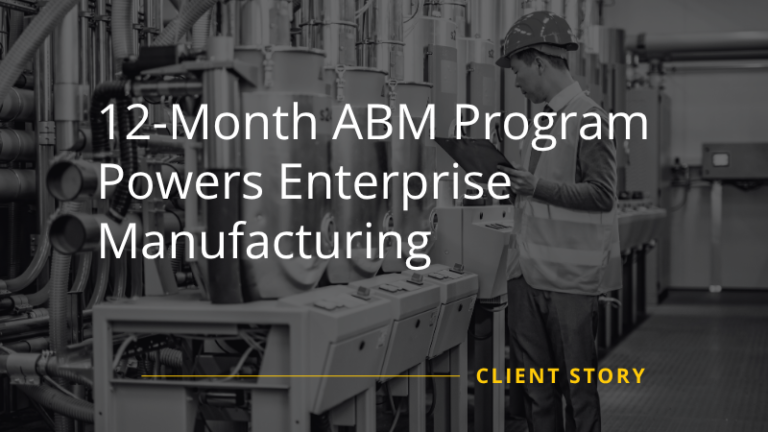
12-Month ABM Program Powers Enterprise Manufacturing
Callbox developed a customized lead nurturing strategy with tailored messaging for different decision-makers. Using AI, they integrated phone, email, web, and LinkedIn into a flexible outreach framework.
View Case StudyComparison Table: Top Manufacturing Lead Generation Agencies (2026)
| Company | HQ | Best For | Core Strength | Global Reach |
| Callbox | Los Angeles, CA | Enterprise & Mid-Market, Tech-Heavy Manufacturing | Multi-channel ABM & Global Scale | North America, EMEA, APAC, LATAM |
| Revnew | Overland Park, KS | Industrial & Engineering | Outbound Program Architecture | North America |
| Martal Group | San Francisco, CA | Tech-Heavy Manufacturing | Technical Sales Integration | US & Canada |
| Gorilla76 | St. Louis, MO | Mid-Sized Manufacturers | Industrial Strategy & Content | North America |
| Ironpaper | New York, NY | High-Growth Industrial | B2B Demand Generation | Global |
Related: Top B2B Lead Generation Agencies
Why Manufacturing Lead Generation Requires a Specialized Partner
Generic lead generation fails in the industrial world because it ignores the “Stakeholder Multiplier.” In 2026, the average B2B buying committee involves 10 or more stakeholders. A general lead generation service might reach a mid-level manager, but a specialized agency knows how to engage the CISO, the Plant Operations Director, and the CFO simultaneously.
The Role of Multi-Channel Outreach
Relying on a single channel is no longer viable. Effective manufacturing lead generation involves a synchronized cadence of:
- Voice Outreach: To break through the “no-phone” barriers of busy plant floors.
- Strategic Email: Focused on solving technical pain points.
- LinkedIn/Social Selling: Building credibility with specification-driven engineers.
- Webinar Marketing: Providing educational value before the sales pitch.
 Industry Insight: Many manufacturers struggle with increasing leads for manufacturing because they focus on features rather than outcomes. The most successful campaigns in 2026 highlight "reduction in downtime" or "energy efficiency" over raw machine specs.
Related: How To Increase Manufacturing Leads
Selection Methodology: How to Choose Your Agency

Choosing between manufacturing lead generation companies is a high-stakes decision. A mistake doesn’t just cost you the monthly retainer; it costs you the market opportunity and the trust of your engineering team.
Not all manufacturing lead generation companies are built equal. We evaluate partners based on three critical criteria:
1. Vertical Knowledge
In the manufacturing sector, a generic lead generation service will often get “gatekept” because they cannot speak the language of the shop floor. Decision-makers in this industry—specifically Plant Managers and Lead Engineers—have a low tolerance for fluff.
- Process Expertise: Does the agency understand your specific niche? You should test their knowledge of the difference between subtractive manufacturing (like CNC machining) and formative manufacturing (like plastic injection molding). An agency that understands these nuances can craft a sales pitch that addresses specific pain points like “tooling lead times” or “tolerances.”
- The Stakeholder Map: A specialized manufacturing lead generation agency knows that you don’t just sell to a buyer; you sell to a committee. They should have a strategy for “multilateral outreach”—engaging Maintenance Managers for operational pain, Engineers for technical specs, and Procurement for contract logistics.
2. Data Compliance
In 2026, data is a liability if not handled with absolute precision. For a global lead generation company, compliance isn’t just a legal checkmark; it is a prerequisite for entering enterprise-level supply chains.
- Global Standards: Your partner must demonstrate active compliance with GDPR (Europe), CCPA/CPRA (California), and PDPA (Singapore/APAC). Ask for their Data Processing Agreement (DPA) and their protocol for handling “Right to be Forgotten” requests.
- Zero-Party and First-Party Data: Leading manufacturing lead generation agencies are moving away from stale, third-party lists. Look for partners who prioritize Data Enrichment—using AI to verify that a contact still holds their position before the first cold call is ever made. According to HubSpot, data decay in the industrial sector averages 22.5% annually; your agency must have a “live” verification process to protect your sender reputation.
3. Tech Stack Integration
The most expensive inefficiency in B2B sales is the manual entry of leads. A top-tier manufacturing lead generation agency must function as a native extension of your internal systems.
- CRM Native Workflows: Can they plug directly into your HubSpot or Salesforce CRM? We evaluate agencies on their ability to set up “Bi-directional Sync.” This ensures that when an agency SDR books an appointment setting meeting, the notes, call recordings, and lead score appear in your dashboard instantly.
- The Feedback Loop: Integration should include a “Closed-Loop Reporting” mechanism. When your sales team marks a lead as “Disqualified,” that data should flow back to the lead generation partner to automatically refine their ideal customer profile (ICP) targeting for the next month.
Expert Insight: Before signing a contract, ask for a "Data Sample." Request a list of 10 contacts in a specific industrial niche (e.g., Automotive Tier 2 Suppliers in the Midwest). If they can’t provide verified, high-intent contacts within 48 hours, they likely lack the infrastructure to scale your manufacturing lead generation effectively.
Overcoming the “Ramp Risk”

One of the biggest hurdles in industrial sales is the time it takes to onboard a new salesperson. HubSpot data indicates that organizations using AI-driven personalization in their outbound efforts see 82% higher conversion rates, yet many in-house teams lack the tools to implement this. Outsourced lead generation for manufacturing companies eliminates this “ramp risk” by providing an operational team within weeks.
Why Decision Makers Choose Outsourcing:
- Immediate Activity: Your campaign starts generating touchpoints on day one.
- No Attrition Overhead: You don’t have to worry about SDR turnover or training costs.
- Scalability: Easily expand your reach into new geographic markets like LATAM or APAC without physical offices.
Wondering how other industrial firms scale? Read our Manufacturing Lead Generation Case Studies to see real-world ROI data.
Frequently Asked Questions
1. What makes manufacturing lead generation agencies different from general agencies?
Unlike generalists, specialized manufacturing lead generation agencies understand technical buyer credibility. They use industry-specific terminology and know how to navigate complex procurement cycles that general agencies often find frustrating.
2. How much does a manufacturing lead generation service cost in 2026?
Pricing varies, but most professional lead generation and appointment setting firms operate on a retainer basis ranging from $6,000 to $15,000 per month. This cost typically covers a dedicated SDR, data enrichment, and multi-channel software licenses.
3. Can a lead generation company help with global expansion?
Yes. Top-tier manufacturing lead generation companies like Callbox have global databases and region-specific SDRs who understand local time zones and cultural nuances, allowing you to scale into markets like EMEA or Southeast Asia effortlessly.
4. What is a realistic conversion rate for industrial leads?
While HubSpot reports that SEO-driven leads close at 14.6%, outbound leads from a high-quality lead generation partner typically close at a higher rate when paired with a robust nurturing strategy and behavior-based scoring.
5. Do I need to provide my own list of prospects?
Most agencies provide their own verified data. For example, Callbox leverages a proprietary database of millions of industrial decision-makers, though they can also clean and enrich your existing CRM data.
Ready to build a predictable, high-value sales pipeline for 2026? Request a custom pricing quote and start your campaign in weeks.
Final Verdict: Choosing Your Growth Partner
For manufacturers in 2026, the cost of “playing it safe” with generic outreach is the steady erosion of market share to more agile, tech-enabled competitors. Relying on outdated prospecting methods in a world of complex, multi-stakeholder buying committees is no longer a viable strategy.
The choice is clear: to secure a consistent, high-volume pipeline that doesn’t sacrifice technical quality, you need a partner that blends the analytical scale of AI with the irreplaceable nuance of human interaction. You need a lead generation partner that understands your shop floor as well as they understand your CRM.
By choosing a specialized manufacturing lead generation agency, you aren’t just buying “meetings”—you are investing in a sophisticated, multi-channel engine designed to navigate the longest sales cycles and win over the most skeptical engineering minds. Whether your goal is domestic dominance or global expansion, the right partner ensures your sales team spends their time where it matters most: at the closing table.