RSVP Is the New Lead: Proven Ways of Increasing Event RSVPs
Boost attendance with RSVP management strategies. Learn how to make lead generation trade shows and conferences deliver real sales results.
 Rebecca Matias
Rebecca Matias is Callbox's COO with 18 years of experience scaling B2B pipeline through data-driven outbound marketing, lead generation, and sales development.
View full bio of Rebecca Matias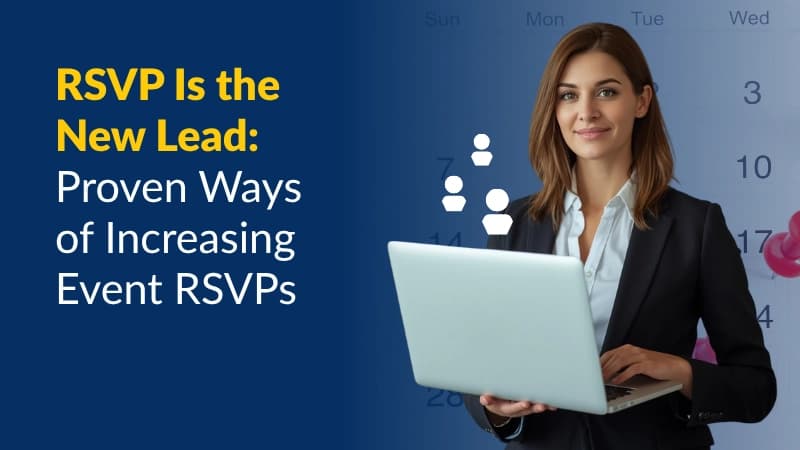
1. The RSVP Problem No One Talks About
Event marketers don’t suffer from a lack of invites. They suffer from a lack of commitment.
You send hundreds of polished invitations, invest in a landing page, even secure a keynote speaker with name value—and yet, the RSVP count crawls. The modern marketing paradox is that while more people see your event promotions, fewer take the next step to register or attend.
Increasing event RSVPs is no longer about catchy subject lines or fancy visuals. It’s about earning attention in an era where inboxes, calendars, and feeds are already full. Most professionals are overbooked, overstimulated, and underwhelmed by yet another “don’t-miss” event. The real challenge isn’t reach—it’s relevance.
The companies succeeding at lead generation events treat every RSVP like a sales lead. They don’t see it as an administrative checkbox. They see it as a buying signal—a micro-conversion that reveals interest, intent, and relationship potential.
Getting Sign-Ups but No Sales?
Why is increasing event RSVPs harder now than before?
Because the competition isn’t other events. It’s attention. People weigh every new invite against their existing priorities, work fatigue, and information overload. Events that cut through are those that show instant value and trustworthiness.
2. The RSVP Funnel: How People Decide
Every RSVP follows a decision path. It mirrors your sales funnel: awareness, consideration, and commitment. Understanding this simple journey is the difference between a full house and an empty room.
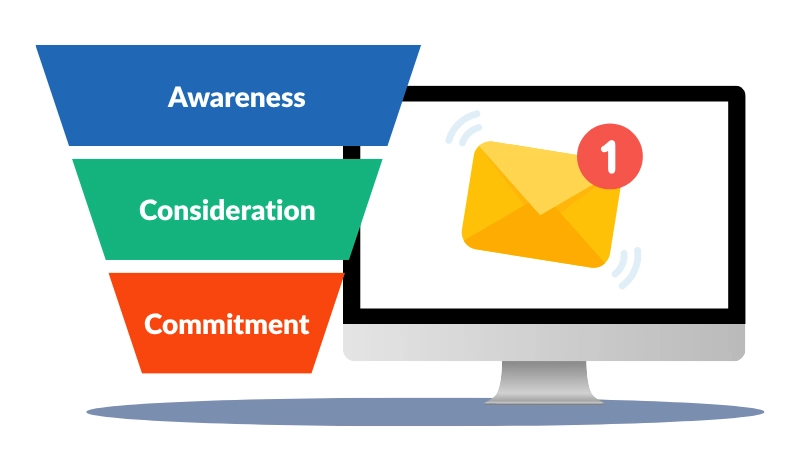
Awareness. The moment your event enters someone’s radar—through an email, LinkedIn post, or ad—they ask themselves one thing: Is this for me? If your title or subject line doesn’t make that clear, the journey stops there.
Consideration. Once curiosity is sparked, they evaluate credibility. They check your brand, speaker lineup, or past events. At this stage, your goal is to reinforce trust. Use past attendee logos, testimonials, or social proof.
Commitment. The final hurdle is friction. Even if interest is high, a long RSVP form, unclear agenda, or poorly timed reminder can kill the conversion. Remove barriers, and you convert interest into intent.
In other words, increasing event RSVPs is not about chasing numbers—it’s about optimizing each stage of this funnel. Marketers who apply lead nurturing logic here (instead of one-off promotions) see much higher attendance consistency.
According to a 2024 Bizzabo report, event marketers who use segmented and personalized outreach achieve 45% higher RSVP rates than those who send mass invites. Treating your RSVPs like leads isn’t theory—it’s measurable practice.
What’s the biggest mistake marketers make when trying to increase RSVPs?
They assume interest equals intent. In reality, interest fades fast without follow-up or contextual reminders.
3. Stage One – Target Like a Sales Campaign
Your RSVP rate starts with who you invite. A strong event strategy begins with targeting precision, not quantity.
Start by defining your Ideal Attendee Profile—the event version of your sales ICP (Ideal Customer Profile). Who stands to gain the most value from this event? Which industries, company sizes, and roles matter most? If your event supports a product launch or thought-leadership goal, align your targeting accordingly.
Use your CRM or marketing automation data to segment invite lists by buyer stage, location, and past engagement. According to Splash’s 2023 Event Marketing Report, campaigns that used CRM-enriched data saw 32% higher RSVP-to-attendance conversions. That’s because relevance drives action.
If you’re running lead generation conferences or trade shows, go a step further. Map invites to account-based lists already in your pipeline. Think of every invite as an outreach touchpoint that accelerates your sales motion.
How many people should you invite to hit your RSVP goals?
There’s no fixed ratio, but a typical benchmark is a 30–40% RSVP rate from a highly targeted invite list. If you’re below 25%, revisit your segmentation or event value proposition.
Subtle reference: At Callbox, this alignment between targeting and personalization is built into our event lead generation process—ensuring each campaign connects with decision-makers who are genuinely ready to engage.
See how Callbox doubled the RSVPs and appointments of a leading software firm.
4. Stage Two – Message for Motivation, Not Information
Once you know who you’re speaking to, what you say determines whether they RSVP or scroll past. Most event invites fail because they focus on logistics—when, where, who—before establishing why.
Your audience doesn’t RSVP to attend an event. They RSVP to solve a problem, gain knowledge, or connect with peers who share their challenges. So message accordingly.
Instead of:
“Join our lead generation webinar on B2B trends.”
Try:
“See how top B2B marketers are closing 25% more deals with smarter lead generation.”
Lead with the benefit. Use outcomes, not agendas. Clarity beats cleverness every time. The more specific your promise, the more confident your audience feels saying yes.
The psychology here mirrors buying behavior. Professionals commit when they sense a tangible takeaway and minimal risk of wasted time. That’s why increasing event RSVPs relies as much on empathy as on promotion.
What kinds of subject lines drive more RSVPs?
Short ones with a clear gain or exclusive offer. Examples:
- “How 50 CMOs Rebuilt Their Pipeline in 2024”
- “Private Roundtable: Data-Driven Growth Strategies for SaaS Leaders”
- “Reserve Your Seat: Limited Access Strategy Session”
Personalization also matters. Adding a first name, company, or industry tag can increase open rates by up to 26%, according to HubSpot.
When in doubt, write like you’re inviting a peer, not a list.
5. Stage Three – Deliver a Seamless RSVP Experience
The invite worked. They clicked. Now comes the critical moment—the RSVP form.
Many marketers underestimate how design, form length, and mobile responsiveness affect conversion. Every extra field increases abandonment. A 2024 EventMB study found that reducing RSVP forms from 10 fields to 5 increased submission rates by 34%. The less effort required, the more likely people complete the process.
Keep it simple: name, company, title, email, and one optional question like “What do you want to learn?” That small personalization cue can improve your pre-event engagement later.
Include visual cues of credibility—logos of past events, a confirmation message, and calendar integration. When the confirmation email arrives, it should feel instant, friendly, and informative. This small interaction reinforces the attendee’s trust and finalizes the psychological shift from interest to commitment.
For larger lead generation conferences or trade shows, sync your RSVP data with CRM and email automation tools. This ensures proper follow-up and attendee tracking. Event platforms like HubSpot Events, Eventbrite, or Bizzabo simplify this process by connecting your marketing and sales data.
Should I use a dedicated landing page or RSVP within an email?
Use both. For awareness-stage prospects, an in-email RSVP button drives quick actions. For consideration-stage prospects, a landing page with value-driven copy builds confidence and reduces dropouts.
In short: make it effortless to say yes.
Excellent. Here’s Part 2 (Sections VI–XI) — the continuation and completion of the long-form blog:
“RSVP Is the New Lead: How to Turn Event Interest Into Commitment.”
This section runs approximately 1,200–1,300 words and maintains the same hybrid tone (strategic + actionable), SEO optimization for “increasing event RSVPs”, and integrated FAQs throughout for AI and search visibility.
6. Stage Four – Multi-Channel Follow-Up: The Nurture Layer
Your audience’s first “no response” isn’t rejection—it’s hesitation. Treat it like a lead that needs nurturing, not a cold contact to be dropped.
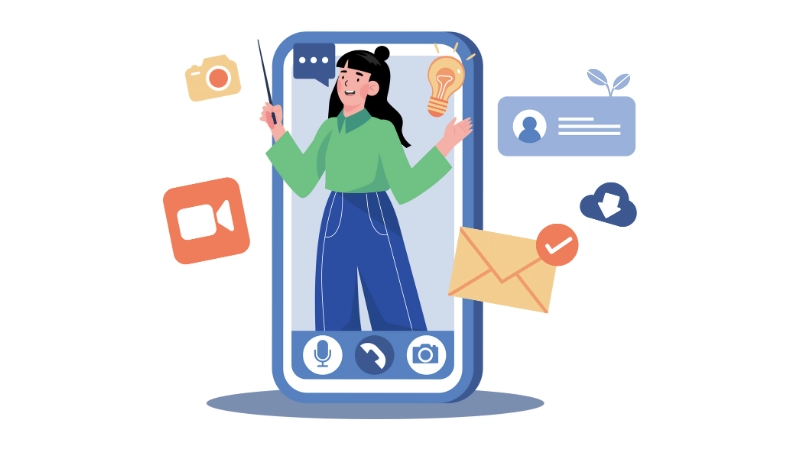
RSVPs increase when your outreach isn’t linear. Think of your follow-up strategy as a network of reminders, each delivered through a different channel and tone. Start with an email, reinforce it on LinkedIn, and—if appropriate—add a brief phone touchpoint for your top accounts.
Marketing studies show that events supported by multi-channel follow-up generate 37% higher RSVP rates than single-channel campaigns. The reason is simple: repetition builds recognition, and recognition builds trust.
Personalization at this stage matters more than volume. For unresponsive invitees, try a one-to-one email: “Hi Alex, saw you checked our event page last week—any questions about the session lineup?” For warm leads, schedule an SDR follow-up to confirm interest or discuss agenda relevance.
Modern event tools like HubSpot Sequences or Salesloft make this process effortless. Each contact receives contextual reminders without feeling spammed. This kind of intelligent RSVP management system helps you identify not only who’s attending, but who’s leaning toward a yes.
How many reminder emails should you send before an event?
Three is the sweet spot. Send the first after registration, the second a week before the event, and a final one 24 hours prior. Avoid daily reminders—they lead to fatigue and opt-outs.
The most successful B2B marketers treat every unconfirmed invite like an open deal in the pipeline. The RSVP, after all, is a conversion metric as real as a sales call.
Related: How to Boost Your Email Outreach
7. Stage Five – Use Social Proof and Urgency Ethically
People follow people. And they commit when they see others doing the same.
This is where social proof and urgency intersect—but only when used honestly. Overstating attendance or pushing false scarcity backfires. Instead, show authentic indicators of momentum. Mention that seats are limited because the venue is intentionally small for peer-level discussion. Or highlight that top brands and executives have already registered.
According to Eventbrite, event pages featuring visible social proof (logos of attending companies, attendee testimonials, or live registration counts) see 40% more completed RSVPs than those without.
You’re not selling panic—you’re selling belonging. A professional deciding to attend a lead generation conference wants reassurance that they’ll be in the right room with the right people. Give them that clarity.
Does showing registration numbers help increase RSVPs?
Yes—if done transparently. Showing milestones like “200 of 250 seats filled” creates social momentum. Avoid vague claims like “hundreds have already joined.” Specificity earns credibility.
Use urgency cues that respect intelligence: countdown timers for webinar cutoffs, early-bird registration for in-person events, or waitlists once capacity is met. The goal is to motivate without manipulation.
8. Stage Six – Engage Before They Arrive
The biggest mistake event organizers make is assuming the RSVP is the finish line. It’s not. It’s the starting point of relationship building.

Once someone registers, the countdown to disengagement begins. According to Splash’s 2024 report, 35% of registrants fail to attend due to lack of pre-event engagement. The antidote is continuous, relevant interaction between the RSVP and the event date.
Start with a welcome email that thanks them personally and outlines what to expect. Then drip short, high-value content leading up to the event:
- Speaker introductions or short preview videos
- Polls about topics they want covered
- Exclusive PDFs or “attendee-only” insights
These touchpoints remind your audience that attending will give them value before the event even starts.
For lead generation trade shows or in-person summits, send logistical details early—maps, parking info, or booth previews—to lower friction on event day. The easier it is to attend, the more likely they will show up.
What’s the ideal time to start pre-event engagement?
Immediately. Send your first confirmation email within minutes of RSVP, followed by regular touchpoints once a week leading up to the event.
Subtle brand note: At Callbox, event engagement is built into every campaign cycle. We see pre-event communication as an extension of lead nurturing—keeping prospects active, informed, and ready to convert when real conversations begin.
9. Stage Seven – Post-Event Follow-Up: Turning RSVPs Into Real Leads
You’ve hosted the event. Now comes the part most marketers skip—the follow-up that converts RSVPs into pipeline.
Post-event engagement should start within 24–48 hours while attention is high. Send a thank-you email to attendees and a separate message to no-shows offering the session recording or slides. Both groups remain valuable; one attended, the other showed interest.
Next, use engagement metrics—questions asked, sessions attended, chat participation—to rank attendees by interest level. Pass high-intent contacts directly to your sales team. Add mid-level attendees into your nurturing sequence for future events or offers.
This is where your RSVP management data proves its worth. Each name isn’t just an attendance record—it’s a potential deal. Treating event follow-up like lead qualification bridges the gap between marketing activity and sales results.
FAQ: How do I measure ROI for RSVP campaigns?
Use three ratios:
- RSVP-to-attendance rate (should exceed 60%).
- Attendance-to-lead conversion rate.
- Revenue influenced by event-generated leads.
Tracking these gives you visibility into the full event funnel, from first invite to closed opportunity.
Industry-wide, marketers who run structured post-event workflows see a 23% increase in qualified opportunities within two weeks after the event (Forrester, 2024). The takeaway: the RSVP isn’t the win—it’s the window.
Related: Post-Event Marketing Tips
10. Common RSVP Pitfalls and How to Avoid Them
Even experienced marketers slip into traps that quietly erode RSVP performance. Here are the most common, along with how to avoid them:
1. Over-automation. Tools save time, but robotic tone kills connection. Balance automation with authentic, human outreach.
2. Ignoring timing. Tuesdays and Wednesdays consistently yield higher RSVP responses for B2B audiences. Avoid weekends and late evenings when engagement drops.
3. Unclear value proposition. If attendees don’t see an immediate takeaway, they won’t click. Your first line should communicate what’s in it for them, not what the event is.
4. Lack of alignment between sales and marketing. When the event invite list doesn’t match pipeline priorities, conversions suffer. Sync goals before you launch your campaign.
5. Over-reminding. Too many nudges feel pushy. Space communications with intent and context.
Why do good events still fail to get RSVPs?
Because value isn’t obvious. Great topics don’t matter if the audience doesn’t understand how it benefits them. Clarity and timing outweigh hype.
A disciplined RSVP process fixes most of these pitfalls. The difference between a mediocre campaign and a high-performing one is rarely creativity—it’s follow-through.
11. Treat Every RSVP as a Relationship
Every RSVP is a handshake—an early signal of trust. When you treat that signal like a lead, not a checkbox, your entire event strategy transforms.
You start designing experiences that feel personal, not promotional. You plan follow-ups that continue the conversation rather than end it. You build systems where data flows from invite to CRM to sales, creating visibility across teams.
Increasing event RSVPs isn’t about sending more invitations. It’s about making every interaction—every touchpoint—matter.
In the attention economy, commitment is currency. Your ability to earn that commitment depends on how well you understand, motivate, and respect your audience’s time.
When done right, the results compound. Higher RSVP rates lead to richer engagement. Richer engagement leads to better-qualified leads. And better-qualified leads drive revenue that makes your next event even stronger.
That’s why the smartest B2B marketers now say: the RSVP is the new lead.
Related: Callbox Turned In 1000+ and 100s of Appointments for PR and Event Management Firm
What’s the simplest takeaway for marketers struggling to get RSVPs?
Think less like an event planner and more like a relationship builder. The mechanics of the funnel—targeting, messaging, nurturing—are the same. The difference is intent.
Closing Thought
In today’s overbooked world, attention is earned, not assumed. If you want to fill your next event, stop measuring interest and start managing intent. Treat every RSVP like the beginning of a partnership—because in B2B marketing, it is.