





So, you finally have leads flowing into your pipeline, but which sales cadence examples should you follow to turn them into opportunities?
Which leads should you contact first? How do you prioritize outreach and determine the right approach? Should you reach out via email, phone, or LinkedIn? How many times should you reach out, and when is the best time to place a call or send an email to your prospect?
If these questions sound familiar, it’s time to revisit your sales cadence. A structured cadence brings clarity, consistency, and rhythm to your outreach, helping your team move prospects from first contact to closed deal.
In this article, we’ll walk through what a sales cadence is, explore sales cadence best practices, and share five winning sales cadence examples used by top-performing sales teams. You’ll also learn how to structure your cold calling cadence, optimize your marketing cadence, and use the right multi-channel sales call cadence to engage and convert more B2B prospects.
- What is Sales Cadence
- Advantages of Sales Cadence
- 5 Sales Cadence Examples
- Sales Cadence Frequently Asked Questions
What is a Sales Cadence?
A sales cadence is a structured sequence of sales outreach activities used to engage prospects over a set period of time. It defines when, how, and how often a sales team contacts potential buyers to move them toward a conversation or meeting.
Think of it as your playbook for lead engagement. For instance, when a prospect downloads your whitepaper or books a demo, what happens next? Whether your next step is a phone call, email follow-up, or social touch, the structure and timing of those actions define your cadence.
A well-defined B2B sales cadence ensures that your outreach remains timely, consistent, and data-driven. It keeps reps aligned, reduces guesswork, and drives measurable results.
Why is a defined cadence so important?
A well-defined sales cadence ensures that your sales process runs more smoothly and efficiently. Key benefits of having a clear cadence include:
- Aligning reps with a consistent meeting rhythm
- Creating a repeatable framework for outbound and inbound outreach
- Speeding up response times and increasing conversion rates
- Reducing missed follow-ups and lost opportunities
Modern sales teams utilize at least three channels (email, phone, and social media) to enhance their sales cadence and make it more effective and personalized.
Sales cadences differ from one type of sales process to the next, but the basic idea remains the same: consistent, sequential touches. Complex sales processes often involve numerous touchpoints and a longer period for nurturing prospects (sometimes several months). In contrast, transactional sales cycles typically require fewer touches over a short period, usually a few days or weeks.
Transform your pipeline from low-quality to high-value.
Advantages of Sales Cadence
Did you know that having well-defined sales cadence templates can significantly enhance the efficiency and effectiveness of your client prospecting process?
An effective sales cadence strategy can be the difference between a stagnant pipeline and one that steadily converts. Whether you’re managing outbound sales cadence examples or optimizing inbound workflows, cadence brings structure to your process.
Here’s what it helps you achieve:
- Strategic Focus – Better prioritization and time management
- Meeting Cadence Clarity – Standardizes timing between follow-ups and check-ins
- Faster Onboarding – New reps ramp up quickly with proven workflows
- Stronger Resource Utilization – Less time wasted on unqualified leads
- Continuous Refinement – Built-in flexibility to test and adjust based on performance

Sales Cadence Best Practices
Before diving into specific sales cadence examples, let’s explore the best practices top-performing teams follow to maximize conversions. These best practices draw from Callbox’s AI-powered, multi-channel lead generation framework.
1. Adopt a Multi-Touch, Multi-Channel Approach
Don’t rely on just one channel. The best-performing cadences combine phone, email, social media, and chat to engage prospects where they’re most active. For example, skilled reps know when to barge the call during a phone sequence joining a discussion at the right moment to coach or clarify as part of a proactive cadence. This cross-channel visibility improves brand recall and boosts response rates. Learn more about multichannel for effective B2B marketing.
2. Time Your Outreach Strategically
Spacing out your touches too far apart can result in lost momentum. For cold leads, a 10–15 day sequence with multiple touches per week often works best. For longer cycles, extend to 30–60 days with consistent touchpoints.
3. Balance Automation with Personalization
Utilize automation tools to maintain consistency, but never lose the human touch. Personalize messages based on behavior, interest, or recent engagement. Referencing specific content they have interacted with can significantly boost open and reply rates.
4. Leverage Data and AI Insights
Smart cadence optimization relies on tracking and learning to improve performance. Use analytics to identify your highest-performing steps, such as calls, emails, or social touches, and refine them accordingly. AI can predict the best times and channels to reach decision-makers.
Related: AI for Lead Generation
5. Align Sales and Marketing Cadences
Your marketing cadence should feed your sales cadence. Leads from webinars, downloads, or ads should enter a tailored outreach sequence that reflects their stage in the buyer’s journey. When marketing and sales cadences align, conversion rates climb.
6. Always Include a Follow-Up and Nurture Path
Not every prospect will be ready at this time. Create a lead nurturing sequence for individuals who require additional time. Send helpful content or value-driven follow-ups to keep your brand top of mind.
Sales Cadence Examples
Let’s take a look at five proven sales cadence examples that can help refine your own outreach strategy.
Sales Cadence Example 1: The 7-Touch Multi-Channel Approach
Our first sales cadence example demonstrates how a structured, multi-channel sequence can create consistent engagement across multiple touchpoints. This cadence template integrates email, phone, and LinkedIn outreach within 10 days, making it ideal for fast-moving campaigns targeting mid-funnel prospects.
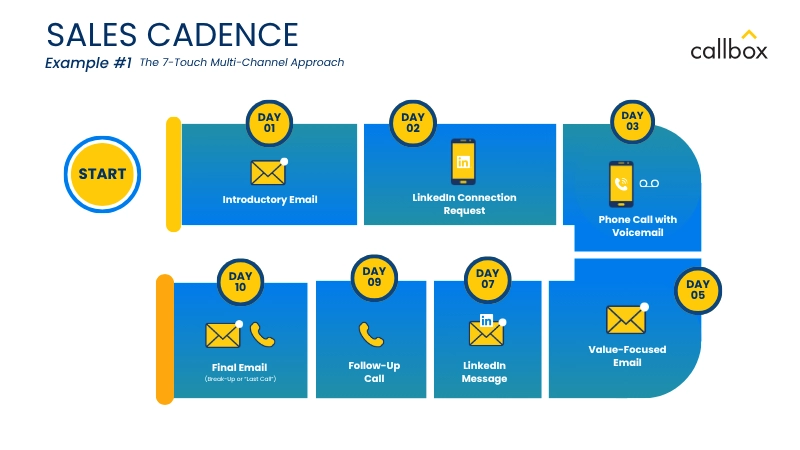
Day 1: Introductory Email
Day 2: LinkedIn Connection Request
Day 3: Phone Call with Voicemail
Day 5: Value-Focused Email
Day 7: LinkedIn Message
Day 9: Follow-Up Call
Day 10: Final Email (Break-Up or “Last Call”)
This cadence consists of seven touchpoints spread over 10 days, allowing sales reps to stay top-of-mind without overwhelming the prospect.
What works:
- Combines three powerful channels (email, phone, and social) for higher engagement.
- Frequent but well-timed follow-ups sustain momentum.
- Every touchpoint adds unique value or context.
Room for improvement:
- Works best for short to medium sales cycles; additional nurture steps may be needed for longer B2B processes.
- Personalization tools or templates can help maintain quality at scale.
How Soon Should I Make The First Call After Sending The Initial Email?
Ideally, within 48 hours. This ensures your email is still top of mind when you follow up with a call.
Can I replace LinkedIn with another social platform?
For B2B audiences, LinkedIn is the best platform. However, if your target audience is active on X (formerly Twitter), you can replicate the same steps there.
How do I personalize this cadence at scale?
Utilize templated frameworks that automatically insert the recipient’s name, company, and recent activity, while maintaining a conversational tone.
Finding it hard to reach the right decision-makers?
Sales Cadences Example 2: The 13-Touch Cold Outbound Cadence
This cold calling cadence is tailored for outbound sales teams targeting new markets or accounts. Spanning approximately 21 to 27 days, it builds recognition and familiarity through repetition and varied messaging.
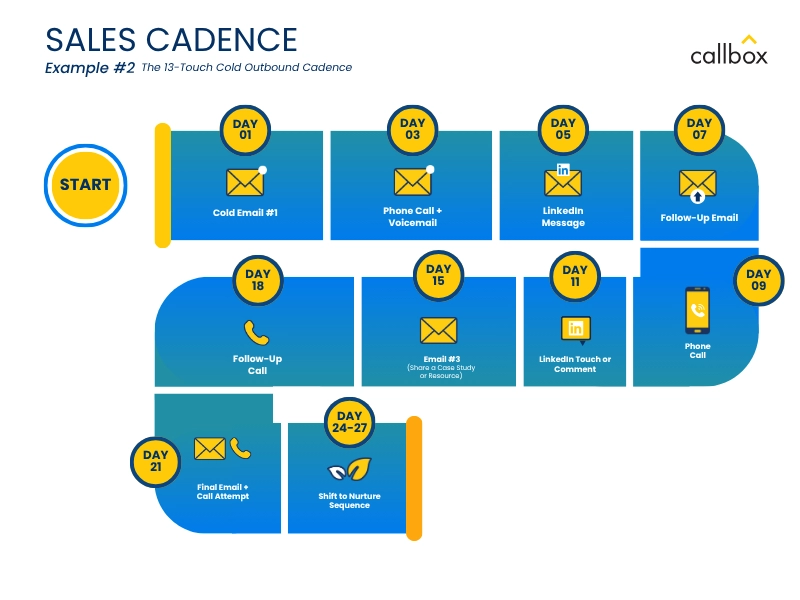
Day 1: Cold Email #1
Day 3: Phone Call + Voicemail
Day 5: LinkedIn Message
Day 7: Follow-Up Email
Day 9: Phone Call
Day 11: LinkedIn Touch or Comment
Day 15: Email #3 (Share a Case Study or Resource)
Day 18: Follow-Up Call
Day 21: Final Email + Call Attempt
Day 24–27: Shift to Nurture Sequence
This B2B sales cadence utilizes 13 touchpoints over approximately four weeks to convert cold leads into meaningful conversations.
What works:
- Alternates channels to prevent monotony.
- Balances persistence with breathing space between touches.
- Proven effective for outbound prospecting and pipeline activation.
Room for improvement:
- Benefit-driven messaging is key. Avoid generic templates.
- Can be enhanced with data-driven insights or AI-triggered reminders.
How many calls are too many in a cold outreach cadence?
Three to four calls are ideal. More than that can feel pushy unless the prospect has previously engaged.
What kind of content should I include in educational emails?
Short case studies, relevant blog links, or a free guide that addresses a known industry pain point.
What if the prospect doesn’t respond after the final follow-up?
Move them into a lead nurturing workflow with less frequent, value-driven touches, rather than starting over.
\Related: Outbound Lead Generation Strategies
Sales Cadence Example 3: The 22-Day Consistent Outreach
This 22-day sales cadence is designed to keep engagement consistent while giving prospects time to respond naturally. It’s an excellent approach for outbound sales teams, balancing persistence with respect for the buyer’s timeline.
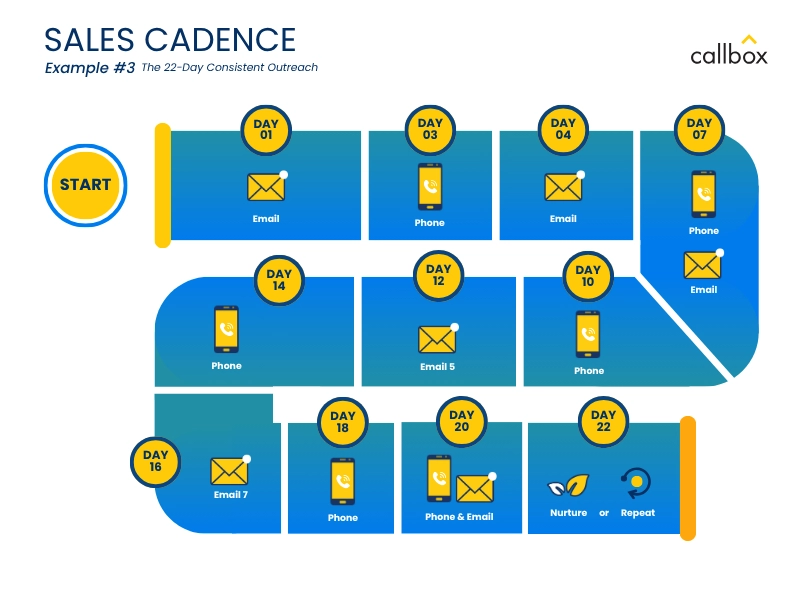
Day 1: Email
Day 3: Phone
Day 4: Email
Day 7: Phone
Day 7: Email
Day 10: Phone
Day 12: Email
Day 14: Phone
Day 16: Email
Day 19: Phone
Day 21: Phone and Email
Day 22: Nurture or Repeat
This cadence comprises 13 touchpoints spread over 22 days, striking a balance between follow-up frequency and sufficient breathing room. It’s especially effective for outbound teams dealing with high-volume lead lists or mixed-intent prospects.
What works:
- A consistent rhythm over two to three weeks helps maintain steady attention.
- Combines calls and emails for a human yet efficient approach.
- Works well when paired with automated reminders or CRM triggers.
Room for improvement:
- Limited to email and phone; integrating LinkedIn or video could enhance reach.
- Messaging must evolve after each touch — not just repeat the same pitch.
How do I avoid sounding repetitive in a high-frequency cadence?
Focus on evolving your message. Each follow-up should add new value — such as a relevant stat, resource, or insight.
When should I stop following up?
After your final day, move unresponsive leads into a nurture sequence rather than continuing indefinitely.
Can this cadence work for inbound leads?
Yes, but shorten the intervals. Inbound prospects respond better to quicker follow-ups within 7–10 days.
Related: You’re Doing Email and LinkedIn Outreach Backwards
Sales Cadence Example 4: The Content-Driven Multi-Channel Strategy
This content-driven cadence merges outbound outreach with educational assets to help sales reps nurture relationships with value. It’s particularly effective in long-cycle or consultative B2B sales, where trust and insight drive engagement more than volume.
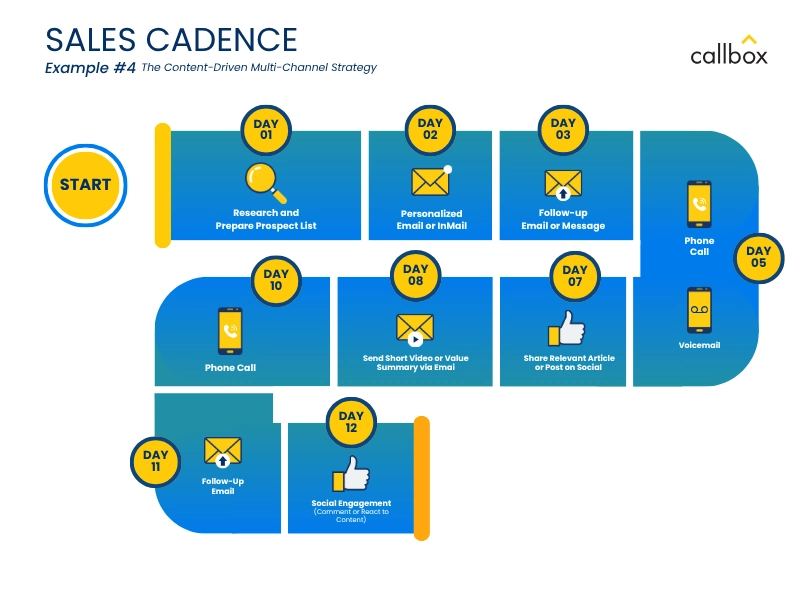
Day 1: Research and Prepare Prospect List
Day 2: Personalized Email or InMail
Day 3: Follow-Up Email or Message
Day 5: Call + Voicemail
Day 7: Share Relevant Article or Post on Social
Day 8: Send Short Video or Value Summary via Email
Day 10: Phone Call
Day 11: Follow-Up Email
Day 12: Social Engagement (Comment or React to Content)
This cadence comprises nine to twelve touchpoints across email, phone, and social media, with a strong focus on content sharing and personalization.
What works:
- Blends education and outreach to establish credibility.
- Uses social proof, articles, and videos to keep prospects engaged.
- Great for positioning your team as consultative advisors, not just sellers.
Room for improvement:
- Requires coordination between sales and marketing for relevant content.
- It may take longer to execute, especially for highly personalized messages.
What kind of content works best in this cadence?
Short videos, articles, case studies, or insights that address industry pain points, content that teaches, not sells.
How often should I share content?
Every 3–5 days within your sequence, ensuring it aligns with the previous message.
How do I measure success?
Track engagement metrics (email opens, LinkedIn interactions, call connections) and correlate them with follow-up meetings booked.
Sales Cadence Example 5: The Spider-Man Cadence
This Spider-Man cadence by Morgan J. Ingram was inspired by its flexibility and precision, representing one of the most adaptable outreach frameworks in modern B2B sales. It combines creativity, timing, and personalization across multiple channels to build a conversation over 20 days.
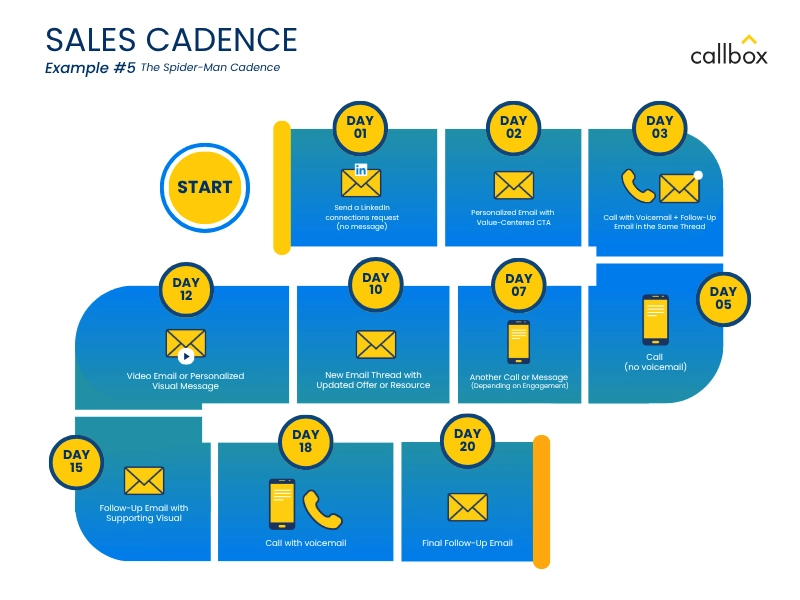
Day 1: Send LinkedIn Connection Request (No Message)
Day 2: Personalized Email with Value-Centered CTA
Day 3: Call with Voicemail + Follow-Up Email in the Same Thread
Day 5: Call (No Voicemail)
Day 7: Another Call or Message (Depending on Engagement)
Day 10: New Email Thread with Updated Offer or Resource
Day 12: Video Email or Personalized Visual Message
Day 15: Follow-Up Email with Supporting Visual
Day 18: Call with Voicemail
Day 20: Final Follow-Up Email
This cadence uses 11 touchpoints over 3–4 weeks, maintaining persistence without overwhelming the prospect.
What works:
- Offers a healthy mix of communication styles (written, verbal, visual).
- Encourages creative outreach with personalized videos and images.
- Keeps outreach intentional. Every step builds on the previous one.
Room for improvement:
- Can be resource-intensive if done manually.
- Works best with automation tools for tracking and scheduling follow-ups.
Sales Cadence FAQs
To help you navigate the essentials of sales cadences, we’ve compiled answers to some of the most common questions. These insights will guide you in designing effective outreach strategies tailored to your sales goals.
What’s the ideal length of a sales cadence?
It depends on your target industry and sales cycle. However, most B2B sales cadences last 2-4 weeks, with more touches spread out over time, extended to 60+ days for long buying cycles.
How many touchpoints should a cadence contain?
A strong sales cadence for most industries typically includes 8 to 12 touchpoints. But complex sales may require 15 or more touches. This allows you to engage across different days, times, and channels without overwhelming your prospect.
What are the best channels to use in a sales cadence?
Email, phone, LinkedIn, voicemails, and social media are the top-performing channels. Supplement with chat or video for modern buyers. The best cadences mix these to meet prospects where they’re most responsive.
Should you have different cadences for different territories?
Absolutely. Buyer behavior varies by region, so tailoring cadences by territory helps you respect time zones, communication preferences, and cultural nuances.
How many cadences should your sales team use?
Ideally, have 3–5 cadences built around key variables, such as industry, persona, buying stage, or urgency. This gives reps flexibility while staying strategic.
The Takeaway
A sales cadence helps your team navigate the often choppy waters of revenue generation. It keeps your reps’ momentum more consistent and their performance more measurable. With these lessons and tips, it’s easier to develop or optimize your own sales cadence.