Top HR Tech Companies in Singapore: Best HR Software 2025
Discover Singapore’s best hr tech companies transforming human resource management with AI, automation, and payroll software.
 Mitos Aguadera
Mitos Aguadera is VP of Sales and Marketing at Callbox, leading go-to-market strategy and demand generation for B2B clients across tech and SaaS.
View full bio of Mitos Aguadera
Singapore stands out as Asia’s hub for HR technology innovation. The city’s mix of skilled talent, business-friendly policies, and digital infrastructure attracts the top HR tech companies shaping the future of work.
Modern employers want tools that help them manage people smarter. They need systems that utilize automation, analytics, and AI in HR to reduce manual work and enhance decision-making. In this article, we spotlight the best HR software providers and explore how they lead in compliance, performance, and workforce automation.
Get featured and gain access to decision-makers looking for HR and payroll solutions.
Why Singapore Is a Global Hotspot for HR Technology
Singapore encourages innovation through funding programs and startup accelerators that drive growth in the HR tech sector. The government’s support and strong legal framework make it ideal for companies offering software for human resource management and HR software solutions.
Businesses now depend on human resource management system software to manage compliance and remote teams, and even evaluate factors like employer of record costs when expanding globally. They use workforce analytics to plan hiring and training. The country’s leading startups combine technology and regulation awareness to deliver systems that simplify global HR operations.
The growing human resources market also attracts international investors. As more companies shift to digital HR platforms, the demand for payroll software, recruitment software, and automation tools in Singapore continues to rise.
The HR Tech Landscape in Singapore
Singapore’s HR tech market covers every stage of the employee journey. Established players and agile startups compete to build platforms that make HR simpler, faster, and more accurate.

Key categories include:
- Recruitment and talent acquisition: Tools using applicant tracking system features and predictive hiring models to reach qualified candidates.
- Payroll and compliance: Localized HR management system tools that handle taxes, benefits, and leave.
- Automation and analytics: Platforms combining HR automation software and HR chatbots to remove repetitive work.
- Engagement and performance: Systems that integrate performance management software and talent management software to improve employee retention.
Together, these solutions redefine what efficient HR looks like across Asia.
2.5× faster pipeline growth and 116 qualified meetings in just months. Download the case study to see how an HR Tech firm in Singapore achieve it.
Top HR Tech Innovators to Watch in 2025
Singapore’s top HR technology companies deliver flexible, scalable tools that fit every business size. Each innovator below shows how creativity and compliance combine to change HR for the better.
Glints
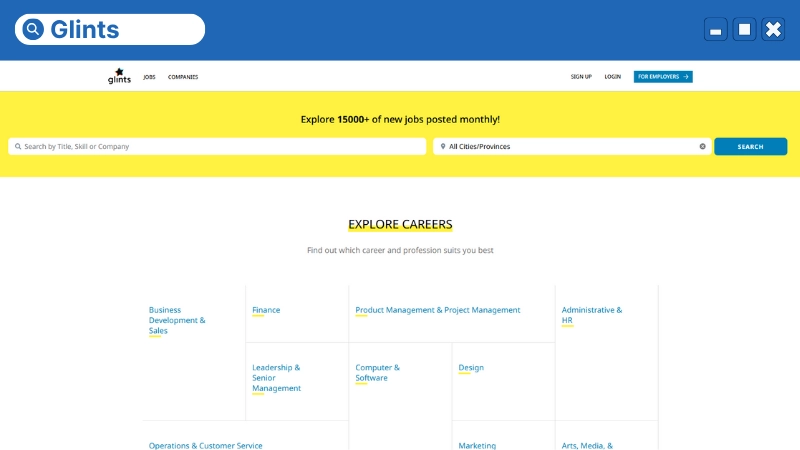
Glints is one of Southeast Asia’s fastest-growing platforms for hiring and workforce management. It bridges the gap between employers and regional talent through its human resource management system software and tech-enabled employer of record (EOR) model. The company’s “TalentHub” helps firms hire, onboard, and manage payroll across multiple countries, making cross-border employment easier for both startups and enterprises.
Strengths:
Glints leads among the best HR tech companies with its mix of recruitment marketplace and employer-of-record services. Its “TalentHub” platform helps companies hire, onboard, and pay employees in multiple countries through one system.
Glints shines in scalability. Companies expanding into Southeast Asia can rely on its tools to manage compliance and payroll with ease. Its automated onboarding software shortens setup time and ensures accurate data transfers.
Limitations:
Smaller firms may find Glints more complex than they need. Its enterprise pricing reflects its cross-border expertise, which may exceed a startup’s budget. For global growth, though, Glints remains unmatched in reach and reliability.
Swingvy
Swingvy is a cloud-based HR software platform designed to simplify HR for small and mid-sized businesses. It centralizes payroll, attendance, and leave management in a single interface. Swingvy simplifies HR tasks for teams without large HR departments, providing affordability, automation, and full local compliance.

Strengths:
Swingvy focuses on simplicity. This platform serves small and mid-sized businesses that need reliable payroll, leave, and benefits management. Its clean interface and compliance features make it popular with companies new to digital HR.
Swingvy integrates payroll software Singapore modules and automates statutory reporting, reducing paperwork for business owners. It delivers strong value without requiring large HR teams.
Limitations:
Swingvy suits SMEs best. Larger firms that need deep analytics or advanced workforce analytics features may find it limited. Still, its speed, affordability, and clarity make it ideal for fast-growing companies.
HReasily
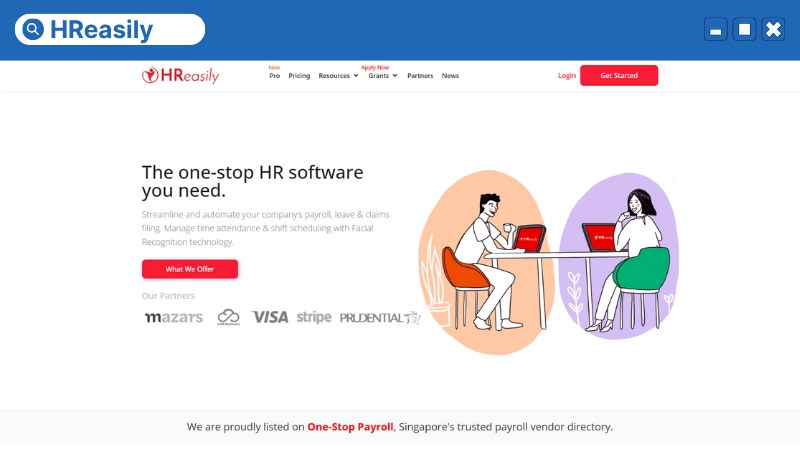
HReasily is a regional HR service provider offering payroll, claims, and leave management for businesses operating across ASEAN. The platform focuses on compliance, ensuring that companies meet each country’s unique employment regulations. HReasily’s multi-country support makes it one of the top HR companies in Singapore for firms with cross-border operations.
Strengths:
HReasily stands out for its regional compliance coverage. It supports payroll, claims, and leave management across multiple ASEAN countries.
Its localization sets it apart. The software consolidates each country’s tax, benefits, and reporting requirements into a single dashboard. This accuracy helps multi-country employers manage HR without hiring local teams.
Limitations:
HReasily focuses on compliance more than engagement. Companies looking for broader human resource information system features, like performance or learning tools, may need extra integrations. For payroll and governance, though, it’s a leader.
Omni HR
Omni HR is a new-generation HR technology platform that automates every step of the employee lifecycle. It combines onboarding, payroll, and performance management into one connected system. Its intuitive design and integration features make it ideal for startups and enterprises embracing digital HR transformation.

Strengths:
Omni HR automates every stage of the employee lifecycle. Its unified platform manages hiring, onboarding, engagement, and exit processes.
The system seamlessly integrates with finance and collaboration tools, making it a true automation hub. Its intuitive design reduces manual tasks and delivers the best mix of power and usability among modern HR automation platforms.
Building your next HR Tech growth strategy?
Limitations:
As a newer entrant, Omni HR continues to build a large client base. Some large enterprises may want more historical data analytics. Despite that, its innovation speed and clear focus on simplicity make it one of the most promising human resource management system software startups in Asia.
Belong
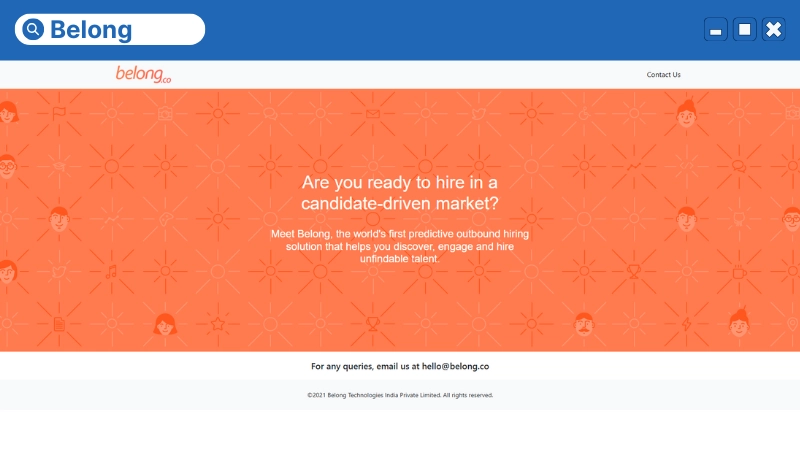
Belong is a pioneer in predictive hiring and data-driven recruitment. It blends recruitment software and marketing intelligence to help businesses identify candidates who align with their company culture. The platform uses AI in HR to forecast candidate availability and improve outreach success rates.
Strengths:
Belong redefines hiring with predictive analytics. It uses artificial intelligence to help recruiters find and engage top candidates before they apply. Its tools merge data intelligence with outbound marketing.
This proactive approach gives recruiters a competitive edge. It identifies candidates who fit both skill and culture using applicant tracking system integration and customized outreach.
Limitations:
Belong’s strength in outbound sourcing makes it less useful for internal transfers or traditional job postings. It works best for companies in tech or finance that depend on fast, high-volume recruiting.
KAMI Workforce
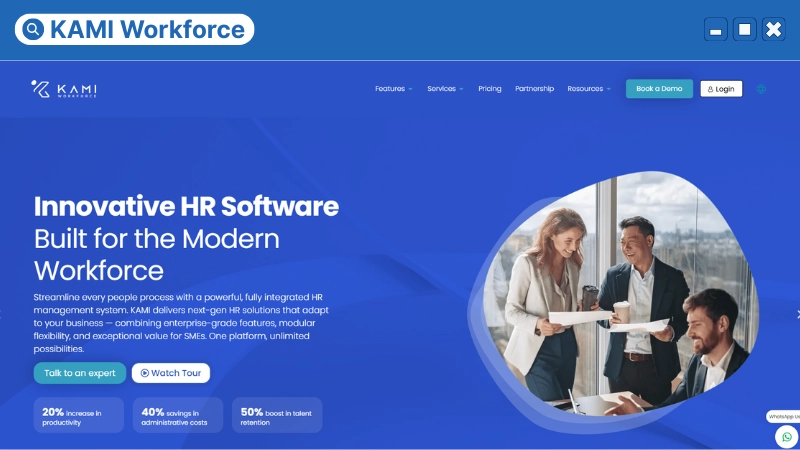
KAMI Workforce offers a combination of digital HR tools and consulting services. It provides companies with workforce analytics, payroll processing, and remote workforce management software to manage distributed teams. Its human-first design emphasizes both automation and people strategy, making it a favorite among mid-size firms expanding globally.
Strengths:
KAMI Workforce combines HR automation with professional advice. It helps companies manage attendance, payroll, and performance, while also providing valuable insights through analytics.
Its advantage lies in remote operations. Businesses use its tools to coordinate teams across time zones. KAMI’s hybrid of software and consulting creates structure for organizations that need both automation and human expertise.
Limitations:
This mix of services and technology can raise costs compared to pure SaaS options. It best fits mid-size to large firms that want personalized support and advanced HR planning rather than quick self-service tools.
Mercu
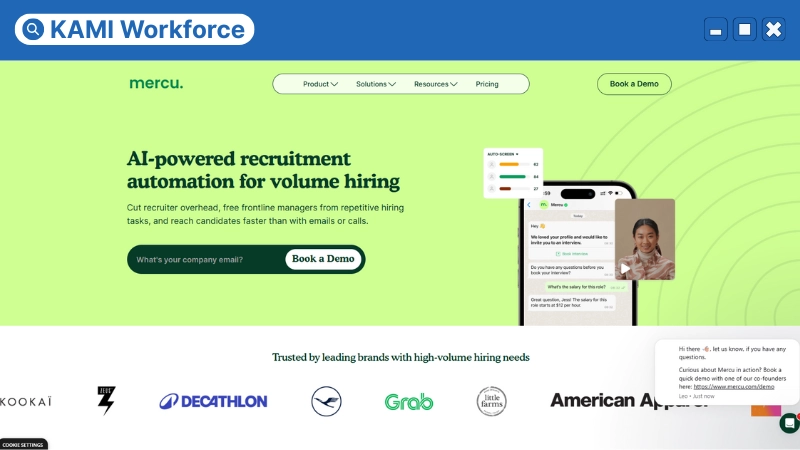
Mercu targets frontline employees often left out of corporate HR systems. It uses HR chatbots and mobile-first automation to deliver training, onboarding, and communication tools. By integrating AI in HR, Mercu makes workforce management more inclusive for industries like retail, logistics, and hospitality.
Strengths:
Mercu focuses on the frontline workforce. Its AI-powered chatbots train, onboard, and inform non-desk employees directly from their devices. It enhances communication and engagement among workers who infrequently use desktop HR systems.
Mercu’s conversational interface helps reduce turnover and boosts satisfaction. It shows how automation can reach industries that rely on large, dispersed teams.
Limitations:
Mercu’s specialization means it doesn’t cover full-suite HR needs like payroll or talent management software. It suits companies with extensive frontline operations that require rapid communication over advanced analytics.
JobCopilot
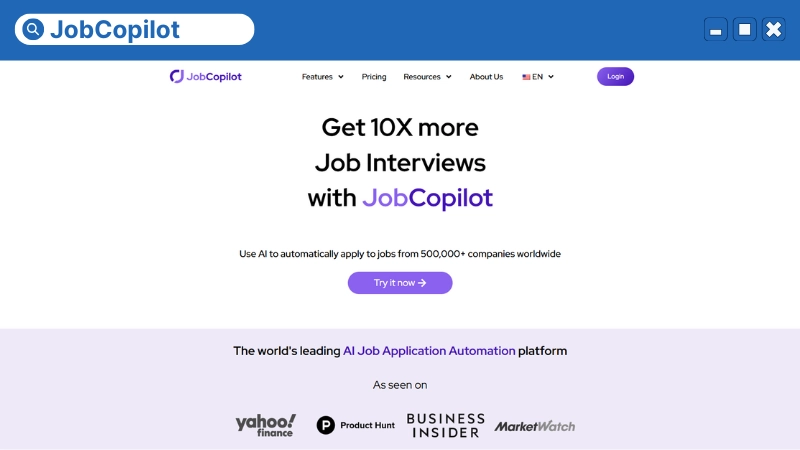
JobCopilot is an automation-driven recruitment platform designed to streamline candidate screening and outreach. It uses artificial intelligence to analyze resumes, match skills, and manage large application volumes. The platform integrates easily with recruitment software and lead qualification systems, making it a strong partner for staffing firms and HR departments seeking scale.
Strengths:
JobCopilot combines AI and automation to accelerate recruitment. It automates resume screening and candidate matching, making it valuable for staffing firms and internal recruiters. Its design allows agencies to process high volumes quickly. JobCopilot’s technology seamlessly integrates with hiring tools, enabling HR teams to reduce their time to hire.
Limitations:
Because JobCopilot began as a candidate-facing tool, its employer features are still evolving. It works best when paired with an existing applicant tracking system rather than used alone.
Want your HR tech solution to stand out like these industry leaders?
| Company | Ideal For | Key Strength | Main Limitation |
| Glints | Regional enterprises | Cross-border payroll and compliance | Complex for small firms |
| Swingvy | SMEs | Simple all-in-one HR suite | Limited analytics |
| HREasily | Multi-country firms | Regional compliance coverage | Lacks engagement tools |
| Omni HR | Digital first start-ups | Full HR innovation and integration | Still expanding analytics |
| Belong | Recruiters | Predictive outbound sourcing | Niche focus |
| KAMI Workforce | Distributed teams | Remote HR management | Higher service cost |
| Mercu | Frontline teams | Conversational AI | Narrow module range |
| JobCopilot | Recruitment agencies | AI automation and speed | Limited employer tools |
Singapore’s HR Tech Edge: Why It Matters
Singapore’s edge comes from its mix of policy, people, and technology. The city’s ecosystem supports HR automation software, HR software, and software for human resource management through grants and incentives.
Its startups influence regional HR transformation. Companies across Asia rely on these innovators for payroll, recruitment, and engagement. The top companies for human resources in the region now look to Singapore’s pioneers for models of scalability and precision.
As more firms invest in digital infrastructure, demand for human resource management system software and cloud-based HR software solutions will continue to climb. The result is a thriving environment where innovation meets practical HR needs.
Conclusion
Singapore defines what’s next for the top HR technology companies. From Glints’ regional reach to Mercu’s frontline empowerment, each innovator plays a role in shaping the region’s digital workforce transformation.
These top HR tech companies strike a better balance between compliance, usability, and automation than ever before. Their strengths and limitations reflect a market maturing through innovation, collaboration, and scale.
As 2025 unfolds, Singapore will remain the launchpad for the best HR tech companies driving Asia’s next evolution in people management — powered by AI, analytics, and an unshakable focus on efficiency.