MQL vs SQL vs SQO: Definitive Lead Qualification Guide
Learn the difference between MQL vs SQL vs SQO and how each stage helps sales and marketing teams qualify leads and improve conversions.
 Rebecca Matias
Rebecca Matias is Callbox's COO with 18 years of experience scaling B2B pipeline through data-driven outbound marketing, lead generation, and sales development.
View full bio of Rebecca Matias
Every business leader seems to operate on a custom definition of lead qualification stages. Some executives consider every web form submitter an MQL, while others convert CRM records into opportunities the moment a prospect accepts an introductory call. While industry definitions vary based on sales cycle length and deal complexity, failing to establish standardized qualification standards creates persistent friction between sales and marketing teams.
When your go-to-market teams lack a unified lead classification framework, your sales pipeline becomes inflated with unvetted prospects. Standardizing the definitions for MQL vs SQL vs SQO establishes strict boundaries across your revenue engine. This alignment ensures that marketing generates high-intent prospects, sales development representatives qualify viable prospects, and account executives focus exclusively on forecastable revenue opportunities.
A strong revenue engine connects lead generation services with qualified sales appointments, ensuring that prospects move from initial engagement to verified sales conversations rather than simply accumulating in a CRM.
Wondering where your next qualified leads will come from?
What is an MQL? (Marketing Qualified Lead)
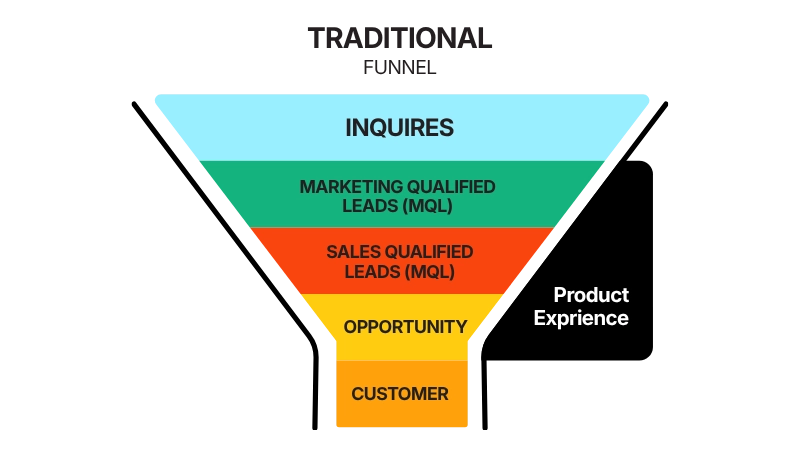
An MQL (Marketing Qualified Lead) is a contact who has actively engaged with your marketing campaigns and matches your ideal customer profile. At this top-of-funnel stage, lead qualification relies on automated scoring algorithms and behavioral tracking rather than direct human interaction. An MQL indicates that a contact demonstrates interest in a specific problem or topic, but it does not confirm an active intent to purchase your solution.
However, engagement alone does not guarantee that an MQL will become sales-ready. Improving lead quality requires stronger targeting, qualification criteria, and feedback between marketing and sales.
Identifying True MQLs
Marketing teams evaluate digital footprints to score and flag prospective buyers automatically. Effective lead scoring models combine demographic criteria with behavioral actions to identify high-potential contacts:
- Behavioral Triggers: Downloading gated industry whitepapers, registering for webinars, or repeatedly visiting high-intent site pages such as service overviews.
- Firmographic Alignment: Matching your ideal customer profile based on target job titles, company size, industry vertical, and geographic location.
- Engagement Thresholds: Accumulating lead scoring points through repeated interactions over a specified time window
The Operational Role of MQLs
An MQL represents an educated hypothesis generated by software. It signals that a prospect merits ongoing marketing automation campaigns, customized content sequences, or preliminary review by sales development representatives. Relying on MQLs alone to build a revenue forecast introduces severe pipeline risk, as these contacts have not yet been qualified by a human representative.
These principles become more effective when they are applied through successful lead generation campaigns that combine precise ICP targeting, personalization, multi-channel outreach, and continuous optimization.
 Industry Insight: Lead scoring rewards engagement, not intent. A competitor auditing your content and a buyer with budget can score identically, which is why MQL volume rarely predicts revenue.
What is an SQL? (Sales Qualified Lead)
An SQL (Sales Qualified Lead) is a prospect that your sales team, typically a Sales Development Representative (SDR), has vetted through direct, two-way communication and confirmed as worth active sales pursuit. The transition from MQL to SQL marks the precise boundary where human verification replaces automated digital scoring. A structured sales outreach strategy helps SDRs turn that initial qualification into meaningful two-way conversations with prospects.
Identifying True SQLs
Sales development representatives conduct initial outreach to validate whether an MQL warrants additional resource allocation. An SQL confirmation requires validating several core parameters through direct conversation or explicit inbound requests:
- Direct Interaction: The prospect responds to outbound prospecting campaigns, accepts a discovery call, or explicitly submits a sales contact request form.
- Problem Recognition: The prospect confirms during initial dialogue that their organization faces a specific challenge that your platform addresses.
- Scope & Fit Verification: The representative verifies that the target account operates within your serving capabilities and possesses basic operational readiness.
Once an SQL agrees to a meeting, qualification does not stop at booking. Maintaining strong appointment show rates requires confirming buyer intent, providing meeting context, and actively nurturing the prospect before the scheduled convers.
Related: How To Turn Your Leads into SQL.
The Operational Role of SQLs
An SQL signifies formal sales acceptance. By marking a contact as an SQL, the sales development team agrees to spend active labor hours cultivating the relationship and scheduling a comprehensive discovery session with an Account Executive. At this point in your CRM, the record remains in a lead or contact state rather than an active opportunity.
Expert Tip: Make the MQL to SQL handoff a two-way gate. If SDRs cannot reject a lead with a logged reason, marketing never learns which scoring signals are noise.
What is SQO? (Sales Qualified Opportunity)
An SQO (Sales Qualified Opportunity) is an SQL that has cleared a strict, standardized qualification gate during formal discovery and officially converts into an active, forecastable opportunity in your CRM. Account Executives validate SQOs to protect executive forecasting accuracy and ensure that active pipeline metrics reflect real deals with purchasing momentum.
The 5-Point Gate for SQO Conversion
For an account executive to convert an SQL into an SQO, the prospect must satisfy five strict criteria during deep-dive discovery calls:
- ICP Fit: Confirmed technical and commercial alignment with your target market specifications.
- Identified Pain: The buyer explicitly articulates an urgent business problem that your solution directly resolves.
- Budget Potential: The prospect confirms available capital or outlines a clear internal process to secure funding.
- Decision-Maker Engagement: Your sales team interacts directly with the economic buyer, executive sponsor, or designated decision committee.
- Scheduled Next Step: A formal evaluation milestone, such as a product demo, technical scope, or security review, is confirmed on the calendar.
These qualification requirements become particularly important in enterprise lead generation, where complex buying committees, longer sales cycles, and multiple stakeholders can make pipeline quality difficult to assess.
Expert Tip: Of the five criteria, decision-maker engagement is the one teams skip. A confirmed pain with no economic buyer in the room is the most common source of a stalled forecast.
MQL vs SQL vs SQO: The Structural Differences
Establishing standard boundaries between these three stages resolves the persistent conflict between sales and marketing teams. The comparison table below outlines how each stage functions across your go-to-market engine:
| Metric / Dimension | MQL (Marketing Qualified Lead) | SQL (Sales Qualified Lead) | SQO (Sales Qualified Opportunity) |
| Funnel Stage | Top / Mid-Funnel (Awareness) | Mid-Funnel (Consideration) | Late Mid-Funnel / Pipeline Opportunity |
| Primary Owner | Marketing Operations / Demand Gen | SDR / BDR Team | Account Executive (AE) |
| Qualification Method | Digital behavioral tracking & automated scoring | Direct 1-on-1 human verification (Discovery) | Rigorous 5-point qualification gate |
| CRM Object State | Unconverted Lead / Contact Record | Lead Status: “Sales Qualified” or “Working” | Converted Active Opportunity Record |
| Conversion Benchmark | 20% to 40% convert to SQL | 30% to 50% convert to SQO (Inbound) | 15% to 30% convert to Closed Won |
| Primary Signal | “I am researching a industry challenge.” | “I am willing to speak with a representative.” | “We have a project, budget, and timeline.” |
Related: Sales and Marketing Alignment Strategies
Industry Qualification Frameworks for the SQO Gate
Selecting the correct qualification framework depends on your deal size, sales cycle complexity, and buyer persona. Implementing an established methodology ensures that your account executives apply consistent discipline when evaluating prospective SQOs.
BANT (Budget, Authority, Need, Timing)
BANT remains the industry standard for transactional, high-velocity sales environments. It evaluates whether the buyer possesses verified funding, purchasing power, an active business need, and an immediate implementation timeline. While efficient for shorter sales cycles, BANT can dismiss enterprise opportunities prematurely if budget allocations depend on demonstrating return on investment first.
MEDDPICC (Metrics, Economic Buyer, Decision Criteria, Decision Process, Paper Process, Identify Pain, Champion, Competition)
MEDDPICC provides the rigor required for complex enterprise sales cycles involving large buying committees. This framework forces account executives to identify quantifiable business metrics, gain access to the true economic decision-maker, and map out legal, procurement, and competitive landscapes. Enforcing MEDDPICC at the SQO gate prevents enterprise deals from stalling late in the sales cycle.
Technology can also influence how qualification frameworks are executed. For organizations evaluating an AI SDR vs. outsourced SDR, the critical question is not simply automation versus human execution, but which model can consistently validate buying intent and qualification criteria.
CHAMP (Challenges, Authority, Money, Prioritization)
CHAMP reorganizes traditional qualification by leading with customer challenges rather than immediate budget questions. This framework encourages discovery reps to focus on buyer friction first, establishing value before evaluating financial bandwidth. CHAMP works exceptionally well for innovative SaaS solutions where buyers may not have an existing line-item budget pre-allocated.
Industry Insight: Framework choice matters less than consistency. Two AEs applying BANT the same way produce a cleaner forecast than a team split between MEDDPICC and personal judgment.
Building a Standardized Lead Handoff Process
Transitioning prospects seamlessly from MQL to SQL and SQO requires explicit operational guidelines between marketing, sales development, and account execution teams. Implementing structured service level agreements prevents revenue leakage and accelerates pipeline velocity.
Step 1: Establish Automated Lead Scoring Thresholds
Collaborate with revenue operations to build a dynamic scoring rubric in your marketing automation system. Assign positive point values for high-intent actions like pricing page visits, while deducting points for non-buyer behaviors like career page views. Set a clear numeric threshold that automatically triggers an MQL handoff to your SDR team. Standardized handoffs become even more important in enterprise sales, where multiple stakeholders and longer buying cycles create more opportunities for qualified prospects to stall between sales stages.
Step 2: Enforce Strict Response Speed SLAs
Speed to lead directly impacts MQL-to-SQL conversion rates. Establish a firm Service Level Agreement requiring sales development representatives to initiate outreach within five minutes of an inbound MQL signal. Prompt follow-up captures buyer intent while interest remains high, dramatically increasing initial discovery booking rates.
Step 3: Mandate CRM Field Validation for Opportunities
Prevent premature opportunity creation by configuring strict CRM validation rules. Require account executives to populate mandatory fields including verified pain points, decision-maker job titles, and agreed-upon next steps before the CRM allows converting a lead into an SQO stage opportunity.
Scaling Your Revenue Strategy
Distinguishing between MQL vs SQL vs SQO eliminates pipeline inflation and protects your Account Executives’ calendar for high-value deals. When marketing targets verified MQLs, SDRs validate genuine SQLs, and AEs forecast only fully vetted SQOs, your organization gains full control over its revenue growth.