List of Top RPA Companies in 2026 (Compared and Ranked)
Explore leading RPA companies that help organizations automate repetitive processes, improve productivity, and scale operations with intelligent automation.
 Rebecca Matias
Rebecca Matias is Callbox's COO with 18 years of experience scaling B2B pipeline through data-driven outbound marketing, lead generation, and sales development.
View full bio of Rebecca Matias
Looking for a clear, no-fluff list of RPA companies worth your shortlist in 2026? You’re in the right place.
The market is crowded. Every vendor claims AI-powered everything. And if you pick wrong, you’re stuck with months of painful implementation and licensing fees that balloon fast.
This guide cuts through it. Below you’ll find the 10 RPA companies that matter right now, what each one does best, and a simple framework for choosing between them. And if you sell into this space, the same list doubles as a map of where RPA lead generation gets competitive, so we’ve included a section on appointment setting and lead generation for vendors further down.
Looking to grow your RPA business with a steady pipeline of qualified opportunities?
What Do RPA Companies Actually Do?
RPA (Robotic Process Automation) companies build software “bots” that handle repetitive, rule-based work. Think invoice processing, data entry, KYC checks, claims handling, and report generation.
The category splits into two groups:
- Platform vendors sell the automation software itself. UiPath, Automation Anywhere, and Microsoft fall here.
- RPA agencies and service providers help you implement, scale, and manage those platforms. Firms like Accenture, Cognizant, and Genpact play in this lane, along with specialized boutique RPA agencies.
In 2026, the line between RPA and AI is blurring. Every major vendor now positions bots as the execution layer under goal-driven AI agents. Keep that shift in mind as you evaluate.

Enterprise RPA Firm Acquire Quality RPA Leas with Callbox Lead Gen Campaigns
Callbox helped successfully Successfully completed an ABM Lead Generation and Appointment Setting campaign for an IT leader
View Case StudyThe List of RPA Companies to Know in 2026
Here’s the shortlist, starting with the market leader.
1. UiPath
The undisputed heavyweight. UiPath holds roughly a third of the market, reported $1.61 billion in revenue for fiscal year 2026, and is the most widely adopted RPA platform, used by a majority of the Fortune 500.
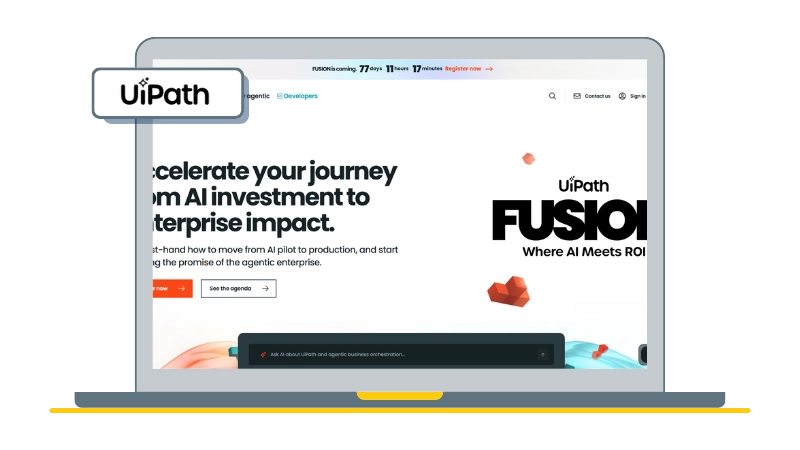
Best for: Enterprises that want the largest ecosystem, deepest training resources (UiPath Academy), and fast time-to-value.
Watch out for: Complex licensing that gets expensive for smaller teams.
2. Automation Anywhere
The strongest cloud-native challenger. Its Automation 360 platform was rebuilt from the ground up for cloud, and the company is pushing hard into agentic AI.
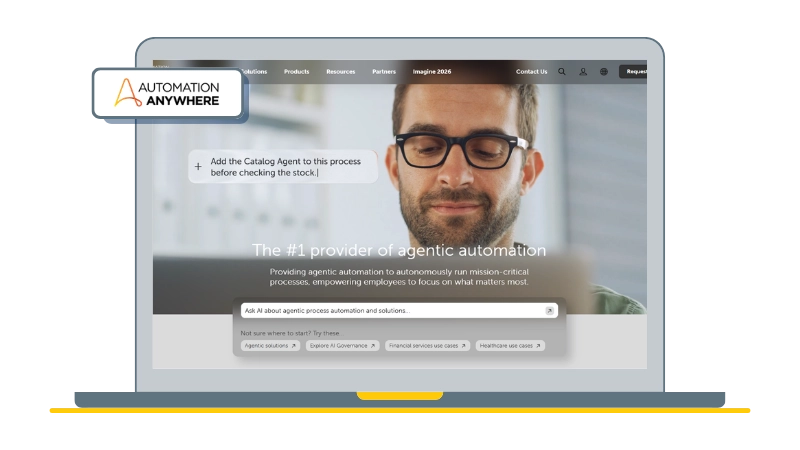
Best for: Cloud-first organizations that want scalability without heavy on-prem infrastructure.
Watch out for: A steeper learning curve than some rivals report.
3. Microsoft (Power Automate)
Microsoft entered late but now ranks as a decisive #3 in analyst evaluations. If your business already runs on Microsoft 365 and Azure, Power Automate is the path of least resistance.
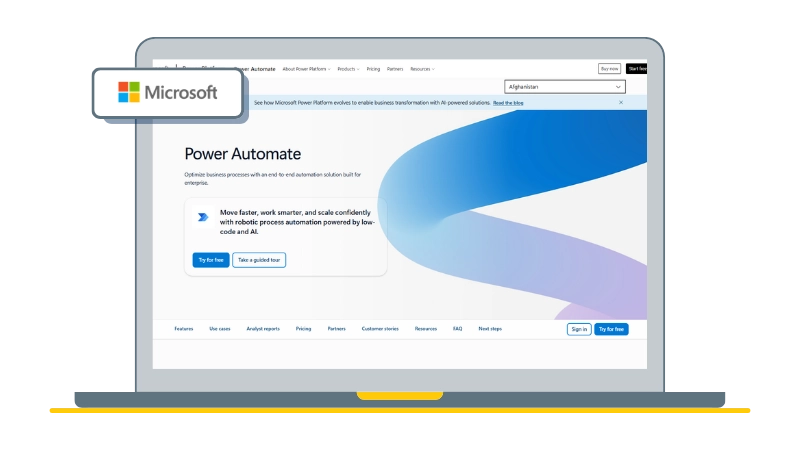
Best for: Microsoft-centric teams that want affordable, license-bundled automation starting around $15 per user per month.
Watch out for: Vendor lock-in and limited flexibility outside the Microsoft stack.
4. SS&C Blue Prism
The company that coined the term “RPA.” Acquired by SS&C Technologies in 2022, Blue Prism remains the go-to for banks, insurers, and pharma companies where audit trails are non-negotiable.
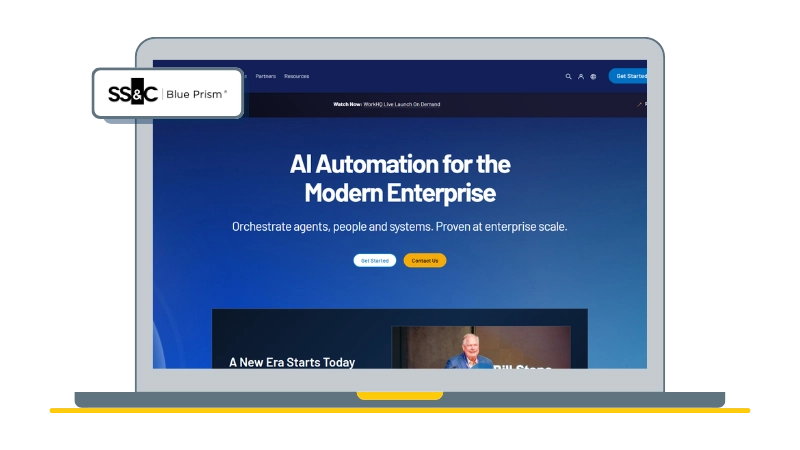
Best for: Heavily regulated industries that prioritize governance, security, and compliance.
Watch out for: Less approachable for non-technical users; you’ll need trained RPA developers.
5. Pegasystems
Pega combines RPA with powerful case management and process orchestration. It’s less of a bot factory and more of an end-to-end workflow engine.
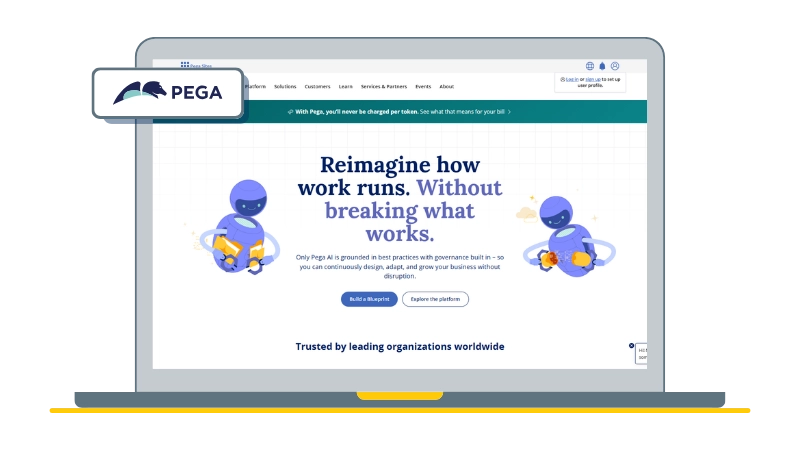
Best for: Large enterprises automating complex, multi-step processes that span departments.
6. SAP (Build Process Automation)
SAP’s automation suite offers the deepest native integration with SAP environments of any vendor on this list.
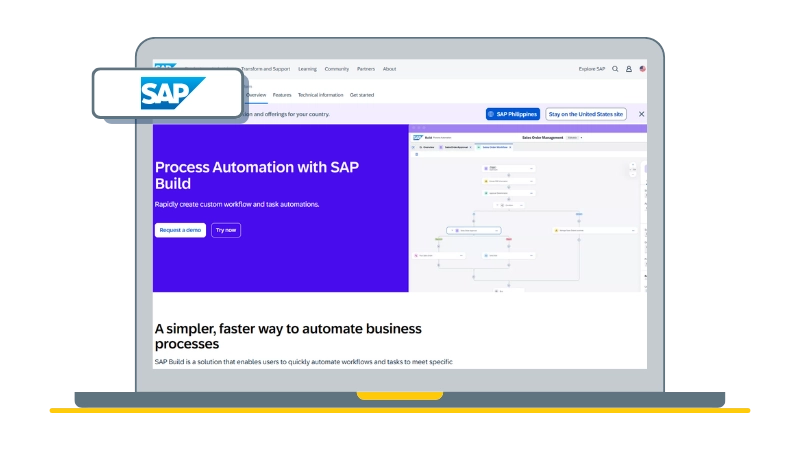
Best for: Companies running SAP-heavy workflows in finance, supply chain, or manufacturing.
7. IBM
IBM pairs RPA with its broader AI portfolio, appealing to enterprises that want automation embedded in a larger digital transformation program.
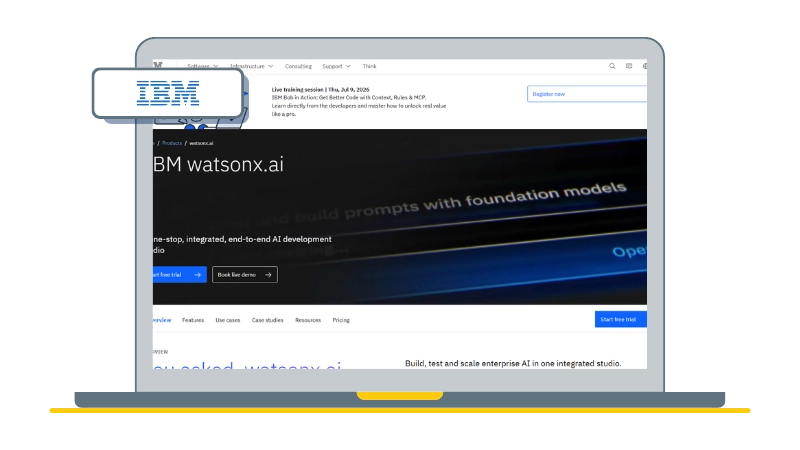
Best for: Complex enterprise IT environments with existing IBM relationships.
8. NICE
NICE dominates attended automation, where bots work alongside humans in real time. Its sweet spot is the contact center.
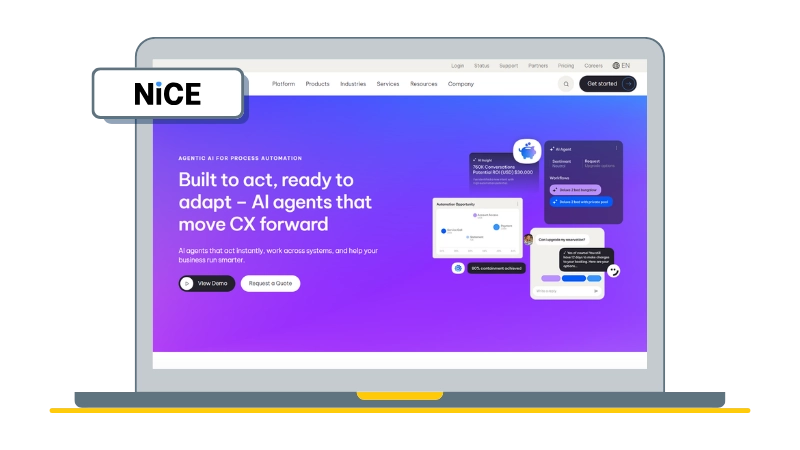
Best for: Customer service and contact center operations that need desktop guidance for agents.
9. Appian
A Gartner-recognized RPA provider built around low-code development. Appian lets teams build custom business apps with automation baked in.
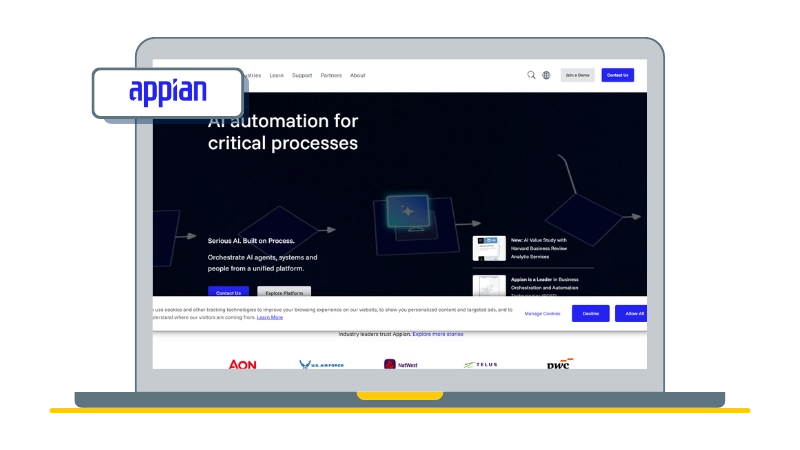
Best for: Organizations that want automation plus rapid application development in one platform.
10. WorkFusion
A specialist rather than a generalist. WorkFusion builds pre-trained AI “digital workers” focused on financial crime compliance, AML, and sanctions screening.

Best for: Banks and fintechs automating compliance-heavy workflows out of the box.
Are you one of these RPA companies (or competing with them)? Standing out in a crowded market takes more than a great platform. Callbox helps technology vendors turn market noise into qualified sales conversations.
RPA Companies Compared: Side-by-Side Table
| Company | HQ | Best For | Core Strength | Global Reach |
| UiPath | New York, USA | Enterprise-wide automation | Largest ecosystem; 7-time Gartner MQ leader | 100+ countries |
| Automation Anywhere | San Jose, USA | Cloud-first enterprises | Cloud-native platform with agentic AI | 90+ countries |
| Microsoft | Redmond, USA | Microsoft 365 environments | Ecosystem integration; low entry cost | Global (Azure footprint) |
| SS&C Blue Prism | London, UK | Regulated industries | Governance, security, auditability | 170+ countries via SS&C |
| Pegasystems | Cambridge, USA | Complex process orchestration | RPA + case management combined | Global enterprise base |
| SAP | Walldorf, Germany | SAP-centric operations | Deepest native SAP integration | 180+ countries |
| IBM | Armonk, USA | Enterprise IT transformation | RPA embedded in broader AI portfolio | 170+ countries |
| NICE | Hoboken, USA / Israel | Contact centers | Attended (human-in-loop) automation | 150+ countries |
| Appian | McLean, USA | Low-code app + automation | Rapid development with built-in RPA | Global enterprise base |
| WorkFusion | New York, USA | Financial crime compliance | Pre-trained AI digital workers | Banking hubs worldwide |
How to Choose from This List of RPA Companies
Don’t let analyst rankings override your actual constraints. Ask these four questions first:
- What’s your existing stack? If you live in Microsoft 365, Power Automate wins on integration alone. If you’re SAP-heavy, SAP Build is the obvious first look.
- How regulated is your industry? Banking, insurance, and pharma teams should weight governance heavily, which favors Blue Prism and WorkFusion.
- Who will build the bots? Citizen developers thrive on UiPath and Power Automate. Blue Prism assumes a trained RPA team.
- What’s your real budget? Entry points range from $15/user/month to enterprise contracts exceeding $200,000 per year. Get total cost of ownership in writing, including licensing tiers and add-ons.
 Expert Tip: Before licensing any bot, check whether an API exists for the process. RPA earns its cost where there is no API, like legacy desktop software. Automating an API-reachable step with a UI bot is the most common (and expensive) mistake buyers make. Splitting the work between cheap integration tools and true RPA can cut your license bill dramatically.
How to Measure RPA ROI: A 5-Step Framework
Deloitte’s Global RPA Survey found that organizations that scaled RPA achieved payback in roughly 12 months, and top performers earned nearly 4x their automation investment. Here’s how to land on the right side of that curve:
- Baseline the process cost. Document hours spent, error rates, and rework costs for each target process before automation. No baseline, no ROI story.
- Calculate total cost of ownership. Include licenses, implementation, maintenance, infrastructure, and training. Not just the sticker price.
- Set measurable targets. Typical benchmarks: 30–50% process time reduction and 25–40% operating cost savings per deployment cycle.
- Track redeployed hours, not just saved hours. ROI compounds when freed-up staff time flows into revenue-generating work. Measure where those hours actually go.
- Review quarterly and scale winners. Kill underperforming bots fast. Double down on the automations that beat their targets.
Industry Insight: BFSI (banking, financial services, and insurance) remains the biggest RPA spender, accounting for roughly 29% of market revenue in 2025, driven by KYC, compliance, and reconciliation workloads. Healthcare is the fastest-growing vertical, expanding at nearly 19% CAGR as providers automate claims and patient records (Precedence Research).
For RPA Vendors: Visibility Is the New Battleground for RPA Leads
Here’s the flip side of this article. If you sell RPA, this list is your competitive reality.
A market growing at 24% annually attracts everyone. Buyers now shortlist vendors before ever visiting a website, often through AI-assisted research. If your company isn’t showing up in comparisons like this one, you’re invisible at the exact moment decisions get made.
That’s why the fastest-growing RPA agencies pair product marketing with outbound. Content builds authority, but a steady pipeline of RPA leads comes from actively reaching the finance, healthcare, and IT decision-makers who are budgeting for automation right now. The vendors that win treat lead gen strategies for robotic process automation as a discipline, not an afterthought.
Selling automation into a noisy market? Callbox’s human + AI outbound teams have generated qualified appointments for software and technology companies for over 20 years. See how it works.
How We Selected These Companies
This list draws on 2025–2026 analyst evaluations (including Gartner’s Magic Quadrant for RPA, where UiPath, Automation Anywhere, Microsoft, and SS&C Blue Prism were named leaders), published market share data from Precedence Research and Fortune Business Insights, vendor revenue disclosures, and independent platform comparisons.
We weighted market position, analyst recognition, platform capability, and clarity of fit for specific buyer types. No vendor paid for placement, and rankings reflect overall market standing rather than suitability for every use case.