Top Lead Generation Companies for IoT Industry
Compare lead generation companies for IoT and learn how they help technology providers reach decision-makers, qualify prospects, and grow pipeline.
 Rebecca Matias
Rebecca Matias is Callbox's COO with 18 years of experience scaling B2B pipeline through data-driven outbound marketing, lead generation, and sales development.
View full bio of Rebecca Matias
Which lead generation companies for the IoT industry are worth considering? Callbox, LevelUp Leads, Leadium, EBQ, SalesHive, and Cognism stand out for documented work in IoT, industrial technology, connected solutions, or complex B2B tech sales. The right choice depends on whether you need multi-channel account engagement, enterprise SDR support, industrial outreach, data-first prospecting, or better account and contact data.
Selling an IoT solution usually means selling to more than one decision-maker. Engineers may care about integration and performance, operations teams about deployment, IT about security, and finance about business value. Generating quality IoT leads therefore depends on reaching the right people with messages that reflect their different priorities.
Looking for more quality IoT leads?
Why Does IoT Lead Generation Require a Different Approach?
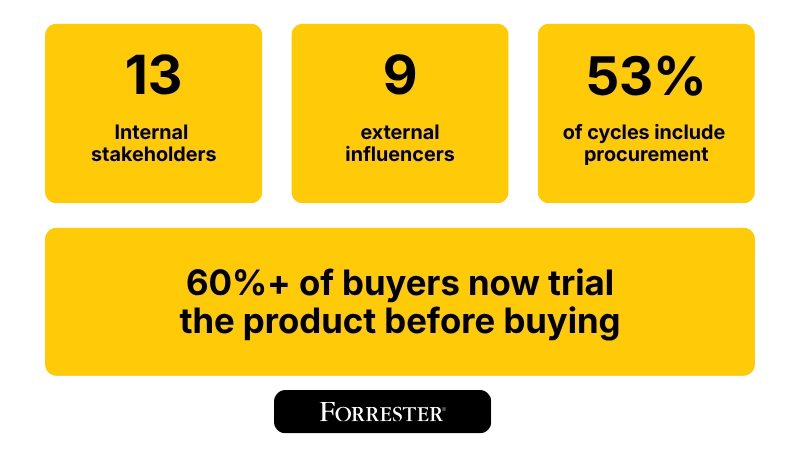
Forrester’s 2026 business buying research found that a typical B2B purchase involves 13 internal stakeholders and 9 external influencers. Procurement is a decision-maker in 53% of buying cycles. For complex IoT purchases, outreach may need to engage technical, operational, security, financial, and procurement stakeholders inside the same account.
That is why lead generation for IoT companies requires more than a large database and a standard sequence. The message has to change with the audience, since each role judges the solution by a different standard.
More than 60% of business buyers now use a product trial before buying, according to Forrester’s 2026 buyer research. For IoT sellers, the first meeting may be only the beginning of a longer path through evaluation, pilot, procurement, and deployment.
 Industry Insight
Thirteen internal stakeholders is the reason IoT campaigns stall at the meeting stage. A single technical champion can advance an evaluation and still lack the authority to clear procurement or security review.
What Makes IoT Outreach Different From General B2B Prospecting?
IoT sellers often have to connect a technical product to a business outcome. A message that works for an IT leader may not answer the questions of an operations manager, engineer, procurement lead, or finance stakeholder.
The target market can also be unusually specific. A campaign may need to narrow accounts by industry, physical operating environment, equipment type, installed technology, geography, or use case before job titles are even considered. That makes account research and persona mapping especially important.
Finally, initial interest does not always move straight from a meeting to a contract. Trials and pilots can become important proof points in complex technology purchases. The lead generation partner therefore needs to support conversations that are relevant enough to move prospects toward evaluation, not simply maximize meeting volume.
Callbox Helped IoT Firm Convert Customers Into Sales Faster
Callbox helped an enterprise software company capture high-intent prospects during an exhibition, generating 56 SQLs and 73 MQLs.
View Case StudyWhat Should IoT Companies Look for in a Lead Generation Partner?
Relevant technical experience
Look for evidence that the provider has worked with IoT, industrial technology, connected products, hardware, OT, or another complex technical market. This reduces the risk of generic outreach that misses how the product is actually evaluated.
Multi-stakeholder targeting
A strong partner should be able to map several relevant roles inside the same account and adjust messaging by persona instead of treating every contact as the same buyer.
Research and data quality
For niche IoT markets, list size is less important than fit. Ask how the agency builds target accounts, validates contacts, and identifies the roles most likely to influence a purchase.
A measurement model beyond booked meetings
Meetings matter, but IoT teams should also be able to track qualified opportunities, trials or pilots, pipeline, and revenue. This makes it easier to judge whether lead generation is creating real sales progress.
Expert Tip
Agree on the qualification definition in writing before launch. In IoT, a meeting with an engineer and a meeting with an operations director look identical on a report and mean completely different things for pipeline.
How Did We Select These Six IoT Lead Generation Companies?
We used four practical filters rather than treating every general technology company as an IoT specialist:
- Relevant proof: documented IoT, industrial, connected-device, OT, hardware, or similarly complex technology work.
- Market coverage: the reach and resources to support clients across their target markets.
- Outbound capability: services that can support appointment setting, account research, or multi-channel prospecting.
- Verifiable evidence: public case studies, client reviews, or other proof that readers can check.
Which IoT Lead Generation Companies Should You Compare?
| Company | Market Reach | Best For | Core Strength | IoT Proof |
| Callbox | Global | Complex IoT accounts | Multi-channel ABM | Industrial equipment ABM program |
| LevelUp Leads | US | OT and industrial buyers | Plant-floor outreach | Vodafone IoT, TDK SensEI |
| Leadium | US and international | Enterprise IT and technology accounts | Multi-touch SDR programs | Rackspace Technology (IT services) |
| EBQ | US | Full-funnel outsourced sales | CRM-integrated sales teams | IT and manufacturing client base |
| SalesHive | US (with Philippines-based delivery) | SaaS, fintech, and technical buyers | Flat-rate multi-channel SDR | SaaS, fintech, and cybersecurity frameworks |
| Cognism | UK, US, and international | Account and contact research | B2B contact and intent data | Supports persona and account mapping for IoT buying committees |
What Does Each IoT Lead Generation Company Offer?
1. Callbox
Callbox combines account-based marketing with phone, email, LinkedIn, and digital touchpoints. That multi-channel approach fits IoT companies that need to engage several people inside the same target account.
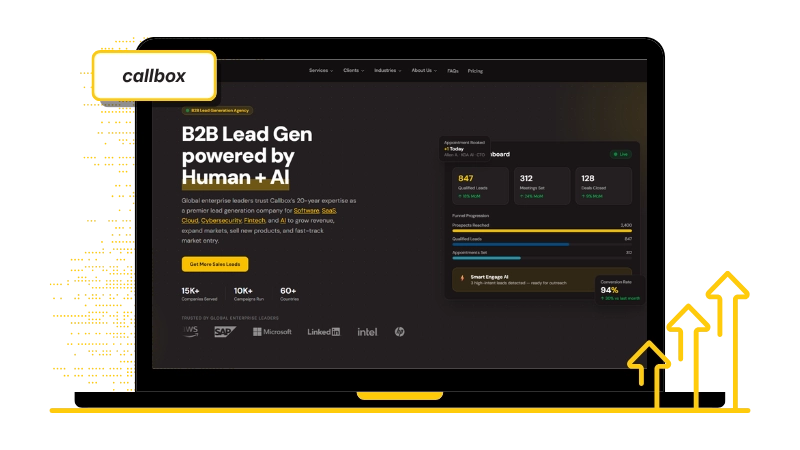
Its experience includes IoT-adjacent industrial technology markets such as OT security, fleet management, manufacturing, and connected infrastructure. In one account-based program for an industrial equipment manufacturer, Callbox generated 82 qualified sales appointments and 41 marketing qualified leads by mapping outreach to the different roles involved in an equipment purchase decision.
Best for: IoT companies that need coordinated outreach across technical and business decision-makers.
2. LevelUp Leads
LevelUp Leads has worked across IoT, sensors, predictive maintenance, energy, and OT security. Its client examples include Vodafone IoT, TDK SensEI, and ShipShape AI.

Best for: Industrial IoT, sensor, and connected-technology companies targeting OT, engineering, and operations buyers.
3. Leadium
Leadium runs multi-touch SDR programs that combine email, LinkedIn, and cold calls, built to reach technical buyers who typically resist standard outbound sales. Its work with Rackspace Technology, an IT and cloud services provider, produced a 35% increase in booked meetings and a four-million-dollar sales pipeline within six months, while saving the client’s team more than 200 hours a month. That kind of layered, multi-stakeholder outreach translates to accounts where technical and business buyers sit side by side.

Best for: IoT and technology companies that need a dedicated SDR team to break into accounts where technical buyers are hard to reach.
4. EBQ
EBQ is a full-funnel outsourced sales and marketing provider covering CRM consulting, data, appointment setting, and sales support, operating out of Austin since 2006. Its client base includes a meaningful share of information technology and manufacturing companies, reflecting experience with both software buyers and equipment-side purchasing processes.
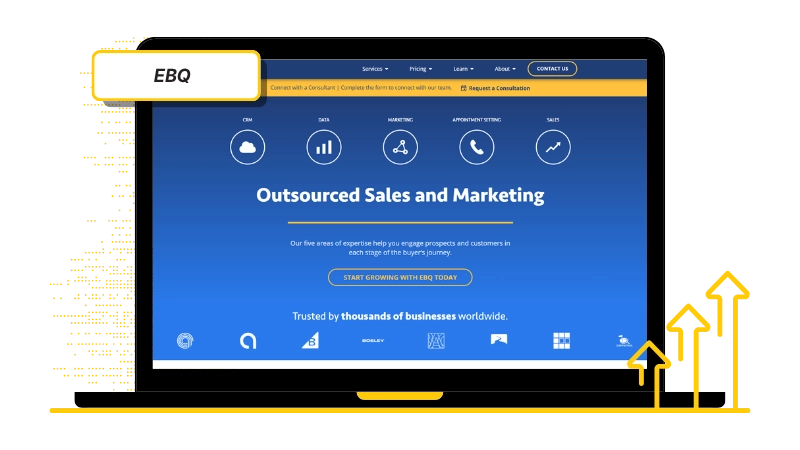
Best for: IoT companies that want one partner to manage CRM setup, data, and outbound sales together rather than coordinating separate vendors.
5. SalesHive
SalesHive pairs US and Philippines-based SDR teams with AI-assisted outbound tools across cold calling, cold email, and LinkedIn outreach. It maintains dedicated frameworks for SaaS, fintech, and cybersecurity, and trains its callers to handle technical buyers without sounding scripted, a detail manufacturing clients have specifically valued.

Best for: IoT companies that want flat-rate, month-to-month outbound support without a long-term contract.
6. Cognism
Cognism is a B2B contact data and sales intelligence platform rather than a managed outbound agency. IoT companies often pair it with an SDR team, or use it in-house, to identify the engineering, operations, IT, procurement, and finance contacts inside a target account before outreach begins.
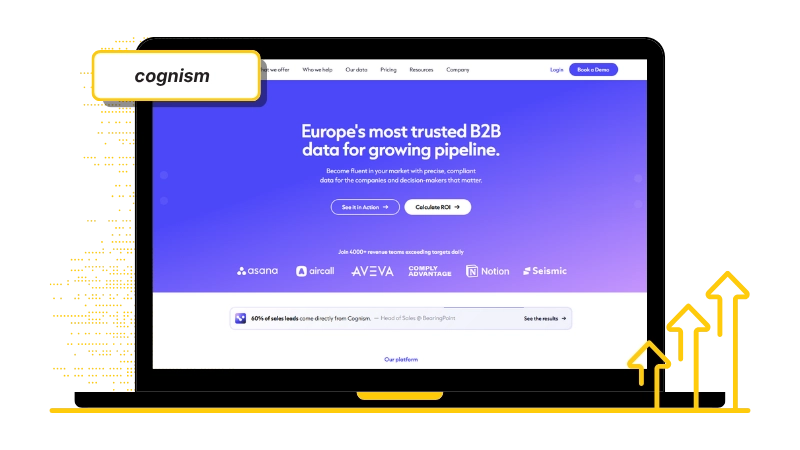
Best for: IoT companies that already run outbound in-house but need better account and contact data to support multi-stakeholder targeting.
Expert Tip
Ask each provider to show how it would change the message for at least three buyer roles in the same target account. If every persona gets essentially the same pitch, the campaign may struggle with complex IoT buying committees.
Which Partner Fits Your IoT Sales Motion?
If you sell into plants, manufacturing, energy, or operational environments, LevelUp Leads has particularly relevant experience with industrial and technical audiences. For enterprise or IT-heavy accounts, Leadium’s multi-touch SDR approach and Callbox’s multi-channel account-based approach may be more relevant.
EBQ stands out when you want a single vendor to manage CRM, data, and outbound sales together. SalesHive fits companies that want flexible, flat-rate SDR support without a long commitment, and Cognism fits teams that need better account and contact data to support a targeting strategy they already run in-house.
The goal is not simply to generate more contacts. It is to create the right conversations with the people who can move an IoT opportunity toward evaluation, pilot, purchase, or broader deployment.
What Should You Ask Before Hiring an IoT Lead Generation Partner?
Can they show relevant IoT or industrial results?
Ask for proof from connected devices, industrial systems, hardware, IoT platforms, or a market with a similar buying process. General technology experience alone may not show that the team can handle specialized personas. Learn more about how to generate and scale industrial leads.
How do they define a quality IoT lead?
Agree on target industries, account characteristics, buyer roles, pain points, and qualification signals before launch. A booked meeting is not automatically a qualified opportunity.
How will they reach different members of the buying committee?
Ask how messaging changes for technical, operational, IT, procurement, and executive audiences and whether the agency can coordinate outreach across several contacts in one account.
What happens after the first meeting?
For IoT companies, progress may include technical evaluation, pilots, procurement, and deployment. Ask whether reporting follows opportunities beyond appointments and how the handoff to your internal sales team works.
Industry Insight
Pilot conversion is the honest measure of IoT lead quality, and it surfaces months after the meeting. Programs judged only on appointment volume tend to optimize toward the contacts easiest to book.
How does the agency manage outreach compliance?
Outreach requirements vary by market and channel. Ask how the provider manages contact data, consent requirements, opt-outs, calling restrictions, and other applicable regulations in the regions you plan to target.
Check out this checklist on how to penetrate the tech market in the US.
How Should IoT Companies Measure Lead Generation ROI?
Price matters, but cost per lead alone can be misleading for complex IoT sales. A smaller number of well-matched accounts may be more valuable than a large volume of contacts that never reach evaluation.
The Bridge Group’s 2025 SDR research reported median on-target earnings of $80,000 and an average ramp time of three months for in-house SDRs. When comparing an outsourced program with an internal team, include recruiting, management, data, technology, training, and ramp time rather than comparing only monthly fees.
A simple ROI framework is to track the same cohort of sourced opportunities through the funnel:
- Meetings held
- Qualified opportunities created
- Trials or pilots started
- Pilots converted into broader deployments
- Pipeline and closed revenue generated
A basic financial check can then be expressed as: ROI = [(Revenue attributable to sourced opportunities − Total lead generation cost) ÷ Total lead generation cost] × 100. For long-cycle IoT deals, also track pipeline and pilot-to-deployment conversion before there is enough closed revenue to calculate ROI reliably.
Expert Tip
Do not wait for closed revenue to judge an IoT program. Track pilots started and pilot-to-deployment rate, which move quarters earlier and predict the same outcome.
Which IoT Lead Generation Partner Should You Choose?
No single provider on this list is the right fit for every IoT company. The better question is which buying motion matches your own: industrial and plant-floor buyers point toward LevelUp Leads, enterprise or IT-heavy accounts point toward Leadium or Callbox, a single vendor covering CRM and data alongside outreach points toward EBQ, flexible month-to-month SDR support points toward SalesHive, and better account and contact data to power an in-house team points toward Cognism.
Whichever partner you choose, hold it to the same standard. It should be able to name the buyer roles inside a target account, show how its message changes for each one, and report on progress past the first meeting, through evaluation, pilots, and deployment. That is what separates a partner that fits complex IoT sales from one built for simpler, single-stakeholder deals.
What Else Should IoT Sellers Know?
What does a lead generation company for IoT businesses do?
It identifies target accounts and decision-makers, runs outbound campaigns, qualifies prospects, and helps create sales conversations. Depending on the provider, the program may combine email, phone, LinkedIn, account research, and account-based outreach.
Why is lead generation harder for IoT companies?
IoT solutions often involve technical and business stakeholders with different priorities. The sales process may also include evaluations or pilots before broader deployment.
How much does outsourced IoT lead generation cost?
Costs vary by provider, campaign scope, channels, target market, and SDR support. Compare what is included in the program and how success is measured rather than choosing based on price alone.
How quickly can an outsourced team produce results?
Early indicators such as replies and meetings may appear before later outcomes such as qualified opportunities, pilots, and revenue. Timelines depend on the target market, offer, campaign complexity, and sales cycle.
What outreach rules should IoT companies consider?
Outreach requirements vary by country, market, and channel. Before launching a campaign, confirm how the provider manages commercial email, telephone outreach, contact data, consent, and opt-out requirements in the regions you plan to target.