How to Run a Tech Lead Generation Pilot: Timeline, Exit Criteria, and ROI Math
Learn how to run a tech lead generation pilot, set clear timelines and exit criteria, and measure ROI before scaling your B2B lead generation program.
 Yza Belle Tinampay
 is an SEO/AEO Content Writer at Callbox with 9 years of experience in content creation and strategy. She specializes in writing search-optimized blog content that improves online visibility, strengthens topical authority, and helps businesses reach their target audiences through strategic, reader-focused content.
View full bio of Yza Belle Tinampay
A tech lead generation pilot is a time-boxed test of an outsourced partner, run against agreed targets before you commit to a long contract. Done well, it shows whether a lead generation company can reach your buying committee, earn qualified meetings, and turn them into pipeline your AEs accept. The short version from our campaigns: plan for six months, not three. Use day 90 as a checkpoint, focus on mid-size companies, and lead with LinkedIn and email before the phone.
Most pilots fail for reasons that have nothing to do with the vendor. The timeline is too short, the target accounts are too big, or the success metric is closed revenue in a window where closed revenue can’t happen yet. This playbook covers how to set one up so the result actually tells you something.
We’re Callbox. We’ve run more than 20,000 B2B campaigns since 2004, many of them for technology companies entering new markets. The guidance below comes from what we’ve seen work and fail in those programs.
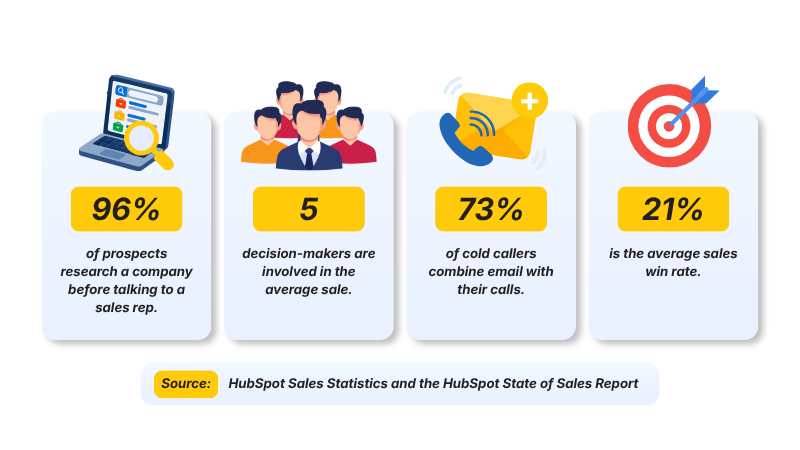
Those numbers shape every decision below. Buyers have researched you before the first conversation, so familiarity has to come first. Committees are large, so account selection matters. And with roughly one in five opportunities closing, a pilot has to generate enough pipeline to be judged fairly.
Tired of Cold Calls That Never Turn Into Conversations?
How long should a tech lead generation pilot run?
Plan for a minimum of six months, especially if you’re entering a new market. Ninety days is enough to see whether a lead generation and appointment partner is targeting the right people. It’s rarely enough to see whether that targeting turns into revenue. A brand that’s unknown in a region needs time just to become recognizable before buyers will take a meeting.
Here’s how we’d structure the six months:
- Month 1: setup and segment testing. Finalize the ICP, verify contact data, and test two or three segments with the same core message. The goal is learning, not meetings.
- Months 2 and 3: building familiarity. Consistent LinkedIn and email touches put your brand in front of the same people repeatedly. Meetings start to come in, but slowly. Day 90 is your first formal checkpoint.
- Months 4 to 6: conversion. Phone outreach scales up to contacts who now recognize you, meeting volume climbs, and the first opportunities move through your pipeline.
 Industry Insight
The most common way a pilot dies is a bookings review at day 90. By then a healthy program has usually just started producing meetings, and almost nothing has had time to close. HubSpot reports that 28% of sales professionals see lengthy sales processes as the main reason prospects back out. That pressure is real, but the fix is a faster handoff to your AEs, not a shorter pilot.
Which accounts should a tech lead gen pilot target?
In our experience, the sweet spot for a pilot is mid-size companies where three or four people make the buying decision. adsHubSpot puts the average sale at five decision-makers, and enterprise deals often involve more. That means more stakeholders to map, more approvals, and a sales cycle that will outlast your pilot. At the small end, deals close fast but often aren’t big enough to justify the program.
Mid-size accounts give you both: a buying committee small enough to reach in a few months, and contract values large enough to make the ROI math work. Once the pilot proves the motion, you can extend it upmarket. This is where account-based marketing becomes valuable. It allows sales and marketing teams to prioritize high-value accounts, identify relevant stakeholders, and personalize outreach based on each company’s buying committee.
Expert Tip: Before launch, ask your partner to map the full committee at 25 of your target accounts: usually an IT or engineering lead, a business owner of the problem, a finance approver, and sometimes security or procurement. If they can only find one name per account, the pilot will be single-threaded from day one, and single-threaded deals stall.
What outreach sequence works best for tech buyers?
A coordinated multi-channel outreach strategy combines LinkedIn, email, and phone engagement to reach decision-makers across multiple touchpoints.
The order of channels matters as much as the channels themselves. What works most consistently in our tech campaigns:
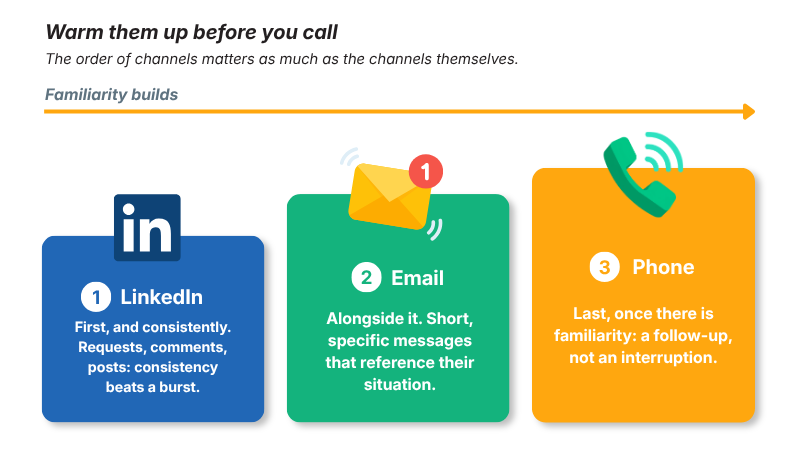
- LinkedIn first, and consistently. Connection requests, relevant comments, and useful posts from a real person build recognition before you ask for anything. Consistency over weeks beats a burst of activity.
- Email alongside it. Short, specific messages that reference the buyer’s situation. When the name in the inbox matches the profile they’ve already seen on LinkedIn, replies go up.
- Phone last, once there’s familiarity. A cold call to someone who has never heard of you is an interruption. A call to someone who has seen your posts and opened your emails is a follow-up. Save the phone for that moment.
HubSpot’s data backs up the mix. Most cold callers already pair calls with email, and most regular callers convert 6 to 10% of conversations into appointments. Warming the contact first improves the odds that the call becomes one of those conversations.
Lead with something free
The offer matters too. In our programs, a free service or consultation, such as an assessment, an audit, or a short working session, consistently gets more meetings than a standard demo request. It gives the buyer something useful whether they buy or not, and it lets your team show expertise instead of describing it. If your offer is just “a 30-minute call to learn about our platform,” fix that before the pilot starts.
For technology companies hosting webinars or industry events, event-based lead generation can also help attract relevant prospects and create opportunities for meaningful sales conversations.
Which tech lead generation companies are worth piloting?
Data tools like ZoomInfo, UpLead, and Hunter supply contacts, and tools like Intercom qualify inbound traffic. A pilot needs a partner that can run the whole sequence: research, LinkedIn, email, phone, and qualification. Each company below has documented work with technology clients. Match the “Best For” column to your situation rather than reading this as a ranking.
| Company | HQ | Best For | Core Strength | Global Reach |
|---|---|---|---|---|
| Callbox | Encino, California, USA | Tech companies piloting entry into a new region or vertical, especially mid-size targets | Hybrid human and AI SDR model with LinkedIn, email, and phone sequencing; Platinum HubSpot Partner | 6 offices across 4 continents; campaigns in 60+ countries and 15+ languages |
| SalesHive | Denver, Colorado, USA | SaaS and software teams that want a managed, US-based SDR team on flexible terms | Cold calling, email, and LinkedIn outreach run by dedicated SDRs, with AI email personalization (eMod) | US-based SDRs, with an offshore calling option |
| Leadium | Las Vegas, Nevada, USA | Tech, SaaS, and IT companies that want a boutique outbound team | Cold email, cold calling, and LinkedIn run by dedicated US-based SDRs, plus deliverability and tech stack setup | US-based delivery model; clients across tech, SaaS, and other B2B verticals |
| Operatix | London, UK | B2B software vendors building direct and channel pipeline | Software-only specialization, including partner and channel development | Offices in London, Dallas, San Jose, and Singapore; 20+ languages |
| memoryBlue | Tysons, Virginia, USA | High-tech firms that want a dedicated, managed SDR team | Sales development for technology companies, now combined with Operatix | North America, EMEA, LATAM, and APAC |
Callbox’s tech work shows up in third-party lists: #2 among B2B lead generation companies for cybersecurity firms (IntentAmplify, April 2026), #3 among SaaS lead generation companies (Prospeo), and #4 on both VIB.tech’s cybersecurity agency list and GrowthSpree’s B2B SaaS list. To see a full program in action, read how Callbox built an IT services company’s pipeline with appointment setting and webinar outreach.
How we chose these companies
We included companies with published case studies or verified reviews from technology clients, independent ratings on platforms such as Clutch or G2, multichannel outbound capability, and clear public information on headquarters and regional coverage, as of October 2026. Callbox publishes this guide and was assessed on the same criteria. No company paid for placement.
How do you choose the right pilot partner?
Ask every finalist these five questions before you sign:
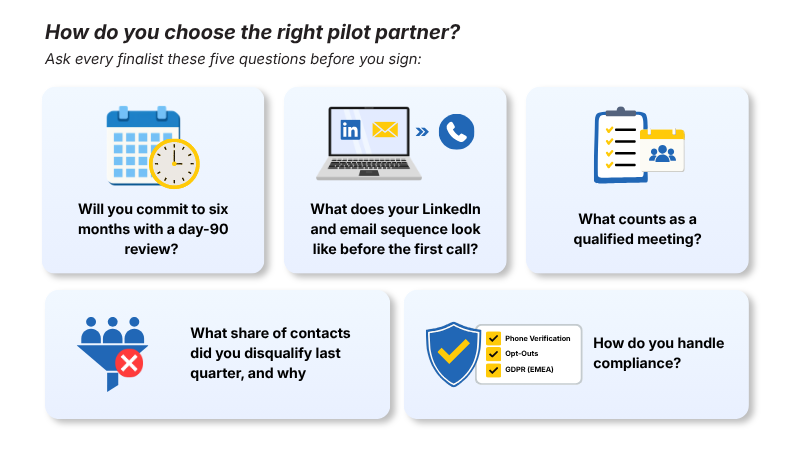
- Will you commit to six months with a day-90 review? A partner that promises results in 30 days is either overselling or planning to flood you with low-quality meetings.
- What does your LinkedIn and email sequence look like before the first call? If the answer starts with the phone, they’re cold calling strangers.
- What counts as a qualified meeting? Get title, company size, confirmed need, and timeline in writing, plus a no-show policy. Only meetings held and accepted by your AE should count.
- What share of contacts did you disqualify last quarter, and why? A partner that can’t answer is optimizing for volume.
- How do you handle compliance? Ask about phone number verification, opt-outs across every channel, and GDPR consent for EMEA outreach.
When evaluating providers, compare their outsourced SDR services and appointment-setting capabilities to determine whether they can support your target accounts, outreach requirements, and pipeline objectives.
What exit criteria should a tech lead gen pilot have?
Agree on these before launch, in writing. Set thresholds from your own funnel data, not the vendor’s case studies. You can also use Callbox’s 2026 B2B lead generation benchmarks to understand industry performance metrics and establish more realistic campaign expectations.
Checkpoint | What to measure | Continue if | Re-scope or exit if |
Day 30 | Data accuracy, committee coverage, early LinkedIn and email engagement by segment | Data is clean and at least one segment is clearly responding | Contact data is wrong or the partner can’t explain segment results |
Day 90 | Meetings held, AE acceptance rate, meeting-to-opportunity rate | Accepted meetings are rising month over month and AEs rate them as real | Meetings are flat or AEs are rejecting most of them |
Day 180 | Pipeline created vs. total cost, stage progression, first closed deals | Pipeline ROI clears your target and deals are moving through stages | Pipeline is thin or stuck at the first stage |
How do you calculate ROI on a tech lead generation pilot?
Skip cost per lead. It tells you nothing about revenue. Use this instead:
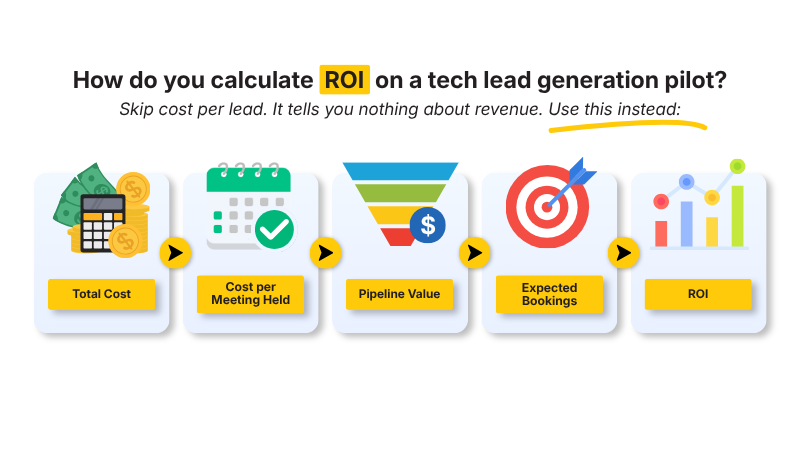
- Total cost. Retainer plus data fees plus internal time, especially AE hours on discovery calls.
- Cost per meeting held. Total cost divided by meetings that happened and your AE accepted.
- Pipeline value. Opportunities created multiplied by your average contract value.
- Expected bookings. Pipeline multiplied by your win rate. HubSpot’s average is 21% if you don’t track your own yet.
- ROI. (Expected bookings x gross margin, minus total cost) divided by total cost.
For a practical example of how appointment setting contributes to business growth, explore this AI technology appointment-setting case study, which demonstrates how a structured outreach program generated qualified sales appointments.
A six-month worked example
Illustrative numbers. Note the ramp: meetings build as familiarity builds.
Input | Value | How it’s calculated |
Total cost (6 months) | $45,000 | $6,000/month retainer plus $9,000 in internal time |
Meetings held | 48 | Ramping 2, 4, 8, 10, 12, 12 per month |
Cost per meeting held | About $940 | $45,000 / 48 |
Opportunities created | 24 | 50% meeting-to-opportunity rate |
Pipeline value | $1,080,000 | 24 x $45,000 average contract value |
Expected bookings | $226,800 | $1,080,000 x 21% win rate |
Gross profit | $181,440 | 80% gross margin |
ROI | About 3x | ($181,440 minus $45,000) / $45,000 |
Now look at day 90 in the same program. Only 14 meetings have happened, about half the budget is spent, and nothing has closed. Judged at that point on bookings, a 3x program looks like a failure. That’s the whole argument for a six-month pilot with a pipeline-based day-90 review. For a real example of the payoff, see how a managed IT firm closed $150,000 in new contracts from one Callbox appointment setting program.
Expert Tip: Report on two clocks. At day 90, measure pipeline created against cost. From month six onward, measure bookings. To set realistic targets for each funnel stage, compare your numbers against our 2026 B2B lead generation benchmarks.