How Can Healthcare Sales Outsourcing Grow B2B Revenue Faster?
Explore how healthcare sales outsourcing can help your team reach more decision-makers, create sales opportunities, and build a healthier B2B pipeline.
 Rebecca Matias
Rebecca Matias is Callbox's COO with 18 years of experience scaling B2B pipeline through data-driven outbound marketing, lead generation, and sales development.
View full bio of Rebecca Matias
Healthcare companies grow revenue faster with healthcare sales outsourcing by handing prospecting, cold outreach, and meeting booking to a trained external team while keeping the actual closing in-house. The outsourced SDR team builds a compliant, healthcare-specific cadence across calls, email, and LinkedIn, qualifies leads against your ideal customer profile, and hands your account executives a calendar full of vetted meetings. That is often the fastest path from headcount gap to booked pipeline, arriving in 30 to 45 days instead of the 3 to 6 months a domestic hire needs to ramp.
The catch is that healthcare sales does not behave like sales in any other industry. A hospital procurement committee moves differently than a single practice owner, and a health system buyer often wants proof of HIPAA awareness before taking a second call. Generic outbound scripts fall flat here. This guide covers what healthcare sales outsourcing looks like, what it costs, how to calculate the return, and how to choose a partner who will not embarrass your brand on call one.
Finding solutions on how to grow your healthcare sales?
What Is Healthcare Sales Outsourcing?
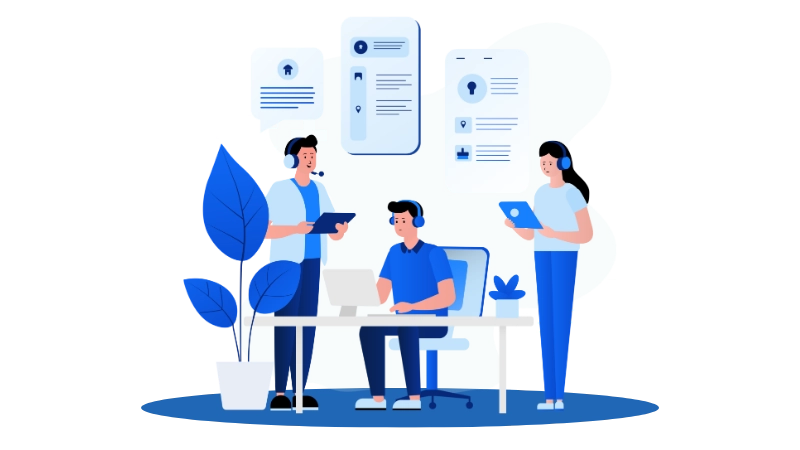
Healthcare sales outsourcing means hiring an outside team, usually SDRs or appointment setters, to run the top of your sales funnel for a healthcare or health tech company. That covers building a prospect list of hospital IT directors, cold calling practice administrators, and qualifying inbound demo requests from a conference booth scan. The outsourced team represents your brand, follows your qualification criteria, and delivers booked meetings directly to your calendar or CRM.
It helps to separate this from two things it is not. It is not staffing a call center for patient phone calls, and it is not a marketing agency running paid ads. It is specifically about generating and qualifying B2B sales conversations, most often for healthcare SaaS, medical device, and health IT companies selling into hospitals, health systems, physician groups, and payers.

AI-Powered Healthcare Platform Expands Sales Pipeline with Callbox
Callbox helped generate 86 qualified sales appointments, delivered 132 marketing-qualified leads, and established 498 new social media connections with US-based healthcare decision-makers.
View Case StudyWhy Are Healthcare CROs Outsourcing SDRs Right Now?
Three forces are pushing healthcare revenue leaders toward outsourced SDRs in 2026.
First, the addressable market is bigger than it was. The U.S. telehealth market alone is on pace to grow from $65.35 billion in 2026 to $447.69 billion by 2035, nearly a 24 percent compound annual growth rate, according to Towards Healthcare. More vendors are chasing the same buyers, making speed to pipeline a competitive advantage in its own right.
Second, in-person access is shrinking while event-based lead flow is growing. Physical events and trade shows are now the top channel B2B marketers report using, narrowly ahead of website and blog SEO, according to HubSpot’s State of Marketing Report. But a badge scan at a healthcare conference is close to worthless without fast follow-up. Outsourced SDR teams exist specifically to close that follow-up gap.
Third, building an in-house healthcare SDR team is expensive and slow. Reps need real training on HIPAA-adjacent conversations, compliance-sensitive language, and the buyer psychology of a hospital procurement committee before they can hold a credible call. Recruiting and ramping that expertise usually takes a full sales cycle or two to pay off.
 Industry Insight:
The healthcare buyers most outsourced SDR teams struggle with are not hospital CFOs, they are practice administrators and clinical operations leads who field several cold calls a day and have learned to screen nearly all of them. The cadences that work lead with a specific, credible reason for the call, such as a shared client type, rather than a generic “quick question” opener.
How Do Outsourced Healthcare SDRs Actually Work?
A healthcare sales outsourcing engagement typically runs through four stages.

- Discovery and calibration. The vendor learns your product, compliance requirements, and ideal customer profile, usually a specific buyer type such as a hospital IT director or a medical device procurement lead. This stage should also cover what data the team can and cannot touch. Business contact data for B2B prospecting is not protected health information, but a credible partner will still be explicit about what it collects and stores.
- Multi-channel cadence build. A cadence usually blends cold calling, email, and LinkedIn outreach over 10 to 15 touches across three to four weeks. Healthcare cadences lean more heavily on phone than most B2B verticals do, because trust building here still happens best in a live conversation.
- Qualification and booking. SDRs run discovery questions against your criteria (budget, authority, need, timeline, and increasingly, compliance readiness) before booking a meeting. A good outsourced team qualifies out just as aggressively as it qualifies in.
- Handoff and reporting. Meetings land on your account executive’s calendar with call notes attached, and the vendor reports weekly or biweekly on activity, connect rates, and meetings booked.
Expert Tip:
The healthcare CROs who get the best return are not the ones with the biggest budget, they are the ones who share their real close rate data before the campaign starts. Without that number, you are just estimating ROI. With it, you can hold the outsourcing partner to a number that actually maps to revenue.
How Do You Evaluate a Healthcare Sales Outsourcing Partner?
Use this six-step methodology before signing.
- Define your buyer and compliance profile first. Write down who the outsourced team will call (title, department, organization type) and what compliance context matters, before talking to a single vendor.
- Ask for healthcare-specific references, not general B2B ones. A vendor booking meetings for SaaS companies generally is not automatically ready to navigate a hospital procurement committee.
- Get specific on data handling. Ask what prospect data the vendor collects and where it is stored. Most B2B sales outsourcing does not require a signed BAA, since contact data is not PHI, but the vendor should explain that distinction clearly.
- Request a sample cadence and call script. A generic “quick question” opener is a red flag. A credible cadence references a specific pain point or regulatory pressure point in the first fifteen seconds of the call.
- Pilot before committing to a full rollout. Run a 60 to 90 day pilot against one ICP segment with defined success metrics, such as connect rate, meetings booked, and show rate, before expanding.
- Set a shared reporting cadence and a named point of contact. Weekly or biweekly reporting, with call notes attached to every booked meeting, is the standard for a partner worth keeping.
Callbox’s outsourced SDR services follow this exact framework for healthcare clients, from compliance-aware discovery through weekly reporting.
How Do Top Healthcare Sales Outsourcing Vendors Compare?
The table below profiles five established, US-based healthcare sales outsourcing providers for a vendor shortlist.
| Company | HQ | Best For | Core Strength | Global Reach |
| Callbox | Encino, CA | Healthcare SaaS and IT/MSP companies that need a full-funnel outsourced SDR and appointment-setting team | Callbox Pipeline runs multi-channel outbound (call, email, LinkedIn, chat) with real-time reporting. Generated roughly 700 appointments over 14 months for one MSP-focused ABM program, and 186 confirmed appointments from 234 MQLs for a cloud services consultancy client. | US-based delivery with additional coverage across APAC and multilingual markets |
| SalesHive | Denver, CO | Mid-market SaaS and tech companies that want high-volume outbound at a fixed monthly rate | Proprietary outreach and CRM platform combining cold calling, email, and LinkedIn sequencing | Primarily US-based, remote-first team |
| EBQ | Austin, TX | Tech and SaaS companies that want SDR outreach bundled with marketing automation support | Pairs outbound qualification with Salesforce Marketing Cloud and Marketo-backed lead nurturing | US-headquartered, team across multiple continents |
| demandDrive | Waltham, MA | B2B tech and healthcare companies wanting an integrated SDR, demand gen, and RevOps partner | Full funnel sales and marketing model. Documented $16 million in pipeline and $3.2 million closed won for a healthcare client (Medrio). | US-based team serving clients nationwide |
| Superhuman Prospecting | Norristown, PA | Small to mid-size healthcare and B2B companies wanting a lean, US-based SDR team | H2H Sales Scripts methodology paired with a real-time supervision dashboard for call outcomes and qualification data | 100 percent US-based SDR team |
None of these five partners is the right fit for every healthcare company. A five-person practice testing outbound for the first time, or a company that needs one field rep running in-person hospital demos rather than a full SDR team, will likely get more value from a generalist freelancer than a dedicated outsourcing program. Healthcare sales outsourcing, including Callbox’s approach, tends to work best for healthcare SaaS, IT, and MSP, and medical device companies with a defined ideal customer profile, an internal team ready to close booked meetings, and enough deal volume to justify a dedicated monthly SDR investment.
What Do Revenue Leaders Ask About Sales Outsourcing?
What Is Healthcare Sales Outsourcing?
It is hiring an outside team to handle prospecting, cold outreach, and appointment setting for a healthcare or health tech company, so an internal sales team can spend its time closing rather than filling its own calendar.
Do Outsourced SDRs Need a Business Associate Agreement?
Usually not. Business contact data used for B2B prospecting, such as names, titles, and work emails, is not protected health information. A BAA becomes relevant only if the vendor’s work involves handling PHI directly, which is uncommon for sales development.
How Fast Can You Launch an Outsourced Sales Team?
Most programs launch in 30 to 45 days from kickoff, covering discovery, cadence build, and calibration, compared to 3 to 6 months to recruit, hire, and ramp an equivalent in house SDR.