2026 Best AI Voice Agents for Lead Generation
Discover the best AI voice agents for lead generation in 2026. Compare top tools that help automate outreach and qualify B2B leads.
 Rebecca Matias
Rebecca Matias is Callbox's COO with 18 years of experience scaling B2B pipeline through data-driven outbound marketing, lead generation, and sales development.
View full bio of Rebecca Matias
💡Quick Definition
AI voice agents for lead generation are real-time conversational systems that handle inbound and outbound sales calls autonomously, qualifying prospects, capturing intent, and syncing outcomes directly to your CRM. They eliminate manual follow-up lag, respond to leads within seconds, and scale pipeline activity without adding headcount.
Here’s a situation most B2B sales leaders know well: a prospect fills out a form at 9:47 PM. By morning, three competitors have already called. Your team gets to them at 10:15 AM and finds a lukewarm lead that’s already in conversations elsewhere. That’s not a people problem. That’s a response infrastructure problem.
AI voice agents for lead generation exist precisely to close that gap. These tools don’t sleep, don’t stall on CRM updates, and don’t lose a qualification script halfway through a call. When done right, they handle the entire first conversation with a lead, from intent detection to outcome capture, before a human rep even opens their laptop.
This guide breaks down how voice AI actually works, which platforms are worth your time, and how to calculate whether the investment makes sense for your business.
Looking how to boost your AI visibility and gain more inquiries?
What Does an AI Voice Agent Actually Do in a Lead Gen Context?
There’s a lot of noise in the voice AI space, so let’s be precise. An AI voice agent for lead generation is not an IVR system with better menus. It’s not a chatbot with a phone number slapped on top. It’s a real-time conversational engine that can:
- Answer inbound calls or trigger outbound sequences instantly
- Understand natural speech, handle interruptions, and stay on context
- Ask structured qualification questions based on your sales criteria
- Route or escalate based on lead score and intent signals
- Log the full interaction to your CRM automatically, no manual updates needed
The practical difference this makes is significant. A study from HubSpot’s 2026 State of Marketing Report found that 40% of marketers cite lead quality as their top metric for success. That only improves when the first conversation is consistent, fast, and data-driven. Voice AI agents deliver on all three.
💡Expert Tip
Don’t evaluate voice AI platforms based on demo audio quality alone. What matters in production is latency under load, how the agent handles off-script responses, and whether qualification data actually makes it into your CRM without human intervention. Ask vendors for a live test with edge-case inputs before signing anything.
Related: Callbox Unveils Next-Generation AI Stack
How Do AI Voice Agents Qualify Leads Automatically?
The mechanics behind automated lead qualification come down to five tightly integrated components. Understanding them helps you ask better questions when evaluating vendors.

Speech recognition and intent detection
The agent listens in real time, converts speech to text, and maps the caller’s intent against known categories: product interest, pricing, support, and scheduling. Good systems handle accents, filler words, and sudden topic shifts without losing context. This is the foundation. If intent detection is weak, every downstream step suffers.
Structured qualification logic
Most B2B teams qualify on criteria like budget range, company size, decision-making authority, timeline, and geographic fit. The voice agent runs through these criteria dynamically, adapting follow-up questions based on prior answers. It’s essentially a conversational BANT framework that runs at scale, consistently, every single call.
Real-time routing and escalation
High-intent leads get routed immediately: live transfer to a rep, calendar booking, or a priority CRM flag. Low-fit calls are handled graciously and closed out. The system only surfaces conversations worth a human’s time, which is the whole point.
🧠Industry Insight
According to HubSpot, companies deploying AI agents for customer conversations have seen first-response time on email drop by 54% and resolution time fall by 36%. These efficiency gains transfer directly to voice-led lead generation when the system is properly integrated with CRM workflows.
Automatic CRM sync
This is where a lot of teams feel the biggest relief. Every call outcome, qualification score, contact detail update, and conversation note lands in your CRM automatically. Platforms that integrate natively with HubSpot or Salesforce are particularly valuable here because they eliminate the update gap that typically slows pipeline visibility.
Follow-up and reactivation workflows
Leads that aren’t ready to convert on call one don’t disappear. Good voice AI platforms support automated follow-up sequences that re-engage those leads with the same qualification logic, keeping the top of your funnel warm without additional rep effort.
Having hard time to reach your target prospects?
What Should You Look for in an AI Voice Agency for Lead Generation?
If you’re evaluating vendors rather than building your own stack, the criteria shift slightly. You’re not just buying software. You’re hiring a partner who will represent your brand in live sales conversations. Here’s what actually matters:
Speed-to-lead capability
The agency should be able to connect with incoming leads within seconds, not minutes. Research consistently shows that lead conversion drops sharply after the first five minutes of a form fill. If their system has a callback delay of 10-15 minutes, it’s not a voice AI solution, it’s a slower call center.
Customizable qualification flows
Your qualification criteria are not the same as every other company’s. The platform should allow you to define your own qualification logic, questions, scoring thresholds, and escalation rules without requiring a 3-month development project to get started.
Native CRM integrations
Platforms that route data through Zapier middleware add latency and failure points. Look for native integrations with your CRM of choice. If your stack runs on HubSpot or Salesforce, the voice AI platform should sync directly, not through a chain of webhooks you’ll be debugging six months from now.
Transparent analytics and call-level reporting
You should be able to see conversation outcomes, qualification rates, escalation triggers, and conversion data at the call level. If the vendor only shows you aggregate dashboards, you can’t optimize. Granular data is what separates a lead generation vendor from a lead generation partner.
Deployment timeline and onboarding support
Enterprise-grade platforms can go live in 48-72 hours with proper configuration support. If a vendor is quoting you three months before you see a qualified call, the product either needs heavy customization work or it’s not mature enough for production. Push on deployment timelines early in the evaluation.
When AI Goes Solo: The Targeting Precision Problem in B2B Outbound
Callbox helped an enterprise software company capture high-intent prospects during an exhibition, generating 56 SQLs and 73 MQLs.
View Case StudyWhich AI Voice Agents Are Actually Worth Using for Lead Generation in 2026?
Here’s the honest reality: most voice AI tools work in demos. The ones that hold up in production environments, at scale, with real leads who go off-script, are a much shorter list. Below are the platforms that have demonstrated consistent performance in B2B lead generation workflows, along with an honest read on where each one shines.
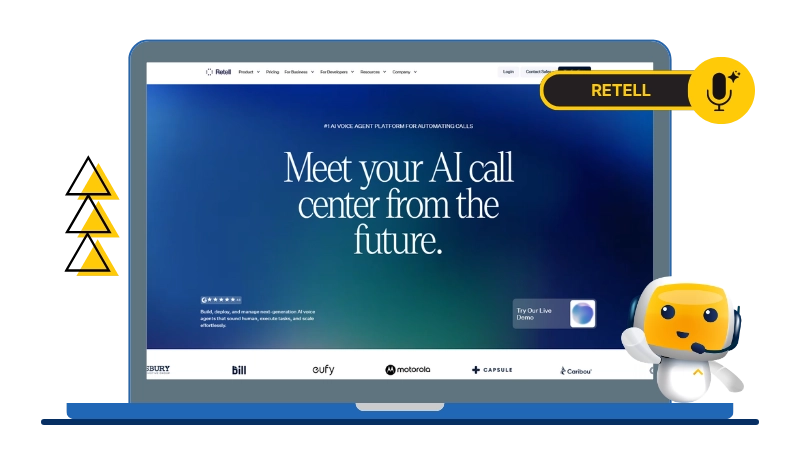
Retell AI
A developer-first voice AI platform built for teams that need deep customization in their calling workflows. Retell AI‘s own evaluation highlights strong performance in structured outbound qualification and CRM routing. Best for technically resourced teams who want full control over conversation logic and AI model configuration.
CloudTalk
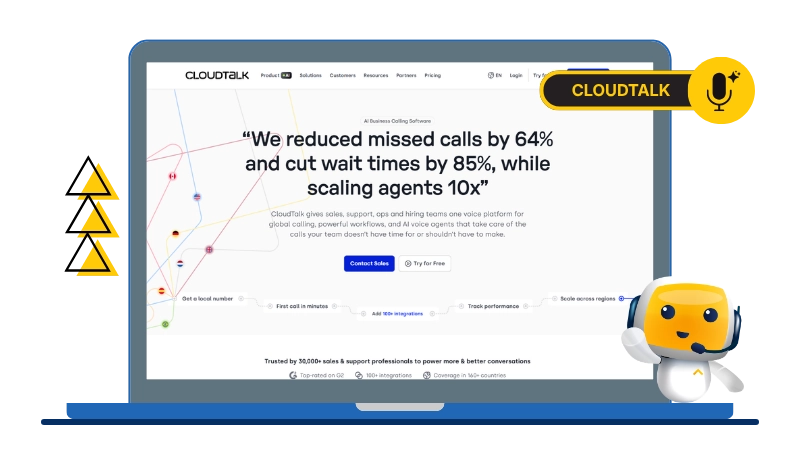
A cloud calling platform with strong voice AI agent capabilities layered on top of a mature telephony stack. CloudTalk handles real-time qualification, missed-call callbacks, and cold lead reactivation within a single platform. Native integrations with HubSpot, Salesforce, and Pipedrive make CRM sync reliable. Strong fit for inside sales teams managing high inbound volumes.
Bland AI
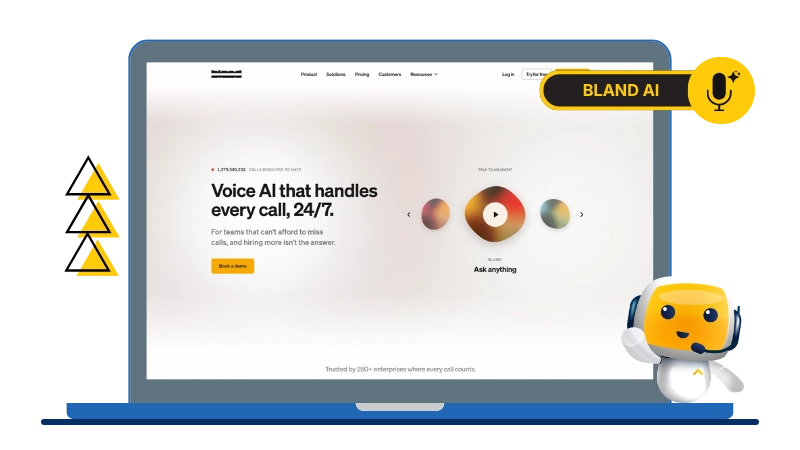
A high-volume outbound calling platform focused on scalability. Bland AI is well-suited for teams running large prospecting campaigns where call volume matters more than deep conversational customization. Pricing is usage-based, which makes it attractive for organizations that need to scale up and down quickly.
Dialora
Handles structured qualification calls reliably, particularly when following defined scripts. Works well for outbound campaigns with clear decision trees and meeting-booking workflows. As noted in Retell AI’s independent evaluation, Dialora is a strong fit for teams that don’t need deep customization but want a dependable, ready-to-run solution.
ElevenLabs
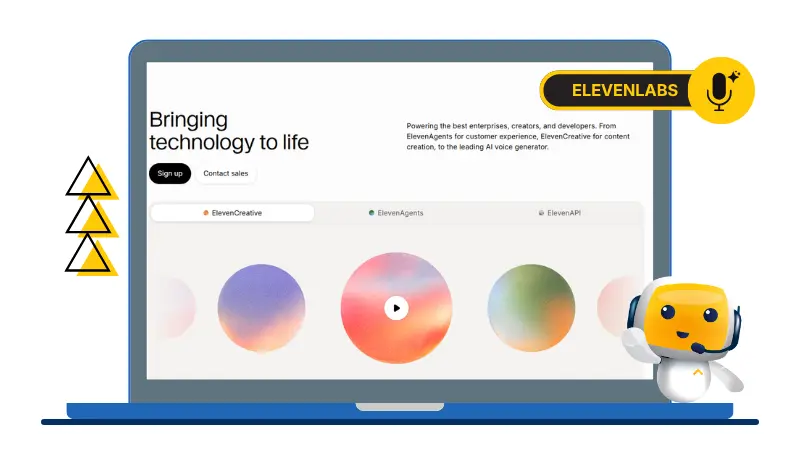
ElevenLabs is best known for producing the most natural-sounding AI voices on the market, with access to 5,000+ voices across 70+ languages via its ElevenAgents platform. For B2B teams that prioritize voice quality and global language coverage above all else, ElevenLabs stands out. Its API-first architecture and enterprise-grade SDKs make it a strong underlying layer for companies building custom voice agent experiences on top of their own calling infrastructure. Less of a turnkey lead gen solution, more of the voice engine powering the best-sounding ones
Side-by-Side Comparison: Top AI Voice Agent Platforms
| Company | HQ | Best For | Core Strength | Global Reach |
| Retell AI Developer | San Francisco, CA | Custom outbound qualification, dev-controlled workflows | Deep API customization, flexible AI model selection, and strong outbound campaign infrastructure | Global, English-first |
| CloudTalk | Bratislava, Slovakia | High-volume inbound teams, inside sales | Mature telephony + voice AI overlay; native CRM integrations with HubSpot, Salesforce, Pipedrive | 140+ countries supported |
| Bland AI | San Francisco, CA | High-volume outbound prospecting campaigns | Cost-efficient at scale, usage-based pricing, and rapid campaign deployment for large lead lists | NA, EMEA focus |
| Dialora | Remote / US-based | Structured script-based qualification, meeting booking | Reliable script adherence, streamlined meeting scheduling workflows, and straightforward setup | North America, English |
| ElevenLabs Voice Layer | New York, NY | Teams prioritizing ultra-realistic voice quality and multilingual coverage | 5,000+ voices in 70+ languages; ElevenAgents platform; enterprise APIs and SDKs for custom voice builds | Global, 70+ languages |
Selection Methodology: How We Evaluated These Platforms
- Real call performance: We prioritized platforms with documented production results, not just demo footage or vendor-provided case studies.
- CRM integration depth: Native HubSpot and Salesforce connectivity was weighted heavily, since middleware-dependent setups create operational fragility.
- Qualification logic flexibility: Can the platform adapt to your qualification criteria, or does it force you into a preset framework?
- Deployment timeline: We excluded platforms with 60+ day onboarding periods unless they offered exceptional managed service value in return.
- Analytics transparency: Platforms were scored on whether they offer call-level data, not just aggregate dashboards.
How Do You Measure ROI From an AI Voice Agent Investment?
This is where a lot of companies stall. Voice AI is a real cost, and you need a framework for measuring whether it’s paying off before, during, and after deployment. Here’s a straightforward model to use with your team:
| Metric | What to Measure | Baseline (Manual) | With Voice AI | Impact |
| Speed-to-lead | Minutes from form fill to first contact | 30-90 min avg | Under 60 sec | Conversion rate up 30-50% |
| Qualification rate | % of calls with completed BANT/ICP scoring | 40-60% (rep-dependent) | 85-95% (consistent) | Cleaner pipeline data |
| Rep productivity | Qualified conversations per rep per day | 6-10 quality calls | 20-35 quality calls | 2-3x output per headcount |
| CRM data accuracy | % of calls with complete CRM records post-call | 50-70% (manual updates) | 95-100% (auto-sync) | Reliable pipeline reporting |
| After-hours coverage | % of leads contacted outside business hours | Near 0% | 100% coverage | No lead decay overnight |
| Cost per qualified lead | Total program cost / qualified leads generated | Varies by team size | Typically 30-50% lower | Better marketing ROI |
Use this framework as your measurement contract with any AI voice agency before you sign. Define your baseline numbers, agree on what “qualified” means, and set a 60-day review date. Any reputable vendor should be comfortable with this level of accountability.
💡Expert Tip
When calculating ROI, don’t forget the soft costs. CRM cleanup after inconsistent manual logging, rep time lost on unqualified calls, and pipeline forecast errors caused by missing data are all costs that voice AI reduces. They’re harder to quantify upfront, but teams that track them see ROI figures that are substantially higher than the headline numbers.
What Are the Most Common Concerns B2B Teams Have Before Deploying Voice AI?
Will prospects know they’re talking to an AI?
Modern voice AI agents are natural-sounding enough that many prospects don’t immediately recognize them as automated. That said, most enterprise deployments opt for transparent disclosure up front, both for compliance reasons and to manage expectations. The key is that the conversation quality should be good enough that disclosure doesn’t kill the engagement. If your AI sounds robotic, the problem isn’t whether to disclose, it’s the platform you chose.
What happens when a lead asks something off-script?
Well-designed systems handle off-script responses by acknowledging the input, continuing with the qualification flow, and flagging the exchange for human review if needed. Escalation logic should be built into any production deployment. The goal isn’t a perfectly scripted conversation; it’s a completed qualification with a clear next step.
Can voice AI handle multiple languages or global markets?
Some platforms do, some don’t. CloudTalk supports 140+ countries with multilingual capability, and ElevenLabs covers 70+ languages with over 5,000 voices. If you’re running international prospecting campaigns, this is a must-check capability, not an afterthought.
The Bottom Line: Is Voice AI Right for Your B2B Pipeline?
If your team is losing leads to slow follow-up, dealing with inconsistent qualification data, or simply can’t hire fast enough to meet inbound volume, AI voice agents for lead generation are not a nice-to-have anymore. They’re the infrastructure gap you’re already paying for, just in lost pipeline instead of software costs.
The platforms in this guide represent the current best of the category. Each has real strengths. Retell AI wins for developer-controlled customization. CloudTalk is the right call for teams with high inbound volume and an existing telephony stack. Bland AI suits high-volume outbound at budget-conscious pricing. Dialora works well when you need structured qualification without deep configuration overhead. ElevenLabs is the platform to reach for when voice realism and multilingual coverage are non-negotiable.
Whatever you choose, hold your vendor to the ROI framework in this article. Define your baseline, agree on the metrics, and review at 60 days. The best AI voice agencies will welcome that conversation. The ones that don’t are worth crossing off your list before you start.