Top 10 Sales Intelligence Tools for Every B2B Company in 2026
Looking for sales intelligence tools for your B2B team? Explore 10 options for prospect research, data enrichment, targeting, and sales engagement.
 Rebecca Matias
Rebecca Matias is Callbox's COO with 18 years of experience scaling B2B pipeline through data-driven outbound marketing, lead generation, and sales development.
View full bio of Rebecca Matias
Modern B2B selling is no longer a guessing game. Cold calling blind list databases and sending generic mass emails to unverified contacts will quickly burn out your sales development team and damage your domain reputation. To win high-value accounts today, modern revenue teams rely on accurate, real-time data to identify, target, and convert key decision-makers before the competition even notices them. An experienced appointment setting company can then turn those targeted prospects into qualified sales conversations.
This is where a dedicated sales intelligence platform becomes indispensable. Accurate data is only valuable when sales teams can act on it consistently. Inside sales teams can use verified prospect data, personalized outreach, and structured follow-up to engage decision-makers across multiple touchpoints.
What are the top 10 sales intelligence platforms for 2026?
| Platform | Primary Strength | Ideal Business Size | Standout Feature |
| ZoomInfo | Enterprise B2B Database | Mid-Market to Enterprise | Comprehensive intent data & org charts |
| Apollo.io | All-in-One Sales Engagement | Startups to Mid-Market | Native sequencing & extensive B2B contacts |
| LinkedIn Sales Navigator | Relationship Intelligence | Individual Reps to Enterprise | Real-time warm introduction network |
| Cognism | Compliant Global Phone Data | Mid-Market to Global Enterprise | Phone-verified mobile numbers (GDPR compliant) |
| Lusha | Quick Prospecting & Enrichment | SMBs to Mid-Market | Highly accurate direct dial extension |
| Clearbit (HubSpot) | Real-Time Account Intelligence | Mid-Market to Enterprise | Automated CRM data enrichment |
| UpLead | 95%+ Data Accuracy Guarantee | SMBs to Scaling Teams | Real-time contact verification before download |
| 6sense | Account-Based Intent Analytics | Mid-Market to Enterprise | AI-driven dark funnel intent tracking |
| Bombora | B2B Buyer Intent Tracking | Enterprise Outbound Teams | Extensive topic-level intent monitoring |
| Clay | Automated Data Orchestration | Growth Teams & SDR Agencies | Multi-source waterfall data enrichment |
1. ZoomInfo
As an enterprise-grade b2b sales intelligence platform, ZoomInfo offers one of the largest and most accurate corporate databases in North America. Beyond basic contact details, it provides deep organizational charts, technographic profiling, and real-time buying intent signals that tell reps when accounts are actively researching competitors or industry pain points.

- Best for: Enterprise sales teams requiring detailed org mapping and deep market coverage.
- Key Feature: Streaming Intent and Scoops that detect key buyer events instantly.
AI-powered SDR tools can help revenue teams process prospect data, identify buying signals, prioritize accounts, and accelerate outreach.
2. Apollo.io
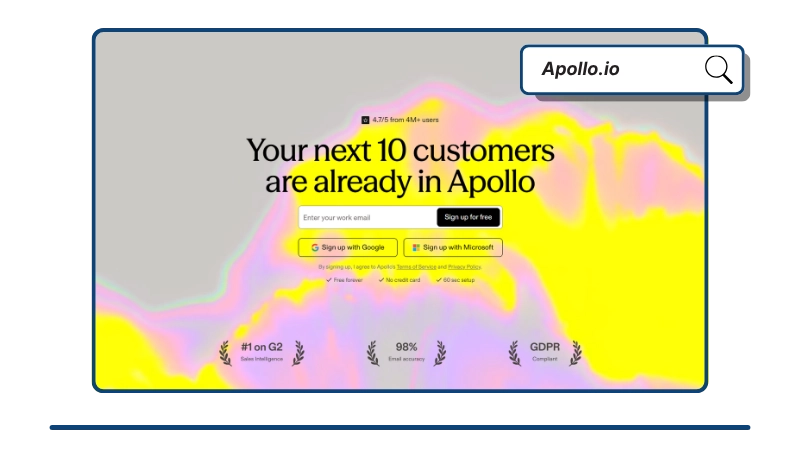
Apollo combines a database of over 275 million contacts with native engagement tools like email sequencing and call dialing. It allows SDRs to discover leads, enrich records, and execute multichannel cadences inside a single dashboard, making it an affordable powerhouse for growing revenue operations.
- Best for: SMBs and mid-market organizations wanting list building and outreach combined.
- Key Feature: Native email sequencing directly integrated with B2B search filters.
3. LinkedIn Sales Navigator
Sales Navigator leverages LinkedIn’s massive professional network to provide unparalleled relationship sales intelligence. It enables representatives to spot common connections, keep track of executive personnel changes, and leverage warm introductions through shared networks.

- Best for: Social selling and relationship-led B2B account teams.
- Key Feature: Advanced Lead & Account Search filters paired with TeamLink intro mapping.
4. Cognism
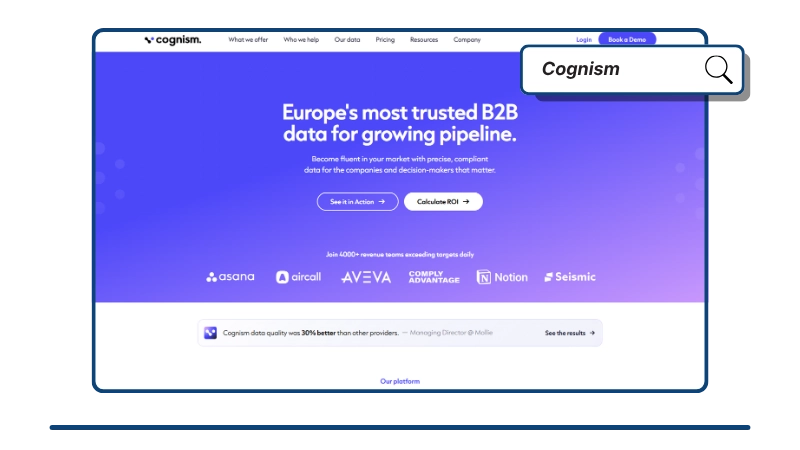
Cognism specializes in EMEA and international B2B contact data, holding a strong edge in strict data privacy compliance (GDPR & CCPA). Its diamond data feature manually verifies mobile phone numbers to ensure reps reach actual decision-makers on the first dial.
- Best for: Companies expanding into European or global markets needing compliant dials.
- Key Feature: Diamond Data offering phone-verified direct mobile lines.
5. Lusha
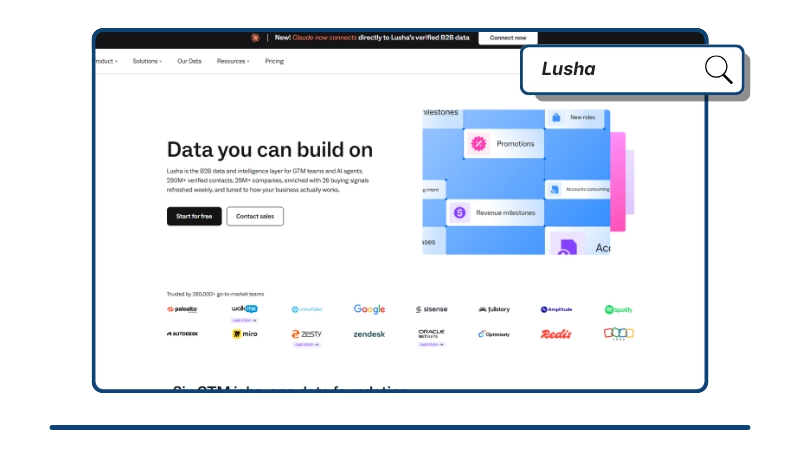
Known for its lightweight browser extension and ease of deployment, Lusha gives sales representatives accurate contact information instantly as they browse LinkedIn profiles or company websites. It integrates smoothly with major CRMs to enrich contact cards with a single click.
- Best for: Individual SDRs and small teams seeking frictionless prospecting data.
- Key Feature: Chrome extension providing fast direct-dial and email lookups.
6. Clearbit (by HubSpot)
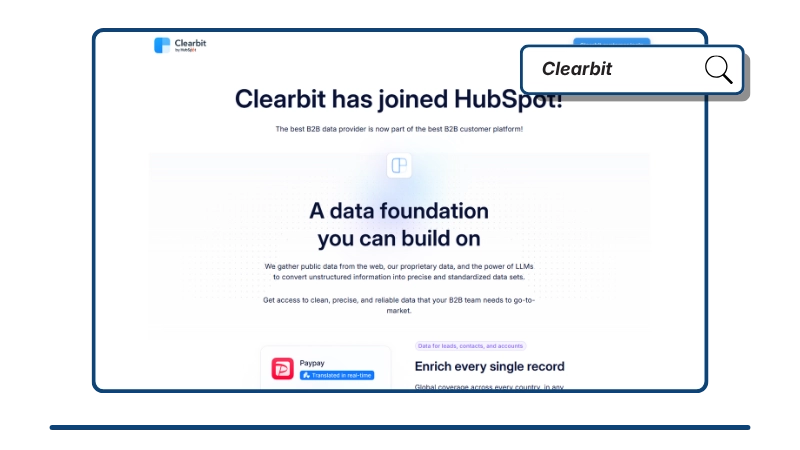
Clearbit specializes in real-time data enrichment and intent monitoring for modern inbound and outbound stacks. By automatically enriching CRM contacts upon form submission, Clearbit ensures sales reps always engage prospects with fresh, contextual data.
- Best for: Data-driven marketing and sales teams using HubSpot or Salesforce.
- Key Feature: Automated web-traffic identification turning anonymous site visits into accounts.
7. UpLead
UpLead stands out by guaranteeing 95% data accuracy on its B2B contact lists. Unlike platforms that rely solely on cached databases, UpLead verifies email addresses in real time at the moment of export, preventing bounce spikes and preserving domain health.
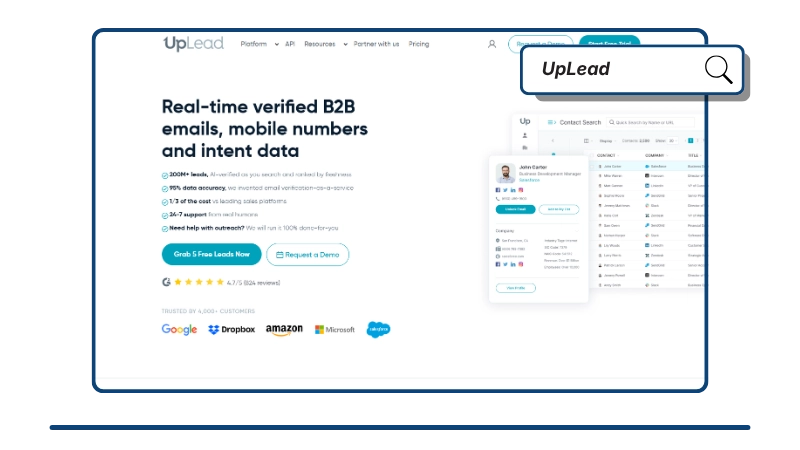
- Best for: Growing outbound teams focused strictly on list hygiene and deliverability.
- Key Feature: Real-time email verification check during list export.
8. 6sense
6sense specializes in uncovering the “dark funnel”, the buyer activity happening across third-party websites before a lead ever fills out a form. Using predictive AI, 6sense maps intent signals to buying committees, telling reps exactly which accounts are ready for direct outreach.
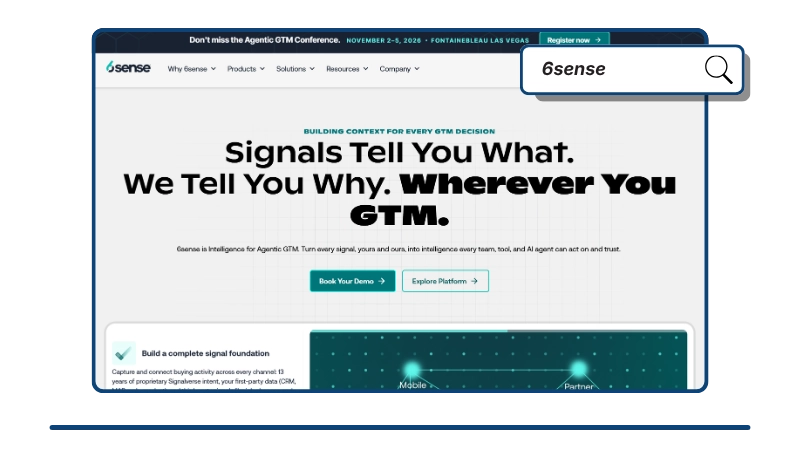
- Best for: Advanced Account-Based Marketing (ABM) and enterprise GTM models.
- Key Feature: Predictive AI intent engine tracking account buying stages.
9. Bombora
Bombora is the industry benchmark for B2B buyer intent data. By monitoring content consumption across a vast co-op of business publication websites, Bombora alerts your team when a company is consuming significantly more content around specific B2B topics than normal.
- Best for: Enterprise outbound teams targeting specific enterprise software or service niches.
- Key Feature: Company Surge® scores tracking content consumption surges across key topics.
10. Clay
Clay orchestrates data from over 50+ data providers into a single automated spreadsheet format. It allows sales operations to run “waterfall enrichment,” checking provider after provider until valid contact details, technographics, or AI-scraped web data are found for targeted leads.
- Best for: Advanced outbound operators wanting bespoke, hyper-personalized data workflows.
- Key Feature: Waterfall enrichment combining multiple intelligence providers in one workflow.
What are sales intelligence tools?
Sales intelligence tools are software solutions designed to help B2B sales teams find, understand, and engage prospective buyers through data enrichment, intent signals, and firmographic tracking. Instead of relying solely on standard phone directories or basic social media profiles, sales intelligence platforms pull information from millions of web points, public filings, social channels, and proprietary networks to create verified profiles of target companies and decision-makers.
By leveraging intelligence sales tactics—such as reaching out right when a prospect triggers a buyer intent signal—sales reps can personalize their communications, shorten deal cycles, and maintain consistently higher win rates.
A structured sales outreach strategy helps revenue teams coordinate messaging and follow-ups across email, phone, LinkedIn, and other channels.
How do sales intelligence tools transform your outbound pipeline?
Integrating an advanced sales intelligence platform into your GTM workflow changes outbound sales from a reactive task to a proactive growth engine. Key strategic advantages include:
- Precision Target Targeting: Identify companies that match your exact Ideal Customer Profile (ICP) based on size, revenue, industry, technology stack, and geographic footprint.
- Intent Data Detection: Pinpoint accounts actively searching for solutions like yours across third-party networks, allowing your team to strike while buyer interest is high.
- Data Verification & Enrichment: Automated verification reduces email bounce rates and eliminates dead-end phone numbers, preserving your sender reputation.
- Contextual Personalization: Leverage recent news, company hires, leadership shifts, and tech installations to craft custom-tailored outreach sequences.
- Shorter Sales Cycles: Pre-qualifying accounts with real-time intelligence prevents sales representatives from wasting time on unpromising prospects.
Verified data alone does not make a prospect sales-ready. Teams need clear qualification criteria to determine whether an account represents a sales qualified opportunity.
Which features should you look for in a sales intelligence platform?
Choosing the ideal tool depends on your team’s specific go-to-market structure, ideal customer profile, and tech stack setup. Prioritize these core features during your evaluation:
- Data Accuracy & Verification: Prioritize platforms offering real-time email pinging or phone verification guarantees to keep bounce rates under 5%.
- Intent Data Integration: Look for solutions tracking third-party search behavior, social interactions, or news releases to help time your outreach.
- Technographic & Firmographic Filtering: Ensure you can filter prospects by revenue, employee count, funding rounds, and software tools installed.
- Native CRM & Sales Engagement Integrations: Your chosen sales intelligence platform must sync seamlessly with tools like HubSpot, Salesforce, Outreach, or Salesloft to keep pipeline data updated.
- Global Regulatory Compliance: If you operate internationally, choose providers that comply strictly with GDPR, CCPA, and regional spam laws.
For high-value accounts, enterprise lead generation requires more than large prospect lists. Teams need accurate decision-maker data, account-level targeting, and coordinated engagement across complex buying groups.
How do you select the best sales intelligence tool for your growth strategy?
To narrow down your options, follow this evaluation framework:
- Audit Your Primary Market: If your core buyers are in North America, ZoomInfo or Apollo work exceptionally well. For European or global campaigns, evaluate Cognism.
- Determine Needed Functionality: Do you need an all-in-one execution platform (Apollo), deep intent analytics (6sense, Bombora), or modular data enrichment (Clay, Clearbit)?
- Assess Team Capacity: Having access to top-tier intelligence platforms won’t deliver ROI if your team lacks the bandwidth to execute personalized, multi-channel outreach campaigns.
Most frequently asked questions about sales intelligence tools
What is the difference between a sales intelligence platform and a standard CRM?
A CRM (Customer Relationship Management system like Salesforce or HubSpot) acts as a central repository for tracking your team’s interactions with existing leads and customers. A sales intelligence platform, on the other hand, provides external market data, finding new prospects, enriching existing lead profiles, and flagging buying intent signals before those leads ever enter your CRM.
How much do sales intelligence tools typically cost?
Pricing varies significantly based on features and target markets. Entry-level extension tools (like Lusha or Apollo) start around $49 to $99 per user per month. Enterprise platforms (such as ZoomInfo, 6sense, or Cognism) generally operate on annual contract models ranging from $10,000 to over $40,000 per year depending on data volume and feature tiers.
How do sales intelligence tools source their contact data?
Leading platforms aggregate B2B data using web scraping, public corporate records, AI algorithms, proprietary contributor networks, and third-party data cooperatives. Top-tier tools validate this aggregated data via automated email pings and manual verification teams.
Are sales intelligence tools compliant with GDPR and CCPA regulations?
Reputable platforms adhere strictly to international data privacy laws. However, providers operating in regions like Europe (e.g., Cognism) place extra emphasis on GDPR compliance by maintaining strict opt-out registries and providing verified business contact details rather than personal, non-work credentials.