5 Best Lead Generation Companies for RPA Vendors (2026)
Compare the 5 best lead generation companies for RPA and hyperautomation vendors in 2026, with pricing models, fit, and an ROI framework.
 Rebecca Matias
Rebecca Matias is Callbox's COO with 18 years of experience scaling B2B pipeline through data-driven outbound marketing, lead generation, and sales development.
View full bio of Rebecca Matias
Enterprise automation deals don’t die at the demo. They die on the first call, when the rep can’t tell an unattended bot from a macro. Here’s who can actually hold that conversation.
 QUICK ANSWER
The best lead generation companies for RPA and hyperautomation vendors in 2026 are Customer Engagement Group (CFG), ViB, Leadium, Sales Focus Inc., and Callbox. Each one fields SDRs who can talk process mining, legacy ERP integration, and enterprise governance with a CIO, which is the single biggest factor in whether an automation opportunity survives first contact.
Picture the call. Your lead generation agency has just helped your SDR get a Head of Process Excellence on the line at a global bank. Thirty seconds in, she asks whether your bots run attended or unattended, and how they authenticate against the core banking system. Your rep says, “Great question, let me loop in someone technical.”
That account is now cold for two quarters.
This is why choosing among lead generation companies for RPA vendors is a different exercise than hiring a generic outbound agency. You aren’t selling a screen-scraping tool to a department head. You’re selling a piece of a multi-year transformation program to a buying committee that includes IT, security, finance, and operations, and every one of them will test your rep’s fluency. Below, we break down five partners that pass that test, where each one fits best, and how to measure whether the investment is paying off.
$20.46B | 22.2% | 69% | 68% |
Projected RPA & hyperautomation market size in 2026 | Projected CAGR through 2030, reaching $45.57B | of GBS organizations call RPA a key transformation technology | of B2B buyers have a front-runner picked before talking to vendors |
The Business Research Company | The Business Research Company | Deloitte, via Innowise | Forrester |
Struggling to sell your RPA products to the market? Let experts help you!
Why is lead generation for RPA vendors so hard?
Because the buyer knows more than your average SDR does. Automation leaders have usually been burned before, whether by a pilot that never scaled, a bot that broke after a UI update, or a licensing model that ballooned. They screen vendors fast, and the SDR is the first filter.
The three questions that end most automation cold calls
- “Attended or unattended, and how is that licensed?” This is the budget question in disguise. A rep who can’t explain the difference can’t qualify the deal size either.
- “Are you API-led or UI-based?” Buyers who’ve watched UI scripts break after every SAP patch want to hear about orchestration and resilience. Hesitation here signals a toy, not a platform.
- “How do your bots handle privileged access?” Once the CISO is in the room, governance and privileged access management (PAM) become gating items. A vague answer stalls the deal in security review for months.
INDUSTRY INSIGHT
Market sizing for RPA varies widely depending on who's counting. Some analysts measure bots alone, while others fold in process mining, intelligent document processing (IDP), and AI orchestration. The consistent signal is double-digit annual growth. For your pipeline, that means more vendors chasing the same CIOs every quarter and a higher bar for the first conversation.
Looking for a reliable SDR team?
What are the best lead generation companies for RPA?
These five partners are listed in no particular order. They differ a lot in delivery model, geography, and pricing, so the right pick depends on where you sell and how your sales cycle runs.
1. Callbox
Best for: global, multi-region ABM programs
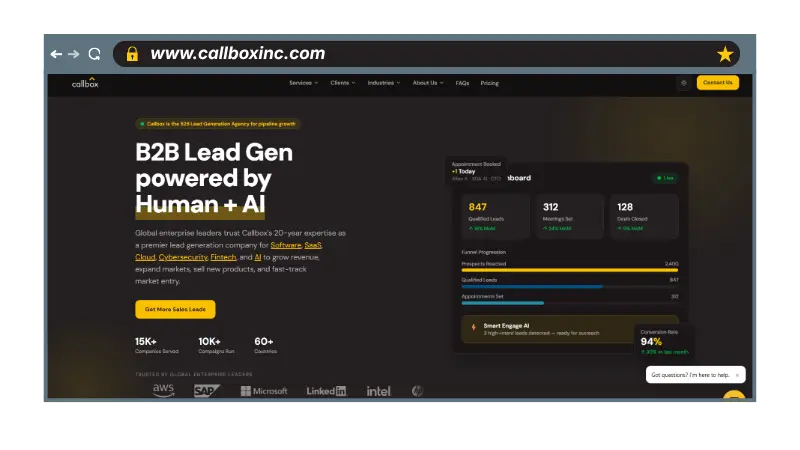
Callbox has spent more than two decades helping technology companies build pipeline, and it operates across 60+ countries. Automation vendors often sell into North America, Europe, and Asia-Pacific at the same time. For them, that reach means one program, one playbook, and one reporting view instead of three regional agencies.
- Nine-touch, multi-channel sequences. Phone, personalized email, LinkedIn, and event cross-selling work together so a CIO and a Head of Shared Services hear a consistent story.
- Intent data pointed at transformation. Proprietary database search and intent monitoring isolate enterprises researching digital transformation and process mining.
- Messaging built for regulated buyers. Pre-approved, compliance-aligned frameworks are designed for BFSI and healthcare, where automation interest is high and tolerance for loose claims is low.
- Third-party validation. Callbox is a Platinum HubSpot Partner and holds a 4.6-star Clutch rating. It was ranked #1 on Blueprint Demand’s 2026 lead generation list and #2 on IntentAmplify’s list for cybersecurity firms.
Personas and stack: CIOs, CTOs, VPs of Digital Transformation, Heads of Shared Services, and IT Directors. Callbox syncs directly with Salesforce, HubSpot, and Microsoft Dynamics and provides real-time pipeline reporting.
ABM Lead Gen That Generates Opportunities for Enterprise RPA
Callbox helped enabled the client to build valuable connections with key decision-makers, enhancing their sales outreach and marketing effectiveness.
View Case Study2. Customer Engagement Group (CFG)
Best for: cost-efficient North American coverage
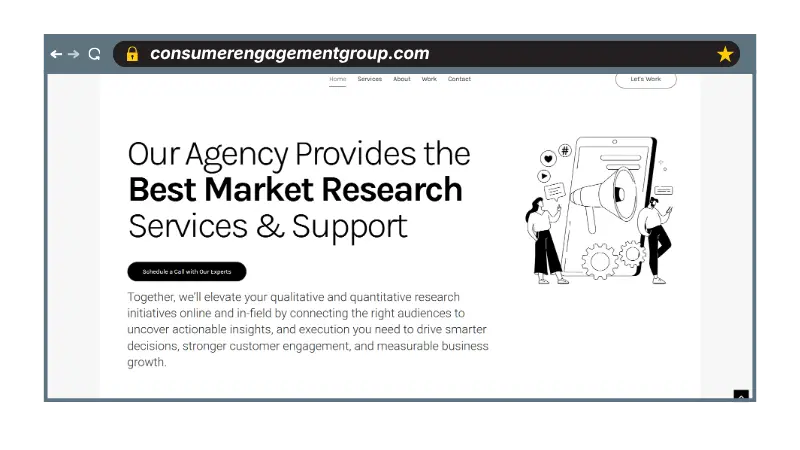
CFG‘s pitch is simple: technical fluency shouldn’t cost US wages. Its nearshore bench in Trinidad draws on reps with backgrounds in back-office IT, systems administration, and workflow operations. They arrive already knowing what a shared services center actually does all day.
- Unit economics that stretch a budget. CFG quotes all-in SDR costs of $12 to $18 per agent hour. It positions this as 60% to 75% below a fully loaded in-house US rep.
- A fast technical ramp. Reps go through a 10 to 14 day vocabulary program covering your bot architecture, pricing model, and vertical use cases before they dial.
- Guardrails on what reps promise. Pre-screened scripts keep SDRs from overcommitting on integrations or SLAs. That saves your AEs from resetting expectations later.
- Personas and stack. CFG targets Heads of Workflow Optimization, VPs of Finance and Accounting, Shared Services leads, and Enterprise Architects. It works natively in Salesforce, HubSpot, Outreach, Salesloft, and Apollo.
Worth weighing: The model is built around North American time zones, so vendors with heavy EMEA or APAC targets may need a second partner.
3. ViB
Best for: pay-for-performance meetings with in-market buyers
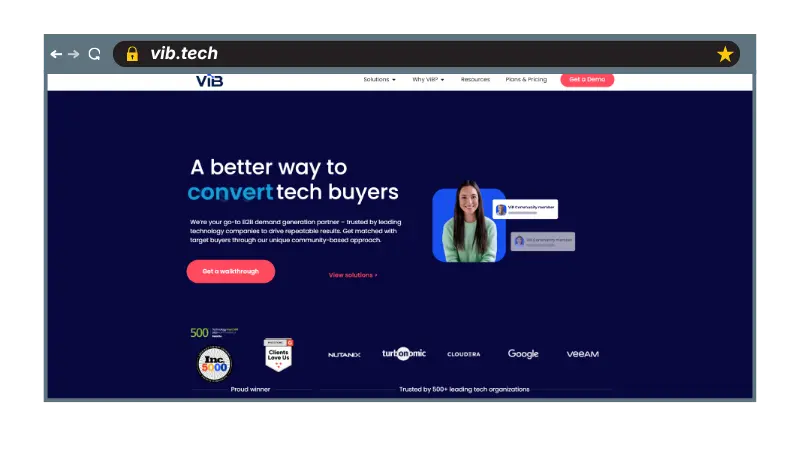
ViB takes a different route than cold outbound. Founded in 2010 and focused entirely on B2B technology, it works through a private community of millions of IT, operations, and transformation decision-makers. It then matches vendors with members who are already researching the category.
- You pay for meetings that happen. The model charges for completed, attended discovery meetings with verified ICP contacts, which shifts no-show risk off your budget.
- Intent built into the matching. Community research signals help surface buyers actively evaluating process mining, IDP, and workflow orchestration.
- Quick to launch. There’s no recruiting or pod-building phase, so campaigns start faster than with a dedicated-team model.
- Personas. Enterprise CIOs, VPs of Enterprise Applications, Directors of IT Infrastructure, and Heads of Process Optimization.
Worth weighing: You’re fishing in ViB’s community. It complements a named-account outbound program aimed at a fixed target list rather than replacing one.
4. Leadium
Best for: transparent multi-channel outbound
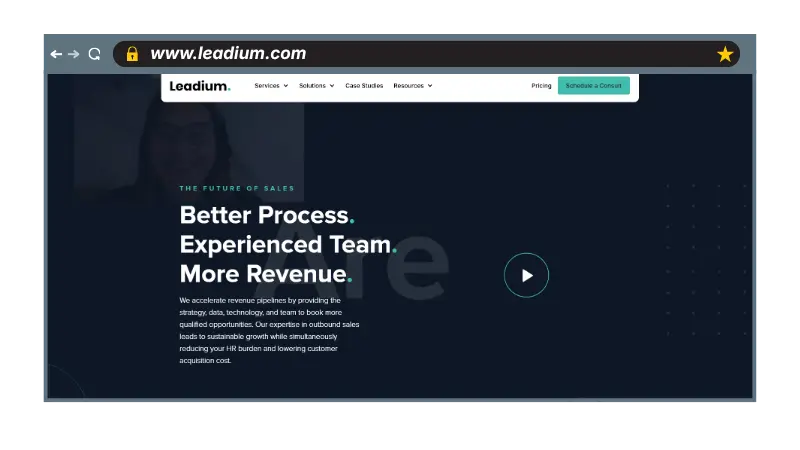
Las Vegas-based Leadium runs managed outbound for B2B software and IT services firms, and it leans hard into visibility. It’s a comfortable fit if your leadership team wants to see exactly which accounts are being worked and what prospects are saying.
- Cadences across four channels. Sequences combine phone, personalized email, LinkedIn, and SMS to reach several members of the buying committee at once.
- Lists built around tech-stack prerequisites. Leadium can filter for accounts running legacy mainframes or specific ERP environments, which is where automation pain lives.
- Tiers for different stages. Budget options range from early-stage automation startups to established enterprise platforms.
- Real-time reporting. Clients see account penetration, open and reply rates, and qualification notes as campaigns run. Core personas include VPs of Operations, Directors of Enterprise Applications, and Heads of Global Business Services.
Worth weighing: Leadium serves a broad range of industries, so confirm how much RPA-specific onboarding your pod gets.
5. Sales Focus Inc.
Best for: dedicated reps on long enterprise cycles
Sales Focus Inc. has been doing outsourced sales since 1998 and is headquartered in North Charleston, South Carolina. Its model is the opposite of a shared-rep agency: every salesperson is recruited, trained, and managed for one client only.
- Launch in 45 days or less. SFI commits to building and deploying a custom program within that window, including recruiting.
- Reps who represent only you. Dedicated, full-time professionals keep your messaging consistent across a sales cycle that can run many months.
- Pods that flex. Teams scale up or down as targets shift or new regions open.
- C-suite and operations focus. SFI targets COOs, CFOs, VPs of Shared Services, and Operations Directors who are weighing legacy modernization or cost reduction.
Worth weighing: The 45-day build is longer than plug-in models. It suits vendors planning a sustained program rather than a quick test.
How do the top RPA lead generation companies compare?
Company | HQ / Delivery Base | Best For | Core Strength | Global Reach |
CFG | Nearshore delivery (Trinidad) | Budget-conscious North American coverage | Technically screened SDR pods at $12 to $18/hour | North America focus |
ViB | Nashua, New Hampshire, US | Pay-per-attended-meeting pipeline | Private tech buyer community with intent matching | Global tech community |
Leadium | Las Vegas, Nevada, US | Transparent multi-channel outbound | Tech-stack-filtered lists and live reporting | US-led, multi-market |
Sales Focus Inc. | North Charleston, South Carolina, US | Long, complex enterprise cycles | Dedicated one-client reps, 45-day launch | US-based teams |
Callbox | Encino, California, US | Multi-region ABM and regulated industries | 9-touch sequences with intent data | 60+ countries (NA, EMEA, APAC) |
EXPERT TIP
Before you sign, ask each finalist to run a 15-minute mock discovery call with you playing a skeptical Head of Automation. Throw the three questions from earlier at them. How the rep recovers from a question they can't answer tells you more than any case study deck.
Which RPA lead generation partner fits your go-to-market motion?
Most vendors don’t need the “best” partner in the abstract. They need the one that matches how they sell. Here’s a quick way to shortlist:
- You’re a Series A or B platform selling mostly into the US. Cost per conversation matters most, so start with CFG or Leadium and test messaging before scaling.
- Your ACV is high and you want to pay only for results. ViB’s attended-meeting model limits downside while you validate a new vertical.
- Your deals take nine months and involve the CFO. Sales Focus Inc.’s dedicated reps keep continuity across a long cycle.
- You’re expanding into EMEA and APAC, or selling into banks and insurers. Callbox’s global footprint and compliance-aligned messaging keep regions and regulated accounts under one program.
Related: Top RPA Companies for 2026
Should RPA vendors build an in-house SDR team or outsource lead generation?
In-house teams give you control, but for technical products the ramp is brutal. A new hire has to learn your platform, your ICP, and the enterprise automation landscape before they’re credible with a CIO. Here’s how the two options stack up.
Factor | In-House US/UK SDR | Specialist Lead Generation Partner |
All-in annual cost | $100,000 to $150,000+ per rep | Varies by model: hourly nearshore (e.g. CFG at $12 to $18/hour), monthly retainer, or pay-per-meeting |
Ramp to pipeline | 12 to 16 weeks for product and ICP fluency | Days to weeks (CFG cites 10 to 14 days; Sales Focus cites 45 days or less, including hiring) |
Technical context risk | High, since entry-level SDRs often struggle with IT architecture | Lower, with reps screened or trained on IT and workflow concepts |
Data and tooling | $1,200+ per seat per month for intent data, contact data, and engagement tools | Usually bundled into the service |
Management overhead | Requires SDR managers plus data and ops support | Managed by the partner with a dedicated account lead |
Discover how SDR as a Service can be your way to scale your success.
How do you measure ROI from an RPA lead generation partner?
Meetings booked is the easiest number to report and the least useful on its own. Use this five-step framework to see whether a partner is building real pipeline.
- Set a baseline cost per qualified opportunity. Take your current fully loaded outbound cost and divide it by the number of opportunities your AEs accepted last quarter. This is the number any partner has to beat.
- Define “qualified” before launch. Agree in writing on persona, company size, tech stack, and a confirmed automation initiative. Loose definitions produce inflated meeting counts and angry AEs.
- Track AE acceptance rate, not just meetings held. If fewer than half of booked meetings convert to accepted opportunities, the targeting or the talk track needs work.
- Measure pipeline value and velocity by 90 days. Compare the dollar value and stage progression of partner-sourced opportunities against your in-house baseline. Automation deals move slowly, so look at stage movement, not just closed-won.
- Calculate payback on closed revenue. Divide total program cost by gross margin on closed-won deals from partner-sourced pipeline. With long enterprise cycles, expect a meaningful read at six to nine months, not after month one.
See the best outsourced SDR companies for every B2B company.
Who do RPA sales development teams target?
Automation touches several departments at once, so strong programs map outreach to the specific use case rather than blasting one title.
- IT and security. CIOs, CTOs, CISOs, and VPs of Enterprise Architecture care about integration, scalability, and governance. They’re often the final technical gate.
- Operational excellence. COOs, VPs of Process Excellence, Heads of Automation or the CoE, and Directors of Business Transformation own the roadmap and usually champion the deal.
- Shared services and finance. VPs of Shared Services, Heads of GBS, CFOs, and Controllers feel the pain in invoice, claims, and reconciliation work. They respond to FTE hours returned and error-rate reduction.
- Industry-specific leaders. VPs of Banking Operations for KYC and AML, Heads of Claims in insurance, and VPs of Supply Chain Operations bring urgent, well-defined use cases.
How do we choose these companies?
This list was compiled by the Callbox content team, and it includes Callbox itself, so we want to be upfront about that. To keep the comparison useful, we evaluated each partner on the same five criteria:
- demonstrated experience selling enterprise technology
- SDR training or screening for technical products
- multi-channel or intent-driven outreach capability
- CRM integration and reporting
- clarity of pricing model
Details for other providers come from their public materials and third-party business directories as of September 2026. Pricing and capabilities change, so confirm specifics directly with each vendor before you buy.
Frequently asked questions
What is lead generation for RPA companies?
It’s the process of finding, engaging, and qualifying enterprise decision-makers who are dealing with high-volume, rule-based work, such as CIOs, COOs, and Heads of Automation. The goal is a qualified discovery meeting where the vendor can present bots, process mining, IDP, or implementation services.
Why do generic outbound agencies struggle with RPA lead generation?
They tend to pitch RPA like plug-and-play software. Enterprise buyers expect reps to understand ERP integration (SAP, Oracle, AS400), security governance, bot licensing, and ROI measures like FTE hours returned. A rep who can’t hold that conversation burns the account.
How much does outsourced RPA lead generation cost?
It depends on the model. Nearshore managed teams such as CFG quote around $12 to $18 per agent hour all-in. Multi-channel agencies like Callbox and meeting networks like ViB usually price as monthly retainers or pay-per-meeting, scoped by region, persona, and volume.
How long does it take an outsourced SDR team to ramp on an RPA product?
Much less time than an in-house hire. CFG cites a 10 to 14 day technical ramp, and Sales Focus Inc. commits to launching in 45 days or less. A new in-house SDR typically needs 12 to 16 weeks to become credible with technical buyers.
Which lead generation company is best for global RPA campaigns?
For programs spanning North America, EMEA, and APAC, a global multi-channel partner like Callbox, active in 60+ countries, is usually the strongest fit. US-focused motions may suit Sales Focus Inc. or Leadium, while nearshore cost efficiency points to CFG.