B2B Customer Acquisition Strategy That Actually Scales
Build a B2B customer acquisition strategy that scales beyond referrals and converts prospects into a predictable pipeline.

At some point, every growing B2B company faces the same uncomfortable realization: the referrals are slowing down, and there is no real plan for what comes next.
A B2B customer acquisition strategy is a deliberate, scalable system for winning new clients — built on defined channels, a clear ideal customer profile, and repeatable outreach that does not rely on luck or warm introductions. Without one, growth becomes reactive instead of predictable.
This article covers the full playbook: how to define your ideal customer, which acquisition channels to prioritize at different revenue stages, how to budget for acquisition, and how to build an engine that compounds over time. You will also see where most founders make the costly mistake of scaling tactics before the strategy is solid.
The difference between companies that plateau and those that scale past it usually comes down to one thing: when they decided to stop depending on referrals.
💡Definition Box : A B2B customer acquisition strategy is a structured, repeatable system for attracting and converting business buyers. It combines audience targeting, channel selection, and a clear funnel process so that pipeline growth does not depend on referrals, relationships, or timing.
Don’t let high-value B2B prospects slip to competitors. Start capturing them today.
1. What Is a B2B Customer Acquisition Strategy?
A B2B customer acquisition strategy is a structured plan for attracting, engaging, and converting business buyers into paying customers. It defines who you are targeting, which channels you will use to reach them, how you will move them through the funnel, and how you will measure success at every stage.

The goal is a repeatable system. You need one that generates pipeline whether or not your network shows up this quarter.
Unlike consumer acquisition, B2B buying cycles are longer, involve multiple stakeholders, and require a higher degree of trust before a deal closes. That means your strategy needs to account for both volume and quality. Getting 500 leads that never convert costs more than getting 50 that do.
Most companies start with tactics: they run ads, send emails, post on LinkedIn. The problem is that tactics without strategy produce inconsistent results. You might have a great month followed by three quiet ones. A real strategy connects those tactics to a defined audience, a measurable goal, and a predictable process.
This is the foundation everything else in this article builds on.
Now, what’s next in customer acquisition? Discover the lead generation trends.
2. Why Referrals Stop Working (and When)
Referrals are not a bad customer acquisition channel. They are actually one of the best — high trust, low friction, fast to close. The problem is that they are not scalable on demand. You cannot decide to grow 40% next quarter and call your referral network to make it happen.

Most B2B companies hit the referral ceiling between $1M and $5M in annual revenue. By that point, the founder’s network has been tapped. Former colleagues, early clients, and friendly introductions have already been converted or declined. What is left is a pipeline that fluctuates based on who happens to be talking about you at any given moment.
💡Industry Insight: According to research from Gartner, B2B buyers complete more than half of their purchase decision process before ever engaging with a sales rep. That means waiting to be referred in is waiting too long. Buyers are already evaluating solutions before you enter the conversation.
The signal that referrals are no longer enough usually shows up as inconsistency. Good months and bad months with no clear reason for either. That inconsistency is not a performance problem. It is a strategy problem. Referrals do not fail dramatically; they fade gradually until the pipeline is too thin to ignore.
The founders who build scalable businesses are the ones who do not wait for the fade. They build the acquisition engine before the referral network runs dry. According to Inbeat Agency, 44% of companies prioritize customer acquisition, but only 18% focus on retention.
3. How to Define Your Ideal Customer Before You Spend a Dollar
The most expensive mistake in B2B customer acquisition is targeting the wrong buyer. You can have perfect messaging, strong channels, and a well-funded campaign — and still produce nothing if the audience is off. Defining your ideal customer profile (ICP) is therefore not a marketing exercise. It is a revenue decision.
What makes a strong ICP?
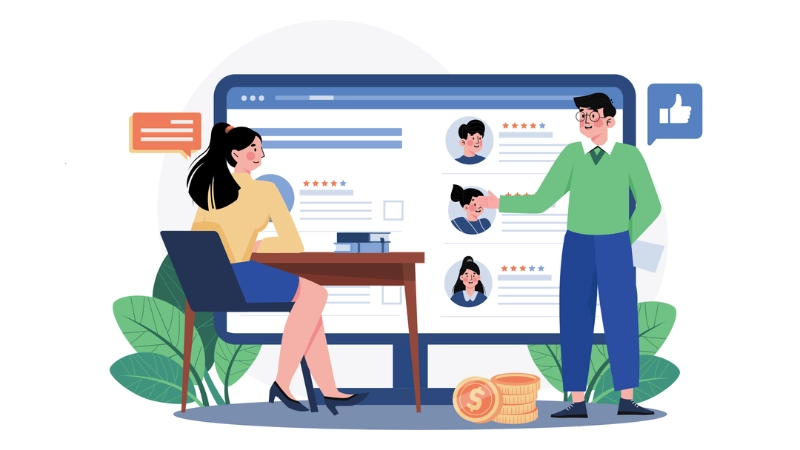
Your ICP describes the specific type of company most likely to buy, stay, and expand. It goes beyond basic firmographics like industry and company size. A useful ICP captures:
- The business problems your product or service solves best
- The internal triggers that make a company ready to buy (growth phase, headcount changes, new leadership)
- The decision-makers involved and what they care about
- The revenue range where your solution delivers clear ROI
- The channels your best customers use to find solutions
The fastest way to build your ICP is to look backward. Analyze your ten best customers — the ones with the highest lifetime value, lowest churn, and most referrals given. What do they have in common? That pattern is your ICP.
What is ICP drift and why does it hurt acquisition?
ICP drift happens when your target customer profile quietly shifts while your acquisition strategy stays the same. Your product evolves, your market matures, your team changes — but your messaging and targeting still reflect a customer you no longer serve best. The result is a pipeline full of prospects that take longer to close, require more hand-holding, and churn faster.
Revisit your ICP every six months. If your recent wins look different from your defined ICP, the ICP needs to update — not the sales team.
Related: 2026 B2B Prospecting Strategies
4. The Core Channels That Drive Scalable B2B Acquisition
No single channel builds a scalable B2B customer acquisition strategy on its own. The companies that grow consistently combine outbound and inbound tactics so that pipeline comes from multiple directions at once. Here is how each major channel performs and when to prioritize it.

Outbound: email, calling, and LinkedIn
Outbound is the fastest way to generate pipeline when you need it now. Cold email, cold calling, and LinkedIn outreach let you reach your ICP directly rather than waiting for them to find you. The tradeoff is that outbound requires discipline: consistent volume, tight targeting, and a message that connects a specific problem to a specific outcome.
Outbound works best when your ICP is clearly defined and your message is specific enough to feel relevant rather than generic. A cold email that references a prospect’s recent funding round or hiring pattern outperforms a generic pitch by a significant margin. Personalization at scale is the skill that separates high-performing outbound from spam.
Build a more productive outbound lead generation strategy.
Inbound: SEO and content
Inbound is slower to build but compounds over time. A well-optimized blog post or landing page can generate qualified traffic for years without additional spend. For B2B companies, inbound works best when your buyers are actively searching for solutions to a named problem — which means content needs to match search intent, not just cover general topics.
Content that answers specific buyer questions (how to reduce customer acquisition cost, what to look for in an SDR partner) outperforms content that simply talks about the brand. Think like the buyer, not the marketer.
Related: Benefits of Inbound Marketing
Paid: ads and sponsored content
Paid acquisition offers control and speed. You can test messaging, reach new audiences, and generate leads within days. The risk is that paid stops producing the moment you stop spending. Because of this, paid works best as a complement to outbound and inbound rather than a standalone strategy.
For most B2B companies, LinkedIn Ads and Google Search are the highest-value paid channels. LinkedIn allows precise targeting by job title, company size, and industry. Google Search captures buyers who are actively looking for a solution right now.
Referral programs and partner channels
Structured referral programs are different from organic referrals. Instead of hoping clients mention you, you build a system that incentivizes and tracks referrals actively. Partner channels — integrations, resellers, complementary service providers — extend your reach into audiences you could not otherwise access efficiently.
These channels take longer to activate but tend to produce higher-quality leads because trust is transferred from the referring party. Therefore, they are worth building in parallel with outbound and inbound from an early stage.
5. How to Set Your Customer Acquisition Budget
One of the most common founder mistakes is treating acquisition spend as a cost rather than an investment with a measurable return. Customer acquisition cost (CAC) — the total spend required to win one new customer — is the number that tells you whether your strategy is working economically.

A healthy CAC depends on your average contract value (ACV) and customer lifetime value (LTV). A commonly used benchmark is an LTV-to-CAC ratio of 3:1 or higher. If you spend $3,000 to acquire a customer worth $9,000 over their lifetime, that is a viable acquisition model. If you spend $3,000 to acquire a customer worth $4,000, you have a math problem that more volume will only make worse.
💡Expert Tip: Before scaling any acquisition channel, calculate your CAC per channel — not just overall. Email outbound, paid ads, and partner referrals often have dramatically different CACs. Knowing which channel produces the best LTV-to-CAC ratio tells you exactly where to double down and where to cut.
Budget allocation should follow the stage of your strategy. Early on, lean toward outbound because it produces faster feedback and lower upfront spend. As you learn what works, redirect budget toward inbound and paid to build compounding assets. The goal is a channel mix where no single source accounts for more than 50% of your pipeline.
Related: Top Customer Acquisition Agencies for B2B Teams

6. Building the Full Acquisition Engine: Outbound, Inbound, and Beyond
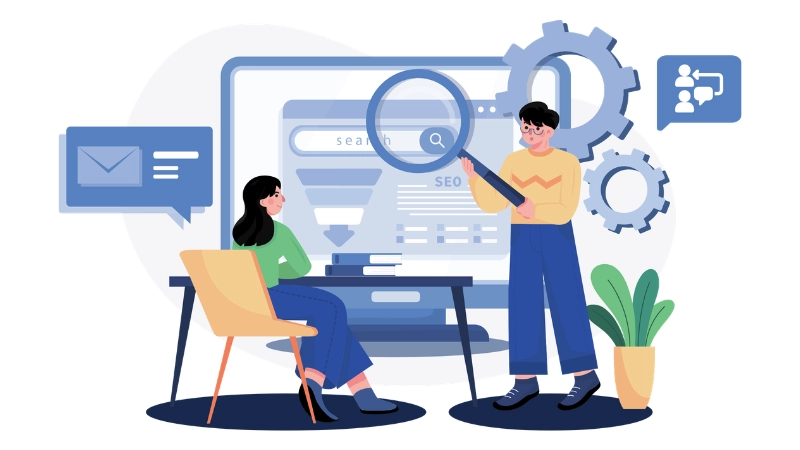
A scalable B2B customer acquisition strategy is not a single channel or campaign. It is an engine — a set of coordinated motions that generate, qualify, and convert pipeline continuously. Building that engine requires four components working together.
Consistent top-of-funnel volume
Pipeline requires volume to function. Whether through outbound sequences, SEO-driven content, or paid campaigns, you need a steady flow of new prospects entering the funnel each week. Inconsistent top-of-funnel activity is the single biggest cause of pipeline gaps two to three months downstream.
A qualification process that filters fast
Not every prospect who enters the funnel is worth pursuing. A strong qualification framework — typically built around criteria like budget, authority, need, and timeline (BANT) or a more modern equivalent — lets your team spend time on deals that are likely to close. Qualification is not gatekeeping; it is resource management.
A follow-up system that does not give up early
Research consistently shows that most B2B deals require five to eight touchpoints before a prospect engages meaningfully. Most sales teams give up after two or three. Building a structured, multi-touch follow-up sequence — across email, phone, and social — is one of the highest-ROI improvements any acquisition strategy can make.
A feedback loop between sales and marketing
The best acquisition engines treat sales and marketing as one team with shared metrics. Marketing knows which content and channels produce the best-qualified leads. Sales knows which objections come up most often and which customer profiles close fastest. When that information flows in both directions, the strategy gets sharper with every cycle.
Callbox accelerates revenue by engaging prospects after brand awareness and converting them into qualified meetings, closed deals, and loyal customers. Once customers are acquired, Callbox does not stop there. Callbox then nurtures them into repeat business, advocacy, referrals, and expansion opportunities, feeding revenue back into the top of the funnel. This creates a self-reinforcing growth engine that continuously scales pipeline, accelerates sales, and maximizes customer lifetime value.
If your team is stretched thin or you are entering a new market, outsourcing the acquisition engine to a specialist partner lets you move faster without building every function in-house.
Looking for a B2B customer acquisition partner that can deliver real pipeline growth?
7. How Callbox Accelerates B2B Customer Acquisition
Building an acquisition engine from scratch takes time, talent, and technology. Many B2B companies – especially those growing past the referral ceiling for the first time — need results before they have the infrastructure to generate them independently.

Callbox provides a fully managed, omnichannel acquisition system: outbound prospecting, multi-touch sequencing, appointment setting, and pipeline reporting — all built around your ICP and revenue goals. Rather than replacing your sales team, Callbox extends it with the capacity and process to generate qualified meetings at scale.
The result is a predictable pipeline that does not depend on who your team knows or how active your referral network is this quarter. Ready to build an acquisition engine that compounds? Talk to Callbox today.
8. Frequently Asked Questions
What is the difference between a customer acquisition strategy and a marketing strategy?
A marketing strategy focuses on building awareness and interest across a broad audience. A customer acquisition strategy is narrower and more commercial: it defines exactly who you are targeting, how you will reach them, and what steps move them from prospect to paying customer. Acquisition strategy lives at the intersection of marketing and sales.
How long does it take to see results from a B2B customer acquisition strategy?
Outbound tactics typically produce results within four to eight weeks if targeting and messaging are dialed in. Inbound and SEO take longer — usually three to six months before content generates consistent traffic and leads. A well-funded paid campaign can produce leads within days, but CAC tends to be higher in the early stages before optimization kicks in.
Is it true that referrals are always the highest-quality leads?
Referrals are often high-quality because they arrive with built-in trust. However, they are not always the best fit. A referral from a client who operates in a different segment or at a different scale can send you a prospect outside your ICP. Quality is not guaranteed by the source alone. Qualification still matters regardless of how a lead enters the funnel.
How many acquisition channels should a B2B company run simultaneously?
Most companies benefit from two to three active channels at any given time. Running too many channels with limited budget and team capacity means none of them get enough attention to work properly. Start with the channel most likely to reach your ICP quickly (usually outbound), prove the model, then add a second channel once the first is generating consistent results.
What is a realistic customer acquisition cost for B2B companies?
CAC varies significantly by industry, deal size, and channel. SaaS companies often target a CAC that is recovered within 12 months of a new customer’s contract value. Professional services firms may accept longer payback periods given higher LTV. The number that matters most is your LTV-to-CAC ratio. If it is below 3:1, the economics of your acquisition model need attention before you scale.