Generating Qualified AI Leads: Why Standard Scripts Don’t Work
Generating qualified AI leads requires more than scripts. Learn why scripted outreach fails and what works to drive real conversions.
 Rebecca Matias
Rebecca Matias is Callbox's COO with 18 years of experience scaling B2B pipeline through data-driven outbound marketing, lead generation, and sales development.
View full bio of Rebecca Matias
In the fast-paced world of artificial intelligence, C-level executives are bombarded with generic pitches daily. If your outreach relies on rigid, templated communication, you are likely failing to connect with your target audience. To capture qualified AI leads, you must abandon the “spray and pray” approach and move toward authentic, high-value engagement.
Definition: What are Qualified AI Leads?
Qualified AI leads are prospects who have been vetted based on specific behavioral, technical, and budgetary indicators that suggest they have both a genuine need for an AI solution and the authority to purchase it. Unlike bulk marketing leads, these prospects demonstrate measurable intent, moving them beyond simple awareness into active consideration.
Struggling to move your leads from interested to sales-ready?
Why Standard Sales Scripts Are Killing Your AI Pipeline

The AI industry is inherently complex, yet many companies treat their lead generation like a commodity retail play. Standard sales scripts fail for a simple reason: they lack context.
When an SDR reads a script like a hostage reading a ransom note, your prospects don’t just lose interest—they lose trust. In 2026, data shows that 61% of marketers cite generating high-quality leads as their biggest challenge (HubSpot State of Marketing 2026). When you force a rigid script onto a CTO or a Head of Innovation, you are telling them that you care more about your process than their specific technical pain points.
Examples of Effective Scripts for AI Lead Generation
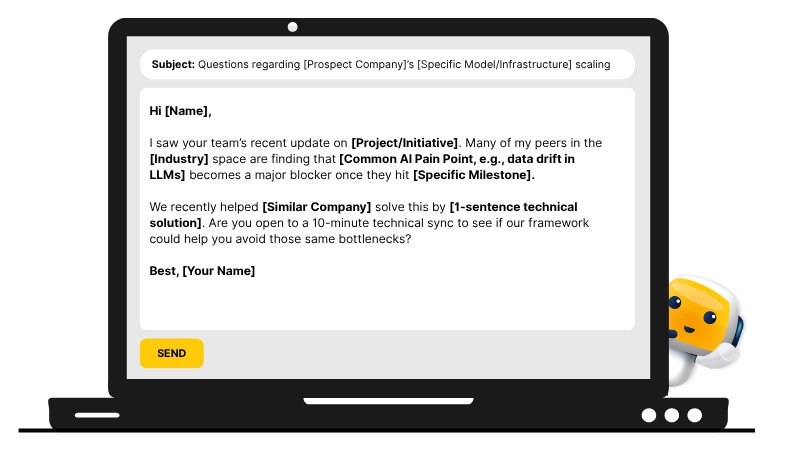
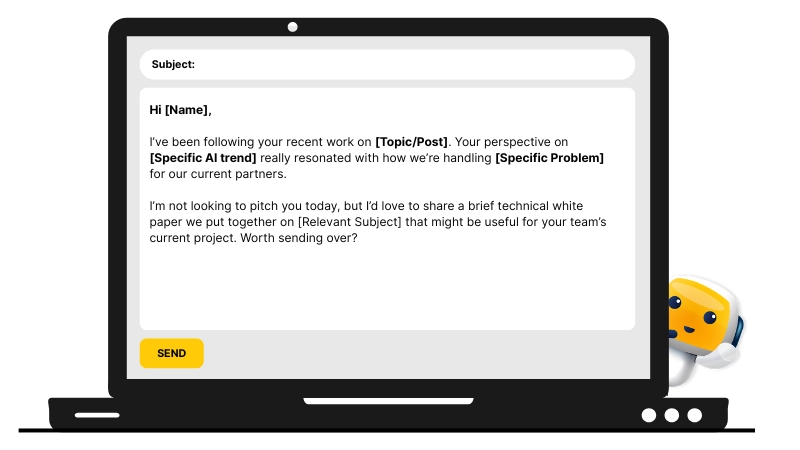
To generate qualified AI leads, your script must move from “selling” to “consulting.” Here are two frameworks that replace the robot-voice with human expertise.
1. The “Problem-Validated” Email Script
2. The “Context-First” LinkedIn Message
Driving Qualified Quantum AI Leads Across North America
After five months, the campaign delivered 185 qualified sales appointments, a 27% increase in conversion rates, and a 22% shorter sales cycle. It also drove strong enterprise awareness among organizations exploring Quantum AI solutions.
View Case StudyThe Breakdown of Scripted Outreach
Research indicates that personalization is the defining factor in B2B engagement. According to recent HubSpot benchmarks, emails with personalized subject lines see a 26% higher open rate, yet less than 30% of sales teams personalize their follow-up sequences. In the AI sector, where the stakes of implementation are high, a generic script signals that the sender has not bothered to research the prospect’s unique technical ecosystem.
- The “One-Size-Fits-None” Problem: Generic scripts fail to address industry-specific compliance or integration hurdles, which are the top concerns for 78% of AI decision-makers.
- Objection Handling vs. Conversation: Rigid scripts treat objections as hurdles to overcome with a pre-baked rebuttal. In reality, data shows that 74% of buyers choose the sales representative who was the first to add value to their buying journey, not the one with the best “comeback.”
 Industry Insight: Great sales teams in the AI space are shifting from rigid scripts to "Adaptive Conversation Frameworks." This approach increases conversion rates by up to 25% for complex B2B solutions because it treats the discovery call as an exchange of expertise rather than a gatekeeping exercise.
How to Fix Your Scripts and Stop Bombarding Prospects
If you realize your current outreach feels robotic, you are likely suffering from the “Volume Trap.” Industry data from 2026 shows that 57% of B2B buyers now find aggressive, repetitive outreach to be the primary reason for opting out of a vendor relationship.
Transitioning to Adaptive Messaging
To fix your scripts, prioritize the “30-Second Relevance Rule.” Your prospect should know exactly why you are contacting them within the first 30 seconds of reading an email or listening to a voicemail.
- Lead with Evidence: Mention a recent company milestone, a specific AI white paper they published, or a known industry technical challenge.
- The “No-Pressure” Ask: Shift from asking for a “discovery call” to requesting a “brief technical sync” to review a specific solution.
Stopping the “Bombardment” Cycle
Bombarding prospects with 10+ emails is not persistence—it is a brand liability.
- The Rule of Three: If you have sent three high-value touches (Email, LinkedIn, Phone) without a response, pause. HubSpot data suggests that prospects are 3x more likely to respond to a “breakup” email that resets the conversation than a fourth or fifth aggressive nudge.
- Sunset Policies: Remove prospects from active sequences after 90 days of silence. This protects your sender reputation and ensures your team focuses on high-intent leads.
Related: Examples of Winning Sales Cadence
The 2026 Reality: Quality Over Quantity
It is no longer enough to generate thousands of names; you need to generate qualified leads for AI companies that convert. As pressure on marketing managers to prove ROI grows, the gap between “leads” and “sales-ready opportunities” has never been wider.
Moving from Volume to Intent
To generate better AI leads, you must prioritize signals. Behavioral data—such as repeat visits to your pricing page or engagement with technical documentation—is critical. Many organizations are now exploring how to leverage AI in sales automation to capture these signals in real time, with companies reporting a 20% increase in lead-to-opportunity conversion when using intent-based triggers.
Struggling to move your leads from “interested” to “sales-ready”?Contact our lead generation experts at Callbox today to audit your strategy and start building a high-intent pipeline.
How Lead Generation Companies Accelerate AI Growth

Scaling an internal sales team while managing complex product roadmaps is a massive drain on resources. Specialized lead generation firms act as an extension of your team, bringing expertise that bridges the gap between technical innovation and revenue generation.
- Industry-Specific Intelligence: Professional agencies provide deep-dive market research, ensuring that your outreach hits the right stakeholders—whether that’s a Data Scientist, a VP of Engineering, or a CEO.
- Multi-Channel Precision: While your internal team might be focused on one channel, partners leverage a full-funnel approach, combining LinkedIn engagement, strategic calling, and personalized email sequences to build trust at scale.
- Technical Credibility: High-end agencies train their SDRs to speak the language of AI. They don’t just “set meetings”; they facilitate technical conversations that validate your solution’s unique value proposition.
- Pipeline Predictability: By outsourcing the top of the funnel, you insulate your revenue stream from the volatility of internal hiring cycles and turnover, ensuring a steady flow of high-intent prospects.
Related: AI Lead Generation Companies in the USA
The Role of AI in Your Own Lead Engine
Ironically, the best way to generate AI lead generation is to use AI to clean and score your data. Using AI for lead generation allows you to analyze hundreds of data points instantly.
Expert Tip: Companies that align sales and marketing teams generate 208% more revenue from their marketing efforts. Use your AI tools to create a "Service Level Agreement" so that "qualified" means the same thing to both the SDRs and the CMO.
Conclusion: Stop Chasing Names, Start Building Relationships
Generating qualified AI leads is about empathy and insight, not volume. In 2026, prospects are looking for partners who understand the technical hurdles of the AI landscape. By ditching the script and focusing on adaptive, signal-based selling, you can cut through the noise and connect with the decision-makers who matter most.