How to Build a Multi-Channel Sales Sequence for Enterprise IT Leads
Build a multi-channel sales sequence that connects with enterprise IT buyers and generates consistent pipeline opportunities.
 Rebecca Matias
Rebecca Matias is Callbox's COO with 18 years of experience scaling B2B pipeline through data-driven outbound marketing, lead generation, and sales development.
View full bio of Rebecca Matias
Here is a number worth sitting with: enterprise IT deals now involve an average of 10 to 11 stakeholders for complex B2B deals, per Gartner. That means your sequence is not a one-to-one conversation. It is a coordinated campaign across a buying committee where each person has different priorities, different preferred channels, and different thresholds for engagement.
Multichannel sales for enterprise IT leads means building and executing a coordinated outreach sequence across email, phone, LinkedIn, and direct outreach channels, timed and personalized to match the behavior of IT decision-makers at different stages of a long, complex buying cycle.
This article lays out the Enterprise IT Sequence Blueprint. This is a practical, step-by-step framework for building sequences that reach the right people on the right channels at the right time. You will learn how to structure your channel mix, how to sequence touches across a buying committee, and how to measure whether your outreach is actually moving deals forward.
Generic cadences do not close enterprise IT deals. A blueprint does. If you are struggling to find the right strategy, mastering lead generation for IT companies is the first step toward building a sustainable pipeline.
Don’t let enterprise IT opportunities slip through your pipeline.
What is the Enterprise IT Sequence Blueprint?
The Enterprise IT Sequence Blueprint is a structured 24-day outreach framework designed to penetrate complex technical buying committees through a high-frequency, low-friction mix of six distinct digital and analog communication channels. This framework moves away from pestering a single CTO and focuses on surrounding the entire IT department with value-driven touchpoints.
In 2026, the surround sound approach is mandatory. According to a 2025 Forrester report, 82% of enterprise IT buyers ignore any vendor that relies on a single communication channel. To achieve multichannel sales for enterprise IT leads, your sequence must function like an orchestra. Each instrument or channel plays a different part of the same song.
Why does a blueprint outperform a standard cadence?
A standard cadence is a linear list of tasks. A blueprint is a strategic map of if-this-then-that scenarios based on how a Lead Architect or a CISO interacts with your content.

Expert Tip: Don’t treat LinkedIn as a lite version of email. Use LinkedIn for soft touches like likes and insightful comments on their posts three days before sending a direct message. This builds familiarity without the friction of an inbox request. For companies seeking to scale these efforts, implementing a proven strategy for generating high-quality IT leads is often the difference between a stalled sequence and a booked meeting.
Outsourcing Sales as a Service: Generating 50+ SQLs for Enterprise Tech
In three months, the program generated 52 SQLs and 88 MQLs while establishing 589 new LinkedIn connections with key medical decision-makers, creating a high-velocity pipeline and expanding the client’s long-term market presence.
View Case StudyStep 1: Mapping the 6.8 Stakeholders
Success in enterprise IT sales requires identifying the technical gatekeepers, the financial approvers, and the end users who will actually live with your software or hardware. You cannot send the same sequence to a DevOps Manager and a Chief Financial Officer.
- The Technical Evaluator: Cares about API documentation and integration friction.
- The Economic Buyer: Cares about ROI, TCO, and vendor stability.
- The Influencer: Often a mid level manager who needs to prove a win to their boss.
Total Cost of Ownership (TCO): A financial estimate intended to help buyers determine the direct and indirect costs of a product or system over its entire lifecycle.
Related: Demand Generation for Tech Companies
Step 2: Selecting Your Channel Mix
The ideal channel mix for IT sales leads includes LinkedIn, personalized email, phone, and dark social signals. While email is the backbone, LinkedIn is the credibility layer, and the phone is the conversion tool.
What is the most effective channel mix for IT leads?
The most effective channel mix for enterprise IT leads consists of 40% email, 30% LinkedIn, 20% phone, and 10% direct video or value added mailers. This balanced approach prevents inbox fatigue while ensuring your brand appears in the professional environments where IT leaders spend their research time.
| Channel | Frequency | Purpose |
| High (6+ touches) | Delivering data sheets and case studies | |
| High (4+ touches) | Building social proof and peer credibility | |
| Phone | Medium (3+ touches) | Pattern interruption and setting the meeting |
| Video | Low (1 touch) | High impact personalization for top tier leads |
Step 3: The 24-Day Sequence Structure
A winning sequence for multichannel sales for enterprise IT leads should span 24 days and include at least 14 touches. This frequency is necessary because IT leaders are bombarded with quick sync requests. You must provide value at every step. You must provide value at every step. If you are refining your approach, understanding the nuances of how to generate leads for technology companies is essential for long-term growth.
- Day 1: LinkedIn Research and Profile View.
- Day 2: Personalized Email via the Insight Opener.
- Day 4: LinkedIn Connection Request with no pitch.
- Day 7: Phone Call in the afternoon and a Follow-up Email.
- Day 10: Share a relevant 2026 industry report via LinkedIn DM.
How many touches are required for enterprise IT sales?
Research suggests that enterprise IT prospects require 14.2 touches on average before a meaningful conversation occurs. This represents a 15% increase from 2024. It reflects the increased noise in digital channels and the rise of AI generated spam.

Callbox accelerates revenue by engaging prospects after brand awareness and converting them into qualified meetings, closed deals, and loyal customers. Once customers are acquired, we don’t stop. Callbox then nurtures them into repeat business, advocacy, referrals, and expansion opportunities, feeding revenue back into the top of the funnel. This creates a self-reinforcing growth engine that continuously scales pipeline, accelerates sales, and maximizes customer lifetime value.
Related: 5 Winning Sales Cadence Examples
Step 4: Personalization at Scale (The 10/50 Rule)
You cannot manually research every lead for three hours, but you cannot send generic templates either. Use the 10/50 Rule. Spend 10 minutes researching the top 50% of your high-value accounts.
Personalization at Scale: The process of using data and automation to deliver tailored messages to a large volume of prospects without sacrificing the human feel of the outreach.
For example, if you see an IT Director recently spoke at a 2026 cybersecurity summit, your email should lead with a specific takeaway from their talk. This is an Experience Signal. It proves you are not a bot.
I clarified the definition of Sequence Velocity and distinguished it from the standard Sales Velocity formula to ensure technical accuracy for your sales-leader readers.
Step 5: Measuring Sequence Velocity
To optimize your outreach, you must measure Sequence Velocity. While Sales Velocity measures the total health of your pipeline using the formula
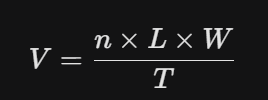
Sequence Velocity focuses specifically on the top of the funnel. It tracks how efficiently your multichannel touches convert a cold lead into a qualified meeting. By measuring the time elapsed between the first LinkedIn touch and the booked discovery call, you can identify which channel combinations are accelerating the “interest-to-intent” phase.
What are the key metrics for IT sales sequences?
The key metrics for IT sales sequences include the Positive Reply Rate (PRR), LinkedIn Engagement Rate, and Meeting Set-to-Held Ratio. While open rates can be skewed by privacy firewalls, a positive reply is a clear indicator of sequence health. A not now but follow up in Q3 signal is also a positive indicator.
Related: IT Lead Generation Companies in California
Frequently Asked Questions
Is cold calling dead for enterprise IT sales in 2026?
Cold calling is not dead for enterprise IT sales, but its role has shifted from a primary discovery tool to a strategic pattern interrupt. When an IT leader has seen your name on LinkedIn and in their inbox, a 30-second no-pressure phone call becomes much more effective at securing a calendar invitation.
What is the biggest mistake companies make with IT multichannel sales?
The biggest mistake companies make is multi-spamming by sending the exact same message across three different platforms simultaneously. This creates a negative brand impression and leads to immediate blocks. Instead, vary the content type and the value proposition for each specific channel to keep the conversation fresh.
How do you handle silent stakeholders in a sequence?
Handle silent stakeholders by shadow sequencing. This involves targeting them with LinkedIn ads or low friction content while focusing your direct outreach on the primary champion. If you are specifically targeting regional markets, consider partnering with specialized IT lead generation companies in Texas to gain a local competitive advantage. This ensures that when the champion brings your name up in a board meeting, the silent stakeholders already recognize the brand name and the core value.