Best Outbound Lead Generation Service for B2B SaaS
Searching for the best outbound lead generation service for B2B SaaS? Discover top companies that generate qualified leads and boost pipeline growth.
 Rebecca Matias
Rebecca Matias is Callbox's COO with 18 years of experience scaling B2B pipeline through data-driven outbound marketing, lead generation, and sales development.
View full bio of Rebecca Matias
Your product is solid. Your team is ready to close. But the calendar is empty, the pipeline is thin, and inbound leads are trickling in too slowly to hit your number. Sound familiar? For most B2B SaaS companies, the bottleneck isn’t the product, it’s access. Getting in front of the right decision-makers, at the right time, with the right message, is where growth stalls. That’s exactly the problem a dedicated outbound B2B SaaS lead generation is built to solve.
In this guide, we break down the strategies that actually work in 2026, the tools powering modern outbound programs, and the top providers worth putting your budget behind, so you can stop waiting for leads and start building a pipeline you can count on.
📌 What is an outbound lead generation service for B2B SaaS?
An outbound lead generation service for B2B SaaS is a managed program — run by a specialized agency or dedicated SDR team — that proactively reaches out to ideal-fit prospects through channels like cold email, phone, and LinkedIn to generate qualified SaaS sales opportunities. Unlike inbound marketing, which waits for buyers to find you, outbound puts your solution in front of decision-makers before they go searching for alternatives — giving SaaS companies a faster, more predictable path to pipeline growth.
A well-run outbound program for SaaS typically includes four layers working in concert:
- ICP and account targeting — defining exactly which companies and buyer roles are worth pursuing, based on firmographic fit, tech stack, growth signals, and budget indicators.
- Data enrichment and verification — building contact lists with validated emails, direct dials, and intent signals so outreach reaches real people, not dead inboxes.
- Multi-channel sequencing — coordinated touchpoints across email, phone, and LinkedIn, timed and personalized to each prospect’s context rather than blasted indiscriminately.
- Qualified handoff to sales — routing only sales-ready meetings to your closing team, complete with prospect research, call notes, and objection history so reps never start cold.
The distinction between a generic lead gen program and a SaaS-specific one matters. SaaS deals involve multiple stakeholders, longer evaluation cycles, and product-specific objections that commodity outreach programs aren’t equipped to handle. The best services are built around these realities from day one.
Scale your SaaS pipeline with outbound campaigns that consistently deliver qualified opportunities.
Why B2B SaaS Outbound Is a Different Problem
Most outbound frameworks were built for transactional sales with a single decision-maker and a short cycle. SaaS rarely works that way. Before choosing a strategy or a partner, it’s worth being precise about what makes SaaS outbound structurally harder — and what a good program actually has to account for.
The SaaS-specific dynamics that shape every outbound decision
Multi-stakeholder buying committees. Enterprise and mid-market SaaS deals rarely close with one person’s approval. A typical deal involves an economic buyer (VP or C-suite), a technical evaluator (IT or engineering), and an end-user champion — each with different objections and different channels they respond to. Outbound programs that target only one role leave pipeline on the table and create blind spots in the deal cycle. Learn the proven outbound lead generation strategies to bring more potential buyers to your SaaS business.
Long evaluation cycles with multiple re-engagement points. SaaS evaluations commonly run 30 to 90 days for mid-market and 6 to 12 months for enterprise. A prospect who doesn’t respond in week one isn’t a lost cause — they’re likely still in-market but not yet ready. Programs without a structured nurture layer and re-engagement triggers will systematically undersell the pipeline they already built. See how to qualify your target lead prospects.
Product-led vs. sales-led motion confusion. Many SaaS companies run a freemium or trial-led model alongside an enterprise sales motion. Outbound that doesn’t account for whether a prospect is already a trial user, a churned user, or a net-new prospect will send misaligned messaging that either duplicates touchpoints or actively undermines product-led growth efforts.
Churn sensitivity and expansion revenue context. In SaaS, the deal doesn’t end at contract signature — customer retention and expansion make up the majority of long-term revenue. Outbound programs that deliver poorly qualified leads (low product-market fit, wrong use case, misaligned budget) create downstream churn that quietly destroys the CAC/LTV math. Quality of fit at the outbound stage has a direct bearing on net revenue retention 12 months later.
Technical and category-specific objections. SaaS SDRs need to handle questions about API integrations, security compliance, implementation timelines, and competitive differentiation — often in the same first call. Agencies without domain depth in your product category will stall out on objection handling and produce meetings that aren’t actually qualified.
These dynamics don’t make outbound harder for SaaS — they make generic outbound harder. A program designed with these realities in mind, with the right ICP definition, persona-specific messaging, and multi-stakeholder sequencing, consistently outperforms broad-market approaches by a wide margin.
Related: Top Outbound Lead Generation Companies
The Core B2B Outbound Lead Generation Strategies That Work in 2026
Not all outbound lead gen strategies are created equal. Here’s what’s actually moving the needle for SaaS companies right now:
1. Account-Based Marketing (ABM)
ABM flips the funnel. Instead of casting wide, you identify a defined list of high-fit target accounts and build fully personalized, multi-touch campaigns around them. For SaaS, this means aligning messaging to each company’s tech stack, growth stage, and specific pain points. ABM consistently drives higher conversion rates because you’re not wasting cycles on bad-fit leads.
2. Hyper-Personalized Cold Email Sequences
Cold email isn’t dead bad, cold email is dead. Winning sequences in 2026 go beyond using a first name. They reference a company’s recent hiring trends, funding round, or tech stack to demonstrate genuine relevance. Multi-step sequences (typically 4–7 touches over 2–3 weeks) with clear value propositions and low-friction CTAs like “Worth a 15-minute call?” consistently outperform generic blasts. Learn the tips on how email marketing can convert quality leads.
3. Cold Calling (Done Consultatively)
Yes, the phone still works, especially for enterprise SaaS targets. The key shift: modern outbound calling is consultative, not transactional. SDRs lead with insight, reference prior email touches, and aim to start a conversation rather than pitch a close. Combining calls with email in a coordinated sequence dramatically increases response rates. The perks of having cold calling.
4. LinkedIn Outreach
LinkedIn remains the highest-intent social platform for B2B SaaS prospecting. Connection requests paired with short, value-first messages, InMail to senior decision-makers, and engagement with a prospect’s content before reaching out all contribute to a warmer conversation. For enterprise accounts, LinkedIn is often the only channel that gets through. Check out how to do LinkedIn lead generation the right way.
5. Multi-Channel Sequencing
The companies winning at b2b outbound lead generation in 2026 aren’t relying on a single channel. They’re orchestrating coordinated touchpoints across email, phone, LinkedIn, and sometimes even webinars or direct mail meeting prospects wherever they’re most likely to engage. Each channel reinforces the others, building familiarity and trust.
Related: Outbound Lead Generation Tools
Top Outbound Lead Generation Service Providers for SaaS
Here’s a curated list of the leading outbound lead generation companies specifically suited for B2B SaaS:
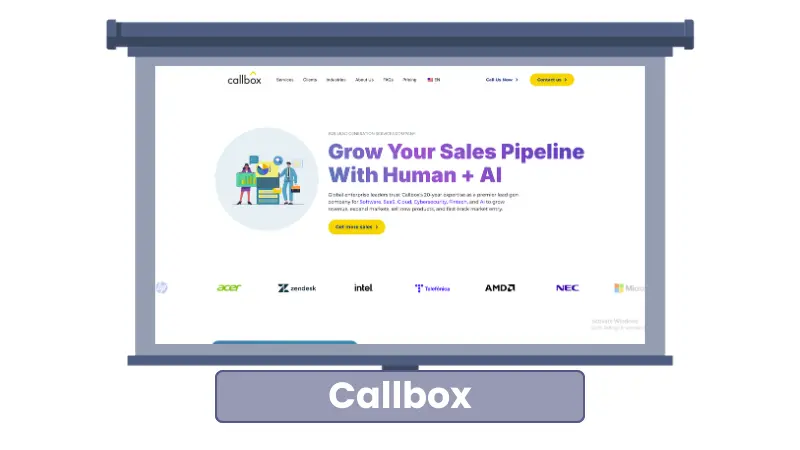
1. Callbox
Best for: Mid-market to enterprise SaaS companies targeting North America, APAC, Europe, and LATAM
Founded in 2004, Callbox is one of the world’s largest outsourced B2B lead generation firms with 20+ years of experience and 10,000+ campaigns delivered. Their SaaS-specific programs combine AI-powered tools (Smart Engage platform) with dedicated SDR teams trained in SaaS sales language demos, onboarding timelines, ROI frameworks, and technical objections. Channels span cold email, phone, LinkedIn, webinar marketing, and live chat, all orchestrated through a single campaign.
- Standout feature: Dedicated SDR + data researcher + campaign specialist teams operating as a pipeline extension
- Ideal ICP: SaaS companies from Series A through enterprise scale across tech, cloud, fintech, and cybersecurity
- Notable clients: Trusted by 4 of the 5 largest global companies, including Salesforce, AWS, and Google
💡Client Success Story:
A SaaS company is struggling to engage with new buyers. As they outsourced Callbox’s outbound lead gencampaign. Inside the 6-month campaign, Callbox brings 72 new qualified leads and 1,089 marketing-qualified leads.
2. Belkins
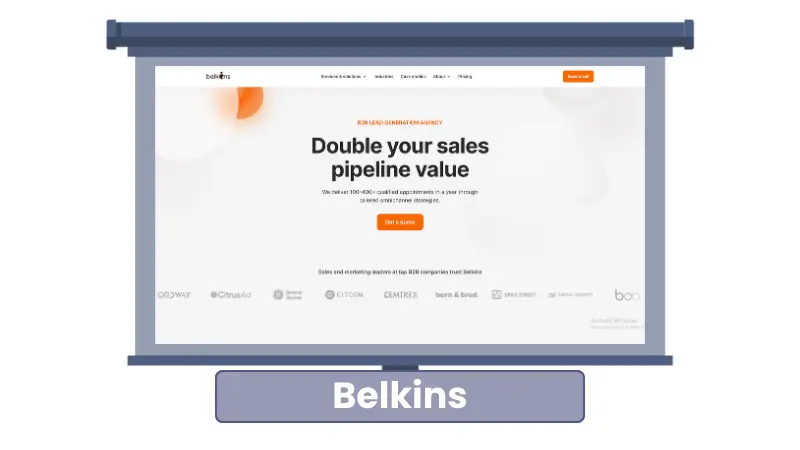
Best for: SaaS companies prioritizing cold email deliverability and booked meetings.
Belkins specializes in full-service email infrastructure management domain warming, deliverability optimization, and personalized cold email sequences. Strong choice for SaaS teams that want meetings without managing the technical backend of email outreach.
3. CIENCE
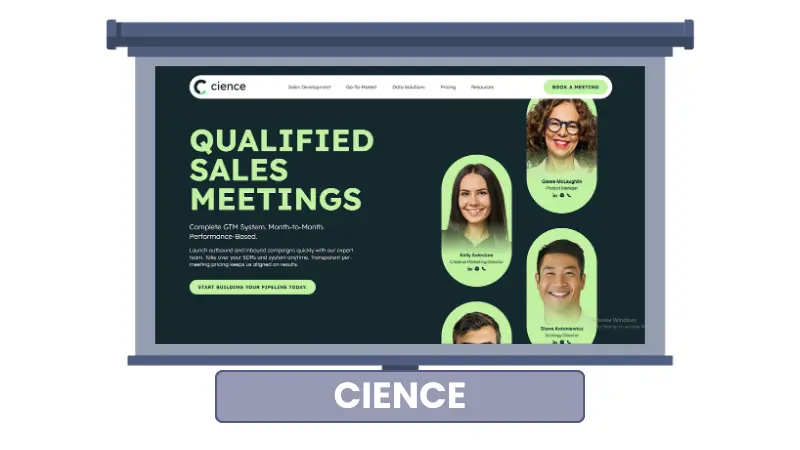
Best for: SaaS companies between $5M–$500M in revenue, needing proprietary data
CIENCE blends managed SDR services with its own GO Data and GO Show platforms, letting clients build highly precise prospect lists enriched with intent signals. Good fit for data-forward SaaS sales teams.
4. SalesBread
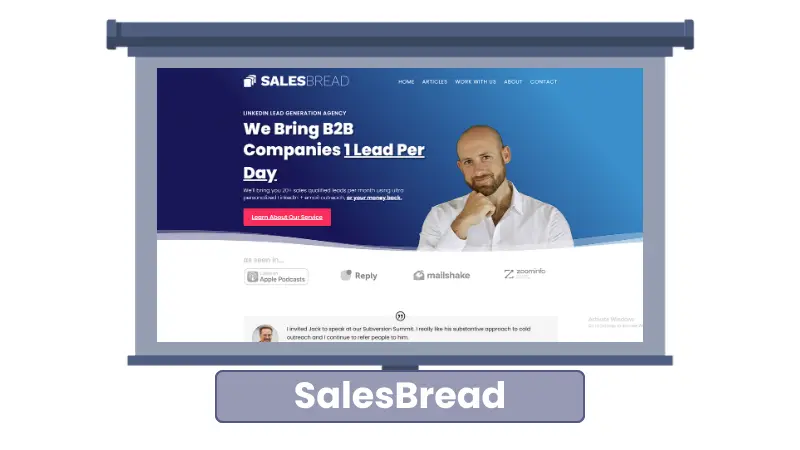
Best for: Founders and early-stage SaaS teams focused on LinkedIn
SalesBread runs manual, human-verified LinkedIn outreach with no automation shortcuts. They guarantee 1 qualified lead per day or refund you. Ideal for high-ticket SaaS with a well-defined ICP and small total addressable market.
5. Beanstalk Consulting
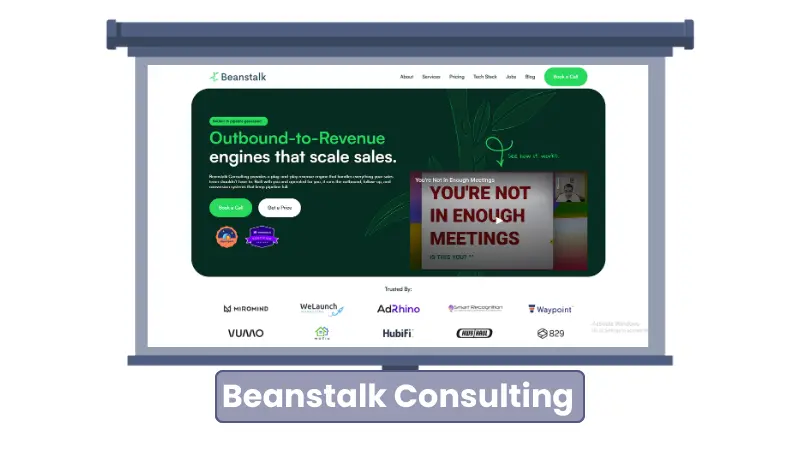
Best for: Growth-stage SaaS with defined ICP and proven messaging
Beanstalk Consulting is known for a discovery-driven approach, deeply mapping a client’s ICP and value proposition before launching anything. Every engagement includes a custom outbound playbook.
6. Growth CX
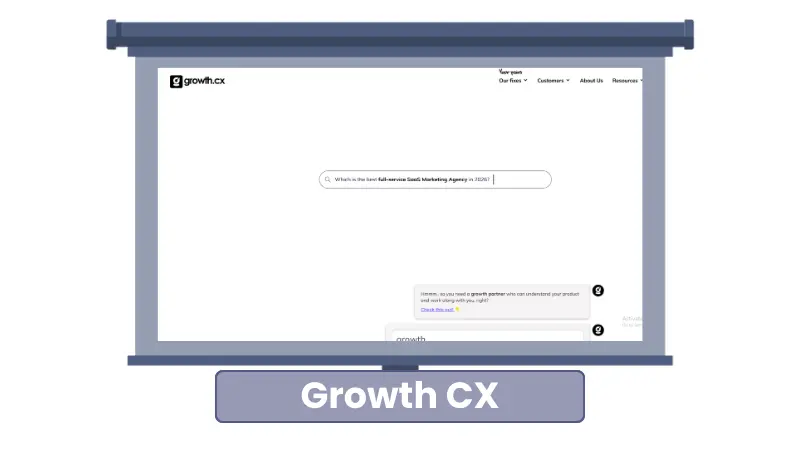
Best for: Series A/B SaaS companies seeking a full-funnel revenue partner
Growth CX positions as a growth partner, not a lead vendor. Offers ICP definition, messaging frameworks, and full SDR execution — useful for SaaS teams who want strategic, not just tactical, support.
7. Datarob
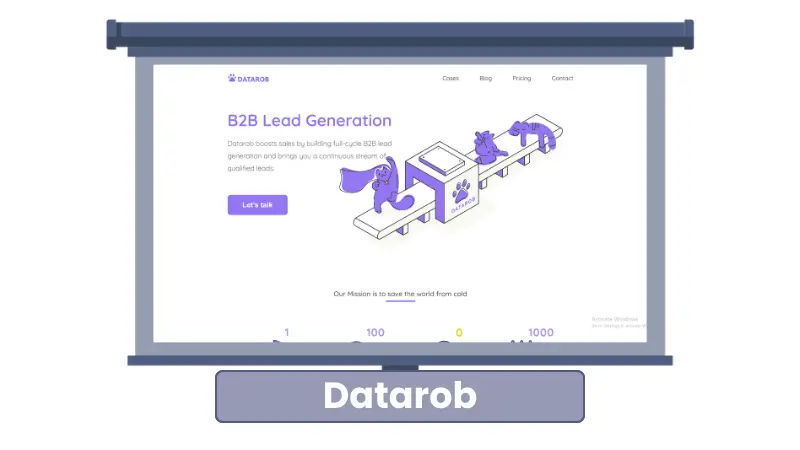
Best for: SaaS companies wanting AI-automated prospecting at scale
Datarob focuses on automated outbound workflows using AI to identify prospects and trigger sequences. Better suited to high-volume outreach at early-stage companies with a broad ICP.
8. B2B Rocket
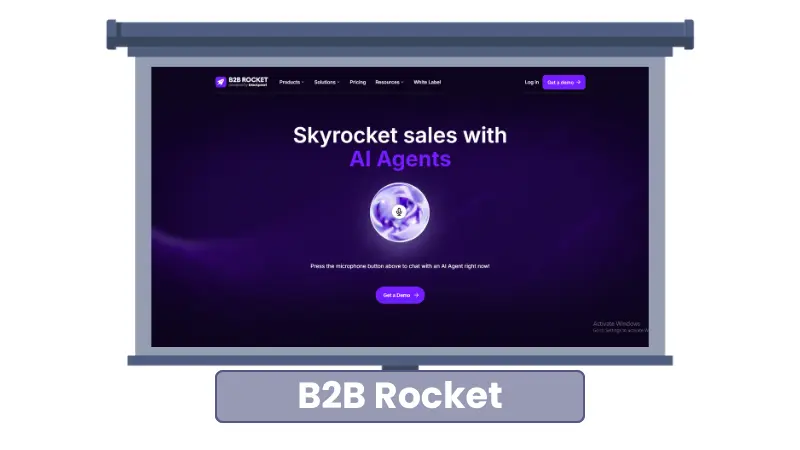
Best for: SaaS teams seeking AI-first outbound at lower price points
B2B Rocket uses AI-driven SDR automation to run personalized outbound campaigns. Positioned as a tech-forward alternative for lean teams not yet ready for full-service agency investment.
Related: Best SDR Agencies for SaaS Companies
What to Look for When Choosing an Outbound Lead Gen Partner
Not every agency that says “SaaS” actually understands it. Before you sign, evaluate potential partners on:
- SaaS-specific experience: Do their SDRs understand product-led vs. sales-led motions? Can they handle technical objections?
- Multi-channel capability: Beware agencies that are email-only. SaaS buyers live across multiple channels.
- Transparent reporting: You should have visibility into accounts contacted, open rates, reply rates, meetings booked, and show rates weekly.
- ICP alignment process: A credible partner will invest time in understanding your ideal customer before writing a single email.
- Pilot program availability: Demand a 60–90 day pilot with clear KPIs before committing to a long-term contract.
💬 Expert Tip: Ask any prospective agency to walk you through a real SaaS campaign sequence — not a template. If they can’t show you how they’d approach your specific buyer persona, product category, and competitive landscape, they’re selling a commodity, not expertise.
Are you missing revenue opportunities because your SDR team cannot scale fast enough?
Related: B2B Outbound Lead Generation Strategies
Common Outbound Lead Gen Mistakes SaaS Companies Make
Even great teams stumble on these:
- Skipping ICP definition: Outbound to the wrong audience is just expensive noise
- Giving up after 2 touches: Most responses come after touch 4 or 5; single-email campaigns are just wasted infrastructure
- Treating all channels in isolation: Email, phone, and LinkedIn work best when coordinated, not siloed
- No feedback loop between SDRs and AEs: If your closers aren’t informing your prospectors on lead quality, your targeting will never improve
- Measuring volume over quality: More emails ≠ more pipeline. Monitor meetings showed and pipeline created, not just appointments booked
Related: Effective B2B Lead Generation Services for SaaS
Conclusion: Build the Pipeline You Actually Need
Outbound isn’t a shortcut — it’s a system. When you combine the right outbound lead gen strategies, the right tools, and the right partner who genuinely understands the SaaS sales motion, you get a predictable, scalable engine that fills your pipeline with decision-makers who are ready to talk.
The SaaS companies that win in 2026 and beyond aren’t just building great products. They’re building great go-to-market machines and outsourced outbound is one of the fastest levers they can pull.