Demand Generation for IT Companies in Latin America
Discover proven demand generation strategies for IT companies in Latin America. Learn how to attract qualified buyers, build pipeline, and accelerate B2B growth.
 Rebecca Matias
Rebecca Matias is Callbox's COO with 18 years of experience scaling B2B pipeline through data-driven outbound marketing, lead generation, and sales development.
View full bio of Rebecca Matias
If you’re trying to generate Latin America-focused IT leads right now, you’ve probably noticed something. The old playbook feels off. Cold email response rates that used to hit 8% are limping in at 2%. Your SDR team is booking calls. But half of them ghost before the demo. Something shifted. And it wasn’t your effort.
 Quick Answer: Demand generation for IT companies in Latin America works when you build market interest across every stakeholder in a deal, not just the first contact, using localized content, ABM targeting, and a qualification bar that filters for buying intent rather than form fills. Volume-first lead gen tactics built for shorter, single-decision-maker markets consistently underperform here.
Here’s what changed. Buyers in the region got more selective. Deal committees got bigger. The tools everyone leaned on for the last five years quietly stopped working as well as they used to.
So what’s the short answer? Stop chasing volume. Start engineering demand through a strategic demand generation program before your sales team ever picks up the phone.
Ready to expand your business in Canada but didn`t know where to start?
Why Is Lead Generation Getting Harder for IT Companies Selling Into LATAM?
The market didn’t shrink. It got smarter. LATAM’s IT services market is projected to add nearly $58.8 billion by 2030. That’s an 8.4% annual growth rate, fueled by cloud migration, cybersecurity, and nearshore software development all accelerating at once. There’s more budget in the region than there’s ever been.
So why does it feel harder? Because everyone selling into that budget is running the same three plays. A gated whitepaper. A LinkedIn ad. A cold call sequence built for a North American buyer persona.
That approach breaks down fast. LATAM’s enterprise IT purchases typically pull in four to eight stakeholders before a deal closes. The CTO owns the technical decision. The CFO owns the budget. A business unit lead owns the use case. Procurement owns the process. A single-touch outbound lead generation campaign might reach only one stakeholder, leaving the rest of the buying committee untouched during the evaluation process.
That’s why so many “qualified” leads stall for months and then quietly die.
Related: How to Generate IT Leads in LATAM
What’s the Real Difference Between Lead Generation and Demand Generation?
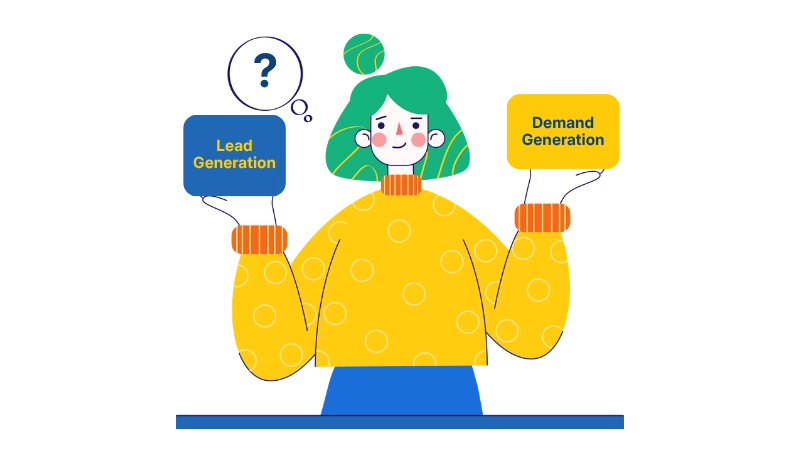
While demand generation builds long-term market awareness, lead generation services convert that demand into qualified sales opportunities for your revenue team. Demand generation asks a different one: how do we get the market to want this before we ever reach out?
That distinction matters more in LATAM than almost anywhere else. The region’s buying culture still runs heavily on trust and relationships. Think about two form fills. One comes from someone who’s never heard of your company. The other comes from someone who read your content three times and saw your team speak at a regional event. The second one converts at a much higher rate, because trust was already built before they ever raised their hand.
Run the math on what that gap costs. Intent-sourced opportunities close at 18.7%, compared with 5.5% for cold ICP-match outreach, according to 2026 cohort data from a 2,400-account B2B study. That’s more than three times the close rate. And it comes just from targeting people who were already showing buying signals, instead of people who simply matched a firmographic filter.
Industry Insight: In practice, the IT companies winning in LATAM right now aren't the ones with the biggest ad budgets. They're the ones whose CTO or head of sales shows up consistently in Spanish-and-Portuguese-language LinkedIn content. That content answers the exact objections regional buyers raise, before a rep ever gets on a call. By the time outreach happens, the `who are you` conversation is already over.
Related: Top Demand Generation Agencies
How Long Does It Actually Take to Build a Demand Pipeline in LATAM?
Longer than most marketing plans account for. Enterprise technology sales cycles across the region typically run six to eighteen months. It depends on deal size and how many systems the new purchase touches. A campaign built to show results in a single quarter is set up to fail. Even when it’s actually working exactly as intended.
This is where a lot of teams sabotage their own results. They launch a campaign. They don’t see closed deals by month three. So they pull the plug, right before the pipeline they built starts converting.
Demand generation should be measured differently, using engagement metrics alongside marketing qualified lead (MQL) to SQL conversion to evaluate pipeline health over time.. Look at leading indicators instead: engagement depth, content consumption, event attendance, repeat site visits. Not just closed-won revenue in the first ninety days.
Expert Tip: Build a 90-day content sprint that maps to a full quarter, not a single campaign. Weeks 1 through 4: establish a point of view with benchmark data and original research. Weeks 5 through 8: address the objections that stall deals, like compliance, integration risk, and total cost of ownership. Weeks 9 through 12: convert warmed interest into a specific, low-friction next step, like a pipeline audit or technical assessment.
Which Channels Actually Move IT Buyers in Latin America?
LinkedIn plays a central role in multichannel lead generation, helping IT companies engage decision-makers alongside email, phone outreach, and targeted advertising.. It’s the one platform where a campaign can target by exact job title, industry, company size, and country, all at once.
It’s also where the CIOs, CTOs, and infrastructure leads who make these decisions actually spend their time. Cost per qualified lead through LinkedIn campaigns in the region typically runs $80 to $300, depending on how tightly the audience and offer are matched.
Virtual and in-person events remain unusually effective, even in a channel mix that’s supposedly gone all-digital. Regional tech conferences and vendor roadshows still generate a disproportionate share of pipeline in markets like Brazil, Mexico, and Colombia.
Why? They compress months of trust-building into a single afternoon of face time.
SEO and long-form content round out the mix. Investing in AEO lead generation services also helps IT companies gain visibility across AI-powered search experiences while attracting high-intent buyers. This is the channel most companies underinvest in. A technical article that ranks well for a specific buyer question, like the one you’re reading, keeps generating qualified traffic for years. And it does that with almost no incremental spend. That makes it the best long-run ROI channel available, once the initial investment is made.
Expert Tip: Don't run the same content through machine translation in Spanish, Portuguese, and English and call it localized. Buyers in São Paulo and buyers in Bogotá reference different case studies. They face different regulatory pressures and different competitive sets. Content actually written for the local market beats translated content by a wide margin, in both engagement and reply rate.
How Should IT Companies Evaluate a LATAM Lead Generation Partner?
Most companies evaluating an outsourced SDR provider or appointment setting partner focus too heavily on cost per lead instead of campaign quality and long-term pipeline impact. That’s the wrong first filter. Ask a better question instead. Has this partner actually run campaigns against LATAM’s specific buying committee structure, in your specific vertical? Does their qualification process go beyond “they filled out a form”?

A Straightforward Selection Methodology
- Ask for vertical-specific case studies, not generic ones. A partner that’s booked qualified meetings for cybersecurity vendors in Mexican financial services has a different playbook. That playbook is different from one that’s only worked with SaaS companies selling to Brazilian retailers. Ask which is closer to your situation.
- Check how they define “qualified.” Some partners count a booked meeting as qualified. Better partners define qualification against your specific ICP and buying-committee criteria. They’ll also show you the disqualification rate, not just the meetings booked.
- Confirm local-language fluency, not just translation capability. Ask whether the team writing your content and making your calls is fluent in the regional business culture. Fluency in the language alone isn’t enough.
- Review their compliance posture. Outbound calling and email regulations are tightening across the region. Many of these partners also serve the U.S. market, where the same rules apply. A partner without a documented compliance process is a liability, not a convenience.
- Ask what happens after the meeting is booked. The best partners hand off more than a calendar invite. They hand off context too: what the prospect cares about, what objections came up, and what the buying committee looks like.
Curious how Callbox attracts LATAM IT leads?
Who Are the Top Providers for IT Lead Generation in Latin America?
The right partner depends heavily on deal size, vertical, and how much of the process you want to keep in-house versus fully outsourced. Here’s how the main options compare.
| Company | HQ | Best For | Core Strength | Global Reach |
| Callbox | United States / Philippines | Mid-market to enterprise IT vendors needing full-funnel outbound plus HubSpot-native reporting | Hybrid human + AI qualification model with a Platinum HubSpot integration for closed-loop pipeline tracking | Global, with dedicated LATAM-facing campaign teams |
| SalesRoads | United States | Companies wanting a human-first, ABM-style appointment setting motion | Dedicated SDR teams with a human-led prospecting model | North America-focused with expanding reach |
| Estudio Maskin | Argentina | Companies wanting a regional agency with deep on-the-ground LATAM market knowledge | Local market fluency across Argentina and neighboring markets | LATAM-focused (Argentina, Chile, Brazil, Related: Mexico) |
Related: Top Lead Generation Agencies in Latin America
How Do You Calculate ROI on Demand Generation Spend for LATAM IT Campaigns?
Return on a demand generation program only makes sense when it’s measured against the full pipeline. Not the first touch. Here’s a framework that holds up across deal sizes.
- Establish your baseline cost per qualified opportunity, not cost per lead. Divide total program spend by the number of opportunities that actually entered a sales-qualified stage. Don’t just count contacts collected.
- Factor in sales cycle length against your cash conversion cycle. A six-to-eighteen-month enterprise cycle means ROI calculated at the 90-day mark will look artificially poor. Model returns against the realistic close timeline for your deal size instead.
- Weight channels by intent-adjusted close rate, not raw volume. A channel producing fewer, higher-intent leads at an 18% close rate outperforms a cheaper channel at 5%. That holds true even if the per-lead cost looks worse on paper.
- Track content-assisted revenue separately from last-touch attribution. Demand Gen Report’s 2026 buyer research shows B2B buyers consume three to seven pieces of content before ever talking to sales. A first-touch or last-touch model alone will undercount what actually influenced the deal.
- Re-forecast quarterly, not annually. LATAM’s IT market moves fast. Channel costs and buyer behavior can shift meaningfully within a single year. A program built on last year’s assumptions will misallocate budget by Q3.
Want the underlying benchmarks used in this framework?
What Should an IT Company’s First 90 Days of Demand Generation Look Like?
Start with research, not outreach. Spend the first two to three weeks building the account list and mapping the buying committee for each target company. Draft content that speaks to the CTO’s technical concerns and the CFO’s budget concerns, separately. Then layer in LinkedIn-based ABM targeting, alongside one piece of original, data-backed content. That content should give your team a point of view the market doesn’t already have.
By week six or seven, that content should be doing double duty. It drives inbound interest. It also gives your outbound team a natural reason to reach out, one that isn’t a cold pitch. By week ten through twelve, you should have enough engagement data to know which accounts are showing real intent. That’s where a qualified handoff to sales actually happens, not on day one of the campaign.
Industry Insight: Companies that skip the research phase and jump straight to outbound in LATAM tend to see a familiar pattern. First, an initial spike in booked meetings. Then a steep drop-off in show rates. Eventually, a sales team that stops trusting the leads entirely. The slower start almost always produces a more durable pipeline.
The Bottom Line
Companies that skip the research phase and jump straight to outbound in LATAM tend to see a familiar pattern. First, an initial spike in booked meetings. Then a steep drop-off in show rates. Eventually, a sales team that stops trusting the leads entirely. The slower start almost always produces a more durable pipeline.