How Does Lead Generation for B2B Enterprise Actually Work in 2026?
Learn how lead generation for enterprise companies works in 2026, from targeting decision-makers to building qualified sales pipeline.
 Rebecca Matias
Rebecca Matias is Callbox's COO with 18 years of experience scaling B2B pipeline through data-driven outbound marketing, lead generation, and sales development.
View full bio of Rebecca Matias
If you’ve ever tried to close an enterprise deal, you already know it’s a different game entirely. Lead generation for enterprise isn’t just a scaled-up version of SMB prospecting. It’s longer, more complex, involves multiple decision-makers, and demands a level of trust that most generic outbound tactics can’t build. So before you spend another quarter on strategies that weren’t designed for large accounts, let’s break down exactly what works and why.
Direct Answer
Enterprise lead generation is the process of identifying, qualifying, and nurturing high-value prospects at large organizations with complex buying committees and long sales cycles. The most effective approach combines account-based marketing (ABM), multi-channel outreach, and data-driven personalization to land and expand within Fortune 500 and mid-market enterprise accounts.
Looking how to increase your enterprise sales through lead generation?
Why Is Enterprise Lead Generation So Different from Standard B2B?
The short answer: scale, complexity, and risk aversion. Enterprise organizations don’t move fast. According to HubSpot’s 2024 State of Sales Report, the average enterprise sales cycle runs between 6 and 18 months, and deals typically require sign-off from 5 or more stakeholders. That’s a lot of people to convince, and a lot of touchpoints to manage without dropping the ball.
61% of B2B marketers say generating high-quality leads is their top challenge, and enterprise leads are significantly harder to qualify than SMB ones. (HubSpot State of Marketing Report)
Standard lead gen leans on volume. Enterprise lead gen leans on precision. You’re not casting a wide net. You’re spearfishing. That distinction shapes every channel, every message, and every tool you choose. Learn how to elevate your enterprise leads in 5 easy steps.
 Industry Insight: The biggest mistake B2B teams make when targeting enterprise clients is using the same ICP (Ideal Customer Profile) they built for mid-market. Enterprise accounts have distinct pain points, procurement processes, and risk tolerances. Rebuild your ICP specifically for this segment before any outreach begins.
What Channels Actually Work for Enterprise B2B Lead Generation?
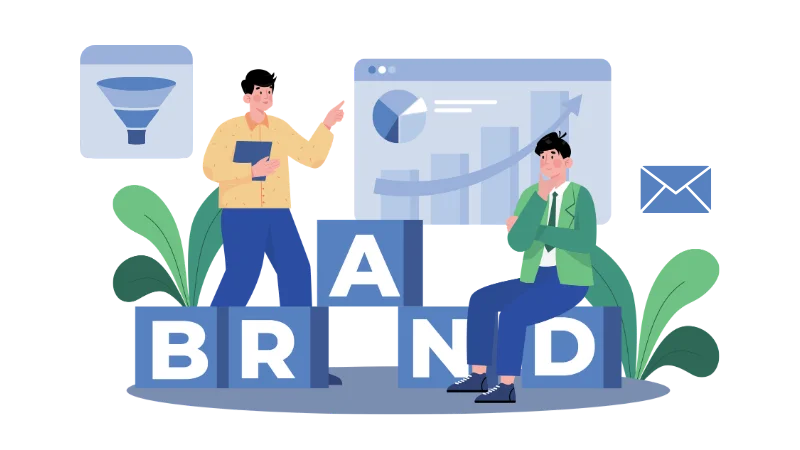
Not every channel scales up to the enterprise level. Here’s what consistently moves the needle when you’re targeting large organizations.
Account-Based Marketing (ABM)
ABM is the gold standard for enterprise B2B outreach. Rather than broadcasting to a broad audience, you select a list of named accounts and orchestrate highly personalized campaigns across email, LinkedIn, display ads, and direct mail. Research cited by HubSpot shows that 87% of ABM practitioners say ABM outperforms other marketing investments for enterprise-level returns.
Cold Email with Deep Personalization
Cold email works when it doesn’t feel cold. The key for enterprise is research-backed personalization. Reference specific company initiatives, recent funding, leadership changes, or industry shifts. Generic “we help companies like yours” emails land in trash folders. Specific ones start conversations.
LinkedIn Outreach and Social Selling
Enterprise buyers are on LinkedIn. C-suite executives, VPs of procurement, IT directors, and CFOs. A well-structured LinkedIn sequence, combined with content that establishes your credibility, can open doors that cold email can’t. According to HubSpot’s sales statistics, 78% of salespeople using social selling outsell their peers who don’t.
Intent Data Targeting
Platforms like Bombora, G2, and 6sense track behavioral signals that tell you when a company is actively researching solutions in your category. Timing your outreach to buying intent dramatically shortens cycles and improves response rates with enterprise clients.
Callbox Revives Dormant Pipeline for Enterprise Tech
Over the course of a high-impact 3-month program, Callbox delivered 38 Sales Qualified Leads (SQLs) and 35 Marketing Qualified Leads (MQLs).
View Case StudyHow Do You Build an ROI Framework for Enterprise Lead Generation?
Most B2B teams measure lead generation by volume. Enterprise teams that actually win measure it by value. Before you invest budget, headcount, or tooling into any lead generation service for enterprise, you need a clear financial model that connects your outreach activity to real revenue outcomes. Here’s how to build one that holds up to scrutiny from your CFO and your VP of Sales.
Step 1: Anchor Everything to Your Average Contract Value
Your ACV is the foundation of the entire framework. If you don’t know what an average enterprise account is worth over a 12 or 24-month period, every downstream metric becomes meaningless. Pull your last 12 months of closed enterprise deals, exclude outliers on both ends, and land on a realistic ACV number. This single figure will determine how much you can rationally spend per lead, per meeting, and per closed account.
Step 2: Work Backwards to a Defensible CPL
Once you know your ACV, you can set a cost-per-lead target that actually reflects enterprise economics. A deal worth $180,000 annually can support a CPL of $800 to $1,500 and still generate a healthy return. Most teams using SMB-era CPL benchmarks (sub-$100) are either underinvesting in enterprise outreach or measuring the wrong thing entirely. The math isn’t complicated: if your average win rate on enterprise SQLs is 20% and your ACV is $150K, each SQL is worth $30,000 in expected revenue. Spend accordingly.
Step 3: Monitor MQL-to-SQL Conversion Rate Obsessively
Volume of leads is a vanity metric at the enterprise level. What matters is how many of those leads are actually sales-qualified. A healthy MQL-to-SQL rate for enterprise programs typically sits between 10% and 25%, depending on your ICP tightness and qualification criteria. If your rate falls below that range, the problem is almost always upstream: either the list quality is poor, the messaging isn’t resonating with the right personas, or your qualification process is letting too many tire-kickers through. According to HubSpot, only 22% of businesses are satisfied with their lead conversion rates, and enterprise programs are disproportionately where that gap shows up.
Step 4: Track Pipeline Velocity, Not Just Pipeline Size
Two enterprise programs can show identical pipeline numbers and deliver completely different revenue outcomes, depending on how fast deals are moving. Pipeline velocity combines deal size, win rate, number of active opportunities, and average sales cycle length into a single number that tells you how much revenue your pipeline generates per day. Tracking this metric monthly gives you an early warning system. If velocity drops, you can usually trace it back to a specific stage: qualification, multi-stakeholder alignment, procurement delays, or competitive displacement.
Step 5: Calculate True Customer Acquisition Cost
Your CAC for enterprise should include every dollar spent on outbound outreach, content production, SDR salaries or outsourced program fees, tools, and sales enablement materials, divided by the number of new enterprise accounts closed in that period. Most companies undercount this number because they only include direct ad spend. When you factor in the full cost, the math often makes a compelling case for optimizing the top of the funnel rather than adding more budget to the middle. Research published on HubSpot consistently shows that companies investing in structured lead nurturing programs generate 50% more sales-ready leads at 33% lower cost.
Related: Side-By-Side Comparison of Enterprise Sales vs. SMB Sales
How Do You Build a Qualified Enterprise Lead List from Scratch?
Before you send a single email or dial a single number, you need a list worth working. And for enterprise lead generation, quality beats quantity every single time. A list of 200 perfectly profiled accounts will always outperform a list of 5,000 loosely matched ones.
Here’s how to build one that actually converts.
Start with a Firmographic Foundation
Define your target accounts by company size (typically 500 to 5,000+ employees), annual revenue, industry vertical, technology stack, and geography. Tools like ZoomInfo, Apollo, and LinkedIn Sales Navigator let you filter at this level of granularity. The tighter your filters, the more relevant your outreach will be to the people receiving it.
Layer in Technographic Data
For enterprise B2B outreach, knowing what technology a prospect already uses is often more telling than their job title. If you’re selling a data integration platform, you want to know whether they’re running Salesforce, SAP, or a legacy ERP. Technographic fit signals that your solution slots into a real operational context, which makes your pitch immediately more credible.
Add Behavioral and Intent Signals
This is where the modern enterprise lead gen playbook separates from older approaches. Intent data platforms track when companies are actively researching solutions like yours. When a VP of Operations at a target account starts consuming content about supply chain automation, that’s your window. Timing outreach to this kind of signal can double or triple response rates compared to cold, untriggered contact.
Companies using intent data see up to a 2x improvement in pipeline conversion rates. For enterprise, where every SQL carries significant ACV, this kind of efficiency gain has an outsized impact on revenue. (HubSpot Marketing Statistics)
Expert Tip: Build two lists in parallel: a `Tier 1` list of 50 to 100 high-fit, high-intent dream accounts that get white-glove personalized outreach, and a `Tier 2` list of 300 to 500 strong-fit accounts that run through a more automated but still personalized sequence. This two-tier approach is how enterprise teams scale without sacrificing message quality.
What Does an Effective Enterprise Lead Nurture Sequence Look Like?
Enterprise buyers rarely convert on the first touch. Or the third. The average enterprise deal involves 6 to 10 stakeholders, and those stakeholders are not all ready to buy at the same time. Your nurture sequence needs to account for that reality.
A high-performing enterprise nurture sequence typically spans 8 to 12 touches across 4 to 6 weeks and looks something like this:
| Touch | Channel | Message Focus | Goal | Timing |
| 1 | Relevance hook + specific pain point | Open and read | Day 1 | |
| 2 | Connection request with brief context note | Accept + profile view | Day 2 | |
| 3 | Relevant case study or proof point | Click and engage | Day 4 | |
| 4 | Phone | Brief voicemail referencing email | Awareness + recall | Day 6 |
| 5 | Personalized message or content share | Conversation starter | Day 9 | |
| 6 | Soft ask for a 15-minute conversation | Meeting booked | Day 14 |
Each touch should reference a previous one. Enterprise buyers notice when outreach is coordinated and consistent. It signals that your organization is serious and that you’ve done real homework on their business. That kind of professionalism moves you out of the “vendor spam” category and into the “worth a call” category faster than any single great email ever could. Don’t let your prospect feel they are bombarded. Learn how to draw a structured sales cadence for the enterprise clients.
How Do You Convert Enterprise Leads into Sales Conversations?
Getting a response is only half the battle. Converting that response into a genuine sales conversation requires a different skill set than standard SMB selling. Enterprise prospects are evaluating whether your team understands their world before they’re willing to give you an hour of their calendar.
Lead with Business Outcomes, Not Product Features
Enterprise buyers are not interested in a feature tour. They want to know what changes inside their organization if they work with you. Frame every initial conversation around measurable business outcomes: cost reduction, revenue uplift, risk mitigation, or operational efficiency. Specific numbers from comparable accounts are worth more than any product demo.
Map Your Outreach to the Right Stakeholders
In enterprise accounts, there is rarely one buyer. There’s an economic buyer (who controls the budget), a technical buyer (who evaluates fit), and end users (who have to live with the decision). Your enterprise lead generation strategy needs to reach all three, with messaging that speaks to each one’s priorities. Economic buyers care about ROI and risk. Technical buyers care about integration and security. End users care about usability and change management.
Use Content as a Qualification Tool
Gated assets like ROI calculators, industry benchmarking reports, and implementation guides do double duty in the enterprise funnel. They attract inbound interest from prospects already researching solutions, and the act of downloading signals clear intent. According to research cited by HubSpot, content marketing generates 3x more leads than outbound at roughly 62% lower cost. For enterprise, high-value gated content is one of the most efficient ways to bring qualified buyers to you rather than always hunting them down.
Industry Insight: The best enterprise sales conversations start before the first call. When your SDRs reference a prospect`s recent earnings report, a new product launch, or a regulatory change affecting their industry, it reframes the entire interaction. You`re not a vendor pitching a solution. You`re a knowledgeable peer who`s done your homework. That framing alone dramatically increases the rate at which enterprise contacts agree to a next step.
How Long Does It Take to See Results from Enterprise Lead Generation?
Honest answer: longer than most teams want. Ramp-up for a new enterprise outbound program typically takes 60 to 90 days before the first qualified meetings start appearing consistently. The full pipeline impact usually shows up at the 4 to 6 month mark.
This timeline reflects the reality of enterprise buying behavior. Decision-makers aren’t going to respond to your first two touches and book a call. They need to see your name multiple times across multiple channels before they take action. That’s why consistency over a sustained campaign period matters far more than a short burst of high-volume activity.
Research published by HubSpot backs this up: companies that nurture leads generate 50% more sales-ready leads at 33% lower cost than those relying on one-time outreach campaigns.
Is Outsourcing Enterprise Lead Generation Worth It?
For most B2B companies targeting enterprise accounts, outsourcing lead generation makes a lot of sense. Building an in-house SDR team capable of working large accounts requires recruitment, onboarding, tooling, and management overhead that can easily run $250,000 to $400,000 per year before a single meeting is booked. A quality outsourced program typically delivers comparable or better results at a fraction of that cost, especially in the first 12 to 18 months.
That said, outsourcing only works when the vendor truly understands enterprise dynamics. You’re not looking for someone to send 10,000 emails a month. You’re looking for a partner who can help you identify, engage, and qualify accounts at a level of sophistication that enterprise buyers actually respond to.
The Bottom Line on Enterprise Lead Generation
Enterprise lead generation rewards precision over volume. The teams that win consistently aren’t the ones sending the most emails. They’re the ones targeting the right accounts, with the right message, at the right time.
Get your ICP tight, run multi-channel sequences that feel human, and measure what actually drives pipeline. Focus and consistency over 6 to 12 months will do more for your revenue than any short-burst campaign ever could.
Frequently Asked Questions
How long does it typically take to see results from an enterprise lead generation program?
Expect a 60 to 90 day ramp-up before qualified meetings start coming in consistently, and 4 to 6 months before you can draw meaningful conclusions about pipeline impact. Programs shut down before that window almost always fail prematurely.
What is the best channel for reaching enterprise decision-makers?
No single channel breaks through on its own. The most effective programs combine personalized email, LinkedIn engagement, and strategic calling coordinated around the same account. Multi-channel consistency is what earns a response from enterprise buyers.
Should we build an in-house SDR team or outsource enterprise lead generation?
Outsourcing typically offers faster ramp-up and lower upfront cost, making it a smart choice for the first 12 to 18 months. Building in-house makes sense once your ICP and messaging are validated. Either way, whoever runs it must understand enterprise buying dynamics, not just outbound volume.