Ultimate Guide to Outsourced Appointment Setting for Sales
Struggling to fill your pipeline? Discover how outsourced appointment setting for sales helps your team book high-quality sales appointments and close more deals.
 Jude Neilson
Jude Nielson is a Business Development Manager at Callbox Inc, with 12 years of experience driving B2B growth through strategic lead generation and sales development.
View full bio of Jude Neilson
Generating a consistent stream of qualified sales appointments is the lifeblood of any growing business. Yet, one of the most common issues in modern sales departments is asking top-tier account executives to manage the entire sales cycle—from cold prospecting to closing deals.
When your highest-paid closers spend half their week chasing cold prospects, sending follow-up emails, and managing calendar scheduling, your revenue potential suffers. This operational bottleneck is why many forward-thinking sales organizations are turning to outsourced appointment setting.
By delegating top-of-funnel outreach to dedicated specialists, your internal team can focus on what they do best: building relationships and closing revenue.
Is your sales pipeline suffering because your meetings aren’t coming in consistently?
What Is Appointment Setting for Sales?
Appointment setting for sales is the targeted process of identifying potential buyers, initiating contact, qualifying their fit, and scheduling a meeting between the prospective buyer and a sales representative.
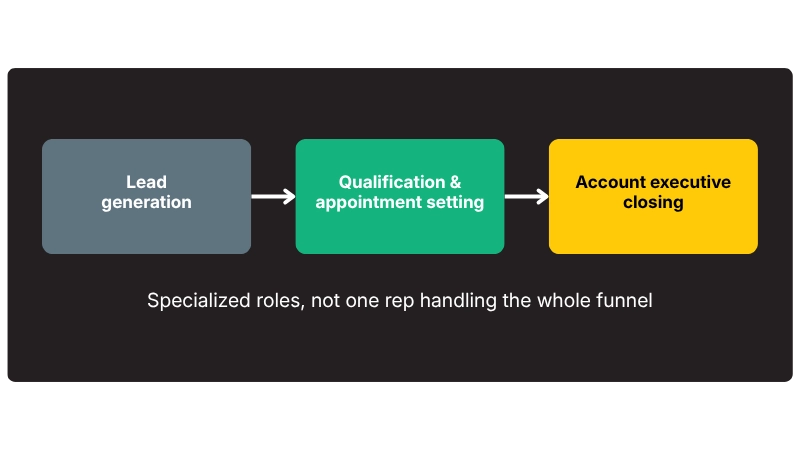
It serves as the critical bridge between marketing lead generation and closing deals. Rather than expecting a single sales rep to handle every stage of the funnel, modern sales structures split these duties into specialized roles:
[ Lead Generation ] ➔ [ Qualification & Appointment Setting ] ➔ [ Account Executive / Closing ]
Appointment setters—often referred to as Business Development Representatives (BDRs) or Sales Development Representatives (SDRs)—focus exclusively on front-end outreach:
- Researching ideal customer profiles (ICPs) and decision-makers
- Managing multi-channel outreach via cold email, phone calls, and LinkedIn
- Qualifying inbound inquiries and incoming leads
- Addressing initial objections and assessing buyer timeline and budget
- Booking qualified sales appointments directly onto your account executives’ calendars
Separating prospecting from closing creates predictable pipeline growth and ensures your sales team spends their time in high-value conversations.
3-Month Appointment Setting Program Scales AI Software Sales
Callbox delivered consistent, sales-qualified appointments to support scalable pipeline growth in 3-month sales appointment setting program.
View Case StudyWhy Are Your Account Executives Struggling to Fill Their Calendars?
If your sales team is missing targets despite having a strong product, the problem rarely lies in their ability to close. It usually stems from a lack of consistent, high-quality sales appointments.
Three primary friction points prevent internal teams from building momentum:
1. The Multi-Tasking Penalty
Closing deals requires deep focus, custom proposals, and ongoing negotiation. Prospecting, on the other hand, demands high volume, consistent follow-ups, and daily outreach. Forcing account executives to toggle between these two distinct skill sets leads to context switching, where neither task gets the attention it requires.
2. Slow “Speed-to-Lead”
Inbound prospects expect near-instant responses. If an inquiry sits unattended for hours because an account executive is stuck in meetings, that lead quickly cools off or moves to a competitor.
3. Pipeline Volatility
When a sales rep has an empty calendar, they prospect heavily until meetings fill up. Then, they pause prospecting to run those meetings. Once those deals close or stall, the calendar is empty again. This creates an unpredictable “famine and feast” revenue cycle.
Related: Top Appointment Setting Service Providers in the US
What Are the Real Benefits of Outsourced Appointment Setting?
Partnering with a specialized provider for appointment setting for sales transforms your top-of-funnel strategy from an intermittent chore into a continuous, scalable system.
Rapid Speed-to-Market
Building an internal sales development team requires recruiting, hiring, software procurement, and months of onboarding. An experienced provider offering outsourced appointment setting already has proven playbooks, trained talent, and outreach infrastructure ready to launch within weeks.
Higher Return on Sales Salaries
Account executives carry significant overhead, including high base salaries, commissions, and benefits. Spending their time on administrative prospecting wastes valuable budget. Outsourcing front-end outreach lowers your overall cost-per-meeting and improves return on investment.
Access to Specialized Infrastructure
Top-tier appointment setting agencies invest heavily in data verification platforms, CRM integrations, sales automation engines, and deliverability monitoring. Partnering with a provider gives you instant access to this technology stack without paying software licensing fees.
Strict Lead Qualification Standards
A common fear is receiving low-quality, irrelevant meetings. Reputable providers establish clear Ideal Customer Criteria (ICP) before outreach begins. Leads are qualified against criteria such as job title, company size, budget, and immediate need before any meeting is scheduled.
Related: Sales Appointment Setting Tips
How Do You Choose the Right Appointment Setting Partner?
Not all agencies are created equal. To ensure your partner delivers qualified sales appointments rather than low-intent calls, evaluate providers against these essential criteria:
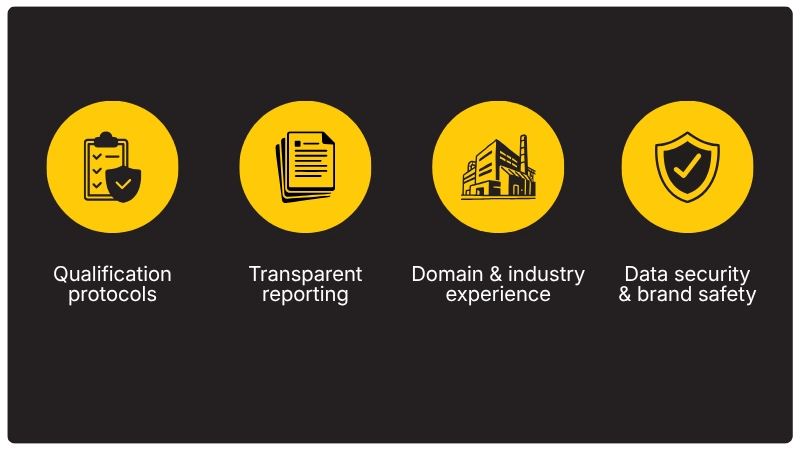
- Clear Qualification Protocols: Ensure the partner uses a strict qualification framework to vet decision-makers before booking meetings.
- Transparent Reporting & Feedback Loops: Choose a partner that offers real-time pipeline visibility and incorporates weekly feedback from your account executives to refine targeting.
- Domain & Industry Experience: Look for providers with proven track records in your specific market (e.g., B2B SaaS, professional services, healthcare, or logistics).
- Data Security & Brand Safety: Confirm that their email outreach, phone practices, and domain management comply with modern data privacy regulations and security standards.
How Do You Transition to an Outsourced Appointment Setting Model?
To ensure a smooth transition and maximize performance, follow a structured implementation process:
- Define Your Ideal Customer Profile (ICP): Document target titles, company revenues, industry verticals, geography, and pain points.
- Establish Hand-Off Workflows: Set clear rules for calendar availability, meeting notifications, CRM record updates, and lead ownership.
- Maintain AE-to-SDR Feedback Loops: Schedule brief weekly syncs between your account executives and the outsourced setters to discuss lead quality, objection trends, and messaging adjustments.
- Monitor Pipeline Metrics: Track show-up rates and opportunity conversion rates to continuously optimize campaign performance.
Frequently Asked Questions
What is the difference between lead generation and appointment setting?
Lead generation focuses on identifying and capturing contact information from potential buyers (e.g., via content downloads, ads, or list building). Appointment setting for sales takes those raw leads, engages them through direct outreach, qualifies their interest, and schedules a formal call with your sales team.
How much does outsourced appointment setting cost?
Pricing models vary depending on scope and industry complexity. Common structures include fixed monthly retainers, pay-per-qualified-appointment models, or hybrid models that combine a base fee with performance-based incentives.
Will an outsourced team understand our product well enough?
Yes. Professional agencies conduct structured onboarding, brand messaging alignment, and script development during the kickoff phase. They build persona-specific playbooks to ensure messaging matches your brand voice accurately.
How do we measure the success of an appointment setting partnership?
Key performance indicators (KPIs) include total meetings booked, show-up rate, lead-to-opportunity conversion rate, and pipeline value generated.