EdTech Lead Generation Companies Crushing Sales in 2026
Discover the top edtech lead generation companies helping edtech companies get high-quality edtech sales leads fast in 2026.


Most B2B lead generation advice treats the pipeline as a continuous flow. In EdTech, that assumption breaks everything.
Educational institutions operate on fixed academic and fiscal calendars. Budget decisions in K-12 districts are often finalized months before any RFP is published. University procurement committees meet on semester schedules. Corporate training buyers align purchases with fiscal year planning cycles.
Because of this, the biggest driver of pipeline failure in EdTech is not message quality or product fit. It is timing. A well-crafted email arriving in October may land six months after the decision was effectively made. Therefore, the most productive reframe for any EdTech sales or marketing team is this: EdTech lead generation is not a year-round activity performed at the same intensity. It is a phased discipline that mirrors how your buyers actually move.
Ready to scale your B2B EdTech growth and reach more decision-makers?
Phase 1: Budget Architecting (February–April)
This is the highest-leverage window in the academic calendar. Districts are building budgets; funds are not yet committed.
- The Strategy: Transition from vendor to strategic resource. Position your solution as a budgetary necessity before the RFP is even drafted.
- Execution: Deploy ROI calculators, outcome data, and cost-per-student benchmarks. Provide curriculum directors with the “internal ammunition” required to justify funding requests.
- The Play: Initiate “pre-RFP briefings” to share trend data. Establishing trust now ensures you are the preferred name when formal evaluations begin.
Related: Understanding B2B Lead Generation Pricing
Phase 2: Intent & Research (May–July)
Budgets are approved; stakeholders are now actively hunting for solutions.
- The Strategy: Implement the Content-to-Conversation Bridge. Passive engagement must be converted into active pipeline within 48 hours of a high-intent download.
- Execution: Use webinars to solve specific pain points—like LMS transitions or learning gap mitigation. Use registration data as a high-intent lead list for immediate SDR follow-up.
- The Play: Move from broad education to personalized consultation. If you aren’t the most helpful resource in the room by June, you will lose the shortlist in August.
Bring your EdTech business in the first page, learn the SEO, AEO, and GEO for lead generation.
Phase 3: Formal Evaluation & RFP (August–October)
This is the most competitive and unforgiving phase of the cycle.
- The Strategy: Leverage Third-Party Validation. At this stage, peer references and independent reviews (G2, EdSurge) carry more weight than any internal marketing collateral.
- Execution: Prioritize operational competence. Respond to RFPs with extreme speed and specificity. Generic or slow responses are immediate grounds for disqualification.
- The Play: If you are not on the shortlist by September, pivot. Nurture the contact for the next cycle with a gracious, low-pressure touchpoint to secure an early entry for the following year.
Phase 4: Expansion & Renewal (November–January)
While competitors treat this as a “slow period,” market leaders use it to solidify their footprint.
- The Strategy: Focus on LTV (Lifetime Value) Optimization. This is the window for contract renewals, multi-year lock-ins, and adjacent module upselling.
- Execution: For existing clients, surface expansion opportunities during renewal talks. For lost prospects, initiate “Year-End Outcome Summaries” to stay visible.
- The Play: Use December to bridge into the February budget cycle. Staying present during the winter hiatus positions you as the incumbent choice when Phase 1 restarts.
Curious how your competitors are staying ahead while others struggle to keep pace?
How AI Is Changing EdTech Lead Generation in 2026
AI-powered lead generation tools have shifted the competitive advantage in EdTech from volume to precision.
In previous years, high-performing EdTech sales teams relied on large contact lists and broad outreach sequences. Today, the most effective teams use real-time intent signals to identify which institutions are actively in a buying phase before any outreach is made.
These signals include job posting patterns (a district hiring a new Director of Curriculum often signals a technology review is coming), funding announcements, conference attendance data, and content engagement patterns. Platforms that aggregate and analyze these signals allow EdTech sales teams to prioritize outreach based on actual buying intent rather than demographic fit alone.
The practical result is a smaller, more qualified outreach list that converts at a significantly higher rate. Rather than sending 500 emails to a cold list, a team using intent data might send 80 highly personalized messages to institutions showing active signals. Pipeline quality improves. Sales cycles shorten. Revenue becomes more predictable.
Top EdTech Lead Generation Companies to Know in 2026
Choosing the right lead generation partner matters as much as the strategy itself. Here are companies worth evaluating:
1. Callbox
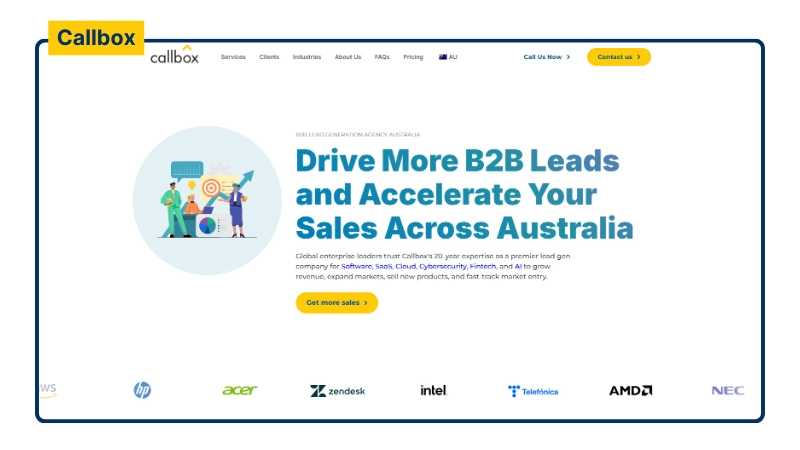
Callbox accelerates revenue by engaging prospects after brand awareness and converting them into qualified meetings, closed deals, and loyal customers. Once customers are acquired, Callbox then nurtures them into repeat business, advocacy, referrals, and expansion opportunities, feeding revenue back into the top of the funnel. This creates a self-reinforcing growth engine that continuously scales pipeline, accelerates sales, and maximizes customer lifetime value. Callbox is particularly strong for EdTech companies targeting multi-stakeholder institutional accounts.
See how Callbox webinar campaign helps EdTech SaaS firms find new customers and boost sales fast.
2. Beyond Codes
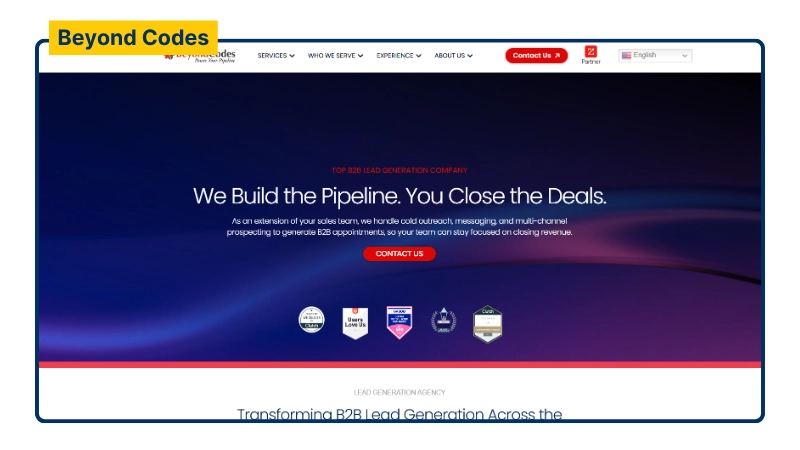
Beyond Codes specializes in appointment setting and multi-channel nurturing for EdTech. Their model emphasizes a research-driven, human-centric approach to identifying the right stakeholders across fragmented institutional buying committees.
3. Landbase
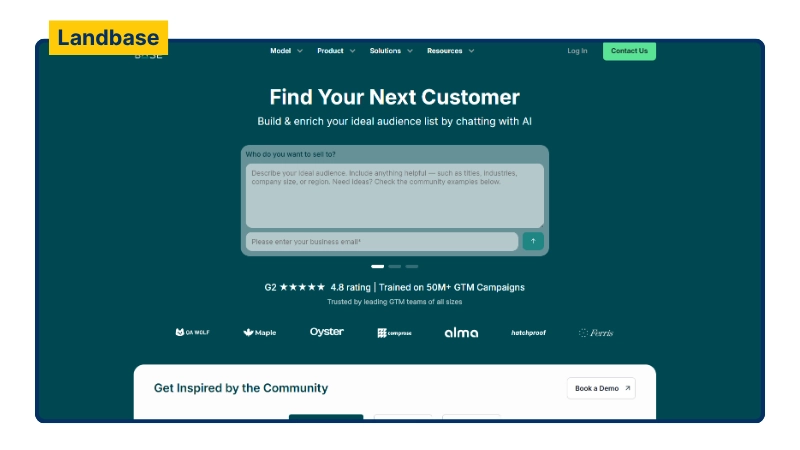
Landbase focuses on AI-powered precision targeting for B2B EdTech. Their platform uses real-time intent signals such as hiring trends and funding events to identify high-intent prospects and supports parallel nurture tracks for different stakeholder roles.
4. ListKit
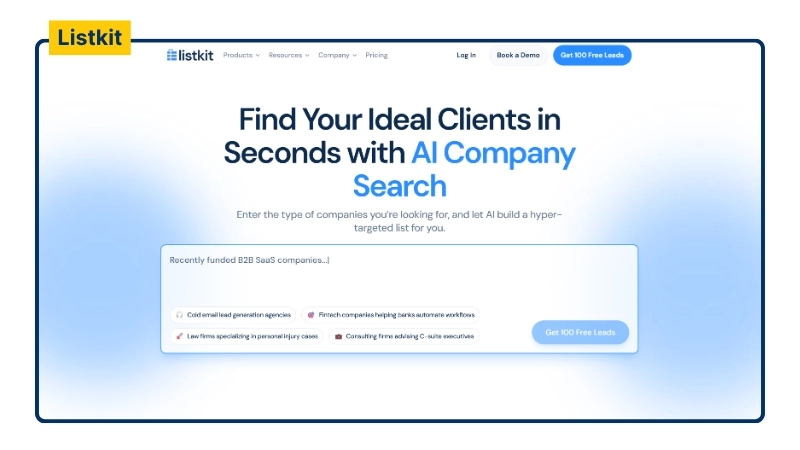
ListKit provides verified lead data with a focus on triple-verified contact accuracy. Useful for EdTech companies building outbound lists for multi-channel sequences targeting school administrators and IT decision-makers.
5. Responsify:
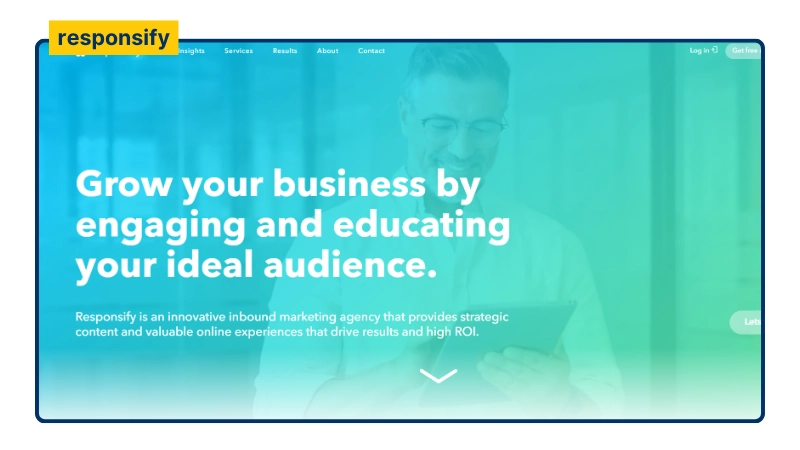
Responsify specializes in inbound content marketing for EdTech and HealthTech companies. Their approach centers on SEO-optimized content that builds organic authority and attracts qualified leads over time.
Frequently Asked Questions
How do EdTech companies generate leads without a large marketing budget?
The highest ROI approach for budget-constrained EdTech teams is to focus on content that serves a specific buyer at a specific stage of their decision process. A well-written implementation guide targeted at curriculum directors during budget season will consistently outperform a broad awareness campaign.
In addition, LinkedIn organic posting, guest contributions to education publications, and webinar partnerships with associations or professional development networks can generate qualified edtech leads at a fraction of paid advertising costs. The key is matching the content format to the procurement phase, not just the audience.
What makes EdTech lead generation different from standard B2B lead generation?
The core difference is the buying structure. Most B2B purchases involve one to three decision-makers and relatively flexible purchase timelines. EdTech sales regularly involve five or more stakeholders across curriculum, IT, finance, and administration, and they operate on fixed academic and fiscal calendars.
This means that standard B2B lead generation frameworks applied without modification will underperform in EdTech. Outreach that ignores procurement timing, stakeholder roles, or institutional compliance requirements will generate surface-level engagement but rarely convert into closed deals.
Is cold outreach still effective for EdTech lead generation in 2026?
Cold outreach still works, but only when it is precise and well-timed. Generic cold email blasted to a large list of school administrators produces very low returns in 2026. What works is personalized, intent-driven outreach sent to the right stakeholder during the right procurement phase.
A message referencing a district’s recent funding announcement, sent to the appropriate curriculum contact during budget planning season, will consistently outperform a templated pitch sent to a cold list. The format has not died. The generic execution of it has.
How long does it typically take to close an EdTech deal?
Sales cycles in K-12 and higher education commonly run six to eighteen months, depending on deal size and institution type. Corporate training buyers tend to move faster, often in the three-to-six-month range.
The length of the cycle is driven by the number of stakeholders involved, budget approval processes, and the institution’s procurement policy. This is why early-stage relationship building during Phase 1 (budget planning) is so valuable. Companies that enter the process during Phase 3 (RFP) are often too late to win the deal, regardless of product quality.
Do EdTech companies really need a specialized lead generation partner, or can they handle it in-house?
Both models can work, but they serve different growth stages. Early-stage EdTech companies often benefit more from a specialized partner because they lack the internal infrastructure to run multi-channel outreach sequences, manage contact data, and track engagement across a long sales cycle simultaneously.
More established teams sometimes bring lead generation in-house once they have validated their ideal customer profile and procurement cycle timing. The honest answer is that the quality of execution matters more than whether it is in-house or outsourced. A well-run internal team will outperform a poorly briefed external partner, and vice versa.
Isn’t generating more leads always better than generating fewer, more targeted ones?
This is one of the most common misconceptions in EdTech sales. Volume-based lead generation creates the appearance of a full pipeline while actually diluting sales team focus and extending cycle times. When a rep is following up with 200 low-intent contacts, they have less time and energy for the 20 high-intent ones who are actually in a buying phase.
The companies consistently outperforming in EdTech in 2026 have intentionally reduced outreach volume and increased targeting precision. Fewer, better-qualified edtech sales leads produce faster closes, higher win rates, and more predictable revenue than high-volume, low-intent lists.