10 Cold Calling Mistakes Sales Reps Make and How to Fix Them
This article debunks the myth that cold calling is dead. Learn key mistakes to avoid and how to do cold calling that translates to customers.
 Mitos Aguadera
Mitos Aguadera is VP of Sales and Marketing at Callbox, leading go-to-market strategy and demand generation for B2B clients across tech and SaaS.
View full bio of Mitos Aguadera
Cold calling is dead—now that’s a myth.
Contrary to popular belief, cold calling remains a valuable part of B2B sales in the APAC, particularly in Singapore. Many businesses still prefer phone conversations to connect with potential buyers, particularly decision-makers. This approach works best when handled by experienced cold calling experts in Singapore.
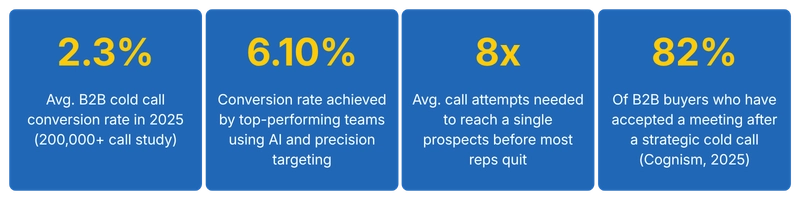
With a 2–3% success rate and a 16.6% connection rate, cold calls continue to be effective in starting real conversations and opening doors to new opportunities. In fact, over 50% of B2B leads still originate from cold calls, and 82% of buyers say they have accepted meetings from a well-timed, relevant cold call.
The channel hasn’t died. It’s simply evolved, and in doing so, it has separated the reps who prepare from those who don’t. A well-timed, well-prepared call can build trust, cut through digital noise, and help reps adjust in real time based on how a prospect responds.
In relationship-focused markets like APAC, that human touch carries real weight. When done right, cold calling remains one of the most direct and impactful ways to connect with high-value prospects. The difference between a call that opens a door and one that gets hung up on almost always comes down to avoiding a handful of repeatable cold calling mistakes.
Why Some Cold Calls Still Fall Flat—Even from Good Reps
If cold calling still works, why do so many sales calls fail?
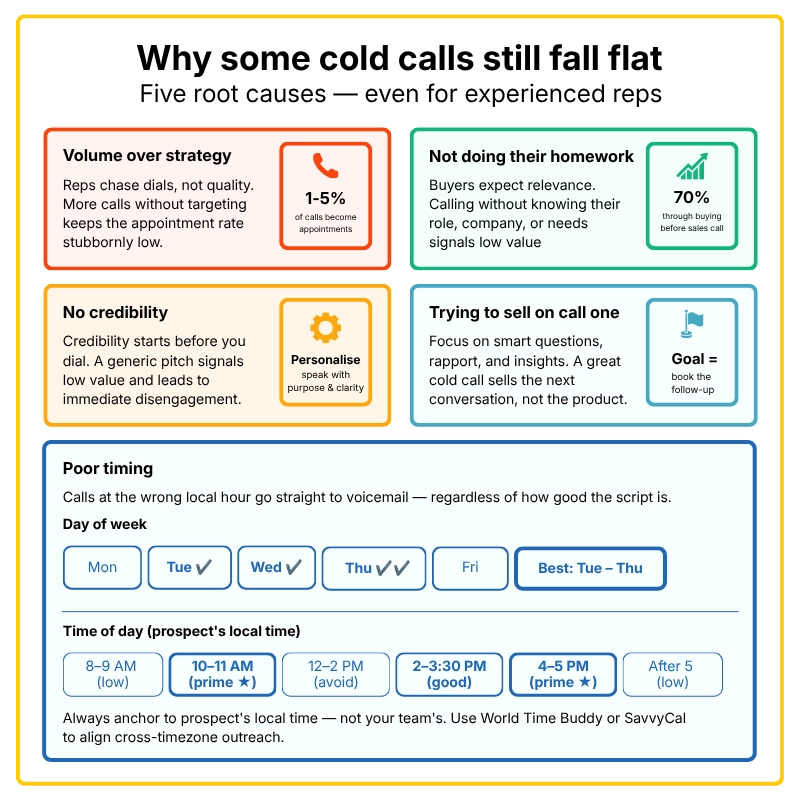
The problem isn’t cold calling itself—it’s how it’s done. In our experience running B2B outreach programs across the region, even seasoned SDRs fall into familiar traps: sounding too generic, calling at the worst time to cold call, or relying too heavily on automation over personalisation. These missteps may seem small, but they’re actually massive cold calling challenges that kill your pipeline.
Here are the most common reasons good reps still miss the mark:
1. They Prioritise Volume Over Strategy
Some reps still follow the outdated “more dials = more deals” mindset. But in reality, only 1-5% of cold calls turn into appointments, and that number stays low when calls are rushed, impersonal, or unresearched.
2. They Don’t Do Their Homework
Reps often skip research and call blindly. But today’s buyers expect relevance—most are already 70% through their decision-making before talking to sales. Not knowing your prospect’s role, company, or needs is a missed opportunity to improve cold calling outcomes.
3. They Have No Credibility
Building credibility on a cold call starts before you even dial. Prospects respond better to reps who demonstrate awareness of their business and speak with clarity and confidence.
A generic pitch or lack of preparation signals low value and leads to immediate disengagement. To earn trust, personalise your message, speak with purpose, and focus on how you can help, not just what you sell.
4. Their Timing Is Off
Timing can make or break a call. Outbound cold calling at the wrong time usually results in voicemail or brush-offs.
Research consistently shows that Tuesday through Thursday, from 10–11 AM and 4–5 PM local time, yield the highest connection and conversion rates. Monday mornings and Friday afternoons are reliably poor windows. The key phrase here is local time, and that distinction matters more than most reps realise.
- Calling US-based prospects. If your SDRs are based in the Philippines or elsewhere in Southeast Asia and are contacting leads in US time zones, those 10–11 AM and 4–5 PM windows fall in the middle of the night or very early morning in Philippine Time. Calling at the wrong local hour, even with a great script, will go straight to voicemail. Use tools like World Time Buddy or SavvyCal’s Time Zone Converter to map your outreach windows accurately before building your daily call schedule.
- Calling local or Asian prospects. If you are targeting markets like Singapore, the Philippines, Japan, or Australia, apply those same 10–11 AM and 4–5 PM windows directly in the prospect’s local time zone. Each market has its own working rhythm, so always anchor your timing to where your prospect sits, not where your team does.
5. They Try to Sell on the First Call
Trying to close on the first call is one of the most common mistakes to avoid during a cold call. Instead, focus on asking smart questions, gathering insights, and building rapport. A successful cold calling approach sells the next conversation, not the product.
Keep the tone friendly and relaxed to build rapport and make the prospect feel comfortable. Before the call, define a clear objective, such as scheduling a follow-up meeting, and work toward it efficiently to respect the prospect’s time.
Still Cold Calling the Old Way?
See how Callbox's multi-touch outreach programs help APAC sales teams reach the right decision-makers faster.
10 Cold Calling Mistakes and How to Fix Them
Even experienced reps can fall into bad habits that hurt results. To improve your success rate, SDRs should steer clear of the following missteps:
1. Talking Too Fast and Too Much
Sales reps often believe that talking more demonstrates confidence. In practice, it overwhelms the prospect. Dominating the conversation makes the call feel one-sided and pushes APAC buyers, who often value measured, respectful dialogue, to disengage early.
Research shows that top-performing reps maintain a talk-to-listen ratio closer to 45:55, meaning they spend more time listening than speaking. Speaking too quickly signals anxiety or a scripted approach, neither of which builds trust.
 Fix it: Slow down, simplify your language, and let the prospect speak. Active listening often wins more deals than persuasive monologues.
2. Calling While Anxious
Sales call anxiety can manifest in several ways, ranging from self-doubt and fear of rejection to physical tension and the urge to avoid the call altogether. These feelings often result in conversations that feel rushed, overly scripted, and disconnected from the prospect, ultimately reducing the chance of meaningful engagement.
Fix it: Preparation breeds confidence. Practice call scenarios, have your notes ready, and remind yourself that you’re offering value, not begging for time.
3. Reaching the Wrong Person
To make a cold call count, it’s important to speak with someone who can actually make decisions. Many sales reps waste time talking to people who aren’t the right contact, either because they don’t have the authority or aren’t involved in the decision-making process.
Notably, 57% of C-level executives prefer phone contact over other outreach methods (Cognism, 2025), which means the right person is actually reachable by phone—they just need to be identified correctly first.
Fix it: Do some quick research before reaching out to avoid this. Find out which job title is most likely responsible for the area you’re selling into, and try to learn the person’s name. Instead of asking for “the person in charge of marketing,” be specific and ask for them directly.
This small step makes your call more direct, more credible, and more likely to reach the right person. Use tools like LinkedIn, ZoomInfo, or industry directories to qualify contacts. Make sure you’re speaking to the decision-maker—or at least someone with influence.
Find out how an IT Security Provider reached over 1,000 decision-makers with Callbox’s Lead Gen Campaign
4. Using a Generic Pitch
Studies show that 81% of customers prefer tailored experiences, and 70% want to speak with someone who understands their past interactions and preferences. When your calls are focused and tailored, they’re far more likely to lead to real conversations.
Fix it: Reference recent company news, location-based examples, or relevant pain points. A rep calling a Singapore fintech should speak differently than one targeting a logistics company in Australia.
5. Calling Without a Clear Reason
Unclear or aimless calls can make it seem like you haven’t prepared, which hurts your credibility. If it feels like you’re just “checking in,” the prospect may not take the call seriously.
Always start with a clear goal, whether it’s to book a meeting, ask an important question, or offer a useful solution. Having a purpose shows that you respect their time and makes the call more productive.
Fix it: Define your call objective before you dial. Are you booking a 20-minute discovery call? Confirming interest in a new solution? Asking about a specific challenge? A focused call with a single, clear outcome in mind is far more effective than a meandering check-in.
6. Oversharing
It’s easy to get carried away on a cold call, but sharing too much information too soon can hurt your chances. When you overload the prospect with details, the conversation can lose focus, feel awkward, and reduce your credibility. Oversharing may also give the prospect reasons to say no or end the call early.
Fix it: Restrict the first call to one or two key benefits, and make your primary goal the follow-up meeting. Save the full product story for a longer, structured conversation where you have the prospect's full attention.
7. Taking Rejection Personally

Rejection is part of cold calling, and 63% of sales reps say it’s the hardest part of the job. But it’s important not to take it personally. A “no” often means “not right now,” “I need more information,” or “tell me why this matters.” Changing how you view rejection can help you stay confident and consistent.
Fix it: Track rejection patterns. Which objections repeat most? Which industries tend to push back on price versus relevance? Each call, successful or not, is a data point that sharpens your approach. Celebrate small wins, like objections handled cleanly or follow-ups secured, not just meetings booked.
Discover Effective Follow-Ups for Cold Call Rejections
8. Sounding Too Sales-Driven
APAC buyers and many others respond best to salespeople who lead with humility and clarity. A hard-sell approach can feel pushy and insincere, especially in the early stages of engagement. To avoid sounding overly sales-driven, focus on building real rapport, making the conversation about the prospect, and providing value before pitching your product.
Fix it: Ditch the pitch tone. Be consultative, sound like a problem-solver, and ask open-ended questions. Record your calls and review them to continuously refine your approach. Collaborative language, phrases that position you as a partner rather than a vendor, increases conversation rates by up to 20%.
When cold calls focus on connection and value instead of pressure, they become a powerful way to build relationships and generate real leads.
9. Getting the Tone Wrong
Tonality in sales is how you sound when speaking with prospects—your pitch, pace, volume, and clarity. It’s not just what you say but how you say it that drives connection and trust. The right tone makes you sound confident, engaged, and credible, while the wrong tone – too flat, too rushed, too scripted – can push prospects away. Even the best script won’t land if you sound bored or unsure.
Fix it: Mirror the prospect’s energy. Stay clear, calm, and confident. Be professional, but show warmth. The right tone builds rapport, and rapport builds trust.
10. Skipping the Follow-Up
This is the most quantifiably costly mistake in the list. 80% of sales require at least 5 follow-up calls, yet 44% of reps give up after just one attempt. A single cold call is rarely enough to close a deal, and skipping the next step can cause valuable leads to slip through the cracks. Whether it’s due to fear of rejection or lack of a system, missed follow-ups mean missed opportunities to build relationships, address objections, and keep the conversation moving forward.
It takes an average of 8 call attempts to reach a single prospect. Most reps abandon the sequence at attempt 2 or 3. The reps who build 8–12 touch cadences across multiple channels, phone, email, LinkedIn, are the ones booking the meetings everyone else is missing.
Why it matters: Prospects might not be ready on the first call, but with consistent, respectful follow-up, timing can shift in your favor. It also shows professionalism, builds trust, and keeps your solution top of mind.
Fix it: Use a calendar or CRM to schedule timely follow-ups. Aim to set the next step before ending your initial call. Mix up your outreach—try email, LinkedIn, or voicemail—and always be polite and relevant. In many cases, persistence delivered with respect closes more deals than the perfect pitch.
The Role of Technology in Smarter Cold Calling
Modern sales teams have powerful tools at their disposal—but not all are using them to their full potential.
CRMs like HubSpot or Salesforce help SDRs keep outreach organised. Call intelligence platforms like Gong or Aircall can analyse tone, pacing, and conversion trends across dozens of calls. With proper integration, reps can gain real-time insights into what makes top performers successful—and replicate that behaviour.
In short: Tech isn’t replacing cold callers—it’s making them sharper.
Use AI transcription and sentiment analysis tools to coach junior SDRs. Identify which phrases increase meeting conversions, and build call scripts around real data.
Integrating Cold Calling into a Multi-Channel Strategy
Even the most polished cold call is unlikely to succeed if it’s your prospect’s first or only interaction with your brand.
That’s why modern B2B outreach, especially in nuanced markets like APAC, requires a multi-touch, multi-channel strategy. Think of cold calls not as standalone sales tactics, but as one layer of a broader engagement plan that includes:
| Channel | Primary Role | Best For | APAC Consideration | Timing |
| Cold Call | Direct engagement, qualification | Decision-maker outreach, objection handling | High preference among the C-suite in SG/AU | Tue–Thu, 10–11 AM or 4–5 PM local |
| Email Cadence | Value delivery, context-setting | Pre-call warm-up, post-call follow-up | Effective in formal SG/AU business culture | Before and after each call attempt |
| Brand familiarity, social proof | Profile views, InMail, connection requests | High executive penetration in APAC | 48 hours before the first call | |
| WhatsApp / SMS | Quick follow-up, meeting reminders | Warm leads who’ve already engaged | Culturally appropriate in SEA markets | Post-call, with permission |
| Content Assets | Education, trust-building | Case study shares, webinar invites | Strong in AU for longer buying cycles | Mid-sequence, after initial connection |
This layered approach builds familiarity and trust, so that when the phone rings, your prospect already knows who you are and When prospects recognise your name before the phone rings, your connection rate and conversion rate both improve. LinkedIn profile views, a relevant email sent 48 hours prior, and a personalised call opener that references both can lift call outcomes significantly in APAC markets.
See How Callbox Helped an SG-Based Logistics Provider Break Into Enterprise APAC
151 MQLs. 67 SQLs. 8% no-show rate. See the multichannel GTM campaign that made it happen.
How to Measure Cold Calling Performance: An ROI Framework
Knowing the mistakes is only useful if you’re also tracking the right metrics to spot them. Here’s a structured approach to measuring cold calling ROI for APAC B2B teams.
- Track dial-to-connect rate: Industry average is 3–10%. If you’re below 10%, your data quality is the problem—not your reps. Invest in verified contact databases before training scripts.
- Measure conversation-to-meeting rate: Average is 2.3% dial-to-meeting in 2025. Top performers reach 6–10%. This metric tells you whether your pitch, tone, and timing are working once you have someone on the line.
- Monitor follow-up attempt depth: If your average outreach sequence stops at attempt 2–3, you’re leaving deals on the table. Benchmark against the 8-attempt industry average and build longer cadences.
- Audit objection types weekly: Use your CRM to tag objection categories. Patterns reveal whether your pitch lacks relevance, your timing is off, or your prospects aren’t the right ICP for your current messaging.
- Calculate cost-per-lead by channel: Cold calling typically costs $300–$500 per lead, fully loaded (salary, tools, overhead). Benchmark this against your email and LinkedIn costs to justify and optimise your channel mix.
Frequently Asked Questions
Is cold calling still effective in B2B sales in 2025?
Yes. Cold calling remains one of the most effective outbound channels for B2B sales in 2025, particularly in relationship-driven markets like APAC. Over 50% of B2B leads still originate from cold calls, and 82% of buyers report having accepted meetings after a strategic cold call. The channel works best when reps invest in personalisation, verified data, and multi-channel follow-up rather than relying on volume alone.
What is a realistic cold calling success rate for B2B teams?
The average B2B cold call conversion rate in 2025 is 2.3%—meaning roughly 1 meeting per 40–45 dials. This reflects a tightening of connect-to-meeting ratios compared to previous years. However, top-performing teams using AI tools, precision targeting, and multi-channel cadences consistently achieve 6–10% or higher. The gap between average and elite is driven by data quality, coaching cadence, and message relevance, not dial volume.
What are the most common cold calling mistakes SDRs make?
The most common cold calling mistakes include: talking too fast and dominating the conversation, calling without a clear objective, using generic pitches that lack personalisation, failing to reach the right decision-maker, sounding too sales-driven rather than consultative, and skipping the follow-up after the first call. The single most impactful mistake is abandoning follow-up too early: 44% of reps give up after one attempt, despite 80% of sales requiring at least 5 follow-up calls.
What is the best time to cold call B2B prospects in APAC?
Research consistently shows that Tuesday through Thursday, from 10–11 AM and 4–5 PM local time, yield the highest connection and conversion rates. Monday mornings and Friday afternoons are reliably poor windows. For APAC markets, always account for time zone differences across Singapore, Australia, Hong Kong, and Southeast Asia, and align call windows to the prospect’s working day rather than the SDR’s.
How many times should you call a prospect before giving up?
Industry data suggests it takes an average of 8 call attempts to connect with a single B2B prospect—yet most reps quit after 2 or 3. Building an 8–12 touch cadence across phone, email, and LinkedIn over a 2–3 week window is the approach used by top-performing outbound teams. Persistence, delivered with relevance and proper spacing between touchpoints, is what separates the SDRs who consistently book meetings from those who don’t.
How does cold calling work as part of a multi-channel B2B strategy?
Cold calling is most effective when it’s not the first touchpoint—it’s a strategic layer within a multi-channel sequence. When prospects have already seen a LinkedIn connection request, a relevant email, or a branded piece of content before the call, connection and conversion rates improve significantly.
In APAC markets, combining phone calls with email cadences, LinkedIn touches, and occasionally WhatsApp or SMS follow-up (where culturally appropriate) creates the familiarity and trust that make cold calls feel warmer.
Can AI improve cold calling performance?
Yes. AI tools are transforming cold calling performance across several dimensions. AI-powered call analysis platforms like Gong and Aircall help identify which phrases, tones, and call structures correlate with meeting bookings. Predictive dialling software increases connection rates by up to 3x. AI-driven lead scoring improves conversion rates by up to 30%, and automated number verification achieves 98% accuracy versus 87% for phone-verified databases. By 2026, 75% of B2B companies are expected to use AI-powered cold calling tools in some capacity.
Cold Calling Still Works—If You Do It Right
Cold calling is far from dead; it just demands more thought, strategy, and human connection than ever before. Done right, it’s still one of the most effective ways to engage decision-makers, spark real conversations, and drive pipeline growth. By focusing on timing, personalisation, tone, and consistency, your team can turn cold calls into warm opportunities.
Want to improve your outbound calling strategy and get more from your sales efforts? Start by applying these best practices—or work with a team that already does.