4 Top Outsourced SDR Agencies for FinTech
See 4 outsourced SDR agencies for fintech companies and how they help build qualified pipelines, book sales meetings, and reach financial buyers.
 Rebecca Matias
Rebecca Matias is Callbox's COO with 18 years of experience scaling B2B pipeline through data-driven outbound marketing, lead generation, and sales development.
View full bio of Rebecca Matias
 Quick Answer: The best outsourced SDR for FinTech partners pair domain-fluent reps (prior banking, payments, or compliance backgrounds) with pre-screened, regulation-safe messaging, and they're built for sales cycles that run 9 to 18 months rather than the 30 to 90 day rhythm of typical SaaS outbound.
One wrong word to a Chief Compliance Officer and the meeting is over before it starts. Here’s who gets FinTech outbound right, and how to tell them apart.
Picture the call. A rep dials into a Head of Treasury at a mid-sized bank, gets forty seconds of real attention, and then reaches for the word “settlement” like it’s a light switch. It flickers. The rep means something close to T+1 settlement, but says it like a vocabulary word memorized the night before. The Head of Treasury doesn’t correct them. She just stops listening, jots a note, and moves on with her day. That account is not coming back on a second call. It’s gone, quietly, the way most FinTech lead generation pipeline dies: not from rejection, but from irrelevance.
This is the real cost structure of outsourced SDR for FinTech: it isn’t dialing volume, it isn’t a CRM integration, and it isn’t even price per hour. It’s whether the person on the phone can survive sixty seconds of real financial vocabulary without giving away that they don’t belong on the call. Get that wrong at scale and you’ve spent a marketing budget burning your own addressable market. Get it right, and outbound becomes the fastest lane into a notoriously slow-moving buyer.
Looking for more qualified fintech leads?
Why FinTech Outbound Breaks Generalist SDR Playbooks
Most SDR training is built for a world where the buyer forgives a clunky sentence because the product is self-evidently useful. FinTech buyers don’t extend that grace. They’ve been trained by their own compliance departments to treat vague vendor language as a red flag, not a rough edge. Say “we help you move money faster” to a Head of Payments and you’ve told them nothing; worse, you’ve told them you don’t know the difference between an ACH cutoff and a wire transfer, and that gap is the whole conversation.
Layer onto that a buying committee that can run 7 to 15 stakeholders deep, spanning CFOs, compliance officers, CISOs, and line-of-business owners, each with veto power and a different definition of risk. A generalist SaaS SDR motion, tuned for a single champion and a 30-day sprint, simply doesn’t have the patience or the vocabulary for that terrain.
Industry Insight: The FinTech sector is on pace to become a $460 billion industry in 2026, with more than 30,000 companies competing for the same buyers. That density means differentiation on message quality, not just message volume, decides who gets the meeting.
The Sales Cycle Nobody Budgets For
Enterprise FinTech deals commonly stretch 9 to 18 months from first touch to signed contract, against a median B2B SaaS cycle closer to 84 days. Campaigns built on a 30-day sprint mentality get abandoned right around the point where the real meetings were about to show up.
That timeline isn’t arbitrary. A payments platform selling into a Tier-1 bank isn’t just persuading a single buyer; it’s moving a request through security review, a data residency assessment, a compliance sign-off, and often a procurement committee that meets quarterly rather than weekly. An SDR partner unfamiliar with that rhythm reads the silence as disinterest and moves on. A partner built for FinTech reads it as exactly what month four of an 18-month cycle looks like, and keeps the account warm instead of writing it off.
The Regulatory Stakes Behind a Single Bad Call
It’s tempting to treat compliance-aware messaging as a nice-to-have, a box a legal team checks after the fact. In FinTech, that framing gets the order backwards. Compliance isn’t a constraint on the sales motion; it’s a load-bearing wall.
Regulators aren’t shy about the price tag. FINRA imposed roughly $88 million in fines in a single year against firms for violations that frequently trace back to what a representative said, or failed to disclose, on a call. On the outbound side specifically, TCPA violations carry statutory penalties of $500 to $1,500 per call, and that number multiplies fast against any meaningful dial volume. A single unmanaged campaign, run against an unverified list, can put an entire quarter’s marketing budget at risk before a single deal even closes.
This is why “compliance-first” can’t be a slide in the sales deck. It has to be baked into how a script gets written, how a rep is trained to handle pushback, and how quickly a flagged phrase gets corrected across an entire campaign.
Expert Tip:
Ask any partner how a compliance issue discovered mid-campaign actually gets fixed. Do they pause the sequence and retrain, or quietly hope it doesn't happen again? The answer tells you whether compliance is a process or a slogan.
What Actually Separates a Strong FinTech SDR Partner
- Vocabulary depth that survives a real conversation. Reps should discuss reassignment databases, KYC checkpoints, or NACHA formatting without sounding like they’re reading a glossary for the first time.
- Compliance-aware messaging by default, not by exception. Scripts should avoid unregistered financial claims from the first draft, not get patched after legal flags them.
- Operational patience for a long, multi-stakeholder cycle. Reporting and cadence should assume months of nurture, not a 30-day sprint and a shrug.
- Willingness to show their actual process. A partner confident in their qualification criteria will walk you through a real sequence and real disqualification logic.
Expert Tip:
Ask any prospective partner to roleplay a two-minute cold call as a Head of Treasury pushing back on "faster settlement" claims. How the rep recovers tells you more than any case study on the website.
The Four Leading Lead Generation Partners
These four aren’t ranked against each other. They’re built for different jobs, and the right pick depends on your budget, your region, and how deep into regulated territory your product sits.
Callbox
Callbox: Best for global multi-channel reach and ABM complexity.
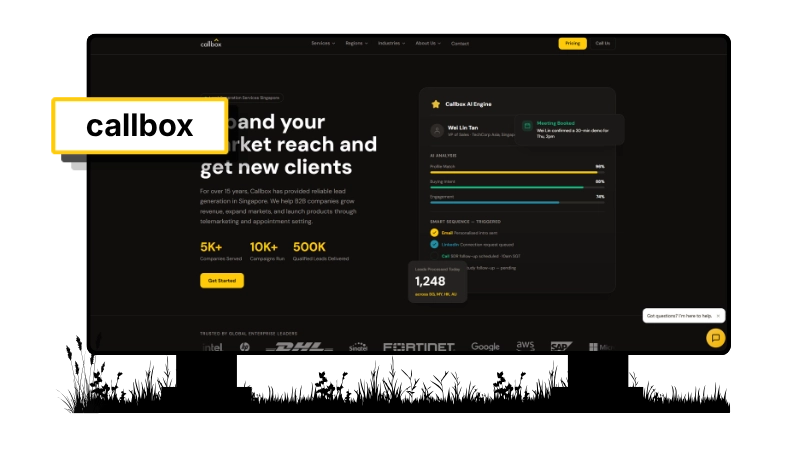
Two decades of B2B experience, with a full support pod (Client Success Manager, Data Analyst, Content Specialist) behind every SDR. Multi-touch sequencing across phone, email, LinkedIn, and social, reaching 60+ countries, with compliance-first messaging built for regulated sectors. Fits RegTech, Fraud Detection, Payments Infrastructure, Governance tools, Enterprise Financial Software. Splitting the workload across specialists means the rep stays focused on the conversation while someone else keeps the database clean and someone else watches the dashboard for where a campaign is losing steam.
Delta-v
Delta-v: Best for enterprise EMEA deals with Tier-1 institutions.
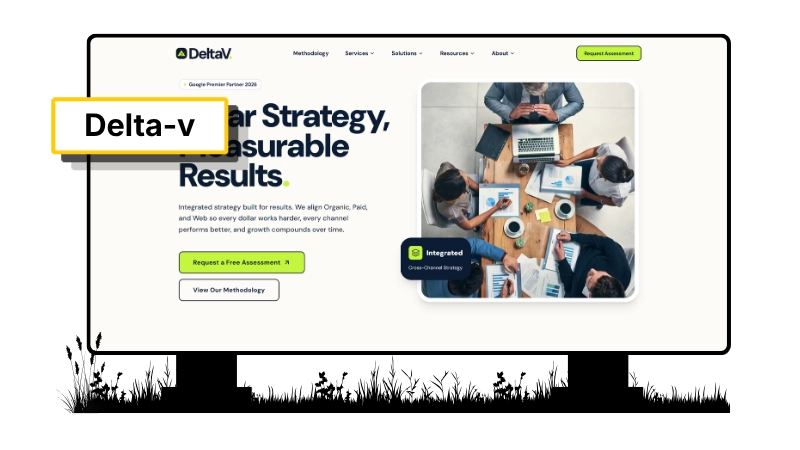
Dedicated pods out of Cape Town built for vendors selling into major financial institutions, insurers, and large enterprise merchants. Track record with PPRO, Electrum, and Tax Systems, exceeding enterprise meeting benchmarks with C-level buyers. Often delivers multi-million-dollar pipeline within 4–6 months of launch. The Cape Town base creates useful time zone overlap with both European and East Coast US business hours.
VirtuWise
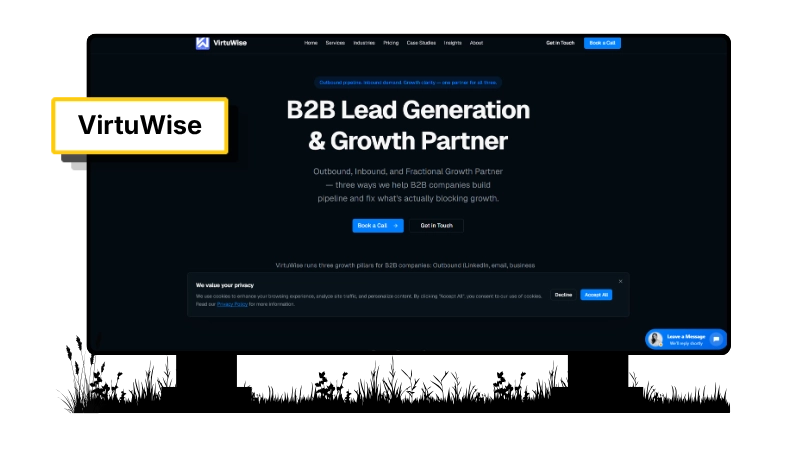
VirtuWise: Best for European regulatory nuance, mid-market. Boutique, Europe-headquartered, precision over volume across LinkedIn, email, and direct outreach. Messaging built for European and North American regulatory contexts. Flat-rate pricing around €3,000–€5,000/month — easier to justify internally than a per-hour model when testing outsourced SDR for the first time.
Profitbl
Profitbl: Best for pan-European, multilingual RegTech outreach.
Native bilingual SDRs (English, French, German, Spanish) focused strictly on BANT and compliance-qualified meetings. Campaigns can launch within 7–14 days. A compliance officer reading an obviously translated outreach message discounts it before finishing the first sentence; native bilingual messaging avoids that failure mode entirely.
Red Flags That Predict a Burned Account
- Reps who default to SaaS language (“boost your revenue,” “streamline your workflow”) on a FinTech call
- Scripts making regulatory claims without compliance sign-off
- Campaigns abandoned before month three, when real meetings often land between week 8–14
- No visibility into disqualification criteria
- One-size-fits-all messaging across a buying committee with very different risk concerns per role
Who’s Actually On the Other End of the Call
- Core Banking & Operations: VP of Banking Operations, Head of Digital Banking, CIO
- Payments & Acquiring: VP of Payments, Head of Acquiring, Director of Risk
- Treasury: VP of Treasury, Treasurer, Head of Cash Management, CIO
- RegTech & Compliance: CCO, BSA Officer, VP of Risk, AML Lead
- Capital Markets: Head of Operations, COO, Head of Settlement
- Embedded Finance/BaaS: VP of Embedded Banking, Head of API Banking, CTO
Industry Insight:
Teams that shift from cold-led to warm-led motion, using investor, board, and customer introductions, have reported cutting their average enterprise FinTech sales cycle by 30–40%.
Comparing the Four at a Glance
| Company | HQ | Best For | Core Strength |
| Callbox | Global | Complex multi-channel ABM | Full support pod, 60+ countries |
| Delta-v | Cape Town | Enterprise Tier-1 deals | Track record with major payments platforms |
| VirtuWise | Europe | Mid-market regulatory nuance | Precision multi-touch |
| Profitbl | Pan-European | Multilingual RegTech | Native bilingual, compliance-qualified SDRs |
How to Measure Whether It’s Working
- Qualified meeting rate, not reply rate. A high reply rate on the wrong persona is noise.
- Vocabulary pass-through on discovery calls. Did the lead arrive already understanding your product category’s mechanics?
- Pipeline created per 1,000 outreach touches. Normalizes for volume differences between partners.
- Cycle stage velocity. Measure time between discovery and next-stage advancement, not just closed-won.
- Compliance incident rate. Zero is the target.
How to Pick the Right Partner
- Test vocabulary depth directly — ask for a live example, not a slide.
- Review compliance protocol before pricing.
- Match to region and budget: Callbox for global multi-channel reach, Delta-v for enterprise EMEA, VirtuWise/Profitbl for multilingual European coverage.
Frequently Asked Questions
What is outsourced SDR for FinTech?
External sales development teams, with banking/compliance backgrounds and pre-screened, regulation-safe messaging, built for FinTech’s long, multi-stakeholder sales cycles.
Why does FinTech need a different SDR approach?
Compliance-trained buyers, 7–15 stakeholder committees, and 9–18 month cycles break generalist SaaS outbound motions.
How much does it cost vs. in-house?
In-house runs 100K–150K+/year; outsourced FinTech partners range from ~12–18/hr to €3,000–€5,000/month flat rate, generally 60–75% savings.
How long does ramp take?
10–14 days for specialized partners vs. 14–18 weeks in-house.
What compliance risks matter most?
Unregistered financial claims and TCPA violations, which carry 500–1,500 per-call penalties.
How long is a typical FinTech sales cycle?
9–18 months for enterprise deals.