How to Sell Medical Software to the Healthcare Space
Learn how to sell medical software to hospitals in 2026: who sits on the buying committee, how to clear security review, and how to prove ROI.
 Jude Neilson
Jude Nielson is a Business Development Manager at Callbox Inc, with 16 years of experience driving B2B growth through strategic lead generation and sales development.
View full bio of Jude Neilson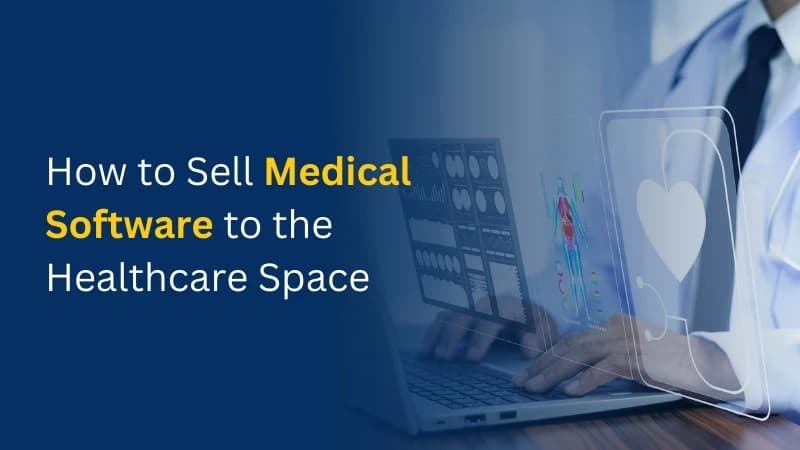
 How do you sell medical software to healthcare organizations? Map the full buying committee before the first outreach, because a single clinical champion cannot move a hospital purchase on their own. Then lead with regulatory and security evidence rather than features, since compliance review is where most deals stall, and close with a documented ROI case tied to a specific line item the buyer already owns, such as denied claims, documentation time, or agency staffing spend.
Knowing how to sell medical software comes down to three things: getting in front of a buying committee that averages seven to twelve people, surviving a security and compliance review that has nothing to do with your product’s features, and proving a financial return that a CFO can defend in a budget meeting. The technology is rarely what loses the deal. The process is.
That process is slower than almost anything else in B2B software. Hospitals and health systems run formal procurement, which usually means an RFP, a legal review, a security questionnaire, and in many cases a value analysis committee sign-off before anyone signs anything. A clinic deal might close in 60 to 90 days. An enterprise deal can run past a year.
As a healthcare IT lead generation provider, we spend most of our time on the first problem: getting a named decision maker on a calendar. This guide covers all three, starting with the question most vendors ask first.
Wondering how to improve your healthcare lead quality and conversion rates?
How Long Does It Take to Sell Medical Software to a Hospital?
Plan for 9 to 12 months on an enterprise health system deal and 60 to 90 days on a small clinic purchase. That gap is not about deal size alone. It is about how many separate approvals sit between a yes from your champion and a signature.
Four things add the months:
- Committee size. Nearly 60% of healthcare organizations report five or more people involved in a technology decision, and 23% report ten or more, according to the 2025 HIMSS Healthcare IT Buyer Survey. In hospital software sales specifically, seven to twelve is the normal range, and several of those people hold an effective veto without being the formal decision maker.
- Formal procurement. RFPs, legal review, and board or committee approval are mandated steps, not optional ones. They add time on their own regardless of how enthusiastic your champion is.
- Security review. Any product that touches protected health information triggers a third-party risk assessment and a business associate agreement. Covered in detail below.
- Budget timing. Health systems set fiscal-year budgets, usually locked in Q3 or Q4 for the following year, and capital expenditure often sits in a separate pot from operating spend. Miss the window and your deal waits for the next cycle no matter how good the fit is.
Industry Insight: The cycle is long, but the gate has moved. Health systems are consolidating vendors rather than adding them. A 2026 survey of health system technology leaders found that 74% name EHR dependency as the top barrier to executing on AI projects, and that more than half of IT bandwidth at many systems goes to vendor management alone. The practical read for a vendor: `we integrate with Epic` is no longer a differentiator on its own. Being one fewer contract to manage is.
Long cycles punish thin pipeline hardest. See how outsourced SDR support keeps healthcare conversations starting while your team works the deals already in play.
Healthcare Software Marketing

Before diving into sales strategies, it’s essential to understand the healthcare market’s diversity. The healthcare network is not a monolith—it’s comprised of various types of organizations including hospitals, pharmacies, research institutions, and even telehealth platforms. These organizations have distinct needs and decision-making processes when it comes to purchasing software. To meet these requirements, custom medical software development delivers solutions tailored to specific workflows and operational goals
For instance, hospitals typically have larger budgets but a more complex decision-making process, involving multiple stakeholders and layers of approval. In contrast, smaller clinics might be more agile but have tighter budgets. Therefore, an in-depth understanding of these nuances allows you to segment your target audience and tailor your sales pitch accordingly.
Moreover, healthcare institutions often operate under financial pressure, balancing the need for cost-efficiency with patient outcomes. Thus, medical software vendors need to communicate how their products will improve clinical workflows, enhance patient care, and ensure compliance with regulatory standards.
Key Takeaway: Conduct detailed research to understand the healthcare organization1s operations and pain points. Segmenting customers based on size, specialty, and budget will inform your go-to-market strategy.
Boost your healthcare software sales with outsourcing
Get Detailed About Your Segmentation
While having a clear grasp of your buyer personas is essential for any software marketing strategy, it’s especially critical if you’re selling to the healthcare software market. For one thing, you need to make sure you’re reaching all the stakeholders involved in the purchasing decision. Having a clear understanding of the challenges and priorities for each buyer type will ensure that your content, website, and campaigns cover all your bases.
But how can you understand those challenges and priorities? Here’s what you need to keep in mind in order to understand your target audience through segmentation:

Identifying buyer personas in the Healthcare Industry
Selling software to hospitals means selling to a committee, not a buyer. Each member evaluates a different thing, and most of them can stop the deal without being able to approve it. Map all of them before the first outreach, not after the first objection.
| Stakeholder | What they actually evaluate | Proof they want | Veto power |
|---|---|---|---|
| CIO / VP of IT | Integration depth, security posture, how many systems this touches | Architecture docs, API and FHIR detail, named reference integrations | Yes |
| CMIO / clinical lead | Workflow disruption and clinician adoption | Time-per-task data, pilot results, clinician testimony | Yes |
| CFO / VP Finance | Total cost of ownership and payback period | ROI model tied to a line item they already own | Yes |
| Compliance/privacy officer | PHI handling, BAA terms, breach history | Security questionnaire, SOC 2 or HITRUST, incident response plan | Yes |
| Department/service line director | Whether it solves their specific daily problem | A demo in their own workflow, not a generic one | Usually champion, rarely approver |
| Procurement | Contract terms, competitive bids, vendor count | Standard paper, clean references, willingness to go through RFP | Yes, on timing |
A 150-bed community hospital may consolidate several of these roles into two or three people, which is why mid-market deals move faster. A multi-site system will not. Size your outreach accordingly: more titles per account at enterprise, fewer and more senior at community level.
This is why outreach has to go wide from the start. Across the same 15+ Callbox healthcare IT campaigns, we engage five to seven decision makers per target account, covering clinical, technical, financial, and compliance authority rather than a single sponsor. On a mid-sized hospital, this is close to the whole committee. On a multi-site system, it is the working minimum, and anything less leaves a stakeholder who can say no without ever having heard from you.
By thoroughly defining and analyzing your buyer personas, you can tailor your marketing efforts to address their unique challenges, priorities, and pain points. Learn how to identify your target healthcare buyers.
Key Takeaway: One champion is not a deal. If you have had three conversations and they have all been with the same person, you do not have a pipeline opportunity, you have a relationship. Go wide early, while the deal is still cheap to influence. More on prospecting healthcare sales leads.
Challenges and priorities for each buyer type
Within the healthcare industry, different buyer types have varying challenges and priorities. For example, healthcare providers may focus on improving patient care and optimizing workflows, while administrators may prioritize cost-effectiveness and regulatory compliance.
Understand the specific needs of each buyer type and develop content, websites, and campaigns that resonate with them. By addressing their pain points and offering solutions, you can increase engagement and interest in your medical software.
Learn how to leverage prospecting in healthcare lead generation.
Tailoring Your Value Proposition
Given the complexity of healthcare, your value proposition should be crystal clear and laser-focused on solving specific problems in this sector. Medical software solutions are often significant investments, so it’s important to communicate both short- and long-term benefits.
Key elements of value propositions for healthcare organizations might include:

- Improved Patient Outcomes: Showcase how your software can directly or indirectly improve care quality.
- Enhanced Operational Efficiency: Highlight workflow automation, reduction of administrative burdens, or faster processing of patient data.
- Regulatory Compliance: Emphasize the importance of your software in helping healthcare organizations comply with regulations like HIPAA, HITECH, or GDPR (for EU customers).
- Cost Savings: Demonstrate how your solution can lower operating costs, such as reducing manual paperwork, minimizing errors, or speeding up reimbursement cycles.
It’s also beneficial to speak in terms of measurable outcomes, whether that’s reduced patient wait times, lower operational costs, or increased revenue from improved billing accuracy.
Key Takeaway: Frame your value proposition around the specific, measurable benefits your software brings to healthcare organizations, ensuring that it aligns with their top priorities.
How to Clear Hospital Security and Compliance Review

Compliance review is not a box your buyer ticks at the end. It is a parallel process run by people who were not in your demo and who are measured on risk, not on the value of your product. Vendors lose months here, and most of those months are spent gathering documents they could have had ready on day one.
Here is what is actually happening on their side. Health systems tier vendors at intake. If your product creates, receives, maintains, or transmits protected health information, you land in the high-risk tier and face a full third-party risk assessment: a security questionnaire, a signed business associate agreement, evidence of workforce training, and in many systems a cross-functional review involving security, privacy, legal, and clinical staff. Low-PHI vendors get a short review. You will not.
Two things have made this review harder since 2024. Business associate involvement in healthcare data breaches reached 43% in the first half of 2026, up from an average of 20% between 2009 and 2017. And a proposed update to the HIPAA Security Rule, still not final as of mid-2026, would require every business associate to provide written verification that its safeguards meet HIPAA standards, certified by someone with authority at the vendor. Buyers are already asking for that verification ahead of the rule.
Key Takeaway: Make regulatory compliance a central part of your pitch to alleviate concerns and build trust with potential buyers.
Build the evidence pack before you need it
Assemble these once and keep them current. Having them ready at first serious conversation routinely takes weeks off the review:
- A signed, ready BAA template on your paper, with the eight required provisions under 45 CFR 164.504(e) already covered. Never ask a buyer to draft it.
- A completed security questionnaire in a common format, plus SOC 2 Type II or HITRUST certification if you have it. ‘We are HIPAA compliant’ is a marketing sentence, not evidence, and reviewers are trained to say so.
- Access control, incident response, and data retention policies in writing, with change management and vendor oversight covered.
- Workforce training records and a current risk analysis.
- Integration documentation naming the EHRs you connect to and how, including which data moves in which direction.
- FDA clearance or relevant certifications where your product’s function requires them. Clearing these early is a genuine differentiator, so say so in the first conversation rather than the fifth.
Expert Tip: Ask for the security questionnaire during discovery, not after the verbal yes. The request signals you have been through this before, which is itself a trust marker, and it tells you whether a review backlog is about to eat your quarter.
Related: across the same 15+ campaigns, the two objections our SDRs hear most on healthcare software calls are budget cycle timing and an incumbent vendor already in place. Neither is a fit problem. Both are timing problems, which means the right response is a nurture date rather than a disqualification. Ask when the budget resets and when the incumbent contract renews, then put the account back in the sequence three months ahead of whichever comes first.
How to Demonstrate ROI That a CFO Will Defend
Healthcare finance leaders are not evaluating whether your software is good. They are evaluating whether the money is better spent here than on the eleven other requests on the list. That means an ROI case tied to a budget line that already exists, not a productivity estimate built on assumptions.
The pressure to prove it is increasing. In a 2026 survey of 321 digital health purchasing decision makers, 68% of employers and 55% of health plans reported using performance-based contracts, where payment is tied directly to clinical or financial results. Most purchasers plan to hold spending flat rather than grow it, and portfolios are narrowing. A soft ROI story loses to a narrow one.
A five-step ROI framework
- Name the line item. Pick one cost the buyer already tracks and reports: denied claims, agency nursing spend, documentation hours, readmission penalties, average length of stay. If finance does not already have a number for it, you cannot move it.
- Get their baseline, not an industry average. Ask the buyer for their current figure. An industry benchmark tells them you have not done the work; their own number makes the rest of the model credible.
- Apply a conservative improvement rate. Use the low end of what you have actually delivered elsewhere, and say that you are using the low end. A model that survives scrutiny beats one that impresses on the first pass.
- Subtract total cost of ownership. Licence plus implementation plus internal IT hours plus training plus ongoing support. Leaving out implementation is the fastest way to lose finance’s trust, because they will add it themselves.
- State the payback period in months. Not percentage return. CFOs budget in months and fiscal years. ‘Pays back in month 14’ is a sentence a champion can repeat in a meeting you are not in.
WORKED EXAMPLE
A revenue cycle tool sells into a system processing 180,000 claims a year at a 9% initial denial rate, with an internal cost of roughly $25 to rework each denial. That is 16,200 denials and about $405,000 in rework annually. A conservative 15% reduction returns about $60,750 a year. Against a $45,000 licence plus $30,000 implementation, payback lands around month 15. Not a dramatic number, but a defensible one, and defensible is what gets signed.
Note the structure: their volume, their denial rate, their rework cost. Three numbers the buyer supplied. The vendor supplied only the improvement rate.
Have the ROI case but not the meetings? Callbox healthcare lead generation puts it in front of the clinical, IT, and finance stakeholders who all have to say yes.
Craft a Strong Sales Strategy
A healthcare sales strategy is a multithreading strategy. Everything else follows from the fact that you need six or more people to agree, and that they will not agree for the same reasons.
- Target on fit, not size. Budget without need stalls. Need without budget stalls longer. Qualify on both, plus a timing trigger such as an EHR migration, a new compliance requirement, a leadership hire, or a contract renewal.
- Lead with education. A healthcare buyer researching a category they have never bought in is doing the reading whether or not you help. Be the source they read. This is also what makes your content retrievable when they ask an AI system the same question.
- Multithread deliberately. Three stakeholders engaged is the working minimum: a clinical champion, a technical evaluator, and a budget owner. Message each on what they evaluate, using the table above.
- Make the pilot small and measured. One department, a defined window, and a success metric agreed in writing before it starts. Pilots without a pre-agreed metric do not convert; they just end.
- Consider outside help for the top of the funnel. If your team is strongest in demos and weakest in getting first meetings with named health system titles, that is a capacity problem, not a skill problem. A specialist B2B appointment setting partner adds reach without adding headcount. The evaluation question to ask any provider: can they name the healthcare titles they have booked, not just the industries they have served.
- Stay in the deal through the quiet months. Silence in healthcare usually means procurement, not rejection. Keep adding value: a relevant regulatory update, a peer case study, an introduction. Consistent contact over a long cycle is the single hardest thing for an internal team to sustain, and the most common reason deals die.
Events are worth a line here too, because they compress the committee problem. A single webinar or roundtable can put clinical, IT, and finance stakeholders from the same account in the same room. See healthcare event marketing.
Learn how software can help generate healthcare leads.
Build Automated, Personalized Journeys
Personalizing digital journeys is a powerful strategy to engage and convert potential customers in the healthcare industry. By tailoring your marketing efforts to the specific needs and interests of your target audience, you can create a more meaningful and impactful experience for them.
Here are some key steps to personalize digital journeys for targeted engagement:

1. Creating Automated Pathways
Automated pathways provide a structured and automated approach to nurturing leads and guiding them through the buyer’s journey. Start by offering high-value lead magnets, such as informative white papers, eBooks, or educational videos, that align with the pain points and challenges of your target audience. These lead magnets should address specific topics or provide solutions that are relevant to healthcare professionals.
Once prospects engage with your lead magnet by providing their contact information, you can initiate an email series that delivers valuable content to nurture them further. The email series should be designed to gradually build their interest and trust in your medical software. Provide informative content, case studies, success stories, and testimonials that highlight the benefits and outcomes of using your software in real-world healthcare scenarios.
Throughout the automated pathway, incorporate strong calls-to-action (CTAs) that guide prospects toward the next step in the journey. This could include inviting them to schedule a demo, attend a webinar, or download additional resources. By strategically mapping out the pathway and automating the process, you can provide a consistent and personalized experience for each prospect.
Looking to generate healthcare leads with target lead generation?
2. Leveraging Behavioral Triggers for Personalization
However, to stand out in this crowded market, you might also want to consider a higher level of personalization, such as journeys based on “trigger events” that you can identify from your knowledge of your target market.
An excellent example of a personalized journey might be a content series aimed at healthcare providers affected by a new type of regulation. The series could start with an educational article on how the regulation may affect your specific target, offer a free webinar to provide more detail, and then use the email addresses from the webinar to deliver a highly targeted email series explaining how your software can help them avoid any compliance pitfalls or risks.
While these can be programmed manually, you may find it easier to use your CRM software to help you segment your contacts more thoroughly and tie content delivery to their online behavior, rather than more general data points (such as company size or job role)
3. Harnessing the Power of CRM Software
To effectively personalize digital journeys and track prospect interactions, consider leveraging Customer Relationship Management (CRM) software. A CRM system allows you to capture and analyze prospect data, segment your audience based on various criteria, and automate personalized content delivery.
With CRM software, you can track prospect engagement with your website, emails, and other marketing channels. This data helps you understand their preferences, interests, and stage in the buyer’s journey. By utilizing this information, you can tailor your content and communication to their specific needs, ensuring a more personalized and targeted approach.
CRM software also enables you to automate personalized content delivery based on predefined rules and triggers. This streamlines delivering the right content to the right prospects at the right time. Additionally, CRM systems provide valuable analytics and reporting capabilities, allowing you to measure the effectiveness of your personalized digital journeys and make data-driven optimizations.
Incorporating CRM software into your marketing strategy empowers you to personalize digital journeys at scale, enhance prospect engagement, and maximize the effectiveness of your medical software sales efforts in the healthcare industry.
By personalizing digital journeys for targeted engagement, you can build stronger connections with your prospects, increase their trust in your medical software, and ultimately drive more conversions in the healthcare space.
Grow Authority With 3rd Party Partnerships
Building authority and trust is crucial for success in the healthcare software industry. Healthcare professionals and organizations are cautious when adopting new software due to the sensitive nature of patient data and the critical role that technology plays in delivering quality care.
Here are some strategies to establish authority and build trust:

Related: Hiring a Third-Party Company for Lead Generation for Healthcare
Win trust with good content
Content is also a great way to build your authority as a trusted provider — and authority is fundamental in this highly regulated environment. Creating valuable, useful content (including original research, e-books, “how to” guides, or other helpful materials) will enable you to demonstrate your company’s understanding of its needs and challenges.
For instance, consider building co-marketing campaigns with a strategic partner, a related (but non-competing) service provider, or even a key client — case studies are a powerful way to build trust in the healthcare market.
The healthcare industry can be tough, crowded, slow, and conservative. Getting ahead in this industry will require software companies to:
- Thoroughly define, analyze, and segment their buyer personas, then create the high-value content their prospects are looking for.
- Partner with industry influencers and known brands to add authority to their content.
- Distribute this trust-building content through personalized journeys based on behavioral triggers.
Discover the main lead generation goals.
Collaboration and Partnerships
Collaborating with industry influencers, known brands, or strategic partners can significantly enhance your authority and credibility. Seek opportunities to collaborate on co-marketing campaigns, joint webinars, or speaking engagements with reputable organizations in the healthcare field. These partnerships can help validate your software’s effectiveness, showcase real-world success stories, and strengthen your reputation as a reliable and trusted provider of healthcare software solutions.
Testimonials and Case Studies
Customer testimonials and case studies are powerful tools for building trust and demonstrating the value of your medical software. Collect testimonials from satisfied customers who have experienced positive outcomes and improvements through the use of your software. Highlight specific benefits, such as increased efficiency, improved patient outcomes, or cost savings. Case studies that outline the challenges faced by healthcare organizations, the implementation process, and the measurable results achieved can further solidify your authority and provide social proof of your software’s effectiveness.
Industry Associations and Certifications
Membership in relevant industry associations and obtaining certifications can enhance your credibility and authority. Identify reputable associations or organizations within the healthcare industry and become active members. Participation in industry events, conferences, and networking opportunities can help establish your presence and credibility among healthcare professionals. Additionally, obtaining certifications or compliance with industry standards can provide reassurance to potential customers that your software meets rigorous requirements and adheres to industry best practices.
Ready to meet your decision-makers with high-intent healthcare buyers? Discover Callbox Healthcare Event Marketing Service.
Thought Leadership and Expertise
Establishing yourself and your team as thought leaders in the healthcare software industry can significantly boost your authority. Share your expertise through speaking engagements, webinars, or contributing articles to industry publications. Engage in discussions and provide valuable insights on social media platforms, forums, and professional networks. By consistently demonstrating your knowledge and expertise, you can build trust and position yourself as a go-to resource for healthcare professionals seeking software solutions.
Building authority and trust in the healthcare software industry requires a combination of valuable content, strategic partnerships, testimonials, industry associations, and thought leadership. By implementing these strategies, you can establish your software as a trusted solution provider and differentiate yourself from competitors. Ultimately, gaining the trust of healthcare professionals is vital for successful sales and long-term relationships in the healthcare software market.
Boost your healthcare software sales with AI.
Utilize Effective Healthcare Software Marketing Strategies
Optimizing distribution channels
To reach your target audience effectively, leverage various distribution channels. Utilize social media platforms, professional networks, and industry-specific websites to promote your medical software. Engage in content marketing strategies such as guest blogging or thought leadership articles to expand your reach and establish your software’s presence in the healthcare industry.
Implementing CRM software for targeted outreach
Utilize Customer Relationship Management (CRM) software to enhance your marketing efforts. Leverage CRM capabilities to segment your contacts more thoroughly based on their online behavior, preferences, and engagement with your content. This allows you to deliver personalized and targeted content to specific segments, increasing the relevance and effectiveness of your marketing campaigns.
Leveraging SEO and keywords
Optimize your website and content for search engines by incorporating relevant keywords related to medical software, healthcare IT software, and software for the healthcare industry. Conduct keyword research to identify the terms and phrases that your target audience is searching for. By incorporating these keywords strategically into your website, blog posts, and other content, you can improve your visibility in search engine results and attract organic traffic.
Implementing these effective healthcare software marketing strategies will help you reach your target audience, establish credibility, and drive the success of your software in the healthcare industry. By combining a comprehensive understanding of your audience, personalized digital journeys, authoritative content, strategic partnerships, and optimized distribution channels, you can maximize the visibility and adoption of your medical software.
Find out about social media marketing for healthcare companies.
The Takeaway
The healthcare industry can be tough, crowded, slow, and conservative. Getting ahead in this industry will require software companies to thoroughly define, analyze, and segment their buyer personas, and then create the high-value content their prospects are looking for.
So, I must say that succeeding in the healthcare software industry requires a comprehensive and targeted approach. By thoroughly understanding your target audience, personalizing digital journeys, establishing authority through valuable content and partnerships, and utilizing effective marketing strategies, you can effectively sell your medical software to the healthcare space. Implement these strategies to differentiate yourself from competitors, generate leads, and build long-lasting relationships with healthcare professionals.