How Elite Teams Win at Webinar and Virtual Event Marketing
Discover webinar and virtual event marketing secrets elite teams use to drive engagement, qualified leads, and revenue.

Most companies are running webinars and virtual events, but many stop at registrations. They celebrate sign-ups, count live attendees, and then move on. The problem is that attendance alone does not translate into pipeline. Without the right webinar and virtual event marketing approach, your events remain surface-level activities that never drive revenue.
Elite teams approach this very differently. They understand that webinar marketing and virtual event marketing require distinct strategies, not a one-size-fits-all playbook. Webinars are compact and targeted, designed for deeper engagement with specific accounts. Virtual events are broader, multi-session experiences that build awareness and community. The marketing tactics that drive each are not interchangeable.
This is where the top 1% gain their edge. They know how to set up campaigns, promote across the right channels, and connect every interaction back to sales. They turn what most teams treat as one-off activities into repeatable engines of growth. In this guide, you will discover the same secrets elite performers use to consistently win with webinars and virtual events, and learn how to apply them to outperform your competitors.
Webinars vs. Virtual Events: Quick Context
Understanding the distinction between webinars and virtual events is crucial because the marketing strategy for each diverges.
A webinar is a compact, focused session. It usually runs 30–60 minutes and targets a narrower group of decision-makers. Webinars are best when you want to demonstrate a product, deliver training, or share in-depth thought leadership.
A virtual event, by contrast, mirrors the structure of a physical conference. It can run for multiple sessions or even multiple days. It brings together keynote speakers, breakout tracks, sponsors, and hundreds or thousands of attendees. Virtual events are designed to enhance brand visibility, position your company as a thought leader, and engage with large segments of your target market.
Think of webinars as precision tools: you reach fewer people, but with more relevance. Think of virtual events as amplifiers: you reach a broad audience, but you need to orchestrate more moving parts. Marketing each requires different tactics across promotion, execution, and follow-up.
See how webinar and virtual events for enterprise leads can be a game-changer.
Why Most Webinar and Virtual Event Marketing Fails
The biggest problem is treating digital events like checkboxes. Send out a few emails, run the event, send a generic recording link, and move on. This is how most competitors operate. The result is low show rates, weak engagement, and little pipeline impact.
The edge comes from treating webinars and virtual events as end-to-end systems, not standalone activities. From pre-event promotion to post-event follow-up, every step matters. When you do it right, registrations become qualified conversations and revenue opportunities.
Related: Reasons Why Webinars Fail and What You Can Do to Avoid Them
Pre-Event Webinar and Virtual Event Marketing: Where the Edge Starts
The success of your event is determined before it begins. If you reach the wrong people or fail to build momentum, no amount of great content will save you. The strongest teams start with data, channel mix, and messaging discipline.
| Aspect | Webinar Marketing | Virtual Event Marketing |
| Runway | 2–3 weeks | 6–8 weeks |
| Promotion | Email + SDR calls + LinkedIn outreach | Email, PR, paid ads, sponsor/partner campaigns |
| Messaging | Pain-point focused (e.g., “Cut onboarding time by 30%”) | Trend- and industry-focused (e.g., “Future of SaaS Infrastructure”) |
👉 The biggest difference is runway and scope. Webinars are intimate, so precision targeting works best. Virtual events need momentum and broader campaigns to fill multiple sessions.
Case in point: One SaaS company shortened webinar promotion from four weeks to two and doubled show rates, while its annual virtual summit required a 10-week campaign with paid ads and partner boosts to break 1,000 attendees.
During the Event: Engagement That Converts
Most webinars and virtual events lose momentum after the opening. Attendees drift away unless you keep them engaged. The difference between a passive viewer and a pipeline lead is interaction.
| Aspect | Webinar Marketing | Virtual Event Marketing |
| Format | Single session, presenter + moderator | Multi-session, breakout tracks, sponsor booths |
| Engagement | Polls, Q&A, and chat every 7–10 mins | Networking lounges, gamification, peer discussions |
| CTAs | Mid-session offers: demo sign-ups, worksheets, office hours | Multi-point CTAs: sponsor sessions, track-level downloads, keynote CTAs |
Things to try:
- For webinars: ask attendees to drop challenges in chat at the start, then address them live.
- For virtual events: assign networking ambassadors to guide conversations in breakout rooms.
⚠️ Watch out: Don’t wait until the closing slide to make your ask. CTAs sprinkled throughout get higher response rates.
See how Callbox generated thousands of high-quality registrants by executing a successful webinar event campaign for a software provider.
Post-Event Nurturing: Turning Engagement Into Pipeline
This is the stage most companies mishandle. They send a generic recording link and call it a day. That leaves warm leads on the table. The winners run structured follow-up sequences that move prospects down the funnel.
| Aspect | Webinar Marketing | Virtual Event Marketing |
| Timing | Fast: within 24–48 hours | Staggered: spread over 2–3 weeks |
| Segmentation | Attendees, no-shows, high-engagers | By track/session attendance, role, region |
| CTAs | Demo booking, consultations, content downloads | Event hub access, follow-up webinars, exclusive reports, ABM targeting |
Think of follow-up as the second half of the event campaign. A webinar should trigger a 1–2 week SDR cadence with tailored messaging. A virtual event should generate enough content for a 3–4 week nurture program across email, social, and ABM campaigns.
✅ Quick wins:
- Create two versions of your thank-you email: one for attendees (including recording and next steps), and another for no-shows (a highlight reel under 15 minutes).
- Build a 14-day cadence mixing touches every 2–3 days.
- Repurpose audience Q&A into blog posts or LinkedIn carousels.

Aligning Webinars and Virtual Events to the Buyer Journey
Not every event serves the same purpose. Align webinars and virtual events with where your prospects are in their journey.
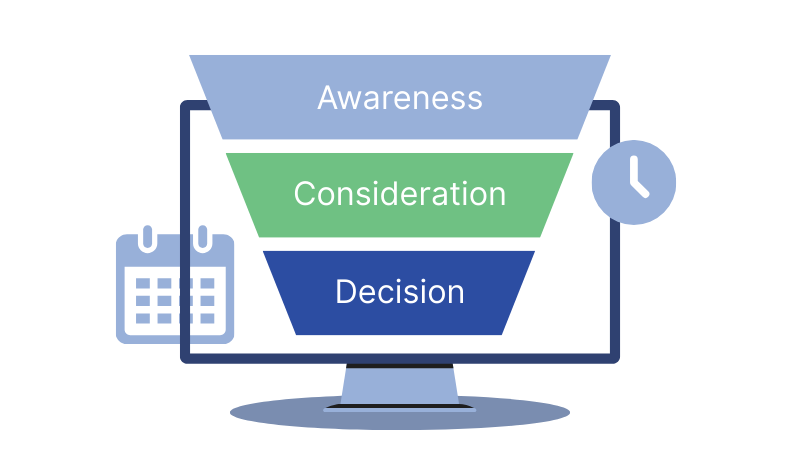
| Funnel Stage | Webinar Marketing | Virtual Event Marketing |
| Top Funnel | Educational sessions, thought leadership | Industry conferences, panel discussions |
| Mid Funnel | Product demos, case studies, workshops | Role-based solution tracks, customer showcases |
| Bottom Funnel | Executive briefings, technical deep dives | Invite-only roundtables, VIP networking |
When you align format and content to the journey, you guide prospects seamlessly toward purchase.
A simple rule of thumb: use virtual events to generate breadth, and webinars to generate depth. Virtual events pull in fresh contacts at the top of the funnel. Webinars push engaged contacts further down. Linking the two—inviting event attendees to follow-up webinars—creates a natural buyer progression.
Planning a webinar or virtual event? Start boosting your sign-ups now.
Webinar and Virtual Event Marketing KPIs to Track
Many companies measure vanity numbers: sign-ups, impressions, or likes. Those are secondary. The metrics that matter tie to pipeline.
| KPI | Webinar Marketing | Virtual Event Marketing |
| Reg-to-attend | 35–55% | 25–40% |
| Engagement | ≥2 actions per attendee (polls, Q&A, downloads) | 3–5 sessions attended per registrant |
| Pipeline Impact | High per-attendee conversion | Higher total volume, broader but less concentrated conversion |
Checklist for reporting success:
- Did you track conversion from registration to attendance?
- Did attendees take at least two actions (poll, Q&A, download)?
- Did SDRs follow up within 72 hours?
- Did you measure opportunities created per 100 attendees?
📊 Example: A SaaS firm ran 10 webinars in a quarter with 2,000 registrants, 900 attendees, and 120 opportunities created. Their cost per opportunity was 40% lower than field events, proving digital events can be more efficient pipeline drivers.
Related: Guide On How to Increase Webinar Attendance
Hidden Webinar and Virtual Event Marketing Advantages
Competitors often stop at the basics. The edge comes from executing on the details that others overlook.
Webinar Marketing Advantages
- Use enriched data to micro-target niche accounts.
- Trigger SDR calls based on poll responses.
- Repurpose sessions into 2–3 short clips for nurture.
Virtual Event Marketing Advantages
- Capture detailed session-level engagement (sessions attended, downloads, booth visits).
- Run multi-channel reactivation campaigns for dormant leads.
- Package recordings into an on-demand hub to extend ROI for months.
👉 These small but often skipped actions are what turn events into predictable sources of pipeline rather than one-off activities.
Discover the ways to increase your event RSVPs.
Final Takeaway
Most companies continue to treat webinars and virtual events as if they are the same, and their results reflect it. They focus on attendance numbers and stop short of creating measurable revenue impact.
Elite teams take the opposite approach. They design distinct marketing strategies for webinars and virtual events, align each format to the right stage of the buyer journey, and execute with discipline from promotion to follow-up. That is why their events consistently fill the pipeline while others are left with vanity metrics.
If you want your programs to perform at the same level, the path is clear. Treat webinars and virtual events as separate but complementary engines. Apply the strategies outlined here and run them with the precision that elite teams already use. When you do, you will stop chasing attendance and start building predictable growth.


