Email vs Phone vs LinkedIn: What Drives B2B Leads in the US?
Learn how email, phone and LinkedIn shape US B2B Lead Generation and why multi channel outreach is the most effective strategy.

Sales leaders in the US are all too familiar with the struggle. Emails get buried. Calls go unanswered. LinkedIn messages sit pending.
The truth about lead generation in the USA is straightforward. Your outreach competes with hundreds of other attempts for a buyer’s attention.
So, the real challenge is not whether you reach out, but how you reach out. Choosing the right channel has never been more crucial.
For years, cold calling was the staple. Then, email marketing took over with its scale and automation. Now, LinkedIn has become the digital connecting point for professionals. But which one truly works in B2B lead generation in the USA?
This post breaks down:
- The benefits and challenges of email, phone, and LinkedIn.
- When each works best for targeted lead generation in the USA.
- Why the best outreach channel in the USA is often not one, but all three combined.
Looking how to reach your target US decision-makers?
Best Outreach Channel in the USA for Lead Generation
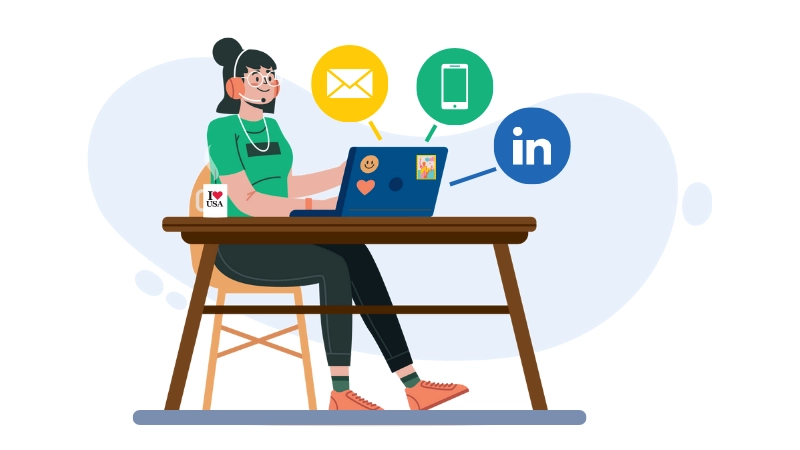
Email Outreach
Email remains a top choice for targeted lead generation in the USA because of its reach and cost efficiency. In fact, 77% of buyers say they prefer email over other channels when hearing from vendors. For sales teams in the US, it’s often the first touchpoint in outreach.
Here’s why email works:
- Let’s you reach hundreds or even thousands of prospects at once.
- Makes it easy to track who opened, clicked, or replied.
- Allows sales teams to send tailored content to specific groups of prospects.
- Works well with automation tools and CRM systems for nurturing campaigns.
The Challenge? Inbox Fatigue
US professionals receive more than 120 emails daily. Without a strong subject line and personalized value, you risk others ignoring your email or marking it as spam. Deliverability is another hurdle—poor data leads to wasted effort.
So where does it fit? Email is ideal for awareness campaigns, nurturing sequences, and setting up conversations before a call or LinkedIn touchpoint. In the cold calling vs email marketing debate, email wins for top-of-funnel and long-term engagement.
Related: Create a Successful Email Marketing Campaign
Phone Outreach
The phone has survived every new trend for one reason—it’s personal. Talking to a prospect creates immediate trust that no email or LinkedIn message can replicate. According to Rain Group, 82% of buyers accept meetings when sellers call proactively.
Why does the phone outreach work?
- Because it gives prospects the opportunity to respond immediately. A live call allows sellers to address objections or questions in the moment, rather than waiting days for an email reply.
- Because tone and empathy matter. Buyers in the US want to feel understood, and hearing a human voice builds rapport faster than text.
- Because timing changes outcomes. A timely call after a prospect reads your email or connects on LinkedIn can turn their interest into an appointment.
The Challenge? Getting Through
Gatekeepers, voicemails, and call avoidance are common in the US. It takes persistence, sometimes eight to 10 attempts, to reach the right person. Some buyers also find cold calls intrusive, which makes timing and context critical.
Still, phone outreach is essential for high-value deals. Using a reliable business phone system along with a lead generation agency can help manage calls more effectively and improve conversion rates.
Related: Choosing a Lead Generation Company in the US
LinkedIn Outreach
LinkedIn has become the professional playground for B2B. With over 200 million users in the US, it is often the best way to reach people. It helps build authority and connect with decision-makers.
Why LinkedIn works:
- Because it gives sales teams direct access to the right people. Company pages and personal profiles make it easy to identify stakeholders without relying on outdated databases.
- Because buyers want proof before they engage. A complete profile, posts, and endorsements show credibility that buyers in the US look for before responding to outreach.
- Because decision-making in B2B rarely involves one person. LinkedIn makes it possible to engage multiple contacts in the same company, which supports account-based marketing.
- Because sharing practical content matters. Regularly sharing insights helps a salesperson or company establish itself as a trusted voice. This makes outreach messages feel less like cold calls and more like a continuation of a conversation.
The Challenge? Patience
LinkedIn is not instant. Building relationships requires consistent posting, commenting, and follow-up messaging. It also requires investment in tools like Sales Navigator, which adds cost for smaller teams.
That said, LinkedIn shines when integrated with phone and email. A connection request, followed by a relevant email and later a call, creates a seamless buyer journey. That’s multi-channel B2B lead generation in action.
wwwwwwwwwwwwwwwwwwwwwwwwwwwwwwwwwwwwwwwwwwwwwwwwwwwwwwwwwwwwwwwwwwwwwwwwwwww
Planning to expand your business in the US market?
Cold Calling vs. Email Marketing: Which Is More Effective in the US?
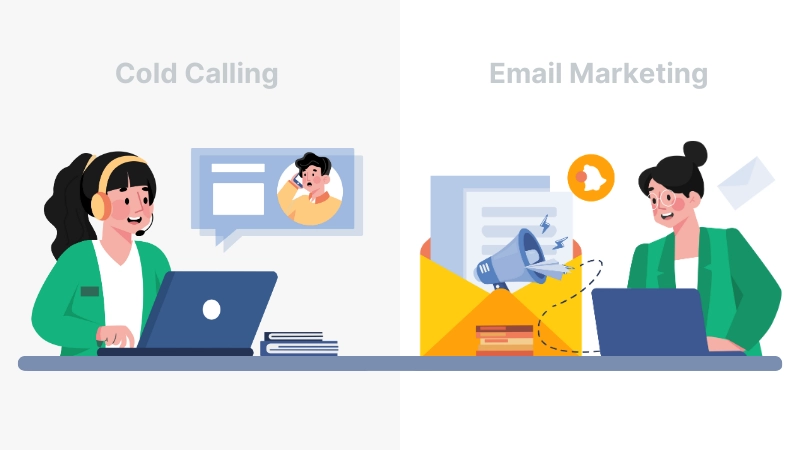
When discussing lead generation in the USA, sales teams often wonder which approach is better. Is it cold calling or email marketing? Honestly, both have a place in the buyer journey, but their strengths lie at different stages.
Email marketing is for reaching your prospects. Scalable and perfect for introducing your brand, sharing resources, and nurturing interest over time. Campaigns are measurable, making it easier to track open rates and engagement. This makes email the best choice for top-of-funnel outreach and long-term nurturing in B2B lead generation in the USA.
Cold calling, on the other hand, is about immediacy. Calls allow sellers to build rapport, handle objections, and qualify leads in minutes instead of weeks. This improves phone outreach in the middle-to-late stages of the funnel. At this point, prospects know about us and are looking at their choices.
The key difference comes down to timing:
- Use email marketing to warm up prospects and stay visible.
- Use phone calls to move them forward once interest is established.
That’s why the debate shouldn’t be “cold calling vs email marketing.” Instead, it should be how to align both into a multi-channel B2B lead generation strategy that maximizes conversions. See how ABM’s way of doing cold calls and cold emails.
LinkedIn vs. Email: Authority vs. Scale
B2B lead generation in the USA often sees LinkedIn and email competing for budget and attention. Both are effective, yes, but they serve different roles.
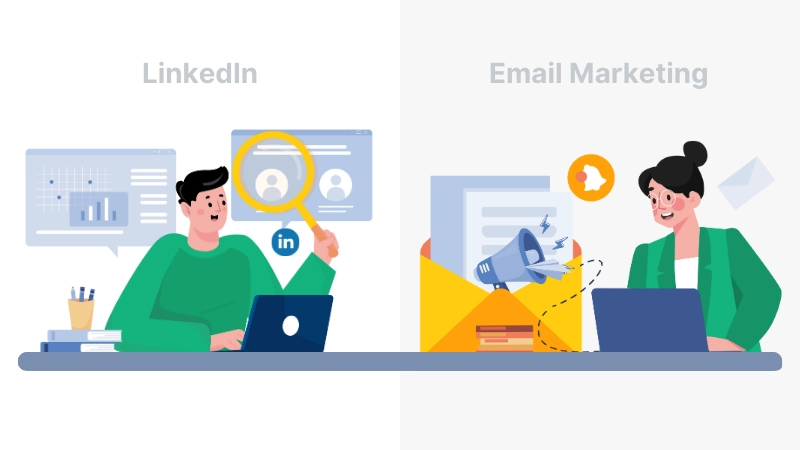
Email is unmatched for scalability. It allows you to reach large lists of prospects with targeted messaging. Performance data is immediate; open rates, clicks, and replies tell you if your campaign is working. Also, it is cost-efficient compared to other outreach methods.
LinkedIn, on the other hand, is all about credibility. Prospects view your profile, posts, and engagement with others. That social proof matters in the US market, where buyers often research sellers before responding. LinkedIn works best for account-based marketing and for engaging multiple stakeholders within a company. Discover how effective LinkedIn Premium Company Page.
Think of it this way:
- Use email to cover more ground quickly.
- Use LinkedIn to establish authority and warm up high-value prospects.
When paired together, email initiates the contact, and LinkedIn reinforces the relationship. This combination is common among top B2B lead generation companies in the USA because it blends scale with trust.
LinkedIn vs. Phone: Social Touch vs. Direct Impact
LinkedIn and phone calls are both personal ways to reach out. However, they work differently for lead generation in the USA.
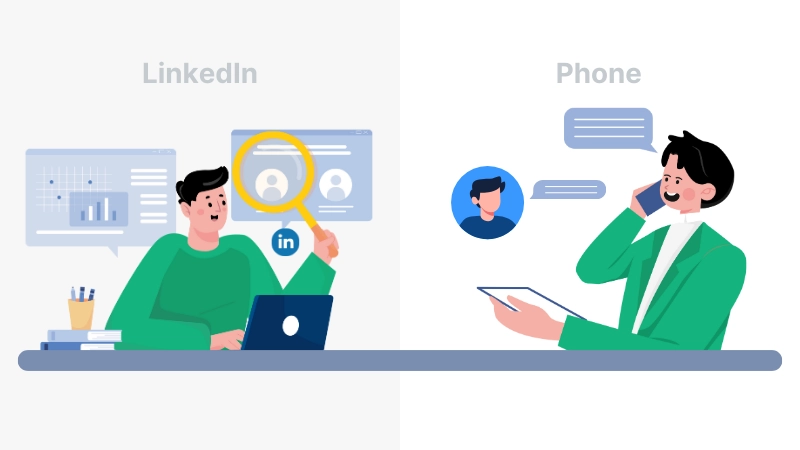
LinkedIn gives you a softer entry. Sending a connection request or commenting on a prospect’s post introduces you without pressure. Over time, consistent engagement builds familiarity. When you finally reach out with a message, it feels less intrusive.
Phone calls are more immediate. A conversation over the phone can cover what would take weeks of back-and-forth messages. Calls are best for qualified leads who are closer to a buying decision, especially in industries with long sales cycles.
Here’s how to use them together:
- Start with LinkedIn for visibility and rapport.
- Follow up with a phone call once the prospect is aware of your brand.
This layered approach works well for targeted lead generation in the USA. Buyers often need several contacts before they engage. A LinkedIn introduction followed by a timely call increases response rates and shortens the sales cycle.
Related: Social Media Marketing for Consulting Firms
Why Multi-Channel Wins
The truth is, no single channel dominates. Buyers engage on different platforms at different times. In fact, it takes multiple touchpoints before a deal progresses.
An email may introduce your brand. LinkedIn builds familiarity. A phone call seals the meeting. That’s why top B2B lead generation companies in the USA use a multi-channel mix, not a single tactic.
This approach not only improves visibility but also accelerates conversions. A US lead generation company that knows how to orchestrate email, phone, and LinkedIn creates consistent, qualified opportunities. To learn how to structure these touches, check out our guide on 5 Winning Sales Cadence Examples. It offers practical workflows that show what works best.
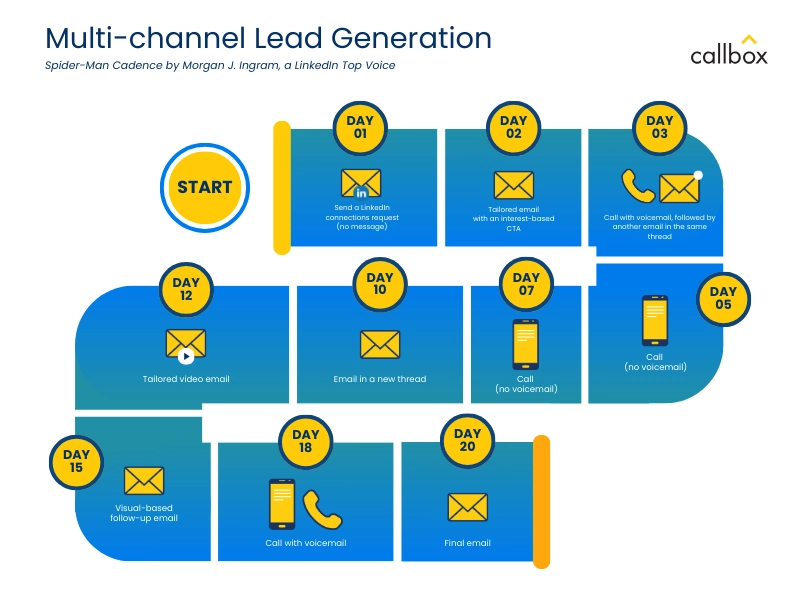
For example, Morgan J. Ingram’s Spider-Man Cadence blends phone, email, video, and LinkedIn over 20 days. It starts with a LinkedIn connection request. Then, it goes back and forth with emails, calls, and a video message.
This results in 11 touchpoints over three weeks. This type of structured, persistent yet respectful outreach illustrates why multi-channel strategies outperform single-channel efforts.
See multichannel lead generation for effective B2B marketing.
Choosing the Right Channel
The question is not whether to use email, phone, or LinkedIn. The question is when and how to use each.
- Email: Best for scale, nurturing, and measurable engagement.
- Phone: Best for direct conversations, trust-building, and complex deals.
- LinkedIn: Ideal for establishing credibility, networking, and engaging with multiple stakeholders.
For targeted lead generation in the USA, the smartest strategy is to combine all three. Integrated campaigns outperform isolated tactics every time.
Other Channels You Should Consider
While email, phone, and LinkedIn are the most common tools in B2B lead generation in the USA, they’re not the only ones worth using. The most effective campaigns extend into other touchpoints to cover a broader audience. They connect with prospects at every stage of the buyer journey.
Here are other channels you might consider:
- Website and Landing Pages – Convert visitors into sales-ready leads through clear calls-to-action, forms, and gated content.
- Chat – Utilize live chat or chatbots for real-time responses, enhancing conversion speed and maintaining prospect engagement.
- Events (Virtual or In-person) – Meet potential clients in a valuable setting. Here, conversations feel natural and less like a transaction.
- Social Media (Beyond LinkedIn) – Platforms like Twitter or Facebook can support brand awareness campaigns and retargeting efforts.
- Instant Messaging (IM) – Channels like WhatsApp or SMS help maximize reach and improve show rates for booked meetings.
This type of structured outreach makes the buyer experience smoother and increases the chances of conversion. Expanding beyond these best channels ensures that you miss no opportunities and creates multiple paths for prospects to engage.
Looking for a trusted partner to grow in the US market?
Sample multi-channel workflow:
A good example comes from the widely cited Balanced Multi-Channel Approach by Sales Hub CEO Max Altschuler. This cadence integrates email, phone, and social media without overwhelming the prospect. It looks like this:
Day 1: Email/InMail
Day 3: Email in the morning, call in the afternoon
Day 5: Call in the morning, call with a voicemail in the afternoon
Day 7: Email in the morning, all in the afternoon with a voicemail
Day 10: Email and call in the morning
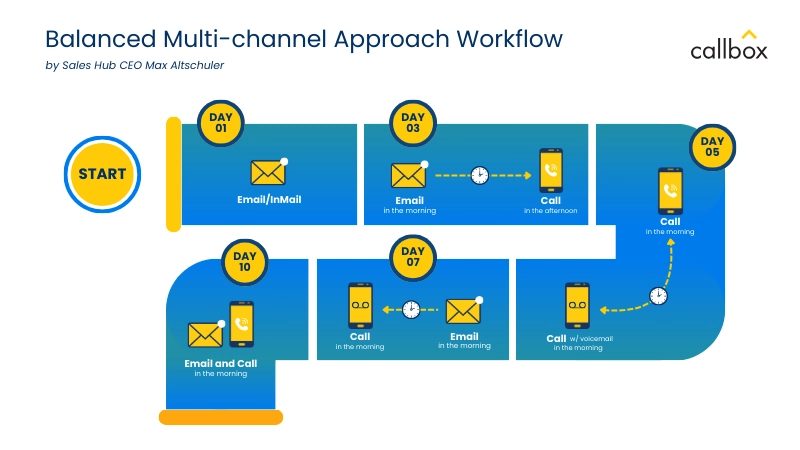
This sequence creates 10 touchpoints in 10 days, blending multiple channels while keeping the engagement consistent. It shows how mixing outreach methods makes follow-ups more natural and increases the chances of getting a response.
By adding channels such as chat, events, and instant messaging, sales teams can establish similar routines. These routines help keep in touch, build trust, and guide prospects through the buying process.
Final Word for B2B Teams
Email is efficient. Phone is personal. LinkedIn is credible. But when blended into a cohesive outreach strategy, they create momentum that keeps pipelines healthy.
This is why the best outreach channel in the USA is not one but multi-channel. That’s why businesses seeking results work with a US lead generation company. They know how to balance all three.