Be the First Answer: SEO, AEO, GEO for Lead Generation
Discover how SEO, AEO, and GEO work together to help businesses become the first answer in search and AI, driving high-quality B2B leads.

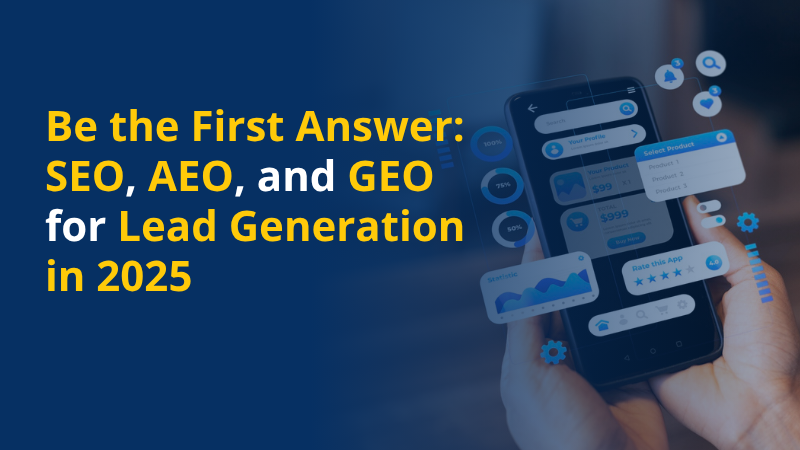
Every B2B buyer starts with a question. In 2025, the first answer they see often determines who they trust and who they contact. If your company provides that first answer, you gain authority and capture the lead. If you don’t, a competitor will.
Traditional SEO gets you on the results page, but it no longer guarantees you’re the first answer. Buyers scan snippets, rely on voice search, or ask AI assistants like ChatGPT, Copilot, or Gemini. AEO (Answer Engine Optimization) and GEO (Generative Engine Optimization) are the natural extensions of SEO that make your business visible in those places. Together, they ensure your brand is the first answer buyers encounter — whether in search, voice, or AI-generated responses.
This matters across every B2B industry — from tech companies, such as SaaS, IT, and cybersecurity firms, to financial services, manufacturing, and healthcare providers. Wherever buyers are searching for solutions, they’re asking questions. The companies that invest in SEO, AEO, and GEO together are the ones positioned to win more trust, shorten buying cycles, and generate better leads.
Why Being the First Answer Matters
Buyers don’t scroll, sift, or compare like they used to. They trust the top answer. Whether it’s a snippet on Google or a generated response from an AI assistant, the first answer becomes the authority. Ranking alone is no longer enough. You need to be the content engines choose.
Being the first answer builds trust instantly. It accelerates the buyer journey because prospects feel you have already solved their question. It also keeps competitors out of the spotlight. In lead generation, visibility is not about being on the list. It’s about being the answer.
Enhance lead generation through AEO visibility.
From SEO to AEO and GEO: Climbing to the First Answer
SEO remains the baseline. Without it, your site will not rank, and no engine — search or AI — will trust your content. But SEO’s role has changed. Ranking is only step one. Engines and assistants now decide which content becomes the answer.
- SEO: Gets you onto the results page.
- AEO: Makes you the featured snippet or voice answer.
- GEO: Puts you inside AI-generated responses.
Together, they form a ladder of visibility. SEO is the first rung. AEO gets you into the answer box. GEO ensures your brand survives the shift to AI-driven search. See how AI can help lead generation.
Can I succeed with AEO and GEO without SEO?
No. SEO is the foundation. Without it, you lack authority and indexing, and engines won’t select you as an answer.
AEO: Winning the First Answer in Search
Search engines aim to serve users quickly. AEO helps you provide answers in the format engines need. Instead of waiting for clicks, engines highlight your content in snippets, FAQs, or voice responses.
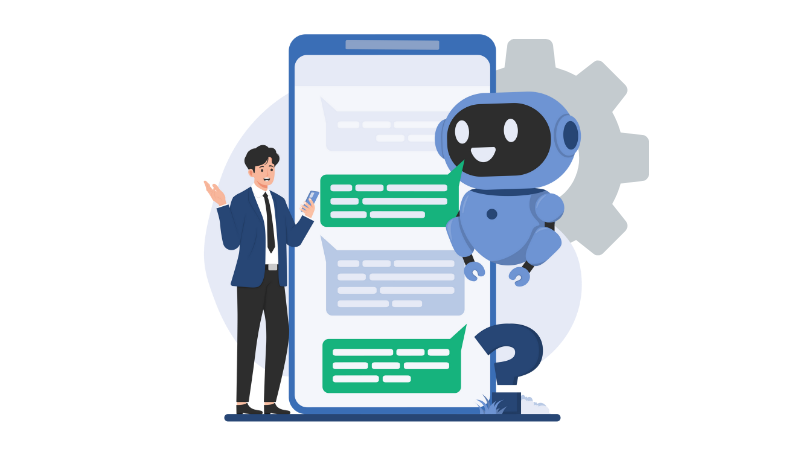
AEO is about clarity. It’s about structuring your SEO-optimized content so engines see it as the best candidate for an answer. When you succeed, you bypass competitors on the SERP and become the first interaction a buyer has with your solution.
How to apply AEO:
- Identify buyer questions through tools like AnswerThePublic and Google Search Console.
- Write answers in 40–60 word blocks before adding supporting detail.
- Apply FAQ, Q&A, and How-To schema.
- Format content with headings that match buyer queries.
- Optimize for voice search with conversational phrasing.
How fast do AEO results appear?
Expect to see featured answer traction in 3–6 months, depending on competition and authority.

GEO: Becoming the First Answer in AI
Generative engines don’t show a list of links. They generate a single response. GEO makes sure your content is one of the sources behind that response. It’s the evolution of inbound: becoming visible in the AI assistant that buyers increasingly trust.

GEO rewards authority and depth. AI engines look for comprehensive, credible, and consistent content. If your guides, case studies, and explainers provide strong context and reliable data, you increase the odds of being surfaced in AI answers. This is the new competition — not just ranking higher, but being named or paraphrased in generative outputs.
How to apply GEO:
- Publish definitive guides and comparison pages.
- Use consistent product names and ICP terms.
- Cite authoritative sources and earn backlinks.
- Keep data current with timestamps and updates.
- Build topical authority by clustering related content.
How do I know if my brand is AI visible?
Run branded and unbranded queries in AI tools like ChatGPT, Copilot, or Gemini. Track whether your company is mentioned or if your content is paraphrased in answers.
How SEO, AEO, and GEO Unite to Deliver the First Answer
SEO, AEO, and GEO are not separate strategies. They’re stages in the same journey toward being the first answer. SEO earns visibility. AEO captures answers in search. GEO ensures inclusion in AI. Together, they cover the full spectrum of buyer discovery.
This integrated approach ensures your brand dominates across environments. A buyer searching on Google finds you in a snippet. Asking Alexa yields your answer. Asking ChatGPT surfaces your guide. You’re not competing for clicks — you’re owning the answer.
Action steps:
- Audit content for both AEO structure and GEO authority.
- Build hubs around core buyer questions with FAQs, guides, and case studies.
- Map each hub to funnel stages with CTAs that match buyer intent.
- Align sales scripts with the same answers your content provides.

Actionable Tips for B2B Tech Companies to Become the First Answer
Technology buyers are some of the most demanding and best-informed prospects. They do deep research, ask highly specific questions, and often consult both search engines and AI assistants before ever speaking to sales. That makes being the first answer critical for tech companies. Here are actionable tips tailored for different tech subsectors.
SaaS Companies
SaaS buyers compare multiple platforms before deciding. Their key concerns are integrations, pricing, and ROI.
- SEO: Optimize pricing and product pages for integration queries (“CRM with Slack integration USA”).
- AEO: Add FAQs on setup, onboarding, and cost. Example: “How much does [Product] cost for 100 users?”
- GEO: Publish comparison guides (“[Your SaaS] vs [Competitor]”) and onboarding explainers so AI assistants reference you when asked about alternatives.

IT Services
IT buyers want proof of scalability, efficiency, and predictable costs. They prefer step-by-step clarity.
- SEO: Target queries like “IT outsourcing costs for SMBs USA.”
- AEO: Create structured How-To content (“How to choose an IT services provider”) and apply How-To schema.
- GEO: Publish case studies showing reduced downtime or cost savings. AI engines favor content with measurable proof.
Cybersecurity Firms
Cybersecurity buyers focus on compliance, prevention, and trust. They look for authoritative answers they can act on immediately.
- SEO: Optimize for compliance-focused queries (“SOC 2 cybersecurity vendor,” “HIPAA security partner USA”).
- AEO: Add FAQs answering urgent buyer fears like “How to prevent ransomware in small businesses?”
- GEO: Publish updated explainers on frameworks (e.g., “What is Zero Trust security?”). AI tools reference timely, credible definitions.
Data Center Providers
Data center clients care about uptime, compliance, and energy efficiency. Their questions are often operational and location-based.
- SEO: Optimize for location-specific searches (“colocation data center in Dallas”) and SLA-related keywords.
- AEO: Add structured answers on redundancy, energy use, and compliance. Example: “What does Tier 3 uptime mean?”
- GEO: Publish thought leadership on sustainability and compliance — topics AI engines highlight in enterprise queries.
AI and Emerging Tech Companies
AI buyers want education and clarity. They often ask AI tools themselves for use cases and definitions, so being cited is critical.
- SEO: Target queries like “AI for predictive analytics in finance” or “AI ROI in customer support.”
- AEO: Add FAQs that simplify technical concepts (“What is generative AI in sales outreach?”).
- GEO: Publish whitepapers and definitions of new terms. If you explain emerging concepts early, AI engines are more likely to cite you.

Key Takeaway:
Across SaaS, IT, Cybersecurity, Data Centers, and AI firms, success depends on the same formula: SEO builds visibility, AEO makes your content the first search answer, and GEO ensures your authority shows up in AI-generated responses. Tech buyers already expect instant, accurate answers — companies that deliver them will capture leads earlier and close faster.
Why First Answer = Faster Leads
Being the first answer builds more than awareness. It accelerates conversion. Buyers who trust your authority early are more likely to engage directly, bypassing competitors.
The lead generation funnel shrinks when you’re the first answer. Prospects don’t sift through 10 vendors. They see your brand early, trust your authority, and move faster toward engagement. That’s why AEO and GEO are not optional upgrades — they are essential for a strong pipeline.
Benefits:
- Higher trust, since first answers are perceived as authoritative.
- Shorter sales cycles, as questions are resolved upfront.
- Better-qualified leads, since intent is matched to your answers.
Tools to Become the First Answer
Each layer requires its own toolkit, but together they give you full coverage.
SEO tools: SEMrush, Ahrefs, Google Search Console.
AEO tools: AnswerThePublic, Schema.org, Yoast SEO.
GEO tools: Clearscope, Surfer SEO, backlink monitors, AI query trackers.
Do I need all three toolsets?
Yes. SEO tools keep your foundation strong. AEO tools give structure. GEO tools measure AI presence. Skipping one leaves gaps in visibility.
Measuring “First Answer” Impact
You cannot improve what you don’t measure. Track how often you’re the first answer in search, how often AI tools mention you, and how that ties to pipeline results.
Metrics to track:
- SEO: organic traffic, keyword rankings.
- AEO: featured snippets, FAQ impressions, voice answers.
- GEO: AI mentions, branded references in generated outputs.
- Pipeline: MQLs, SQLs, opportunity value, win rate.
What’s a realistic benchmark?
Aim for a 20–30% increase in featured snippets with AEO and measurable AI mentions within 12 months of GEO work.
Common Mistakes to Avoid
Becoming the first answer requires focus. Many firms fail by treating AEO and GEO as optional, burying answers in long paragraphs, or not refreshing content.
Avoid these pitfalls:
- Writing around questions instead of answering them directly.
- Ignoring schema markup for AEO.
- Letting content go stale without updates.
- Treating GEO as experimental rather than strategic.
- Over-focusing on keywords instead of intent.
Closing Perspective
In B2B lead generation, visibility is no longer about simply ranking. It is about being the first answer buyers see when they search, speak, or prompt an AI tool. SEO provides the foundation. AEO structures your content so it is chosen as the search answer. GEO builds the authority that makes AI assistants reference your brand.
This is true for every industry. Tech companies need it to explain integrations and compliance. Healthcare providers need it to address regulation and outcomes. Finance, manufacturing, and education firms need it to answer operational and ROI questions. Whatever sector you are in, your buyers are asking questions — and only one company gets to be the first answer.
Becoming that first answer builds trust earlier, shortens buying cycles, and delivers better-qualified leads. In 2025 and beyond, that is the competitive edge. The choice is clear: either you provide the first answer, or your competitor will.