19 B2B Lead Gen Problems, Fixes, and Costs of Doing Nothing
Struggling with leads? Uncover 19 B2B lead generation challenges and expert solutions to help marketing leaders drive better results.

B2B lead generation isn’t broken, but for many companies, it feels like it is. You’ve got sales teams hungry for qualified conversations, marketing teams producing content and campaigns, and a CRM that’s supposed to tie it all together. Yet pipelines are unpredictable, deals stall, and growth slows down.
If this sounds familiar, you’re not alone. Nearly every business runs into the same roadblocks. Some are about data, others about process, and many about how you connect with prospects. The good news: each challenge has a practical solution.
This guide walks through the top 19 pain points, grouped into four themes. For each, you’ll see what the problem looks like in real life and how to fix it.
1. Data and Targeting Challenges
No Customer Data
Companies new to lead generation often start from scratch with no customer data to guide them. Without benchmarks, they have to guess who the right buyers are, which leads to wasted effort on the wrong markets. Campaigns lack direction, and sales teams end up chasing prospects that were never a fit in the first place. This not only burns through budgets but also hurts morale when results fail to show.
How to fix it
- Build your Ideal Customer Profile (ICP) based on industry, company size, and buyer roles.
- Use data enrichment services to collect verified contact details.
- Run small test campaigns to gather behavioral data before scaling.
Poor Data and Analytics
Having a database isn’t enough when it’s full of outdated, incomplete, or inconsistent records. Poor data creates missteps across the funnel: marketing targets the wrong accounts, sales wastes time on dead leads, and leadership loses trust in reports. On top of that, without analytics, you can’t see what’s working or what to adjust. The result is a cycle of blind campaigns and disappointing ROI.
How to fix it
- Invest in regular database cleaning and verification.
- Standardize how your teams record and track customer data.
- Use analytics tools to monitor engagement and conversion at each stage.
Low-Quality Leads
Sometimes the funnel looks healthy on the surface with plenty of leads flowing in. But if most of them aren’t a good fit, sales spends more time disqualifying than closing. This creates tension between marketing and sales, with each side frustrated by the other. Over time, lead volume stops being a metric anyone trusts, and the pipeline becomes more noise than signal.
How to fix it
- Refine your lead qualification criteria.
- Align with sales on what a “sales-ready” lead means.
- Implement lead scoring based on firmographics, engagement level, and buying intent.
Tired of Generating Low-Quality Leads? Get the High-Value Prospects You Deserve.
Lead Overload
There’s such a thing as too many leads. When businesses run high-volume campaigns without a process for sorting or prioritizing, sales teams become overwhelmed. Good opportunities get buried under the noise, and the lack of structure creates missed follow-ups. The irony is that while the numbers look strong, conversion rates drop, and pipeline efficiency plummets.
How to fix it
- Define a clear lead routing and follow-up process.
- Segment leads by urgency, deal size, and intent.
- Automate reminders and status tracking in your CRM.
Targeting Niche Markets
Niche industries or highly specialized roles are tough to reach. The audience is small, the buying cycles are unique, and traditional mass-marketing approaches don’t resonate. Companies often overspend trying to reach everyone instead of focusing on the few decision-makers who matter. Without a precise approach, outreach feels generic and credibility suffers.
How to fix it
- Narrow campaigns around specific industries, job functions, or pain points.
- Use account-based marketing (ABM) to personalize outreach for a small set of high-value targets.
- Leverage industry-specific events and content to build credibility.
Related: Unlock New Opportunities through Expand Into New Market
2. Process and Alignment Issues
Misaligned Sales and Marketing
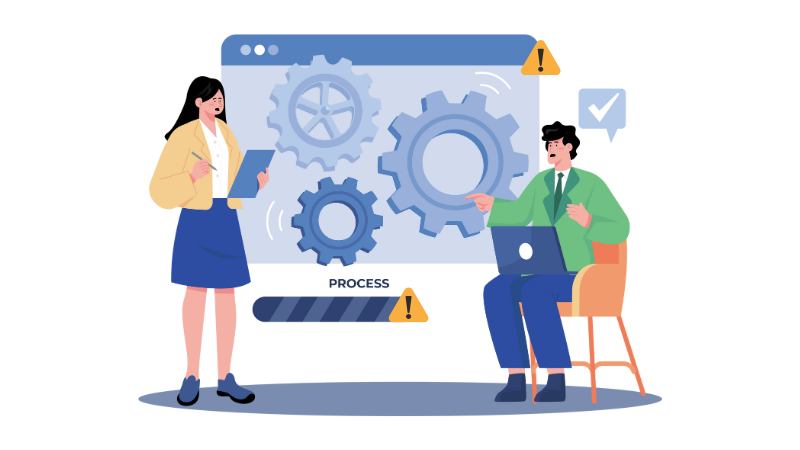
Few things hurt lead generation more than sales and marketing pulling in different directions. Marketing thinks they’re delivering enough leads, while sales argues the leads aren’t qualified. The result is wasted spend, dropped opportunities, and finger-pointing instead of progress. Alignment isn’t optional anymore — it’s the foundation of a working funnel.
How to fix it
- Set shared metrics such as revenue contribution or pipeline value.
- Hold regular joint planning sessions.
- Create service-level agreements (SLAs) defining lead quality and response times.
Poor Follow-Up
Even the best leads lose interest if they don’t hear back quickly. Slow responses make prospects feel ignored, while rushed, generic replies push them away. Sales reps often juggle too many tasks, and without a structured process, valuable opportunities slip through the cracks. In competitive markets, poor follow-up is the difference between winning and losing deals.
How to fix it
- Automate lead alerts for your sales reps.
- Implement a structured follow-up sequence across email, phone, and social.
- Track follow-up activity in your CRM to ensure accountability.
Related: Poor Follow Ups Can Sabotage Your Lead Generation
Poor Lead Nurturing
Most B2B buyers aren’t ready to buy the first time you reach them. Without nurturing, those early interactions go cold, and the brand is forgotten. Many companies focus so much on net-new leads that they ignore nurturing, leaving warm opportunities untapped. Over time, this creates a leaky funnel where interest is generated but never converted.
How to fix it
- Build nurture tracks with educational content.
- Segment nurture flows by buyer stage and persona.
- Use lead scoring to identify when a prospect is sales-ready.
Discover the Cons of Not Mapping Lead Nurturing Touchpoints.
Lack of Marketing Automation
Manual processes limit scale and introduce inconsistency. Sales and marketing teams waste time on repetitive tasks, from sending follow-up emails to updating records. Without automation, leads don’t get timely responses, and personalization becomes impossible at volume. This gap directly impacts pipeline velocity and overall efficiency.
How to fix it
- Deploy marketing automation tools for email, landing pages, and scoring.
- Integrate your CRM to streamline data flow.
- Use automation to scale while keeping personalization.
Inconsistent Messaging
When a prospect sees different messages on the website, in an email, and on a sales call, it creates confusion. Mixed signals weaken credibility and make it harder for buyers to understand your value. Inconsistency usually stems from teams creating content in silos without a shared framework. Over time, this erodes trust and slows conversions.
How to fix it
- Create a unified messaging framework.
- Train teams to use consistent language in outreach.
- Audit your campaigns regularly to spot gaps or inconsistencies.
3. Conversion and Engagement Gaps
Underperforming Content
Content is often produced quickly to “check the box,” but buyers notice when it lacks relevance or depth. Generic blogs and surface-level assets fail to engage decision-makers. When content doesn’t educate or add value, prospects disengage and turn to competitors for insights. Weak content also starves your nurture programs, leaving gaps in engagement.
How to fix it
- Focus on practical, data-driven content tailored to buyer challenges.
- Repurpose strong assets across formats (e.g., case study into video, webinar into blog).
- Use thought leadership pieces to build trust.
Low Landing Page Conversions
Traffic alone doesn’t drive revenue. If your landing pages don’t convert, every dollar spent on ads or campaigns goes to waste. Many pages fail because of cluttered design, unclear messaging, or weak CTAs. The result is plenty of clicks but very few sales-ready leads.
How to fix it
- Simplify landing pages—one goal, one CTA.
- Add social proof like testimonials or case studies.
- Test variations regularly to improve conversion rates.
Weak Personalization
In B2B, buyers expect outreach to reflect their role, industry, and challenges. Generic emails or cookie-cutter LinkedIn messages signal that you don’t understand them. When personalization is missing, engagement rates drop, and brand perception suffers. The result is a funnel that looks busy but delivers little progress.
How to fix it
- Personalize by industry, role, or buying stage.
- Use dynamic fields in email and landing pages.
- Combine AI-powered personalization with human review for accuracy.
Overreliance on One Channel
A single-channel strategy worked in the past, but today’s buyers move across multiple platforms before engaging. Companies that depend only on cold calls or emails limit their reach. Prospects who prefer other touchpoints are left out, and pipeline growth slows. Without diversification, your funnel becomes fragile and easily disrupted.
How to fix it
- Build a multi-channel strategy using phone, email, social, events, and web.
- Track channel effectiveness and optimize the mix.
- Sequence touches across channels to improve engagement.
4. Growth and Resource Constraints

Long Sales Cycles
Complex buying groups and budget approvals often stretch B2B deals over months. Leads stall, revenue is delayed, and forecasting becomes unreliable. Companies without a strategy to accelerate decision-making end up stuck in endless follow-ups. Long cycles drain resources and frustrate sales teams.
How to fix it
- Map your buyer journey and identify bottlenecks.
- Use ABM to engage decision-making groups, not just individuals.
- Share ROI-focused content to accelerate consensus.
Struggles with Scaling
Early lead generation success is difficult to replicate at scale. Processes that worked for small campaigns fall apart under higher volumes. Without standardization, growth feels like two steps forward and one step back. This makes it hard for businesses to sustain momentum.
How to fix it
- Standardize processes and documentation.
- Invest in tools that support scaling, such as CRM and automation.
- Outsource parts of the funnel to specialized partners.
Budget Constraints
Lead generation often competes with other marketing priorities for budget. When resources are tight, companies are forced to cut corners. This limits testing, reduces channel diversity, and slows innovation. Over time, restricted budgets turn into restricted pipelines.
How to fix it
- Prioritize high-ROI channels.
- Focus on building owned assets like email lists and content libraries.
- Consider subscription-based outsourcing models to control costs.
Related: Cost Comparison of Outsourcing Lead Gen
High Lead Attrition
Even strong leads fall away if engagement isn’t consistent. Competitors are quick to step in, and slow internal processes give them the opening. Each lost lead represents wasted acquisition cost and lost revenue potential. High attrition is a clear sign that follow-up and nurturing aren’t working.
How to fix it
- Shorten response times and improve follow-up.
- Strengthen nurturing programs to keep prospects engaged.
- Provide sales enablement content to help reps win deals.
Lack of Trust and Credibility
B2B buyers are cautious, especially in crowded markets. Without proof points or brand authority, vendors struggle to earn attention. Prospects want to see evidence that you’ve solved similar problems before they commit. Without it, outreach feels unconvincing, and credibility stalls the conversation.
How to fix it
- Build credibility with case studies, client logos, and testimonials.
- Invest in thought leadership and industry recognition.
- Train sales reps to focus on consultative conversations rather than hard pitches.
Final Thoughts
Lead generation isn’t about avoiding problems — it’s about solving them quickly and effectively. Every company faces challenges with data, process, engagement, and growth. What separates high-performing teams is their ability to identify these pain points early and address them with structured strategies.
By focusing on clean data, aligned teams, multi-channel engagement, and scalable processes, you can build a lead generation system that produces consistent, high-quality opportunities. The result is more predictability, less wasted effort, and a pipeline your sales team can rely on.