Mastering Lead Qualification Services: A Game-Changer for B2B Growth
Discover how lead qualification services help B2B teams identify high-fit prospects, improve conversion rates, and build a stronger sales pipeline.
 Rebecca Matias
 is Callbox's COO with 18 years of experience scaling B2B pipeline through data-driven outbound marketing, lead generation, and sales development.
View full bio of Rebecca Matias
Every B2B organization faces the same critical challenge: a bloated sales pipeline filled with contacts, but a severe shortage of actual, revenue-generating opportunities.
While lead generation fills the top of your funnel, lead qualification is the filter that protects your account executives’ time. According to recent B2B pipeline benchmarks, only a fraction of marketing-generated leads actually become legitimate sales opportunities. Without a rigorous qualification process, your sales team is wasting massive amounts of time chasing prospects who lack the budget, authority, or genuine need to buy. In fact, recent sales data from Salesforce and Spotio reveals that the average sales rep spends up to 70% of their time on non-selling activities and chasing unqualified leads.
SHaving hard time on how to qualify your prospects?
What is B2B Lead Qualification?
B2B lead qualification is the systematic process of evaluating a prospective customer’s fit, readiness, and potential value before they consume account executive (AE) time.
Instead of passing every form-fill directly to a closer, a professional qualification process assesses the prospect against specific criteria—typically verifying their budget, decision-making authority, business pain points, and purchasing timeline.
Without proper qualification, your sales pipeline is effectively a guessing game. Implementing a structured lead qualification process provides three measurable business benefits:
- Shortened Sales Cycles: By disqualifying poor-fit leads early, reps avoid spending weeks on opportunities that will never close.
- Higher Win Rates: Focusing resources exclusively on high-potential opportunities can increase quota attainment significantly. According to Everstage, rep quota attainment currently sits at alarming lows globally, making rigorous pipeline filtering more critical than ever.
- Improved Pipeline Forecasting: A qualified pipeline allows Revenue Operations (RevOps) to accurately predict quarterly revenue, as the deals in the pipeline have verified intent and budget.
Lead Generation vs. Lead Qualification: What’s the Difference?
A common mistake B2B marketers make is treating lead generation and lead qualification as the same activity. They are distinct, sequential phases of the sales funnel.
- Lead Generation is the process of attracting interest and capturing contact information. It creates a Marketing Qualified Lead (MQL) based on engagement (e.g., downloading a whitepaper, attending a webinar, or matching a demographic profile).
- Lead Qualification is the process of verifying readiness and intent. It transforms an MQL into a Sales Qualified Lead (SQL) by having a Sales Development Representative (SDR) engage the prospect to confirm they have a solvable problem and the authority to buy.
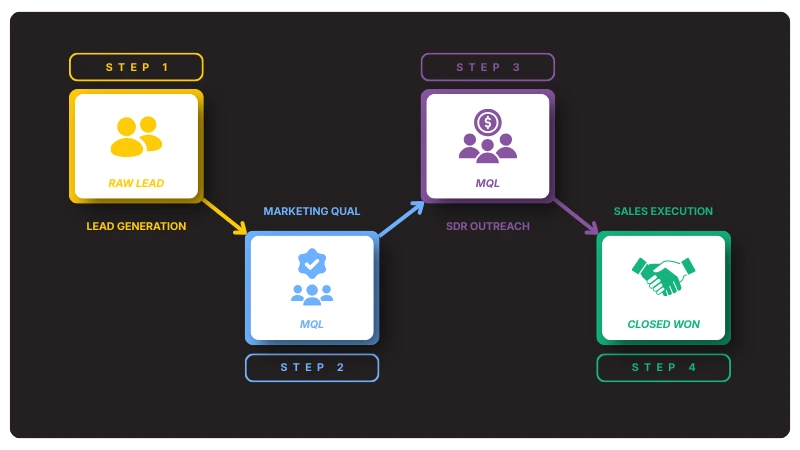
In short: Lead generation fills the funnel with names; lead qualification filters the funnel for buyers. Explore the exact mechanism of how a raw lead transforms into a closed deal below.
To qualify leads effectively, your SDRs and sales teams need a standardized scoring framework. Here are the three most proven methodologies used in B2B enterprise sales today.
1. BANT (Budget, Authority, Need, Timeline)
Developed by IBM, BANT is the classic, most widely used qualification framework. It is best suited for transactional B2B sales with shorter cycles.
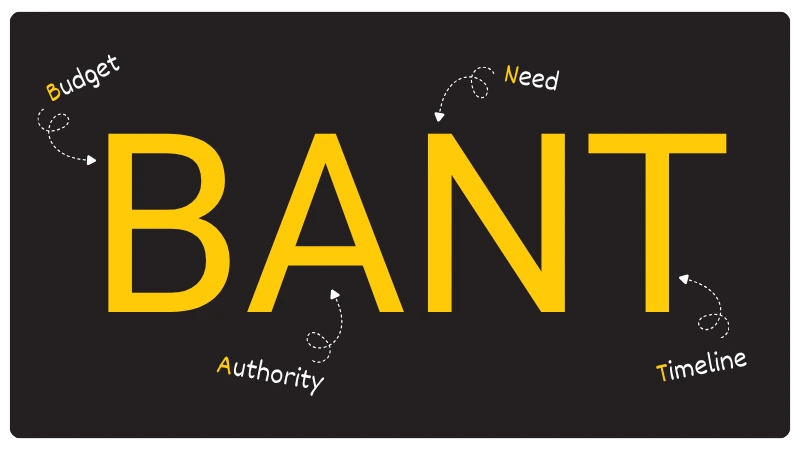
- Budget: Do they have allocated funds for this solution?
- Authority: Are you speaking to the person who can sign the contract?
- Need: Does their business have a specific problem your product solves?
- Timeline: Are they planning to make a purchase within a defined timeframe (e.g., this quarter)?
2. MEDDIC (Metrics, Economic Buyer, Decision Criteria, Decision Process, Identify Pain, Champion)
MEDDIC is designed for complex, high-ticket enterprise sales involving multiple stakeholders and 6-12 month sales cycles. It is highly analytical and requires deep discovery.
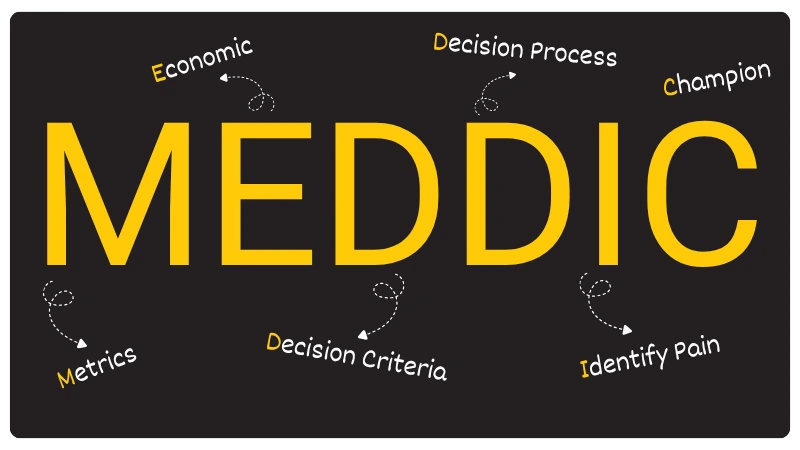
- Metrics: What is the quantifiable economic impact of the solution?
- Economic Buyer: Who has the ultimate budget release authority?
- Decision Criteria: How exactly will the company evaluate competing vendors?
- Decision Process: What are the legal, security, and procurement steps to close?
- Identify Pain: What is the severe business pain driving the evaluation?
- Champion: Who is the internal advocate fighting for your solution?
3. CHAMP (Challenges, Authority, Money, Prioritization)
CHAMP is a modern, buyer-centric alternative to BANT. It prioritizes the customer’s pain points over budget, acknowledging that in modern SaaS sales, budget is often found after a severe challenge is identified.
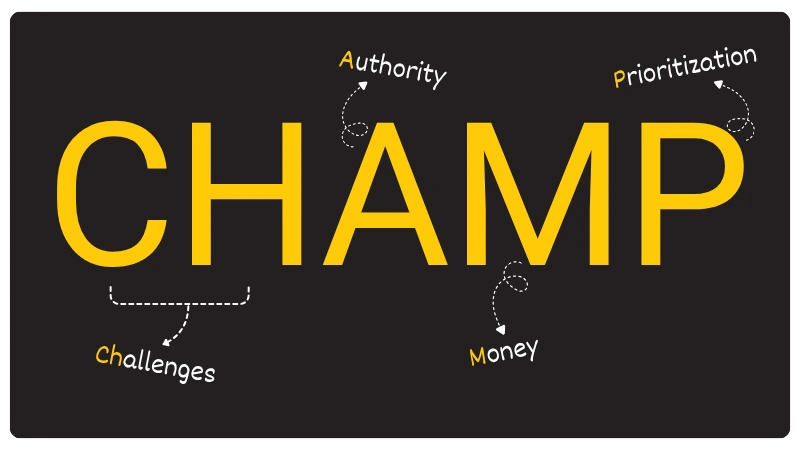
- Challenges: What is the operational or strategic hurdle they cannot overcome?
- Authority: Who else needs to be involved to make a change?
- Money: How much is the current challenge costing them?
- Prioritization: Where does solving this problem rank on their executive roadmap?
Scaling Qualification: Internal SDRs vs. Outsourced Partners
For growing organizations, executing rigorous qualification requires either building an internal SDR team or hiring an outsourced lead generation agency. The market in 2026 offers distinct models depending on your scale and target audience.
If your company requires massive, multi-region global expansion, legacy providers like Callbox deploy dedicated “Campaign Pods” (which include an SDR, campaign manager, and data analysts). Because they operate delivery centers across the US, LATAM, EMEA, and APAC, they can run synchronized, multilingual outbound motions. Standard Callbox programs typically range from $4,000 to $8,000 per month, while fully managed Enterprise campaign pods run between $16,000 to $32,000 per month (often requiring minimum quarterly commitments).
Conversely, if you are a mid-market SaaS company that does not need a sprawling global call center, modern boutique agencies offer leaner, more specialized alternatives. Agencies like SaaS Hero utilize flat retainers (ranging from $1,250 to $7,000 per month) with highly flexible month-to-month contracts. This model appeals to teams seeking to decouple agency fees from ad spend and align the agency’s incentives directly with Net New ARR, rather than just inflating lead volume.
The right choice depends on whether your organization values buying a massive, fully managed global execution engine, or partnering with a specialized team to build a leaner, highly targeted pipeline.
Ready to Build a Qualified Pipeline?
Stop chasing unqualified prospects and start closing real deals. Callbox combines 20+ years of B2B lead generation expertise with an AI-powered, multi-channel outreach engine to deliver guaranteed, sales-ready appointments to your calendar.
Book a free strategy session with a Callbox growth specialist today. We’ll build a custom plan for your market, team size, and revenue goals—no commitment required.