The Challenges of Selling Industry-Specific SaaS (and How to Overcome Them)
Learn how to overcome selling SaaS challenges with smart strategies that boost ROI and cut churn.

Selling Software-as-a-Service (SaaS) is exciting, but not without its challenges. Did you know that the global SaaS market is projected to be worth over $1 trillion by the end of 2032? With such rapid growth, it’s no surprise that competition is fiercer after over 20 years of development.
Are you struggling to stand out or finding it hard to convert leads into loyal customers? Well, that’s understandable as the growing market means growing competition, given the fact that over the past decade, the SaaS market has seen an annual growth rate of 25%.
This only means that many SaaS businesses also face these very same hurdles. But don’t worry. With the right strategies, you can tackle these challenges and turn them into opportunities for growth.
13 SaaS Marketing Challenges
- Building Trust with Prospects
- Outpacing Competitors
- Complex Buying Journey
- Saas Lead Quality
- Smaller Lead Pool
- Not Enough Resources
- Acquisition Cost
- Reaching the Right Audience
- Dealing with Resistance to Change
- Managing Long Sales Cycles
- Leads Lost In the Long Sales Cycle
- Addressing Customer Churn
- Explaining the Value of Your Product
Let’s dive into the challenges of selling SaaS and how to overcome them.
1. Building Trust with Prospects
One of the biggest hurdles in B2B SaaS sales is earning the trust of your prospects. Unlike physical products, SaaS is intangible. Imagine being in their shoes—they’re being asked to invest in something they can’t physically see or touch.
Your potential customers can’t hold it in their hands or see it in action until they’ve tried it. They need to be sure your product can deliver what it promises, and that hesitation is completely understandable.
So, how can you ease their worries and have them trust you?
- Offer Free Trials: A free trial gives prospects a no-risk opportunity to experience your product’s value firsthand. Highlight the key benefits during this period.
- Show Social Proof: Share testimonials, case studies, and reviews from satisfied customers. Real-world examples go a long way in building credibility.
- Be Transparent: Clearly explain pricing, features, and how your product works. Avoid hidden fees or surprises—this can make prospects wary.
2. Outpacing Competitors
Any type of business is competitively vying for attention in its specific marketplace. SaaS is no different. In fact, as of November 2024, the United States accounts for 9,100 SaaS companies approximately. This is followed by the United Kingdom’s 1,500 SaaS companies (that’s a 7,600 difference from the leading SaaS market, the US).
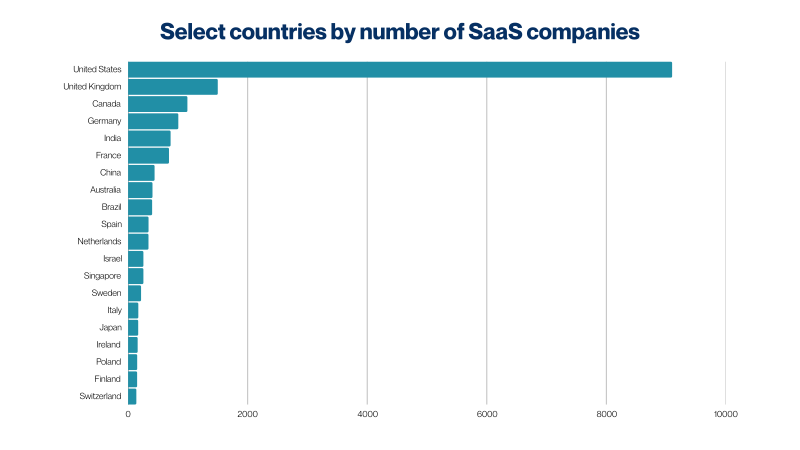
Competing in such a vast landscape requires a strong strategy. With so many options, your prospects may feel overwhelmed and unsure of which solution to choose. It’s not that they don’t want to hear you—it’s that they’re bombarded with choices every day.
So how can you make your target audience notice you?
- Focus on Your Unique Selling Proposition (USP): What makes your product different? Whether it’s the ease of use, a specific feature, or exceptional support, make your USP clear.
- Narrow Your Target Audience: Instead of trying to appeal to everyone, focus on a niche. For example, if your software helps small e-commerce businesses, tailor your messaging to that group.
- Create Educational Content: Blogs, webinars, and videos that address common pain points can position you as an expert in your field and attract the right audience.
Outpace your competitor with sales strategies for SaaS sales reps.
3. Complex Buying Journey
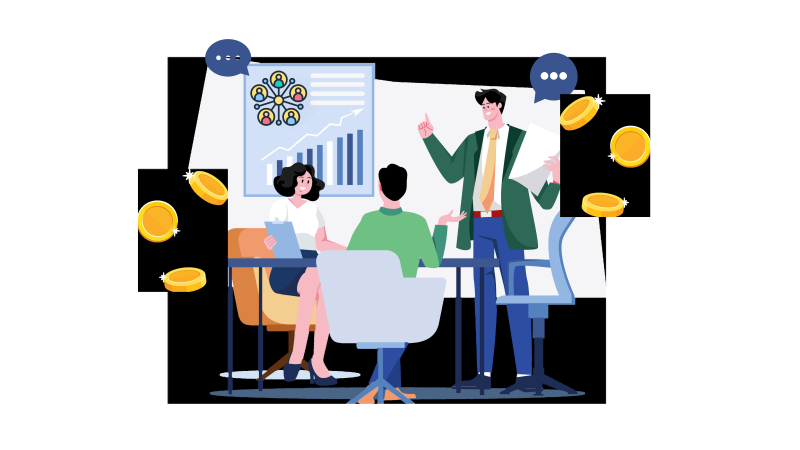
Selling SaaS frequently requires negotiating a network of decision-makers, budget holders, and influencers. Each stakeholder has unique priorities, which might complicate the process.
To overcome this, make sure to:
- Map Stakeholders: Identify all decision-makers and their specific concerns.
- Create Tailored Pitches: Address the unique needs of each stakeholder group.
- Use Collaborative Tools: Provide shared resources like demo recordings or detailed proposals to keep everyone aligned.
4. Saas Lead Quality
Unlike mass-market products, SaaS businesses often target a narrower audience. This makes every lead valuable, but finding high-quality leads is difficult. To generate quality leads, make sure to:
- Leverage Intent Data: Identify prospects already searching for solutions like yours.
- Optimize Lead Scoring: Focus your sales team’s efforts on leads most likely to convert.
- Partner with Specialists: Work with agencies or platforms specializing in SaaS lead generation.
Generate more SaaS sales leads.
5. Smaller Lead Pool
Industry-specific SaaS providers focus on solutions to niche problems of the niche enterprise. At some point, it can also feel like you may have exhausted your lead pool. What are the things you need to do?
- Scale with Customers: Grow as your customers’ businesses grow. SaaS cross-selling opportunities can emerge naturally by offering complementary products or services.
- Expand to Similar Niches: Don’t be afraid to enter smaller markets in the same vein as your current customers.
See why SaaS companies outsource the Callbox appointment setting solution to boost their sales pipeline.
6. Not Enough Resources
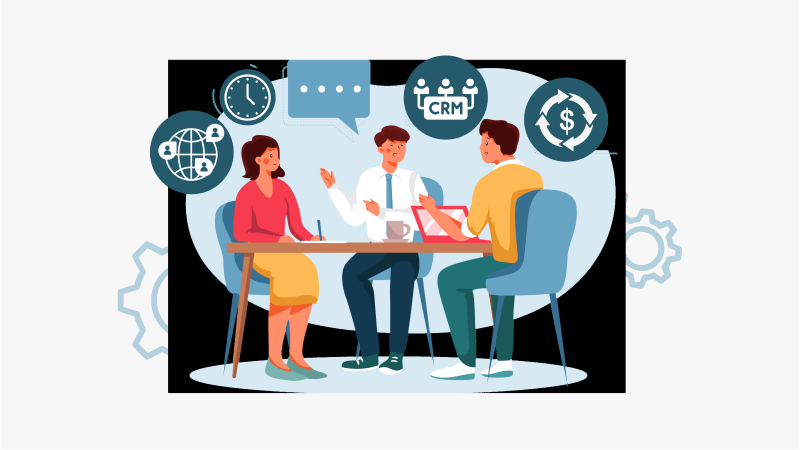
Small SaaS teams often juggle multiple roles, leaving little time for a focused sales strategy. To address this challenge, you need to:
- Automate Where Possible: Use tools like CRMs and marketing automation platforms to save time.
- Outsource: Partner with agencies for specific tasks like lead generation or content creation.
- Prioritize Tasks: Focus on high-impact activities that directly drive revenue.
7. Acquisition Cost
Customer Acquisition Cost (CAC) can quickly eat into profits if not managed carefully. To overcome this, improve targeting by focusing on high-value accounts to maximize returns. Upsell and cross-sell to increase customer lifetime value, offsetting acquisition costs. Analyze campaigns continuously to optimize strategies and reduce waste.
8. Reaching the Right Audience
Stunted growth could be an indication of advertising to the wrong target audience. If you’re not reaching the right people, your efforts are wasted. Reanalyzing your target description may help you narrow down who your target market is. As much as possible:
- Get Specific: The more targeted your audience, the more relevant your message.
- Choose the Right Channels: Platforms like LinkedIn or industry-specific forums often work better.
- Personalize Messaging: Create one-on-one conversations based on real prospect data.
If your SaaS business is facing stunted growth, you’re not alone. Many providers cite targeting as one of the top SaaS strategic growth challenges today.
Struggling to reach your target SaaS clients? Check out these SaaS lead generation strategies.
9. Dealing with Resistance to Change
Many businesses hesitate to adopt new tools, fearing disruption or failure. In fact, one of the reasons why enterprises take longer in the sales cycle is the fear of change.
They have used their systems for a long time and invested time and money in them. Asking them to switch to a more effective and dynamic solution, yet more complex can be a lot to ask.
- Engage Users: Reach out to the primary system users who may better understand the solution.
- Offer Product Trials: Let them try your product and share their experience with decision-makers.
- Demonstrate ROI: Emphasize how your tool simplifies processes, improves security, or saves costs.
10. Managing Long Sales Cycles
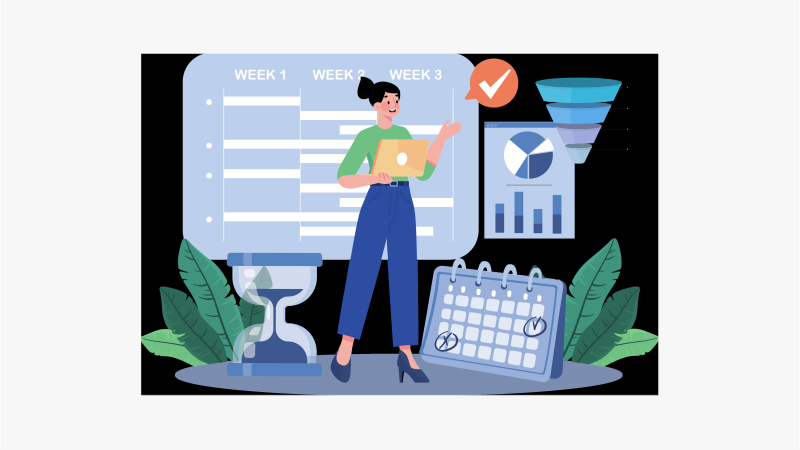
Long sales cycles in SaaS can feel like navigating a maze. Your prospects aren’t just saying “no”; they’re dealing with internal processes, tight budgets, and multiple decision-makers who must align. It’s frustrating, but understanding this can help you plan better.
“On average, SaaS sales cycles can range from 3 to 9 months, depending on the product and market segment.” – Rebecca Matias
Patience and exceptional follow-ups are the secrets to thriving amid an unusual sales cycle in SaaS. In particular, SaaS providers who recently launched their sales program may lack precise data on how long it will take to close a deal. It can lead to unrealistic expectations, unnecessary pressures, and unreachable quotas. Another problem is staff turnover, which replaces team members who leave the company.
SaaS sales don’t happen in a single transaction. It can take weeks or months for the buying committee to approve the purchase. The complexity and price of the SaaS tool may further lengthen the sales cycle. By contrast, less complex and less pricey solutions will sell faster.
As it is harder to predict monthly and quarterly quotas and manage overlapping sales cycles, consider benchmarking to improve your expectations. Factors to consider include pricing, the complexity of the product, your niche industry, and your customers’ needs. It can take a while to understand the buyer’s process that you can use to set more realistic sales targets. To overcome this challenge:
- Use a Clear Sales Funnel: Map out your prospect’s journey and ensure you have content and strategies for each stage—awareness, consideration, and decision.
- Nurture Leads: Use email marketing to stay on your prospects’ radar. Share helpful resources and updates about your product to keep them engaged.
- Set Expectations: During initial conversations, explain the typical timeline for implementation and results. This transparency can help move the process along.
SaaS growth challenges often stem from the lack of a process to manage extended cycles. Account-based strategies can help shorten timelines by aligning messaging across departments.
Learn how ABM can shorten the SaaS sales cycle.
11. Leads Lost In the Long Sales Cycle
As it can take multiple decision-makers longer to approve the purchase, leads can get lost in the coming weeks, months, or years. The problem is not much of having a limited lead pool but a poor lead follow-up. It can be tempting to ignore leads when they are seemingly not ready to make a purchase decision.
To avoid losing leads, encourage your sales team to nurture leads every step of the way in their buyer journey until they are ready to take that crucial step. Consistency is the key to the long sales cycle of the SaaS industry. Avoid neglecting leads by having a system of following-up leads over time. Help them along the sales pipeline by addressing concerns, educating them, and adding value.
Become aware of these B2B SaaS marketing mistakes.
12. Addressing Customer Churn
Signing up customers is exciting, but keeping them around? That’s the real challenge. High churn rates can feel like pouring water into a leaky bucket—no matter how much you add, it’s hard to stay full. Addressing churn means digging deeper into what your customers truly need.
To overcome this:
- Improve Onboarding: Help users find value quickly.
- Be Proactive: Check in regularly to resolve issues early.
- Incentivize Loyalty: Offer discounts, early access, or exclusive features.
13. Explaining the Value of Your Product
Complex SaaS features can leave prospects scratching their heads. If they can’t immediately see how your product fits into their lives or solves their problems, they’re likely to move on. And really, who can you blame them?
According to B2B Buyer Trends 2025, 93% of SaaS buyers say understanding the ROI is crucial before making a purchase decision.
To overcome this, make sure to:
- Simplify Messaging: Use clear, everyday language to explain your tool.
- Use Visuals: Show how your SaaS works through demos or videos.
- Quantify Benefits: Share specific ROI metrics or use cases.
Understanding these SaaS marketing challenges is the first step toward refining your sales and marketing strategy. The good news? Every challenge here can be addressed with strategic planning, the right tools, and a deep understanding of your customers.
Before You Go
SaaS sales require a strategic approach that should be intentional and consistent. Selling SaaS solutions may come with challenges, yes, but each obstacle is an opportunity to improve your strategy. As you overcome challenges, growth and innovation are inevitable.
By focusing on trust, clarity, and customer satisfaction, you can overcome these hurdles and grow your business successfully. Finally, remember that SaaS relies on customers continuously using and benefitting from the software over multiple contracts.