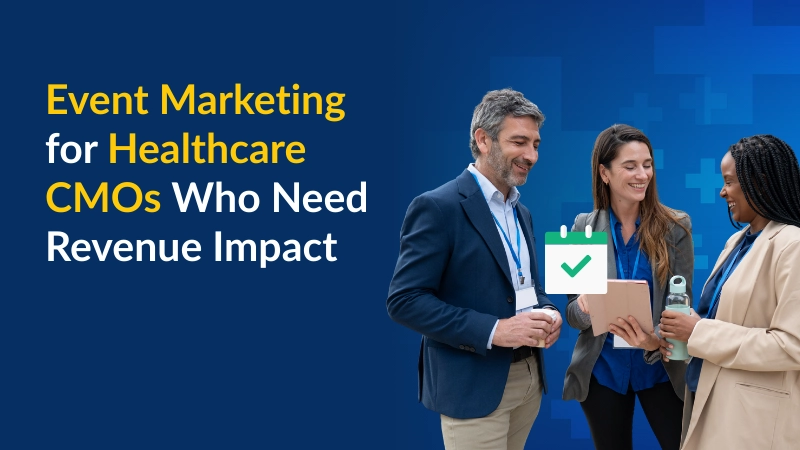
Event Marketing for Healthcare CMOs Who Need Revenue Impact
Event marketing for healthcare CMOs must tie events to revenue. See how events drive pipeline performance, forecast confidence, and sales velocity.

Healthcare CMOs operate under growing scrutiny. Boards expect marketing to influence pipeline, improve forecast confidence, and accelerate revenue across long, committee-driven buying cycles. Events still command a large share of budget, yet many organizations struggle to explain how events translate into measurable revenue outcomes.
Industry benchmarks show that B2B healthcare companies allocate between 20 and 30 percent of their annual marketing spend to events. At the same time, internal revenue analysis across healthcare SaaS, services, and medical technology firms reveals that fewer than 25 percent of event-generated contacts ever progress into sales-qualified opportunities.
The issue is not event relevance. The issue is operational design.
Event marketing for healthcare produces revenue impact only when events function as structured pipeline infrastructure rather than isolated campaigns.
Running healthcare events but not seeing the pipeline impact you expect?
The Event ROI Gap in Healthcare Marketing
Healthcare CMOs often report strong attendance and engagement metrics, yet pipeline impact remains inconsistent. This disconnect stems from how ROI is measured.
Across healthcare B2B benchmarks, more than 60 percent of event leads receive only one follow-up attempt, typically within a generic post-event email. Conversion analysis shows that leads receiving three or more personalized touches within the first seven days convert to opportunities at nearly double the rate of those receiving minimal follow-up. Don’t let poor follow-ups turn you down.
The ROI gap emerges between event engagement and post-event execution.
Event marketing for healthcare must be evaluated by its ability to create qualified sales conversations, not by attendance volume.
Key benchmark insight for CMOs:
- Event-influenced opportunities close at higher average deal values, often 10 to 20 percent higher than non-event opportunities.
- This lift appears only when follow-up is structured and aligned to buyer stage.
Why do healthcare events show strong engagement but weak pipeline results?
Healthcare events attract interest, but pipeline impact depends on execution after attendance. Most revenue loss occurs when follow-up lacks speed, personalization, or qualification aligned to buyer stage.
Related: Benefits of Outsourcing Event Marketing Services
Why Attendance Metrics Undermine Revenue Forecasting
Attendance, badge scans, and session engagement correlate poorly with revenue outcomes in healthcare markets.
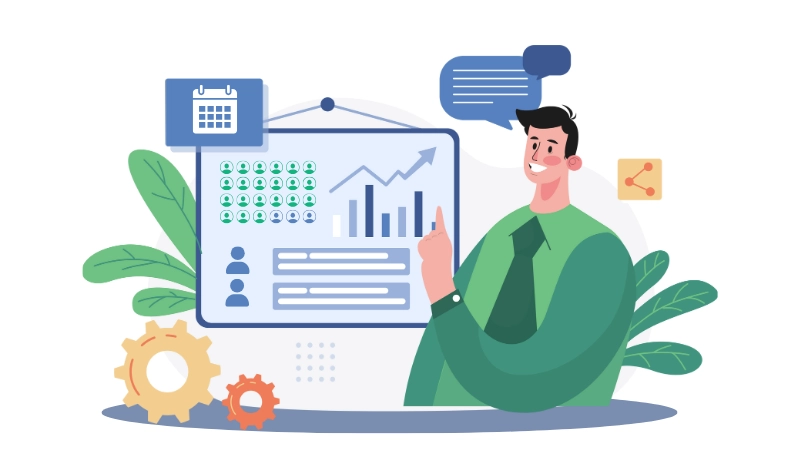
Pipeline audits across mid-market and enterprise healthcare vendors show that fewer than one in five event attendees align with active or emerging buying committees within the next 90 days. However, those aligned attendees account for the majority of event-influenced pipeline value.
This creates a false signal for leadership teams. High attendance suggests success, while revenue impact remains concentrated in a small subset of accounts. According to Zippia, 79% of marketers generate sales through events.
Event marketing for healthcare must shift from volume-based reporting to committee-based analysis.
Board-relevant metrics include:
- Percentage of attendees tied to target accounts
- Number of buying committees engaged per event
- Opportunity acceleration rate among event-engaged accounts
This reframing aligns event performance with revenue discussions at the executive level.
What event metrics actually matter to healthcare CMOs and boards?
Boards care about meetings set, opportunities created, deal acceleration, and pipeline value influenced. Attendance and scans only matter when tied directly to these revenue outcomes.
See how Callbox’s event marketing program brings 96 sales meetings and 410 event registrants for a healthcare technology firm.
Where Events Actually Influence the Healthcare Buying Cycle
Contrary to common belief, events rarely influence final purchase decisions in healthcare. Data shows their strongest impact occurs earlier.
Healthcare pipeline analysis indicates that events most often influence:
- Shortlist formation
- Internal consensus building
- Vendor validation during evaluation phases
These moments frequently occur before opportunities appear in CRM systems.
As a result, many CMOs underreport event impact because attribution models track revenue only after opportunity creation. Event marketing for healthcare requires earlier intent capture tied to account-level engagement.
High-signal indicators include:
- Multiple stakeholders from one organization attending the same event
- Repeated engagement across sessions or event touchpoints
- Post-event technical, compliance, or integration inquiries
These signals often precede formal sales engagement by weeks or months.
At what stage do healthcare events influence buying decisions most?
Healthcare events influence early and mid-stage evaluation when buyers form shortlists, validate vendors, and align internal stakeholders before formal opportunities exist.
Related: 5 B2B Healthcare Marketing Trends
Why Pre-Event Engagement Delivers Higher Revenue Leverage
Healthcare CMOs typically prioritize post-event follow-up. Benchmark data suggests pre-event engagement produces greater revenue leverage.
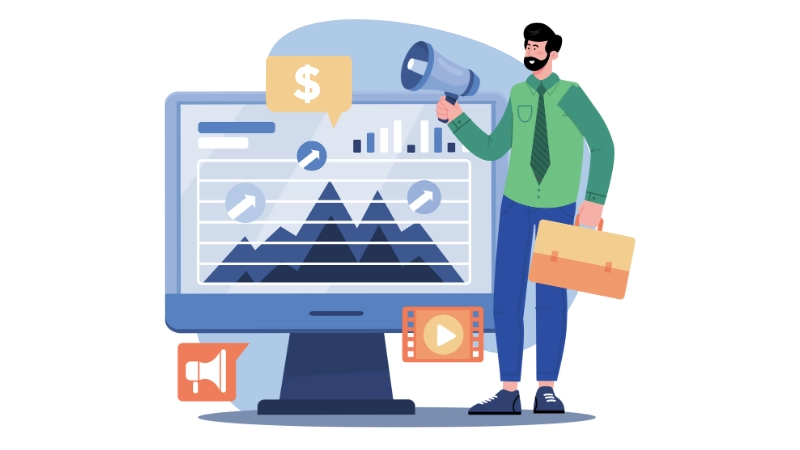
Programs that schedule meetings or validate relevance before events report:
- Higher onsite meeting attendance rates
- Greater seniority among attendees
- Shorter time from event to opportunity creation
Pre-event outreach reframes events as validation moments rather than introductions. Buyers arrive prepared to discuss specific challenges, not general awareness topics.
Event marketing for healthcare performs best when pre-event outreach targets:
- Accounts already in evaluation cycles
- Buying committees seeking peer validation
- Organizations preparing for procurement or compliance review
This approach shifts events from top-of-funnel activity into pipeline acceleration mechanisms.
Should healthcare marketers focus more on pre-event or post-event outreach?
Pre-event outreach delivers stronger revenue leverage because it frames the event as a validation moment rather than an introduction, leading to higher-quality conversations and faster pipeline movement.
Related: Proven Ways of Increasing Event RSVPs
Turning Live Event Conversations Into Measurable Pipeline Movement
Live event engagement only creates revenue impact when conversations translate into defined next steps.
Healthcare buyers expect relevance and continuity. Generic follow-up erodes trust and delays momentum. CRM data shows that personalized follow-up referencing specific event conversations improves response rates by over 40 percent compared to generic outreach.
Event marketing for healthcare must treat live conversations as the first stage of sales engagement.
Operational requirements include:
- Capturing discussion context during events
- Tagging engagement by buyer role and concern
- Aligning follow-up messaging to specific evaluation criteria
This discipline transforms event conversations into measurable pipeline progression.

Post-Event Follow-Up as a Revenue Control Point
Speed and structure define post-event success.

Healthcare engagement benchmarks indicate that follow-up within 48 hours produces the highest response rates. After five days, engagement drops sharply, even among interested buyers.
CMOs should treat post-event follow-up as a controlled revenue process, not an ad hoc activity.
Effective programs enforce:
- Defined follow-up timelines by buyer stage
- Multi-channel outreach across email, phone, and professional networks
- Qualification before handoff to sales
Event marketing for healthcare loses revenue impact quickly without this structure.
How fast should healthcare teams follow up after an event?
Follow-up within 48 hours produces the highest response rates. Engagement declines sharply after five days, even among buyers who expressed interest during the event.
How Events Improve Forecast Confidence When Tracked Correctly
Events influence forecast accuracy when engagement data feeds revenue models.
Healthcare revenue teams who incorporate event signals into forecasting report:
- Improved probability weighting for committee-engaged accounts
- Shorter expected sales cycles following executive participation
- Higher confidence in multi-quarter deal projections
Event marketing for healthcare becomes a forecasting asset when engagement indicates internal alignment within buying organizations.
This capability resonates strongly with boards seeking predictability, not just growth.
Thinking about how to create a strategic cadence on how to follow up with your prospects? Discover the 5 winning sales cadence examples.
Why CMOs Outsource Event Execution Strategically
Healthcare CMOs do not outsource event execution to reduce cost. They outsource to protect strategic focus and execution consistency.
Event windows are narrow. Missed follow-up timelines, inconsistent messaging, or incomplete qualification reduce revenue impact quickly.
Outsourced execution provides:
- Scalable, compliant multi-channel engagement
- Faster response times after events
- Clean integration with sales workflows
Callbox accelerates revenue by engaging prospects after brand awareness and converting them into qualified meetings, closed deals, and loyal customers. Once customers are acquired, we don’t stop. Callbox then nurtures them into repeat business, advocacy, referrals, and expansion opportunities, feeding revenue back into the top of the funnel. This creates a self-reinforcing growth engine that continuously scales pipeline, accelerates sales, and maximizes customer lifetime value.
This positions outsourcing as revenue infrastructure, not tactical support.
Is outsourcing event marketing common in healthcare B2B?
Yes. Healthcare CMOs outsource execution to ensure compliance, speed, and scale while maintaining internal focus on strategy, messaging, and revenue alignment. Let’s see how to choose the right outsourced company for your upcoming healthcare event.
Board-Level Takeaway for Healthcare CMOs
Events do not fail because healthcare buyers stopped attending. They fail because organizations design them as marketing moments rather than revenue systems.
Healthcare CMOs who drive revenue impact through events:
- Measure committee engagement, not attendance
- Capture intent before opportunities exist
- Use events to accelerate deals already forming
- Integrate event signals into forecasting models
Event marketing for healthcare remains one of the few channels capable of influencing revenue across long, complex buying cycles when executed with discipline.
What is the biggest mistake healthcare CMOs make with event marketing?
The biggest mistake is treating events as awareness programs instead of revenue systems. Without structured engagement and qualification, event ROI erodes quickly.