






Q4 brings pressure on every marketing team. You prepare reports, build next year’s plan, and close remaining deals. You also deal with shorter workweeks, limited bandwidth, and slower buyer responses. These factors reduce your outreach volume at the moment when your prospects set next year’s budgets. Your internal priorities stack up, and your available hours shrink. The shift affects every part of your demand generation process.
At the same time, you work through new AI tools. Training takes time. Workflows shift. Processes feel heavier before they feel easier. Internal delays affect your Q4 lead generation performance. You lose active conversations. Your pipeline enters Q1 with fewer qualified opportunities. This slowdown creates a compounding effect. Fewer touches in December lead to fewer opportunities in January and weaker conversations in February.
You do not need to lose ground at the end of the year. You keep a strong Q4 lead generation rhythm when you bring in external support that maintains outreach, enriches your data, and engages prospects while your internal team resets. You protect pipeline momentum. You enter Q1 with active deals and clearer demand signals instead of stalled activity. Your team gains breathing room without risking your revenue goals.
This article breaks down why Q4 slows teams down, why internal execution drops, and how an external partner like Callbox fills these gaps with an AI-driven, human-supported approach. Every recommendation is practical and specific to teams that want predictable pipeline performance during the most congested quarter of the year.
Still thinking about how to elevate your lead generation game this quarter?
Why Q4 Marketing Execution Drops
Q4 is the most compressed quarter for marketing and sales. You face time and resource pressure simultaneously. Outreach drops fast. The demands on your team increase while the available time to meet those demands decreases. This creates tradeoffs that harm your pipeline.
Below are the main drivers.
1. Internal Teams Shift Toward Planning and Reporting
As Q4 progresses, internal teams focus less on outreach and more on internal documentation and strategic planning. You need to finalize budgets, evaluate performance, and hand in reports that shape next year’s direction. These tasks are non-negotiable, and they often require cross-functional input. Meetings increase. Deadlines shorten. Your team faces more interruptions and loses long stretches of uninterrupted work.
This shift pulls time away from outbound prospecting, segmentation work, content updates, and targeted follow-up. These activities form the backbone of Q4 lead-generation performance, yet they are the first to be deprioritized. The drop is not intentional. It is a natural effect of competing priorities.
2. AI Adoption Adds Work Before It Reduces Work
Many teams adopt new AI tools during Q4. These transitions place additional weight on your internal processes. You test new tools, evaluate quality, confirm compliance, and adjust workflows. Teams also need time to learn new instructions and adapt to new outputs. This reduces efficiency before it improves it.

The transition period introduces new questions. You check accuracy. You validate tone and messaging. You refine prompts. These steps slow down outreach. Many internal teams pause outbound activity while they align on AI-supported messaging. This pause leads to lower volume and fewer conversations.
Related: AI-Driven Lead Generation for Q4
3. Holidays Reduce Bandwidth
Q4 includes more non-working days than any other quarter. This reduces the availability of both your team and your prospects. You deal with vacations, shorter weeks, and last-minute schedule changes. Team members split their time between internal tasks and limited outreach.
Your campaign rhythm breaks. Follow-ups get delayed. New outreach slows. Prospects also respond more slowly because they face the same bandwidth challenges. This creates lag on both sides and adds friction to your pipeline.
4. Buyer Attention Shifts
Your prospects shift their attention in Q4. They prepare budgets, evaluate current vendors, and complete internal reviews. These activities limit their ability to engage in long qualification conversations. They postpone evaluations to the following year. This lowers reply rates and stretches the time between touches.
It becomes harder to start new conversations during these weeks. You need more touches to reach the same number of buyers. You also need tighter messaging and stronger timing to keep attention. Without consistent outreach, your lead velocity drops.
5. Inbound Slows While Outbound Needs to Increase
Organic traffic dips at the end of the year. Buyers search less. They submit fewer forms. They attend fewer webinars. This forces marketing teams to depend on outbound channels to balance the pipeline. Outbound requires consistency, volume, and precise targeting.

This is also the moment when your team has the least time to manage outbound work. The gap widens. You enter the new year with less inbound activity and lower outbound volume.
These factors create a predictable pattern. Q4 is the toughest quarter to maintain marketing momentum. Teams pause. Pipelines flatten. Q1 loses speed before it starts.
Why an External Engine Protects Your Q4 Pipeline
You cannot remove Q4 planning, reporting, or AI adoption. These tasks drive your long-term growth. What you can control is the drop in outbound activity. You protect your pipeline by shifting execution to a team that specializes in multi-channel outreach, data accuracy, and consistent contact volume.
Below is why this approach protects your pipeline.
1. You Preserve Outreach Volume When Internal Workloads Spike
When your team becomes focused on planning and reporting, your outbound activity drops, an external partner keeps outreach running at full capacity. This preserves your visibility, contact frequency, and market presence during weeks when your internal team is overloaded.
Outreach volume is the single biggest factor in Q4 pipeline health. You avoid the drop by shifting high-volume tasks to a partner that maintains full production.
Discover email and LinkedIn outreach strategy can help your outbound campaign.
2. You Reduce the Lag From AI Adoption
AI adoption slows teams before it accelerates them. Callbox removes this lag. You get AI-supported workflows paired with trained specialists who review every message and adjust to your audience. You do not pause outreach while your internal team learns new tools or tests new language.
This protects your short-term pipeline performance while your internal systems continue to evolve.
3. You Avoid Bandwidth Gaps
Holiday schedules create natural downtime. Your team works with fewer hours and fewer people. An external partner maintains full staffing and full production during these weeks. This prevents periods of pipeline inactivity and protects your lead flow.
You continue to reach buyers who are active in the final weeks of the year. You also capture intent from prospects who prepare next year’s initiatives.
4. You Engage Buyers Who Are Planning Q1 Budgets
Your buyers evaluate options and set priorities during Q4. They review vendors and decide who they want to speak with early next year. An external partner identifies these signals, starts conversations, and warms accounts before the new year starts.
You enter Q1 with active opportunities instead of cold lists.
5. You Maintain Multi-channel Reach Without Overloading Your Team
Multi-channel outreach requires coordination across phone, email, LinkedIn, and retargeting. Internal teams often lack the bandwidth to run all channels at full volume during Q4. An external partner handles these tasks and ensures that every account receives consistent touchpoints.
This improves engagement and reduces the risk of missed opportunities.
Let’s build your Q1 lead generation strategy.
How Callbox Fills Q4 Marketing Gaps With AI-Driven Lead Generation
Callbox operates as an extension of your team. Your internal marketers stay focused on high-level planning while Callbox manages daily outreach, data operations, and buyer interactions. This creates a stable pipeline during volatile weeks.
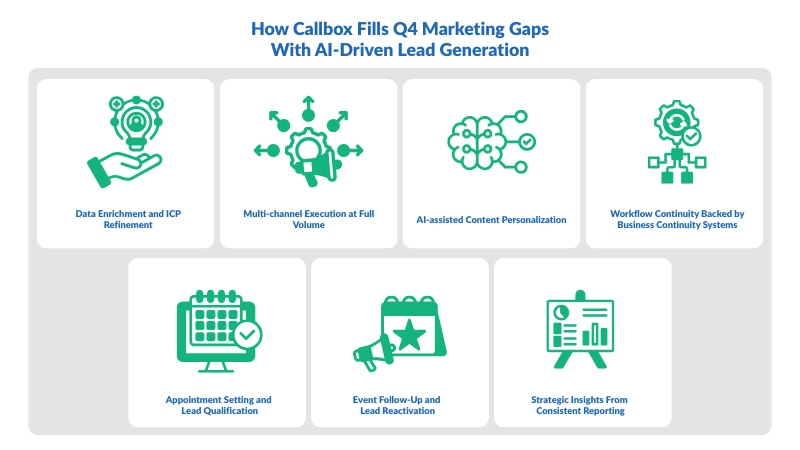
Below is a detailed breakdown of how Callbox supports your Q4 strategy.
1. Data Enrichment and ICP Refinement
Accurate data is essential in Q4 because buyers respond more slowly and require more precise targeting. Outdated information leads to more bounces, more failed attempts, and more wasted hours. Clean data improves contact rates.
Callbox maintains a dedicated data team supported by AI and human verification. This process ensures your lists stay complete, accurate, and aligned with your ICP. You improve your outreach efficiency and engage the right prospects without delay.
2. Multi-channel Execution at Full Volume
Consistent outreach is challenging to maintain during Q4. Your team has fewer available hours and more internal tasks. Callbox fills this gap with a structured multi-channel process.
You receive complete volume execution across phone, email, and LinkedIn. Every day includes outbound calls, messages, follow-ups, and account touches. This preserves your brand presence and ensures your prospects stay engaged during the busiest quarter of the year.
3. AI-assisted Content Personalization
Q4 outreach requires tighter messaging. Prospects read faster and respond only when the value is clear. Callbox uses AI to produce fast first drafts, generate variants, refine tone, and adapt messaging based on prospect behavior. Human SDRs then adjust language to match context.
This balance improves message quality and helps you stand out during periods of message fatigue.
4. Workflow Continuity Backed by Business Continuity Systems
Callbox maintains full service delivery through strict continuity systems. This includes backup operations, rapid recovery procedures, and stable production infrastructure. Outreach continues even during unexpected events or internal disruptions.
Your pipeline benefits from uninterrupted execution at a moment when buyers are difficult to reach.
5. Appointment Setting and Lead Qualification
Your sales team needs to be ready to engage in meetings without spending hours on outreach. Callbox SDRs handle first contact, qualification, and scheduling. You receive meetings with decision makers who match your target profile.
Your team enters Q1 with active conversations scheduled and clear next steps.
6. Event Follow-Up and Lead Reactivation
Q4 includes end-of-year events and webinars. Many of these engagements produce warm leads that go cold when internal workloads spike. Callbox handles every follow-up with structured sequences and fast responses.
Old leads also get attention through targeted reactivation campaigns. Prospects who engaged earlier in the year receive renewed outreach with personalized context.
7. Strategic Insights From Consistent Reporting
Your Q4 strategy depends on accurate insights. Callbox provides consistent reporting that highlights response trends, account behavior, channel performance, and conversion metrics. These reports become key inputs to your Q1 plan.
You start the year with real data instead of assumptions.
How to Strengthen Your Q4 Marketing Strategy Step by Step
You improve your Q4 pipeline by applying a structured process. This approach reduces friction, protects outreach volume, and prepares your team for the new year.
1. Audit Your Current Q4 Workload
Review your internal calendar and capacity. Identify which weeks will have reduced bandwidth. Understand which tasks require internal focus. These insights reveal where external support is most valuable.
2. Review Your ICP and Target Accounts
Your outreach is only as strong as your targeting. Update your ICP before increasing outreach volume. Identify gaps in industries, job titles, regions, and technologies. Clean your lists to improve contact accuracy.
3. Decide Which Channels to Prioritize
Q4 requires balanced multi-channel engagement. Select channels based on buyer behavior. Email reaches broad audiences. Phone calls create direct conversations. LinkedIn increases visibility. Retargeting supports awareness. Build sequences that connect these channels for stronger engagement.
4. Refresh Your Messaging
Prospects read faster in Q4. You need clear messages that explain value with no friction. Simplify your tone. Shorten your first touch. Provide direct next steps. Follow up with context from previous interactions. This improves response rates and reduces message fatigue.
5. Create a Fast Response System
Speed matters more in Q4 because buyers work with tighter schedules. Create shared inbox workflows. Prepare standard responses. Assign ownership of follow-ups. Set a same-day response target. Faster replies increase your conversion rate.
6. Clean Your CRM Before the Last Push
Your CRM becomes cluttered during the year. Q4 is the right time to remove outdated leads, duplicate entries, and incomplete records. This prepares your team for a clean transition into January.
7. Use External Support to Handle High Volume Tasks
Shifting high-volume tasks to a partner removes pressure from your internal team. You maintain outreach volume while staying focused on strategic work, forecasting, planning, and reporting. This prevents pipeline drops and preserves momentum.
See how Callbox executed a 3-month lead generation campaign for a US-based cybersecurity vendor.
How to Choose a Q4 Lead Generation Partner
Selecting the right external partner requires clear criteria. You need reliable execution, accountable reporting, and strong alignment with your internal team.
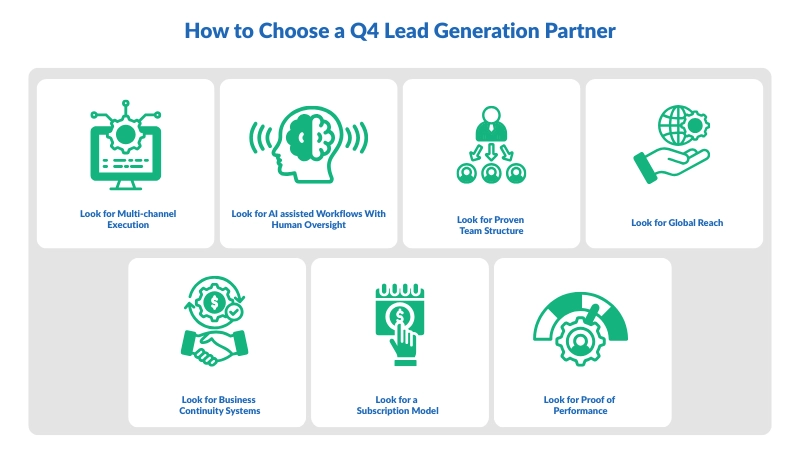
1. Look for Multi-channel Execution
Your partner should handle every central channel. Multi-channel reach drives more engagement and higher-quality conversations. It also reduces your dependence on a single channel during periods of low response.
2. Look for AI assisted Workflows With Human Oversight
The right partner uses AI for speed and efficiency and depends on human oversight for quality and accuracy. This combination improves personalization and maintains message integrity.
3. Look for Proven Team Structure
Your partner must assign dedicated roles. You need structured support, not a single generalist. A strong team includes managers, specialists, SDRs, and analysts. This structure ensures complete coverage.
4. Look for Global Reach
Pipeline performance depends on regional coverage. A partner with international reach engages buyers across time zones and increases your touch frequency.
5. Look for Business Continuity Systems
Your partner must maintain operations through infrastructure issues, staffing challenges, and unexpected events. Continuity protects your outreach during Q4 instability.
6. Look for a Subscription Model
A subscription model stabilizes costs. It keeps resource planning simple and gives you predictable service levels.
7. Look for Proof of Performance
Review case studies, testimonials, and client history. Focus on long-term clients within your industry. This signals consistent results.
Related: Top Lead Generation Companies for 2026
Why Q4 Is the Best Time to Strengthen Your Pipeline
Q4 presents challenges but also rare advantages. You reach prospects while your competitors reduce their activity. You stand out in a quiet market. You influence early evaluation cycles.
You create opportunities before January even begins. You start the year with warm leads, booked meetings, and active buying signals. Your team gains early traction and reduces the pressure of Q1 ramp-up.
A Clear Path Forward
You do not need to pause your Q4 marketing efforts. You protect your pipeline and prepare for a stronger Q1 by shifting high-volume tasks to a partner that blends AI systems with trained SDRs, analysts, and strategists.
Callbox provides this complete support with data operations, multi-channel outreach, human-guided engagement, and steady reporting. You maintain execution without overloading your internal team.
You gain time to focus on strategic planning. You enter the new year with pipeline momentum. You reduce friction in January and move faster toward your revenue targets.