Top B2B Lead Generation Companies in the USA
Compare the best B2B lead generation companies in the USA. See services, pricing, and results for 2025.
If you’re running a B2B business in 2025, lead generation is no longer an optional marketing function, it’s the lifeline of your sales pipeline.
Every closed deal starts with a lead, but not every lead is worth your team’s time.
Sales teams across the US are feeling the pressure:
- Decision-makers are harder to reach.
- Cold outreach is increasingly regulated.
- Buyers demand more relevance before they engage.
A recent industry report showed that 61% of B2B marketers say generating high-quality leads is their biggest challenge. That’s why more companies are turning to specialized lead generation firms to find, qualify, and connect them with ready-to-buy prospects.
Why the Right Lead Generation Partner Matters
Choosing the right partner can mean the difference between:
- A pipeline full of sales-ready opportunities.
- Or a spreadsheet of unresponsive contacts.
The right company will not only find leads but will also:
- Target the right decision-makers in the right industries.
- Engage them across multiple channels at the right moments.
- Hand over leads that are vetted, interested, and likely to convert.
The wrong company? You’ll see:
- Missed revenue targets.
- Wasted ad spend and SDR hours.
- A damaged brand reputation from poor outreach practices.
That’s why we’ve created this comprehensive 2025 guide to the top B2B lead generation companies in the USA.
You’ll learn:
- Which companies have the strongest track record.
- What services they offer and how they differ.
- How to match the right provider to your goals.
- What mistakes to avoid before signing a contract.
How We Selected the Top Companies
Before you choose a B2B lead generation partner, you need to know what makes one company better than another — and better for your business.
Not every agency that calls itself “full-service” is equipped to deliver the kind of leads that will actually close.
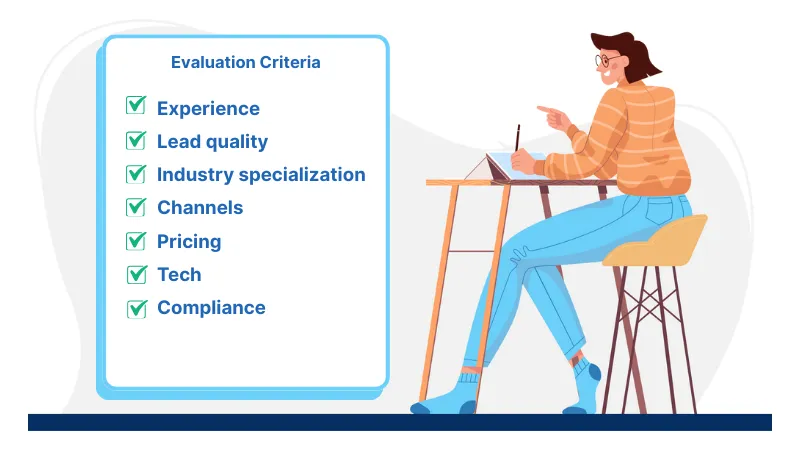
We evaluated dozens of providers and narrowed this list down based on specific, measurable factors. Each of these criteria has a direct impact on your results, and knowing how to assess them will help you make an informed decision.
1. Years in Business and Proven Track Record
Experience isn’t just about how long a company has been around. It’s about whether they’ve adapted to changes in buyer behavior, technology, and compliance regulations over time. A provider that’s been in business for 15–20 years has seen market shifts, experimented with outreach methods, and refined its approach based on thousands of campaigns
Why it matters: A track record means they’ve likely handled situations similar to yours — whether that’s launching into a new market, reviving dormant leads, or running enterprise-level account-based marketing.
2. Lead Quality and Conversion Rates
It’s tempting to focus on the number of leads promised in a proposal, but quantity means little without quality.
We looked for providers that can demonstrate:
- Lead-to-opportunity conversion rates above industry averages (10–15%).
- Low bounce rates on email outreach.
- Clear definitions of what qualifies as a lead in your context.
Why it matters: High-quality leads shorten the sales cycle, reduce wasted SDR time, and improve your return on investment.

3. Industry Specialization
Some agencies are generalists, serving any B2B vertical. Others specialize in industries like SaaS, healthcare, or manufacturing.
Specialization often means:
- Better data on your buyer personas.
- Messaging that resonates with your industry’s decision-makers.
- Familiarity with industry-specific regulations (for example, HIPAA compliance in healthcare).
Why it matters: A specialist provider can ramp up faster and avoid the learning curve that a generalist might face.
4. Multi-Channel Capability
The days of relying on a single channel like cold email are over. Top providers combine multiple touchpoints to reach and re-engage prospects:
- Phone calls for direct conversations.
- Email for nurturing and content delivery.
- LinkedIn for professional networking.
- Retargeting ads for staying top-of-mind.
Why it matters: A multi-channel approach increases engagement rates, especially for complex B2B sales with longer decision cycles.
For a deeper breakdown, see Email vs Phone vs LinkedIn: What Drives B2B Leads in the US?.
5. Pricing Transparency and Flexibility
Pricing models vary widely, including subscription, retainer, or pay-per-lead. We looked for companies that:
- Are upfront about costs.
- Offer flexible terms for testing or scaling.
- Align pricing with measurable outcomes.
Why it matters: Flexible contracts reduce risk, especially if you’re entering a new market or testing a new outreach strategy.
For benchmarks and breakdowns, see The Real Cost of B2B Lead Generation Services in the USA.
6. Technology and Data Capabilities
The best agencies leverage technology for:
- Data enrichment and verification.
- Automated follow-up sequences.
- Real-time reporting and analytics.
We prioritized providers with proprietary platforms or best-in-class integrations with CRMs and marketing automation tools.
Why it matters: Technology-driven processes scale better, reduce errors, and allow for better performance tracking.
7. Compliance and Risk Management
Regulatory compliance is not optional in 2025. The companies on our list adhere to laws like:
- CAN-SPAM for email marketing.
- TCPA for phone outreach.
- GDPR and CCPA for data protection.
Why it matters: Non-compliance can lead to legal fines and reputational damage — even if the violations come from your vendor.
By applying these criteria, we eliminated companies that lacked transparency, overpromised on volume without proof of quality, or had no clear compliance framework.
Up next, we’ll move into Section 3 – The Top B2B Lead Generation Companies in the USA (Full Profiles), where we’ll introduce each company with market context, service breakdowns, and what type of client they serve best.
The Top B2B Lead Generation Companies in the USA (2025)
Finding the right lead generation company is not about finding the one with the loudest marketing. It’s about finding the one whose approach, technology, and track record align with your goals.
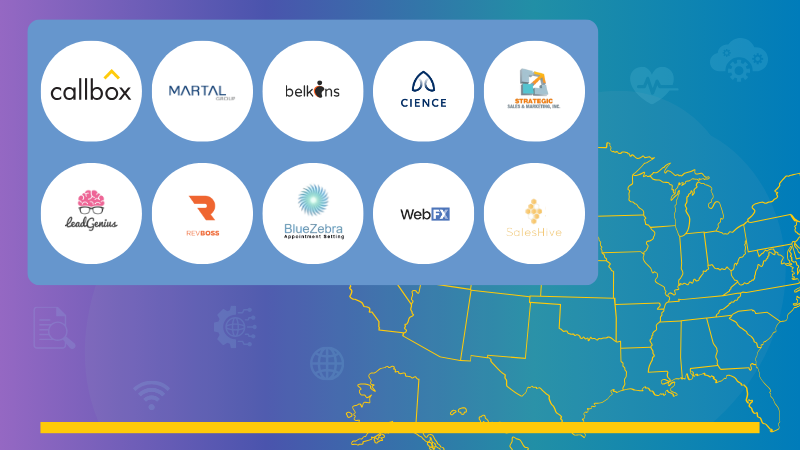
Below, we review 10+ of the top providers in the USA, based on experience, lead quality, industries served, and flexibility.
Each profile includes a brief market context, key services, and a “Best for” recommendation.
1. Callbox
If there’s one name that consistently comes up in B2B lead generation conversations, it’s Callbox. With over two decades in the industry, Callbox has worked with everyone from venture-backed SaaS startups to enterprise giants like Salesforce, AWS, and Google.
What makes Callbox stand out is not just their longevity, but their Team + AI approach to multi-channel outreach. Using their proprietary Smart Engage platform, they combine automation with human oversight, ensuring that every lead meets strict quality and compliance standards.
Their global reach — with teams across North America, APAC, LATAM, and EMEA — allows them to execute region-specific strategies without losing consistency.
Performance snapshot: In campaigns for US-based SaaS companies, Callbox reports lead-to-opportunity conversion rates between 15% and 20%, well above industry averages.
Compliance coverage: Full adherence to CAN-SPAM, TCPA, GDPR, and CCPA.
Key facts:
- Years in business: 20+
- Core services: Lead generation, appointment setting, event/webinar marketing, data enrichment, lead reactivation, cross-border marketing, SEO/content syndication, performance ads
- Channels: Phone, email, LinkedIn, chat, events, SEO, web retargeting, SMS
- Industries: Tech, SaaS, healthcare, finance, manufacturing, education, marketing agencies
- Pricing model: Subscription-based with flexible terms
Best for: Companies needing scalable, multi-channel campaigns with strict compliance and data accuracy requirements.
See why US-based B2B companies choose Callbox as the best lead gen company
2. SalesHive
Founded in 2016, SalesHive has built its reputation on speed and flexibility. Their month-to-month contracts appeal to companies that want to test outbound campaigns before committing long term.
Their approach is more focused than full-service agencies — they specialize in outbound prospecting through cold calling, email, and LinkedIn outreach, with optional Google Ads for targeted awareness.
SalesHive’s proprietary platform, combined with their vRep AI system, allows for fast deployment and scaling of outreach sequences.
Performance snapshot: Many clients report going from zero outreach to a steady flow of 20–40 qualified meetings per month within 90 days.
Key facts:
- Years in business: Since 2016
- Core services: Cold calling, email outreach, LinkedIn outreach, Google Ads
- Industries: Multi-vertical, including SaaS, manufacturing, and professional services
- Pricing model: Month-to-month
Best for: Businesses wanting to validate outbound channels quickly without long-term commitments.
3. Martal Group
Martal Group sits in the middle ground between traditional lead generation agencies and full SDR outsourcing. Their onshore teams in North America and Europe are a selling point for companies that value native English fluency and cultural familiarity.
They combine inbound and outbound tactics, often starting with a 4-month pilot program before moving to monthly engagements.
Performance snapshot: In B2B tech campaigns, Martal Group has delivered appointment show rates of 70% and above, supported by rigorous pre-qualification.
Key facts:
- Years in business: 10+
- Core services: Outbound/inbound lead gen, appointment setting, sales outsourcing, lead gen and sales training
- Channels: Email, phone, LinkedIn, digital channels
- Industries: Tech, SaaS, healthcare, finance, education, manufacturing
- Pricing model: 4-month pilot + monthly
Best for: Mid-sized tech and SaaS companies that want English-speaking reps and mixed inbound/outbound coverage.
4. Belkins
Belkins has carved out a niche in personalized appointment setting for tech and SaaS firms. Their campaigns rely heavily on email and LinkedIn and are designed to feel like organic business conversations rather than scripted pitches.
They maintain a strong focus on mid-market companies, tailoring messaging to decision-makers who are often overwhelmed with generic outreach.
Performance snapshot: Belkins campaigns often achieve 20–30% positive reply rates in targeted LinkedIn outreach for SaaS clients.
Key facts:
- Years in business: 7+
- Core services: Appointment setting, email outreach, LinkedIn prospecting
- Industries: Tech, SaaS
- Pricing model: Retainer
Best for: SaaS companies needing highly personalized outbound campaigns aimed at senior decision-makers.
5. CIENCE
CIENCE focuses on structured prospecting and data research. They’re not the most creative marketers, but they excel in operational consistency and building repeatable processes.
Their campaigns often target specific titles or account lists, using a mix of email, phone, landing pages, and forms.
Performance snapshot: In professional services campaigns, CIENCE has delivered steady appointment volumes with conversion rates around 11–14%.
Key facts:
- Years in business: 5+
- Core services: Lead generation, profiling, prospecting
- Industries: Tech, SaaS
- Pricing model: Retainer
Best for: Companies needing a systematic, research-heavy approach to outbound lead generation.
6. Strategic Sales & Marketing (SSM)
With over 30 years of experience, SSM is one of the oldest appointment-setting companies in the US. They maintain a phone-first approach, which resonates well with manufacturing, industrial, and traditional B2B sectors.
Performance snapshot: Their reps are trained to navigate gatekeepers and build rapport, often resulting in high-quality meetings with decision-makers in complex sales environments.
Best for: Industrial and manufacturing firms where voice contact remains the most effective sales channel.
7. LeadGenius
LeadGenius specializes in data enrichment and market intelligence rather than running full outbound campaigns. They combine AI technology with a distributed team of human researchers to deliver high-accuracy contact lists.
Performance snapshot: Clients often use LeadGenius to fuel their in-house SDR teams, resulting in improved targeting and higher connect rates.
Best for: Businesses that already have an SDR team but lack clean, accurate, and targeted data.
8. RevBoss
RevBoss takes a platform-first approach to outbound marketing. Their software automates prospecting workflows, while their team sets up and monitors campaigns.
Performance snapshot: Often used by agencies and SaaS firms to scale quickly into new markets without hiring additional SDRs.
Best for: Companies seeking scalable, automated outbound programs with minimal manual effort.
9. BlueZebra Appointment Setting
BlueZebra focuses exclusively on high-quality B2B appointment setting in high-value sectors like finance, healthcare, and IT. Their team is trained to qualify opportunities deeply before handing them off to sales.
Performance snapshot: For consulting firms, BlueZebra has achieved meeting acceptance rates exceeding 80% after initial qualification.
Best for: Companies with complex sales that require highly qualified meetings, not just contact lists.
10. WebFX
Primarily known as a digital marketing agency, WebFX earns a spot here for its inbound lead generation capabilities. They use SEO, PPC, and CRO strategies to generate leads for clients in both e-commerce and B2B sectors.
Performance snapshot: WebFX has driven millions of leads annually for clients by combining organic and paid acquisition strategies.Best for: Businesses that want to strengthen inbound lead generation alongside outbound.
In-Depth Comparisons of Top US Lead Generation Companies
Even after you’ve reviewed each company’s profile, it helps to see how they stack up side-by-side.
In this section, we compare the top providers based on channels used, pricing structure, industries served, and contract flexibility, then break down what those differences mean for you.
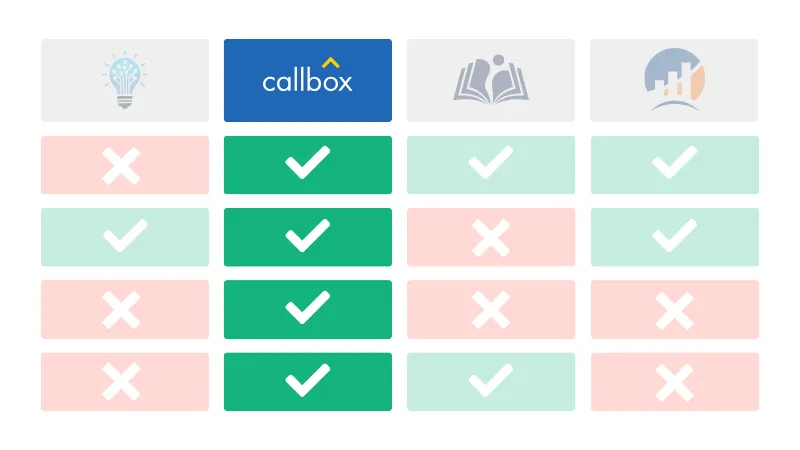
Comparison 1: Channels Used
The communication channels a lead generation provider uses can make or break your results.
A multi-channel approach increases the likelihood of reaching decision-makers where they’re most active, while a single-channel strategy risks missing them entirely.
| Company | Channels in Use | Multi-Channel Score |
| Callbox | Phone, Email, LinkedIn, Chat, Events, SEO, Retargeting, SMS | High |
| SalesHive | Email, Phone, LinkedIn, Google Ads, SEO | Medium |
| Martal Group | Email, Phone, LinkedIn, Digital | Medium |
| Belkins | Email, LinkedIn | Low-Medium |
| CIENCE | Email, Phone, Landing Pages, Forms | Medium |
| SSM | Phone, Email, LinkedIn | Medium |
| LeadGenius | Email, LinkedIn, Phone | Medium |
| RevBoss | Email, LinkedIn, Phone | Medium |
| BlueZebra | Phone, Email | Low-Medium |
| WebFX | SEO, Ads, Email, Social | Medium-High |
Takeaway:
- If your market is hard to reach, providers like Callbox with a high multi-channel score tend to outperform.
- Single- or dual-channel providers can still work well if your audience is known to favor those specific channels — for example, Belkins’ email-LinkedIn focus for SaaS decision-makers.
Comparison 2: Pricing Structure and Contract Flexibility
Pricing models vary not just in cost but in commitment terms.
Here’s how the top companies structure their engagements:
| Company | Pricing Model | Contract Length Options |
| Callbox | Subscription | Flexible (3–12 months) |
| SalesHive | Subscription | Month-to-month |
| Martal Group | Pilot + Subscription | 4-month pilot, then monthly |
| Belkins | Retainer | 6–12 months |
| CIENCE | Retainer | 6–12 months |
| SSM | Project/Retainer | Variable |
| LeadGenius | Custom | Variable |
| RevBoss | Subscription | Monthly |
| BlueZebra | Hourly/Project | Variable |
| WebFX | Custom | Variable |
Takeaway:
- Month-to-month contracts (SalesHive, RevBoss) are ideal for testing but may cost more per lead.
- Longer retainers often come with lower rates but require more trust in the provider.
Comparison 3: Industry Coverage
Industry specialization impacts targeting accuracy, messaging, and compliance knowledge.
| Company | Key Industries Served |
| Callbox | Tech, SaaS, Healthcare, Finance, Manufacturing, Education |
| SalesHive | Multi-industry, including SaaS, Manufacturing, Services |
| Martal Group | Tech, SaaS, Healthcare, Finance, Education, Manufacturing |
| Belkins | Tech, SaaS |
| CIENCE | Tech, SaaS |
| SSM | Manufacturing, Industrial, Services |
| LeadGenius | SaaS, E-commerce, Finance |
| RevBoss | SaaS, Agencies, Consultancies |
| BlueZebra | Finance, Healthcare, IT |
| WebFX | E-commerce, SaaS, Manufacturing, Healthcare |
Takeaway:
- Broad coverage can work for general B2B targeting.
- Specialized providers tend to outperform in highly regulated or niche industries.
Comparison 4: Global Reach
If your sales goals include multiple regions, choose a provider that understands local markets and regulations.
| Company | Geographic Coverage |
| Callbox | Global (NA, APAC, LATAM, EMEA) |
| SalesHive | Primarily US, Remote SDRs |
| Martal Group | NA, EU, LATAM |
| Belkins | US, EU |
| CIENCE | US, limited overseas |
| SSM | US |
| LeadGenius | Global |
| RevBoss | US |
| BlueZebra | US |
| WebFX | Global |
Takeaway:
- If you only sell in the US, a domestic-focused provider works fine.
- If you’re planning market expansion, choose a company with proven international execution, like Callbox or LeadGenius.
Discover how Callbox’s appointment setting campaign helped a SaaS firm expand in the US and generate 164 sales appointments.
Now that you’ve seen the head-to-head comparisons, the next section will guide you through how to choose the right partner — expanded into a full narrative with real-world scenarios and linked resources, so you can make the decision with confidence.
How to Choose the Right B2B Lead Generation Partner
By now, you’ve seen what the top players offer and how they compare.
But knowing who’s good isn’t the same as knowing who’s right for you.
Choosing the wrong lead generation partner can cost you more than just money. It can slow your sales momentum, drain your team’s energy, and even damage your brand reputation if the outreach is poorly executed.
Below is a framework for making the right choice — explained step-by-step with the same approach we use when advising enterprise clients.
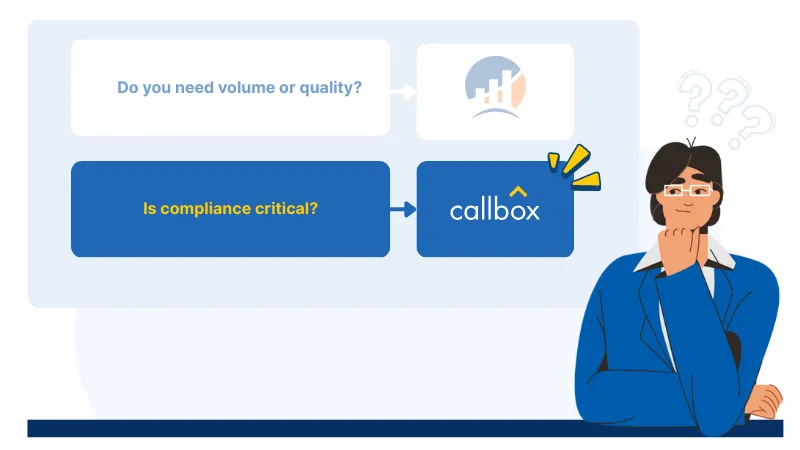
Step 1: Define Your Goals with Precision
Many businesses skip straight to vendor selection without first getting crystal clear on their own objectives.
Ask yourself:
- Do you need volume — a steady stream of meetings to keep your SDR team busy?
- Do you need quality — fewer but highly qualified opportunities for a complex sale?
- Are you testing a new market — where early feedback matters more than lead volume?
For example:
A SaaS company entering the healthcare sector may not need 100 meetings a month. They may need 15 with senior IT decision-makers in hospitals — each one worth six figures.
That calls for a provider like Callbox or Martal Group with compliance knowledge and deep account targeting, rather than a high-volume generalist.
If you’re unsure how to set realistic goals, see Top Mistakes to Avoid When Hiring a B2B Lead Gen Company.
Step 2: Decide Between USA-Based and Offshore Delivery
One of the most important — and overlooked — decisions is whether to work with a US-based team or an offshore provider.
- US-based teams often bring stronger cultural alignment, faster communication, and an understanding of local business etiquette. They can also navigate regional regulations more easily.
- Offshore teams can be more cost-efficient, and some have excellent English fluency and technical expertise.
The trade-off is usually cost vs. market familiarity. For high-ticket sales where every interaction matters, many companies prefer a domestic provider.
Step 3: Match Their Experience to Your Industry
Industry familiarity isn’t just a nice-to-have — it can make or break your campaigns.
A provider with experience in your vertical:
- Understands your buyer personas.
- Knows which messaging resonates.
- Can anticipate objections before they come up.
- May already have warm data sources or existing relationships.
For instance, a finance-focused firm like BlueZebra understands how to navigate compliance-heavy outreach in regulated industries, while Belkins’ strength in SaaS allows them to run conversational, LinkedIn-heavy sequences that appeal to tech buyers.
Step 4: Evaluate Their Channel Strategy
Different audiences respond to different outreach methods. The most effective lead generation companies know this and use a multi-channel approach to cover all touchpoints:
- Phone calls for direct, real-time conversations.
- Targeted Email Campaigns for personalized follow-up and content delivery.
- LinkedIn for professional engagement and networking.
- Retargeting ads for staying top-of-mind after initial contact.
If a provider only offers one or two channels, ask how they compensate for missed touchpoints.
Step 5: Review Compliance and Data Practices
Data compliance is more than a checkbox — it’s risk management.
A single violation of CAN-SPAM, TCPA, or GDPR can mean legal penalties and lasting damage to your brand.
Ask every provider:
- How do you verify data accuracy?
- How do you handle opt-outs and suppression lists?
- What’s your process for ensuring campaign compliance?
Callbox, for example, integrates compliance workflows into every campaign, so no lead is contacted without passing their verification process.
Step 6: Compare Pricing Against ROI Potential
Price alone doesn’t tell you if a provider is affordable.
What matters is cost per opportunity and customer acquisition cost.
Two providers might both charge $8,000/month. But if one delivers leads that convert at twice the rate, they’re effectively half the cost.
For example:
Step 7: Demand Proof of Results
- Provider A delivers 40 meetings, with a 20% close rate on $20,000 deals. That’s $160,000 in pipeline for $8,000.
- Provider B delivers 80 meetings, but only a 5% close rate on $10,000 deals. That’s $40,000 in pipeline for the same spend.
Don’t just take their word for it. Ask for:
- Case studies with real metrics.
- References you can call.
- Reports showing conversion rates, not just activity levels.
Providers like Callbox make these metrics part of their standard reporting, so you see both activity and outcomes. Discover what our clients have to say about their experience with Callbox.
For examples of what strong results look like, read Case Studies: How US Lead Generation Companies Deliver ROI.
Step 8: Plan for Scalability
Think beyond the next quarter.
If you double your outreach budget, can the provider double delivery without sacrificing quality?
If you expand into Europe, can they support campaigns in local languages?
Choosing a partner with scalability built into their model will save you the pain of switching providers when your growth accelerates.
We explore future-ready strategies in 2025 Trends in B2B Lead Generation for US Companies.
Key takeaway:
The best partner for you is not necessarily the largest name or the most affordable option. It’s the one whose experience, process, and approach align with your goals — and who can prove they’ve delivered similar results for businesses like yours.
Common Mistakes and Red Flags When Choosing a Lead Generation Partner
Even the most savvy sales and marketing teams can make costly mistakes when hiring a lead generation company.
Mistakes often occur early — during the evaluation stage — and can result in months of wasted time, budget, and opportunity.

Below, we’ll cover the most common missteps, the red flags to watch for, and how to avoid them. Each point comes with an example drawn from scenarios we’ve seen in the field.
Mistake 1: Prioritizing Lead Volume Over Lead Quality
It’s tempting to be swayed by big promises — “We’ll get you 500 leads a month” sounds impressive.
But volume without quality is a fast way to overload your sales team with unqualified prospects.
Scenario:
A mid-sized IT services company signed with a provider offering an aggressive cost-per-lead model.
Within the first month, they had a list of 600 contacts. But only 4% matched their target decision-maker profile. SDRs spent hours calling people who had no authority, no budget, and no intent to buy. By month three, morale and close rates had plummeted.
Red flag:
Any provider that focuses heavily on numbers without clearly defining what constitutes a “qualified lead” in your context.
Fix:
Ask for conversion rate data from past clients in your industry. Clarify the qualification criteria before signing.
Mistake 2: Ignoring Compliance and Data Protection
In 2025, compliance is not a background task — it’s a core risk management requirement. The best providers treat it as part of their value proposition, not an afterthought.
Scenario:
A healthcare technology company unknowingly partnered with a firm that didn’t follow TCPA guidelines for phone outreach. After a complaint, they faced legal costs and had to shut down campaigns for three months, losing valuable market momentum.
Red flag:
Vague answers when you ask how they ensure compliance with laws like CAN-SPAM, TCPA, GDPR, or CCPA.
Fix:
Request documentation of their compliance processes. Companies like Callbox integrate compliance into every campaign workflow — that’s the standard you should look for.
Mistake 3: Choosing a Single-Channel Provider When Your Audience is Multi-Platform
If your audience uses multiple communication channels, relying on just one can mean missed opportunities.
Scenario:
A SaaS company hired an email-only provider. Response rates started strong but plateaued within six weeks. Competitors were reaching the same prospects through LinkedIn and phone calls, securing meetings that the SaaS firm never had a chance at.
Red flag:
Providers who dismiss or downplay the value of channels beyond their specialty.
Fix:
Choose a provider that can run coordinated campaigns across multiple touchpoints — or be prepared to run those extra channels in-house.
Mistake 4: Failing to Verify Performance Claims
It’s easy to put impressive numbers on a website. It’s harder to back them up with real, auditable data.
Scenario:
A manufacturing company signed with a lead gen agency that claimed a 30% lead-to-opportunity rate. Midway through the contract, they realized the numbers were inflated; the “opportunities” were merely prospects who had agreed to receive more information, not those with genuine purchase intent.
Red flag:
Over-reliance on vague case studies or generic testimonials.
Fix:
Request detailed reporting templates and speak directly to references. Providers like Callbox share both activity metrics (such as calls made and emails sent) and outcome metrics (including meetings booked and conversion rates).
Mistake 5: Overlooking Contract Flexibility
Your business needs may change — quickly.
If you’re locked into a long-term contract with a poor-fit provider, switching can be expensive and disruptive.
Scenario:
A fintech company signed a 12-month retainer with a firm that underdelivered in the first quarter. They spent the rest of the year paying for a service they barely used, while scrambling to run campaigns internally.
Red flag:
Rigid contract terms with heavy penalties for early termination.
Fix:
Negotiate trial periods or shorter initial terms. SalesHive and RevBoss, for example, offer month-to-month contracts for businesses testing the waters.
Bottom line:
Avoiding these mistakes requires a mix of due diligence, clear expectations, and the willingness to walk away if a provider’s answers don’t inspire confidence.
The Future of B2B Lead Generation in the USA
Lead generation has never been static. Over the past decade, the US market has seen cold calling evolve into multi-channel orchestration, mass emailing give way to hyper-personalization, and manual list building replaced by AI-driven targeting.
2025 is proving to be another turning point. The combination of technology, buyer behavior, and regulation is reshaping how companies find and convert prospects.
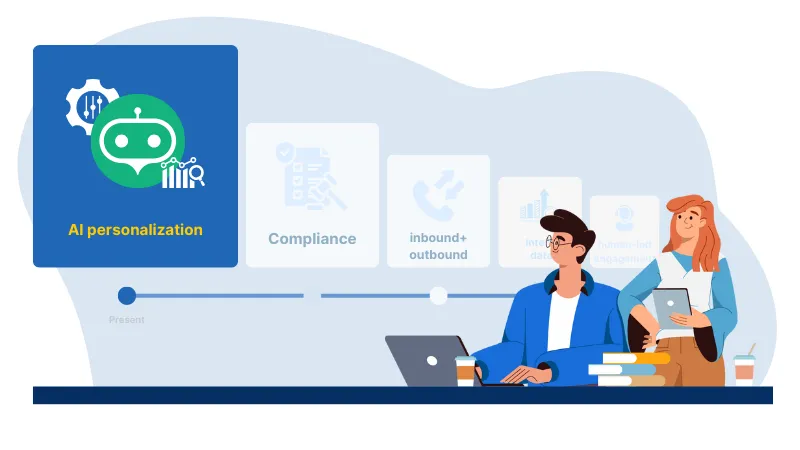
Below, we look at the biggest shifts shaping the future — and how you can adapt now to stay ahead of the curve.
1. AI-Driven Personalization Becomes the Standard
What’s changing:
Generic outreach is dying. Decision-makers are inundated with hundreds of messages per week, and they can easily spot a template. Artificial intelligence now makes it possible to customize every touchpoint based on a prospect’s role, behavior, and intent data.
Why it’s happening:
- Advances in natural language processing allow for near-human personalization at scale.
- AI tools can analyze buying signals from multiple data sources in real time.
- Competition forces companies to make every message count.
Example:
Callbox’s Smart Engage platform uses AI to segment prospects and adjust messaging dynamically.
An IT director might receive a message highlighting integration benefits, while a CFO sees ROI projections in the subject line.
Action step:
Audit your current outreach templates. Identify where personalization can go beyond first names and job titles. Utilize AI tools to insert relevant business insights into your messaging dynamically.
2. Compliance Shifts from Risk Management to Competitive Advantage
What’s changing:
For years, compliance was treated as an operational necessity — something to be handled quietly in the background. Now, US companies are realizing that proactive compliance is a sales asset. Buyers want to know that their data is handled responsibly, and procurement teams are incorporating privacy checks into vendor evaluations.
Why it’s happening:
- Stricter enforcement of TCPA, CCPA, and GDPR.
- Growing buyer awareness of data privacy rights.
- The reputational risk of non-compliance.
Example:
In healthcare and finance, we’ve seen RFPs that award points for demonstrated data protection measures. Providers like Callbox openly market their compliance processes, turning what was once a checkbox into a selling point.
Action step:
Publish your compliance policies. Train your sales reps to discuss data handling confidently — it signals maturity and reliability to enterprise buyers.
3. Integrated Inbound + Outbound Strategies
What’s changing:
The old model of treating inbound (content, SEO, ads) and outbound (calls, emails, LinkedIn) as separate silos is fading. The most effective programs blend both to create consistent, multi-touch engagement.
Why it’s happening:
- Inbound warms up the market; outbound closes the gap by targeting high-value accounts directly.
- Retargeting tools now make it easy to follow up on inbound interactions with outbound outreach.
- Sales and marketing alignment is improving, making integrated campaigns easier to manage.
Example:
A manufacturing company runs an SEO campaign that attracts engineering directors to a whitepaper. Callbox then runs an outbound cadence targeting those same individuals, referencing their content download in the first message.
Action step:
Map out your buyer’s journey. Identify where inbound can build awareness and where outbound can accelerate conversion. Align KPIs so both teams are measured on pipeline contribution, not just activity.
4. Intent Data as the New Prospecting Gold
What’s changing:
Rather than chasing static lists, companies are prioritizing leads that show real-time buying intent. This includes signals like increased visits to competitor sites, content consumption patterns, and budget-related announcements.
Why it’s happening:
- Access to third-party intent data is growing.
- CRMs and marketing platforms now integrate intent scoring natively.
- It reduces wasted outreach by focusing on accounts in-market now.
Example:
Martal Group uses intent keywords to trigger outreach — if a target account starts searching for “cloud migration consultants,” they receive a tailored campaign within 48 hours.
Action step:
Integrate intent data providers into your CRM. Prioritize outreach sequences for accounts showing multiple buying signals within a set period.
5. Human-Led Engagement Still Wins Trust
What’s changing:
Automation can start conversations, but it can’t build trust on its own. In complex B2B sales, human interaction remains a deciding factor — especially when budgets are large and contracts span years.
Why it’s happening:
- Buyers want to work with people, not just systems.
- Human reps can read nuance and respond in ways automation can’t.
- Multi-channel strategies still require skilled human touchpoints, especially on calls and live demos.
Example:
BlueZebra’s appointment setters are trained to adapt mid-call based on tone, hesitation, or enthusiasm — something a scripted bot can’t replicate.
Action step:
Balance automation with skilled SDR engagement. Let tech handle repetitive tasks so humans can focus on consultative conversations.
The Bottom Line:
The future of B2B lead generation in the US will belong to companies that combine advanced technology with human expertise, maintain strict compliance, and integrate inbound and outbound seamlessly.
Conclusion
The US market for B2B lead generation in 2025 is more sophisticated, competitive, and fast-moving than ever.
Choosing the right partner isn’t just about outsourcing prospecting, it’s about finding an extension of your sales team that understands your industry, aligns with your goals, and can deliver measurable ROI.
From our review, several providers stand out for specific needs:
- SalesHive for quick-start, month-to-month outbound testing.
- Martal Group for native English SDR coverage in North America and Europe.
- Belkins for personalized SaaS outreach via email and LinkedIn.
- BlueZebra for highly qualified appointments in regulated, high-value industries.
- WebFX for inbound-driven lead generation strategies.
But if you’re looking for multi-channel precision, global reach, proven compliance, and a long track record of results, one company consistently checks every box: Callbox.
With over 20 years in business, Callbox has:
- Delivered 15,000+ campaigns for clients in tech, SaaS, healthcare, finance, manufacturing, and more.
- Built an Team + AI-powered Smart Engage platform for accurate targeting and personalized outreach.
- Maintained full compliance with CAN-SPAM, TCPA, GDPR, and CCPA across all campaigns.
- Operated as a true sales team extension, with dedicated account managers, SDRs, marketers, and data specialists.
Your next step:
If you’re ready to build a pipeline of qualified, sales-ready opportunities and stop wasting resources on unfit leads, it’s time to speak with Callbox. Explore Callbox Lead Generation Services and see how their Team + AI approach can help you hit your 2025 growth targets.





 English (United States)
 English (Singapore)
 English (Australia)
 English (Canada)
 English (UK)
 Spanish
 Portuguese