






The cloud software market crossed $675 billion in global revenue in 2025 and analysts project it will surpass $1.2 trillion by 2030. Every enterprise software decision being made today has a cloud-first assumption baked into it, and the companies dominating that shift are reshaping how businesses of every size operate, sell, market, and grow.
But the landscape is crowded. Between hyperscaler platforms, vertical SaaS leaders, AI-native challengers, and infrastructure specialists, identifying which cloud computing companies actually matter to your business and why requires more than a logo slide.
This guide breaks down the top cloud software companies defining the market in 2026, explains what separates the leaders from the also-rans, and gives you the context to make smarter software decisions, whether you’re evaluating platforms or simply trying to understand where the industry is heading.
Are your current lead gen campaigns failing to generate quality leads and ROI?
What Is Cloud Software?
Cloud software is any application or service delivered over the internet rather than installed locally on a device or on-premises server. Instead of purchasing and maintaining hardware infrastructure, users access software through a web browser or API endpoint — with the provider handling hosting, maintenance, updates, and security on their end.
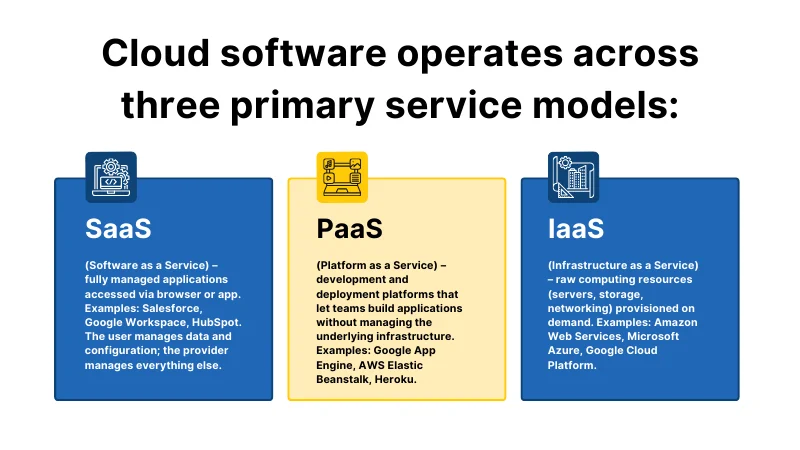
Cloud software operates across three primary service models:
SaaS (Software as a Service) – fully managed applications accessed via browser or app. Examples: Salesforce, Google Workspace, HubSpot. The user manages data and configuration; the provider manages everything else.
PaaS (Platform as a Service) – development and deployment platforms that let teams build applications without managing the underlying infrastructure. Examples: Google App Engine, AWS Elastic Beanstalk, Heroku.
IaaS (Infrastructure as a Service) – raw computing resources (servers, storage, networking) provisioned on demand. Examples: Amazon Web Services, Microsoft Azure, Google Cloud Platform.
Most modern enterprises operate across all three layers simultaneously, using IaaS for core infrastructure, PaaS for internal development workflows, and SaaS for functional applications across sales, marketing, HR, and finance. To guide your journey, here are the steps to boost your cloud GTM strategy.
What Makes a Cloud Software Company Worth Watching in 2026?
Before diving into the list, here is the evaluation framework used to select these companies. The best cloud computing services providers in 2026 share five defining characteristics:
- Scalability without friction – the platform grows with the customer without requiring re-architecture or expensive migrations at inflection points
- AI integration depth – not just an AI feature bolt-on, but machine learning woven into core workflows, delivering measurable productivity gains
- Security and compliance posture – SOC 2, ISO 27001, GDPR, and increasingly industry-specific certifications (HIPAA, FedRAMP) are table stakes for enterprise deployment
- Developer and API ecosystem – the best platforms become infrastructure — their APIs power hundreds of downstream integrations that embed them deeper into the customer’s stack
- Verified ROI evidence – analyst ratings, verified review profiles on G2/Gartner Peer Insights, and documented customer outcomes, not just marketing claims
With that framework in place, here are the top cloud software companies worth your attention in 2026.
Ready to outpaced your competitors? Outsource your lead gen.
The Top Cloud Software Companies of 2026
1. Amazon Web Services (AWS)
Category: IaaS / PaaS / Cloud Infrastructure
Why it leads: AWS remains the undisputed market share leader in global cloud infrastructure, holding approximately 31% of the cloud services market as of early 2026. With over 200 fully featured services spanning compute, storage, database, machine learning, IoT, and developer tools, AWS is the backbone of internet infrastructure – running everything from Netflix to NASA. Their 2026 focus has doubled down on generative AI with Amazon Bedrock and Amazon Q, making AI services accessible at the IaaS layer for the first time at scale.
Best for: Enterprise development teams, startups building on scalable infrastructure, AI/ML workloads.
2. Microsoft Azure
Category: IaaS / PaaS / Hybrid Cloud
Why it leads: Microsoft Azure‘s defining advantage in 2026 is its deep integration across the Microsoft ecosystem – Office 365, Teams, Dynamics 365, GitHub, and LinkedIn all feed into and through Azure infrastructure. Microsoft’s OpenAI partnership has made Azure OpenAI Service the most enterprise-ready path to deploying large language model capabilities at scale, with compliance controls that AWS and Google Cloud are still catching up to. Azure holds roughly 24% cloud infrastructure market share and is the dominant choice for enterprises already in the Microsoft ecosystem.
Best for: Enterprise organizations with existing Microsoft licensing, hybrid cloud environments, regulated industries requiring granular compliance controls.
3. Google Cloud Platform (GCP)
Category: IaaS / PaaS / Data and AI
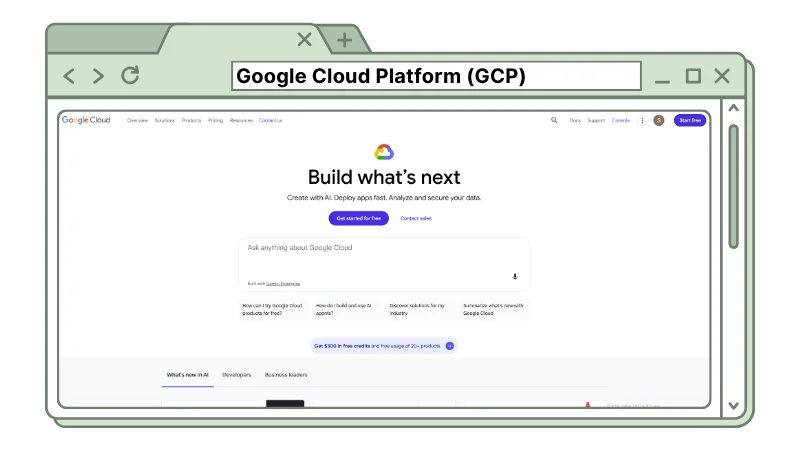
Why it leads: Google Cloud‘s strongest differentiator has always been data and analytics – BigQuery, Vertex AI, and Looker give data-heavy organizations a pipeline from raw infrastructure to production AI that few platforms match. Google Cloud holds approximately 12% market share but has been growing faster than both AWS and Azure in recent quarters, driven by enterprise AI workload migration. Gemini’s integration across GCP services is accelerating adoption among organizations prioritizing AI-native infrastructure.
Best for: Data engineering teams, AI/ML-native organizations, analytics-heavy workloads, companies migrating from on-premise data warehouses.
4. Salesforce
Category: SaaS – CRM, Sales, Marketing, Service Cloud
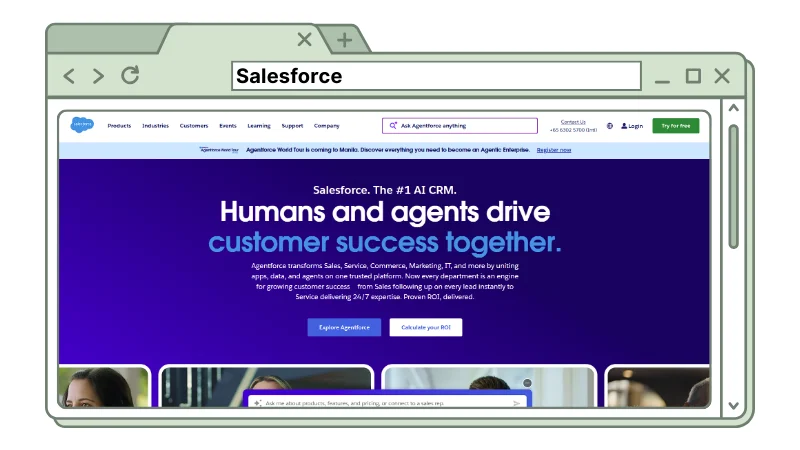
Why it leads: Salesforce remains the world’s leading CRM platform and the defining example of enterprise SaaS at scale. Their platform powers sales, marketing, customer service, and commerce workflows for over 150,000 companies globally. The 2025–2026 period has been defined by Einstein AI becoming a native layer across every Salesforce product — automating pipeline management, lead scoring, email drafting, and customer service resolution at a scale that meaningfully reduces manual work for large sales organizations. The Salesforce AppExchange ecosystem now hosts over 7,000 third-party applications, making it one of the stickiest platforms in enterprise software.
Best for: Mid-market to enterprise B2B companies, complex sales organizations, businesses running integrated sales and marketing operations.
5. ServiceNow
Category: SaaS — IT Operations, Workflow Automation, Enterprise Service Management
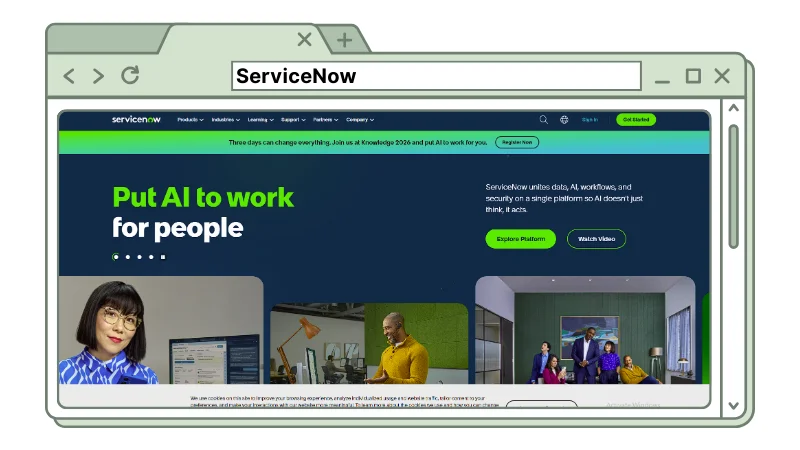
Why it leads: ServiceNow has quietly become one of the most strategically important cloud software platforms in the enterprise — not because it does one thing brilliantly, but because it connects everything. Their Now Platform automates IT, HR, legal, finance, and customer service workflows across a single cloud-native architecture. Revenue crossed $10 billion annually in 2025, and their AI-powered workflow automation has become a critical infrastructure layer for Fortune 500 operations teams managing complex, multi-department service delivery.
Best for: Large enterprises with complex IT operations, organizations automating cross-departmental workflows, HR and legal operations modernization.
6. HubSpot
Category: SaaS — CRM, Marketing, Sales, Customer Service
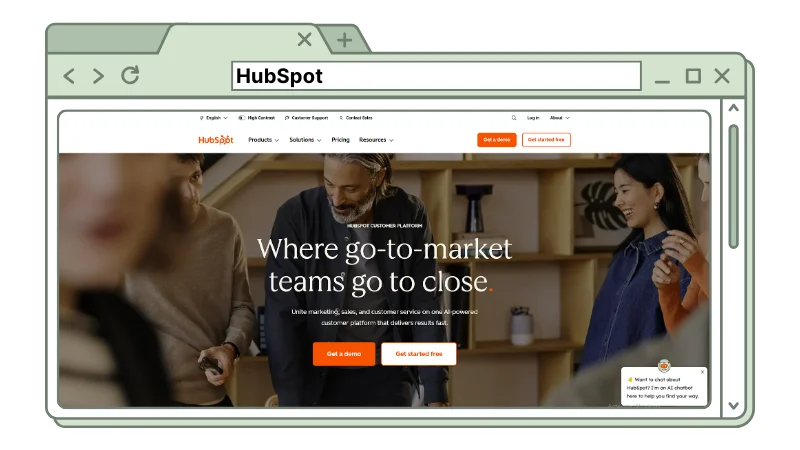
Why it leads: HubSpot‘s 2026 positioning has shifted from “inbound marketing platform” to “the CRM for growing companies” — and the distinction matters. Their unified platform spanning marketing automation, CRM, sales engagement, customer service, and content management is now genuinely competitive with Salesforce for companies in the $5M–$500M revenue range. HubSpot’s AI tools — Breeze AI, Content Hub, and AI-powered prospecting — give mid-market teams enterprise-grade capability without enterprise-grade implementation costs. Their free tier and transparent pricing model continue to make them the cloud software entry point for thousands of growing B2B companies annually.
Best for: Growing B2B companies, marketing-led sales organizations, companies unifying CRM and marketing automation on a single platform.
7. Snowflake
Category: SaaS / PaaS — Cloud Data Platform
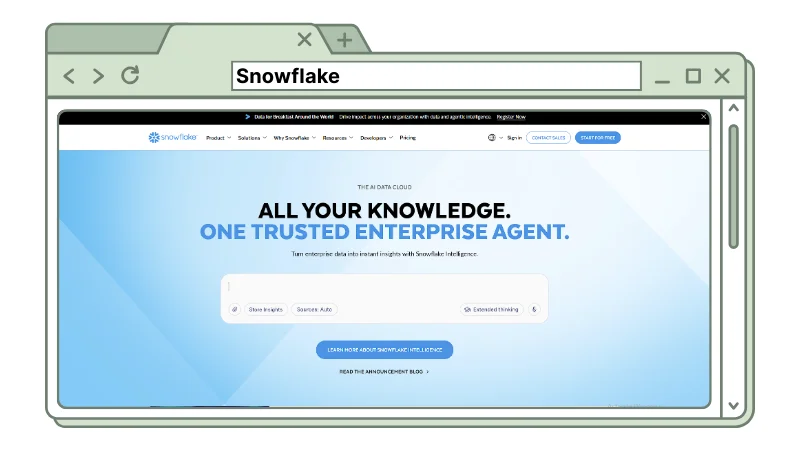
Why it leads: Snowflake redefined how enterprise organizations store, share, and query data — and their Data Cloud architecture, which enables secure data sharing across organizational boundaries without data movement, remains technically unmatched. Their 2026 trajectory has been shaped by Snowflake Cortex (native AI/ML within the data platform) and an accelerating partner ecosystem connecting Snowflake to virtually every enterprise data tool. Over 9,000 customers, including 641 of the Forbes Global 2000, depend on Snowflake as their core data infrastructure layer.
Best for: Data-intensive enterprises, organizations sharing data across partners or subsidiaries, analytics teams running large-scale SQL and ML workloads.
8. Workday
Category: SaaS — HCM, Financial Management, Planning
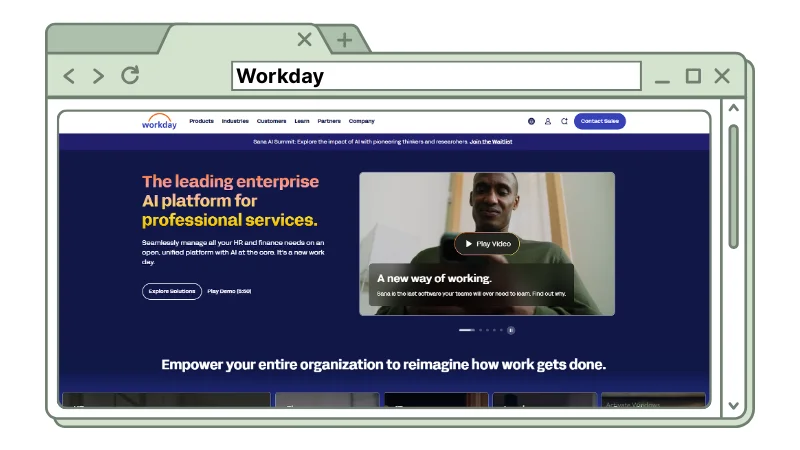
Why it leads: Workday dominates the enterprise Human Capital Management and financial planning market, with over 10,000 customers globally including 50% of the Fortune 500. Their unified platform — combining HR, payroll, talent management, financial management, and workforce planning — eliminates the fragmentation of legacy on-premise ERP systems that most large enterprises are still running. Workday AI in 2026 is deeply embedded in talent acquisition, workforce analytics, and financial forecasting workflows, making it the default cloud HR and finance platform for large organizations.
Best for: Mid-enterprise to large enterprise organizations replacing legacy ERP/HCM systems, companies requiring unified HR and financial management.
9. Zoom
Category: SaaS — Video Communications, Contact Center, AI Companion
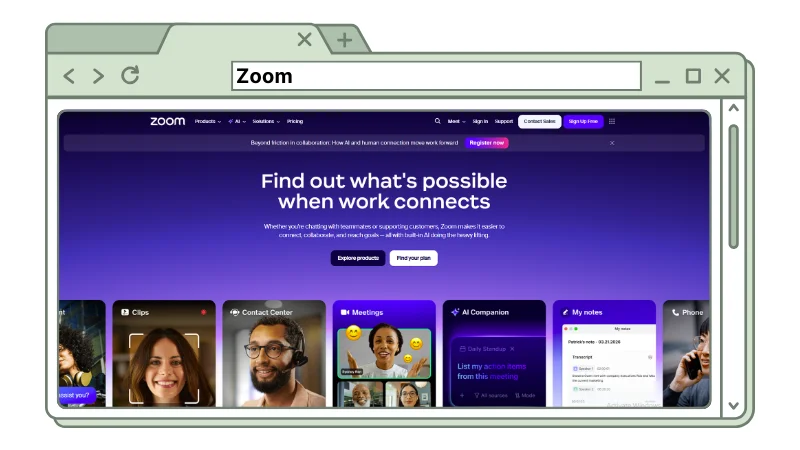
Why it leads: Zoom‘s evolution from video conferencing tool to full communications platform has accelerated in 2026 with Zoom Contact Center and AI Companion becoming significant enterprise revenue drivers. Their platform now covers meetings, phone, webinars, events, contact center, and async video — all within a single cloud-native architecture. AI Companion’s real-time meeting summaries, action item extraction, and conversation intelligence have made Zoom a genuine productivity platform, not just a meetings app. Over 210,000 enterprise customers globally.
Best for: Distributed workforce management, customer-facing contact centers, enterprise video and async communication at scale.
10. Adobe Experience Cloud
Category: SaaS — Digital Experience, Marketing, Content, Analytics
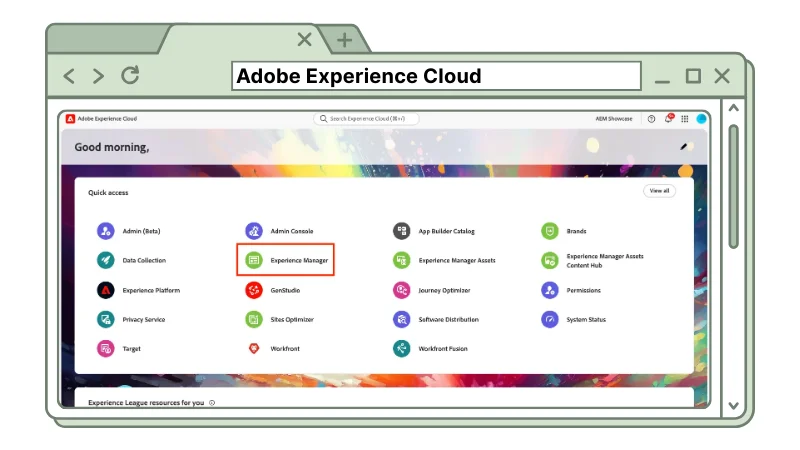
Why it leads: Adobe‘s cloud software suite spans the full digital experience stack — from content creation (Creative Cloud) to marketing orchestration (Experience Cloud) to document management (Document Cloud). For enterprise marketing and creative organizations, Adobe is irreplaceable infrastructure. Adobe Sensei AI is embedded across the entire platform, automating personalization, content generation, and customer journey analytics. Their 2025 acquisition activity and Firefly generative AI integration have made Adobe the most complete cloud computing company in the creative and marketing technology space.
Best for: Enterprise marketing organizations, digital agencies, media companies, organizations running large-scale digital experience programs.
How to Choose Between Cloud Computing Companies
With this many credible options across the best cloud computing services landscape, selection comes down to four practical filters:
Stack compatibility first. The best cloud software for your organization is almost always the one that integrates most cleanly with what you already use. A Microsoft-heavy enterprise has different infrastructure gravity than a Google Workspace organization.
Scale to your stage, not your aspirations. Enterprise platforms like Salesforce and ServiceNow are priced and structured for organizations with dedicated admins and implementation budgets. Platforms like HubSpot are purpose-built for organizations scaling toward that complexity — not yet there.
Verify with independent reviews. Gartner Magic Quadrant, G2 Grid Reports, and Forrester Wave reports provide analyst-validated comparisons. Peer review platforms like G2 and Gartner Peer Insights give you verified practitioner experience at scale — not vendor-curated case studies.
Total cost of ownership, not just licensing. Implementation, training, integration development, and ongoing administration costs routinely exceed the licensing cost for enterprise cloud platforms. Factor all four before signing.
Related: Cloud Software Lead Generation Strategies
The Cloud Software Growth Ripple Effect
One dimension of the cloud computing companies landscape that often goes underappreciated: the growth of cloud software has created an entire ecosystem of services companies that help organizations actually use these platforms.
B2B technology companies selling into enterprise accounts — whether they’re offering cloud infrastructure, SaaS tools, or vertical software — increasingly need specialized sales development support to reach decision-makers in a buying environment that has become more complex, not less. Platforms like Salesforce, HubSpot, and AWS are sold through multi-stakeholder buying committees with 6–12 month sales cycles.
This is where B2B lead generation and appointment setting agencies like Callbox come into the picture — not as a cloud software company, but as the growth infrastructure that many cloud technology vendors use to build pipeline and reach the enterprise buyers that make the adoption decisions for the platforms covered in this guide. If you’re a cloud software company trying to scale faster into enterprise accounts, outsourced sales development is often the most efficient path to qualified conversations before you’ve built the in-house SDR function to support it.
Frequently Asked Questions
What are the biggest cloud computing companies in 2026?
The largest cloud computing companies by infrastructure market share are Amazon Web Services (31%), Microsoft Azure (24%), and Google Cloud Platform (12%). In the SaaS segment, Salesforce, ServiceNow, Workday, and HubSpot are among the most widely adopted enterprise platforms.
What is the difference between cloud software and traditional software?
Traditional software is installed on local hardware and requires the user or organization to manage updates, backups, and security. Cloud software is hosted and maintained by the provider — users access it via internet connection with no local installation required. Cloud software typically operates on a subscription pricing model versus a one-time license fee.
What are the best cloud computing services for small businesses?
For small businesses, the best cloud computing services typically include HubSpot (CRM and marketing), Google Workspace (productivity), QuickBooks Online (accounting), Zoom (communications), and AWS or Google Cloud for infrastructure if development is involved. The defining criteria is ease of setup, transparent pricing, and strong self-serve support.
How fast is the cloud software market growing?
The global cloud software market was valued at approximately $675 billion in 2025 and is projected to exceed $1.2 trillion by 2030, driven by enterprise AI adoption, digital transformation spending, and the continued migration from on-premise to cloud-native infrastructure.
The Bottom Line
The top cloud software companies in 2026 are not just technology providers — they are the operating infrastructure of the modern enterprise. AWS, Azure, and Google Cloud own the foundational layer. Salesforce, HubSpot, Workday, and ServiceNow own the application layer. Snowflake, Twilio, and Veeva are building defensible vertical and data infrastructure that is increasingly hard to displace.
Understanding this landscape matters whether you are evaluating platforms for your own organization, advising clients on technology decisions, or building a company that sells into the cloud technology ecosystem.
The companies that navigate it best — buyers and sellers alike — are the ones who know not just which platforms lead the market, but why, and what that means for decisions they need to make today.
Looking to reach decision-makers at companies evaluating or deploying cloud software? Callbox helps B2B technology companies build a qualified sales pipeline through multi-channel outreach and appointment setting — so your sales team spends time with the right buyers, not chasing them.