






At the edge of every major port, hundreds of vessels move without chaos. Each one follows a silent system of coordination—signals, data, and timing that make global trade possible.
Modern ocean freight software works the same way. Its value is not in visibility, but in orchestration. Every action, from data enrichment to multi-channel outreach, operates like a synchronized terminal—quiet, constant, and precise.
Lead generation for freight technology should follow that same principle. When you build systems that move unseen but perfectly aligned, your ocean freight software lead generation becomes the digital equivalent of a port at full capacity—efficient, rhythmic, and profitable.
The Signal Problem in Ocean Freight Software Lead Generation
Most freight technology companies face the same problem that ports solved decades ago: noise.
Every vendor floods inboxes, webinars, and feeds with marketing signals. But few send them clearly enough to be recognized by decision-makers in logistics and trade.
The challenge isn’t reach. It’s clarity. Executives in shipping, freight forwarding, and logistics automation already receive hundreds of offers weekly. The message that cuts through is the one that’s timed, contextual, and credible.
True ocean freight software sales depend on signal discipline—knowing when to send, what to send, and who should receive it. The companies that learn this transform outreach from noise into navigation.
Lost at sea with poor leads? Navigate better with smarter lead gen approach.
Precision Over Volume: Building Clean Data for Ocean Cargo Software Leads
Every strong signal begins with an accurate coordinate.
For freight tech marketers, that coordinate is data—firmographic, technographic, and behavioral insight that identifies where buying intent sits within the global supply chain. Teams that build their outreach on unverified databases lose direction fast.
Effective ocean cargo software lead generation starts with verified, compliant data. Teams like Callbox structure every campaign around enriched, human-verified contact intelligence—ensuring that outreach aligns with international regulations such as GDPR, CAN-SPAM, and PDPA.
This is the equivalent of AIS tracking in maritime navigation: every record clean, every signal traceable, every movement documented. It’s the foundation of trust between seller and prospect.
Without clean data, your signals never reach port.
Multi-Channel Signals: How to Move Prospects Like Cargo
Ports work because every system—cranes, carriers, customs—is linked to a single command center. The same structure defines effective ocean freight software lead generation.
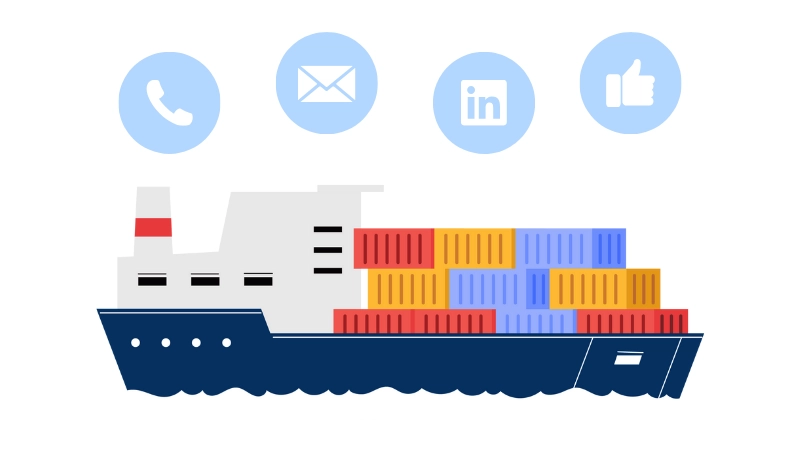
Each outreach channel becomes a terminal:
- Calls handle direct qualification.
- Email delivers tailored insight.
- LinkedIn establishes professional visibility.
- Retargeting keeps you in their periphery.
Together, they form a synchronized system that moves your ocean freight software leads from awareness to engagement.
Multi-channel orchestration isn’t about more signals. It’s about consistent ones—each message building on the last, each interaction reinforcing your credibility. Teams like Callbox deploy this approach daily, coordinating human outreach with AI-driven timing and analytics.
Your message reaches its destination not because it’s loud, but because it’s steady.
Timing the Signal: When Ocean Freight Software Buyers Are Ready
Even the best-coordinated fleet fails if it leaves port at the wrong tide.
Timing decides everything in ocean freight software sales. A freight director reviewing annual contracts requires a different signal cadence than an operations head seeking process efficiency mid-quarter.
Data-driven systems now read intent signals the same way radar reads incoming traffic—tracking engagement peaks, reactivation windows, and buying cycles.
The best teams apply AI to predict not only who is ready, but when. They send fewer signals, but each one lands with precision.
In sales, as in shipping, the right signal at the right tide delivers more cargo than a thousand calls at the wrong hour.
Related: How to Drive Logistics Sales Through B2B Lead Gen
Trust and Compliance: The Signal Integrity of Ocean Cargo Software Lead Generation
Ports function on international trust. Every shipment moves because every actor—from customs to carriers—follows the same compliance structure.
In B2B outreach, the same principle applies. Compliance isn’t paperwork; it’s signal integrity.
Adherence to privacy laws ensures your brand remains visible and credible in a market that values control and security. For ocean cargo software lead generation, respecting data boundaries and transparency builds a trust chain stronger than any marketing claim.
A compliant process signals maturity. Freight buyers respond to that. They prefer systems that mirror their own—structured, ethical, and verifiable.
See how Callbox’s ABM lead gen campaign bring new customer sources for a US-based freight expert company.
From Signals to Systems: Turning Ocean Freight Software Leads into Revenue
A clean database and a clear message mean little without process.
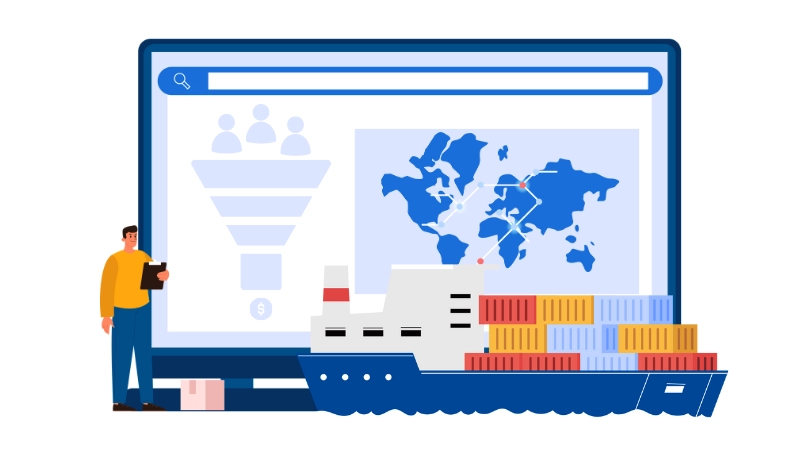
The final layer is system integration—linking marketing signals to sales outcomes. The best ocean freight software lead generation programs treat every contact as a tracked movement, like containers logged from port to port.
Teams like Callbox integrate CRM visibility, AI-driven scoring, and SDR collaboration to track leads across multiple channels and stages. Each engagement triggers data feedback, refining the next signal’s precision.
The result is a system where ocean freight software leads move predictably toward conversion. Not by luck, but by structure.
That’s the invisible machinery behind every reliable pipeline.
Quiet Systems Win: The Future of Ocean Freight Software Lead Generation
Global trade doesn’t run on noise. It runs on rhythm.
The ports that move millions of containers a year do so with silence, precision, and trust. The best marketing systems for ocean freight software do the same.
Lead generation built on signal clarity, timing, and compliance doesn’t chase attention—it earns it.
In the digital ocean of freight technology, your success depends on how well your systems communicate when no one is watching. That’s where the true strength of ocean freight software sales lies—in the invisible port that never stops moving.
Soft Close
Precision is the new persuasion. The companies that send the clearest signals—not the loudest—will lead the next wave of ocean freight software lead generation.