






Ever wonder why so many MSPs struggle to land sales meetings? You already know how to deliver reliable IT support, cybersecurity, and cloud solutions. But turning those capabilities into new contracts depends on one thing: getting in front of the right decision-makers.
Did you know that only 2% of cold calls convert into meetings? MSPs that use structured appointment setting strategies raise their success rates to 10–15%. That’s the power of a proven system for booking MSP sales appointments. It fills your calendar with quality conversations and builds a stronger sales pipeline.
This guide will show you how appointment setting for IT managed services helps you drive consistent growth. You’ll see how strategies, processes, and the right mix of channels ensure you’re always meeting with the prospects that matter.
How MSP Appointment Setting Has Changed Over Time
Appointment setting for MSP has undergone significant changes over the last decade. Years ago, cold calling was the main tactic. Today, buyers research online, compare providers, and prefer engaging across multiple touchpoints before committing to a meeting.
Modern managed service appointment setting now involves:
- Data enrichment and intent signals to target the right accounts
- Multi-channel outreach across phone, email, LinkedIn, and chat
- Lead nurturing workflows that keep prospects engaged until they’re ready
You might wonder: Is cold calling dead? Not at all. It remains effective when combined with email and social engagement. The difference is that cold calls are now part of a larger, more strategic MSP sales appointment-setting process.
Fill your MSP pipeline with qualified appointments.
Why Many MSPs Fail to Keep a Steady Flow of Sales Meetings
If you’re finding it difficult to maintain a steady flow of MSP sales appointments, you’re not alone. The most common challenges include:
- Limited internal resources. Your team is already busy supporting clients
- Poor data quality. Outdated or incomplete prospect information
- Lack of strategy. Random cold calls without a clear target profile
- Missed follow-ups. Prospects lose interest without consistent nurturing

But why is it so hard for MSPs to keep appointments consistent? Because IT decision-makers are bombarded with pitches every day. Without personalization, timing, and persistence, your message can easily get lost.
Related: Steps to Boost MSP Sales
Core Elements of a Winning MSP Appointment Setting Program
Your sales results depend on having a clear strategy. A successful MSP appointment-setting strategy begins with understanding your Ideal Customer Profile (ICP) and tailoring outreach efforts accordingly.
Core elements include:
- Data-Driven Targeting
- Personalized and Relevant Messaging
- Multichannel Outreach
- Lead Nurturing
- Sales Handsoff
Data Driven Targeting
Your outreach is only as good as the data behind it. You need a clear Ideal Customer Profile (ICP) that identifies the industries, company sizes, and roles most likely to need managed services.
This means verifying emails, updating phone numbers, and enriching records with firmographics and intent signals. With clean, targeted data, you’re reaching IT buyers who are worth your time.
Personalized and Relevant Messaging
Tailor outreach by industry and role. Decision-makers won’t respond to generic pitches. They want outreach that addresses their industry challenges, whether it’s compliance for healthcare, uptime for manufacturing, or security for financial services.
Personalization, going beyond just inserting a name, shows that you understand their world and builds trust before the first meeting.
Multi-Channel Prospect Engagement
Calls are still effective, but they shouldn’t be the only tactic. A strong MSP appointment-setting process utilizes email campaigns, LinkedIn touches, live chat, and even event follow-ups.

Multi-channel engagement increases visibility and raises your chances of connecting with busy IT leaders who may ignore one channel but respond on another.
Check out our 5 Winning Sales Cadence Examples to learn more about these touches.
Ongoing Lead Nurturing
Not every prospect is ready to meet right away. Some individuals require additional education, reassurance, or time to establish a budget. A structured nurturing process keeps them engaged until they are sales-ready. This could mean sending them helpful content, checking in periodically, or offering a quick demo at the right moment.
Seamless Sales Handoff
Even the best-set appointment can fall flat if your sales team walks in blind. A quality program delivers a complete handoff package. Be it contact background, conversation history, identified pain points, or suggested next steps. This ensures your reps are fully prepared to make the most of every meeting.
Now, you may be asking: Do you really need all five elements? The answer is yes, because leaving out even one weakens your appointment-setting process.
Skip data, and you’ll waste time on the wrong prospects. Skip personalization, and your emails go unread. Skip multi-channel outreach, and your reach shrinks. Each element strengthens the others, creating a system that consistently drives MSP sales appointments that convert.
See how Callbox helps a leading MSP firm generate 700 sales appointments in a 14-month ABM campaign.
Strategies to Identify and Qualify MSP Prospects
You don’t want your calendar filled with every contact who answers the phone. You want appointments with decision-makers who are ready—or nearly prepared—to purchase managed services. That’s why qualifying prospects is so crucial in appointment setting for IT managed services.

Here’s how you can take the qualification further:
1. Using intent data to spot prospects researching IT services
Look for signs that a company is actively exploring IT managed services. These signals might include downloading whitepapers on cybersecurity, recent funding announcements, or job postings for IT staff. Intent data tells you who’s in the market right now, so your outreach is more likely to get a response.
2. Asking discovery questions to confirm fit (budget, need, authority, timeline)
When you connect, don’t stop at a surface-level conversation. Ask questions like:
- How do you currently handle IT support?
- What are your top challenges with your current provider?
- What’s your timeline for making a change?
- Who else in your team is involved in IT decisions?
These questions confirm whether the prospect has budget, urgency, and decision-making authority. All of which are essential for qualifying them as a good fit.
3. Scoring leads based on engagement and responsiveness
Not all prospects engage at the same level of interest. If a contact opens your emails, connects on LinkedIn, and answers your calls, they’re more likely to convert than someone who never replies. By assigning scores to actions, you can rank leads and prioritize those that show a more substantial interest.
So, what’s the difference between a “lead” and a “qualified prospect”? Think of it this way:
- A lead is anyone in your funnel. Maybe they downloaded an eBook or clicked on an email.
- A qualified prospect matches your ideal customer profile, demonstrates an intent to buy, and possesses the authority or influence to move forward.
Your goal in MSP appointment setting is to move leads to qualified prospects as quickly as possible. That’s how you ensure every appointment on your calendar has the potential to turn into new business.
Related: 2025 MSP Trends that Double Your Revenue
Handling Common MSP Sales Objections
Even when you secure MSP sales meetings, objections are part of the process. Common ones include:
- “We already have an IT provider.”
- “Your services are too expensive.”
- “Now isn’t the right time.”
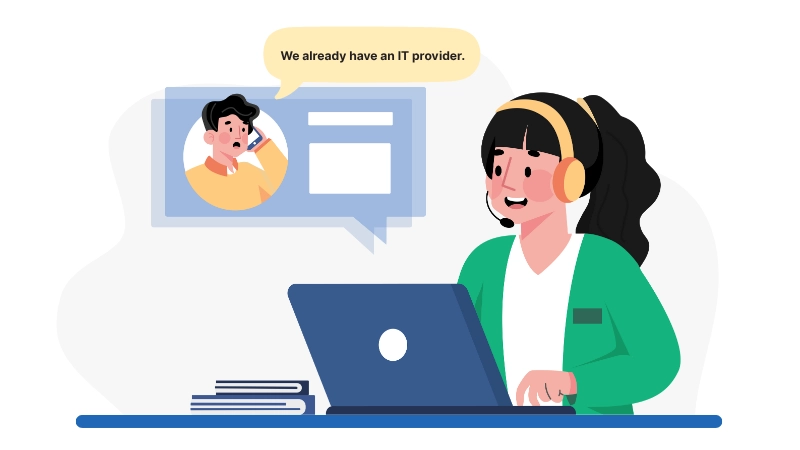
How do you overcome these?
- Position your MSP appointment-setting strategy around differentiation and explain why your approach is unique.
- Show ROI with data and case studies.
- Use nurturing workflows to stay top-of-mind until timing improves.
If you’re asking yourself: Should I push harder when I hear “not interested”? The answer is no. Respect the response, but continue to nurture and reconnect later.
In-House vs. Outsourced Appointment Setting for MSPs
One of the most significant decisions you face is whether to run appointment setting for IT managed services in-house or outsource it. Both options have strengths, but the right choice depends on your resources, growth goals, and the speed at which you need results.
Running Appointment Setting In-House
Building your own sales development team gives you complete control over your sales strategy. You decide on the scripts, cadence, technology stack, and how closely the team aligns with your brand voice. This approach works best if you already have:
- Budget for SDR salaries, training, and management
- Access to data tools and enrichment platforms
- Bandwidth to design and oversee the entire process
But in-house teams come with trade-offs. Recruiting, training, and retaining SDRs can take months. Many MSPs find that performance drops when internal staff also juggle account management or support tasks. The costs of tools, CRM integration, and data subscriptions can quickly add up. Discover the top appointment setting companies.
Outsourcing to a Specialist Provider
Outsourced MSP appointment setting gives you immediate access to:
- Experienced SDRs trained in IT sales development
- Verified prospect databases enriched with decision-maker details
- Multi-channel outreach programs that combine calls, emails, LinkedIn, and chat
- Dedicated account managers who track performance and optimize campaigns
Instead of building everything from scratch, you plug into a proven system designed to generate qualified sales appointments. Outsourcing also scales faster. You can increase outreach without the delays or overhead associated with hiring.
Discover why B2B companies outsourced the Callbox SDR Outsourcing solution.
Which Is the Better Option?
If you have the resources and want complete control over messaging, an in-house team can work, especially for MSPs with established sales development departments. However, if your team is already stretched thin, outsourcing can be more cost-effective and reliable for achieving consistent results.
Now, most of you might ask: Will outsourcing mean you lose control over quality? The answer is no. A good partner functions as an extension of your team. Providers like Callbox integrate with your CRM, use your messaging guidelines, and deliver detailed handoff briefs so every meeting feels like it came from your own sales staff.
MSP Appointment Setting Best Practices for High-Quality Sales Meetings
Booking an appointment is only half the battle. The quality of those meetings determines your revenue growth. To maximize results:
- Confirm the meeting with multiple reminders (email, call, LinkedIn)
- Provide your sales team with a detailed lead handoff brief
- Tailor your pitch to the prospect’s industry challenges
- Follow up quickly after the meeting to keep the momentum

What’s the biggest mistake MSPs make with sales meetings? Going in unprepared. Without context or insight, you risk losing trust before the conversation even starts.
Related: MSP Lead Generation Best Practices
Layering Appointment Setting with Other Channels
Appointment setting becomes more effective when paired with other outreach channels. A true MSP appointment setting strategy should include:
- Voice – Cold calls and warm follow-ups
- Email – Personalized campaigns for nurturing
- Social – LinkedIn connections and content sharing
- Chat – Real-time engagement on your website
By layering channels, you maximize appointment quality and show rates.
If you’re asking: do multi-channel campaigns really work? Yes. Research shows that multi-touch, multi-channel campaigns generate twice as much engagement compared to single-channel outreach.
Driving Sales Growth Through MSP Appointment Setting
When you bring all these elements together, you get more than appointments. You get a consistent pipeline of sales opportunities that fuel long-term MSP growth.
Appointment setting for IT managed services is not an afterthought. It’s your engine for driving revenue. And whether you build in-house capacity or outsource to experts, the result is the same: consistent, high-quality MSP sales appointments that move your business forward.